
One unit below was checked on Amazon on October 10, 2026. The seven others are sold on dealer or maker sites, so specs are the makers’ claims and were not re-priced. Always check the home’s data plate and local codes before you add or replace cooling, and hire a licensed HVAC pro for ductwork and central units.
Mobile homes can feel like an oven in July. The walls are thin, the roof is low and the ducts often run under the floor where leaks hide. Here is how to pick a cooling system that fits, what to check first and which units to look at.
Table of Contents
How Much Cooling Does a Mobile Home Need?
A rough guide for a single-wide home of about 800 to 1,000 square feet is 18,000 to 24,000 BTU, or 1.5 to 2 tons. A double-wide of 1,500 to 1,800 square feet often needs 3 to 3.5 tons. These are starting points, not answers. Thin insulation, large windows, a sunny lot and a metal roof push the number up. Shade, skirting and attic or roof insulation push it down.
Use the free BTU calculator for a first estimate, and ask a licensed pro for a load calculation for a central system.
Check the Home’s Label First
HUD-code manufactured homes carry a comfort cooling certificate on the data plate. It lists the cooling load the duct system was built for. A central unit that is much larger than the label is not a good idea, because the ducts may not carry the air. If your home is a pre-1976 mobile home, it may have no label, and a pro should check the ducts and the wiring before adding anything big.
Looking ahead, more manufactured homes are being built with better insulation, heat-pump systems and room for modern ductwork, and more owners are choosing ductless mini-splits to fix hot rooms. The catch is that many older mobile homes were built to a lighter standard, so a new unit that looks big enough on paper may still struggle in a heat wave.
Types of Air Conditioners for Mobile Homes
- Central AC or heat pump. Cools the whole home through ducts. Needs a pro, and the ducts must be sealed.
- Packaged units. One outdoor cabinet that holds everything, often used in manufactured homes with roof or side ducts.
- Ductless mini-split. A good fit for single-wides and add-on rooms. No ducts needed, and many also heat.
- Window units. Cheap and good for one or two rooms. Check that the walls and windows can hold the weight.
- Portable units. Easy to set up, and the least efficient way to cool.
- Evaporative coolers. Work only in dry climates, and they add moisture to the air.
7 Air Conditioners From Dealers
The details below come from maker and dealer pages and the older version of this guide. Confirm the model, the voltage and the fit for your home before you buy.
1. Revolv AccuCharge 3-Ton 14 SEER Central AC
A 36,000 BTU split-system condenser sold for manufactured homes. The dealer page lists a corrosion-resistant coat and an auto-reset feature. It needs a matching indoor coil and a licensed installer.
- 3 tons, 14 SEER per the dealer
- Whole-home cooling
- Needs a pro install
2. Zero Breeze Mark 2 Portable AC
A small battery-powered unit for tents, cabins and vehicles. It is rated at about 2,300 BTU with a battery that runs a few hours, so treat it as a personal cooler, not a home system.
- About 2,300 BTU
- Battery option
- Personal cooling only
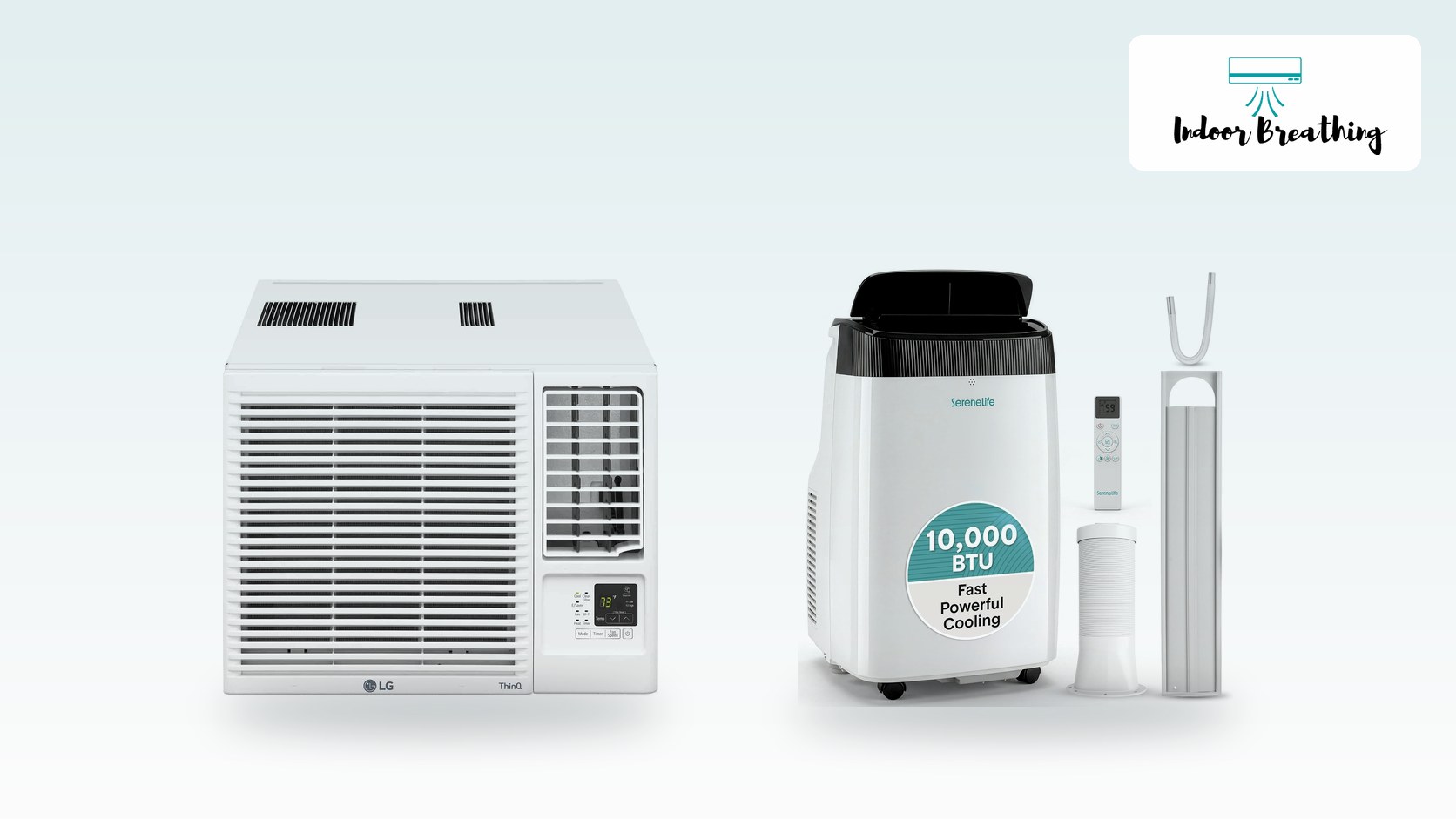
3. LG 18,000 BTU Heat and Cool Window AC with Wi-Fi
A large window unit with a heat mode, a remote and app control. The older page said it covers about 1,000 square feet, which is optimistic for a mobile home. Check that your outlet matches the plug, since units this size often need a 230V circuit.
- Heat and cool
- Wi-Fi control
- Often needs 230V
4. Frigidaire 8,000 BTU Portable AC
A portable unit with a remote, a window kit and a dry mode. The older page said it suits about 350 square feet. Fine for one bedroom.
- Portable
- Window kit included
- One room
5. Whynter 14,000 BTU Dual-Hose Portable AC
A dual-hose portable unit, which uses outside air for the condenser and wastes less cool air than a single-hose model. See our Whynter ARC-14S review for details on this style.
- Dual hose
- Larger room
- Heavy
6. Hessaire MC61M Portable Evaporative Cooler
An evaporative cooler with a large airflow rating. It only helps in dry air, and it adds humidity, so skip it in damp climates.
- Dry climates only
- Low power use
- Adds humidity
7. Honeywell 15,000 BTU Portable AC
A portable unit with a high BTU label. Portable BTU numbers are often quoted on an older scale and cool less than they look.
- Portable
- High BTU label
- Check the DOE rating
The risk to watch is the hot-box effect. Thin walls, a metal roof and a low-slung shape soak up heat, and a unit sized only by floor area can run all day and never catch up. Leaky belly ducts can waste a third of the cool air before it reaches a room. Expect repair and efficiency programs to focus on ducts and skirting, and expect the cheapest fix to be sealing and shading before adding tons.
1 Unit You Can Price on Amazon
Price and rating were checked on Amazon on October 10, 2026.
| Model | Best for | Price | Rating |
|---|---|---|---|
| SereneLife 10,000 BTU Portable Air Conditioner | Portable cooling for one room | $329.90 | 4.2 (4,941) |
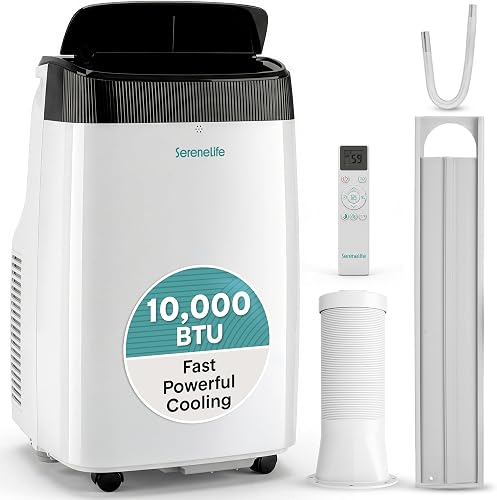
Price on Amazon: $329.90 | 4.2 stars from 4,941 ratings (checked October 10, 2026)
The SereneLife 10,000 BTU portable is a lower-cost option for one room, such as a bedroom or a living area. Portable units quote a BTU number that is often higher than their DOE rating, so expect less cooling than the box suggests. It has a large rating count on Amazon.
Cut the Heat Before You Buy More Cooling
- Seal the ducts. Leaky belly ducts waste a large share of the cool air. A pro can seal them with mastic, not just tape.
- Add skirting and shade. Awnings, trees and light roof coating cut sun gain.
- Insulate the roof or attic space.
- Use blinds and reflective film on the sunny side.
- Upgrade the thermostat so the system runs on a schedule.
Running Costs
A 18,000 BTU window unit draws roughly 1,500 to 1,700 watts. At 17 cents per kWh, ten hours a day costs about $2.60 a day, or around $75 a month, in hot weather. A mini-split or heat pump with a high SEER2 uses a lot less for the same cooling.
FAQ
Why do mobile homes get so hot?
Thin walls, low insulation, metal roofs and leaky ducts. Heat gets in, and cool air gets out.
Is a mini-split good for a mobile home?
Yes, often. It needs no ducts, and many also heat. A pro should check the wall and the electrical panel.
How can you cool a mobile home without AC?
Shade the windows, run ceiling fans, open windows at night, seal the ducts and add skirting and roof insulation. In dry climates an evaporative cooler helps.
Is it safe to put a window AC in a mobile home?
Usually yes, if the wall frame and window can hold the unit and the circuit can carry it. Ask a pro if you are unsure.
Final Word
Fix the ducts and the shade first, then size the unit by a real load estimate. For single rooms, see our best window air conditioners and best portable air conditioners.
What happens next: mini-splits and heat-pump systems will keep taking share from window units and old rooftop packs, and portable units will stay a stopgap. If you are buying now, get a proper load estimate, check the home label and fix the ducts first.
Related Guides
Keep going with BTU calculator, best window air conditioners, best portable air conditioners and Whynter ARC-14S review.