
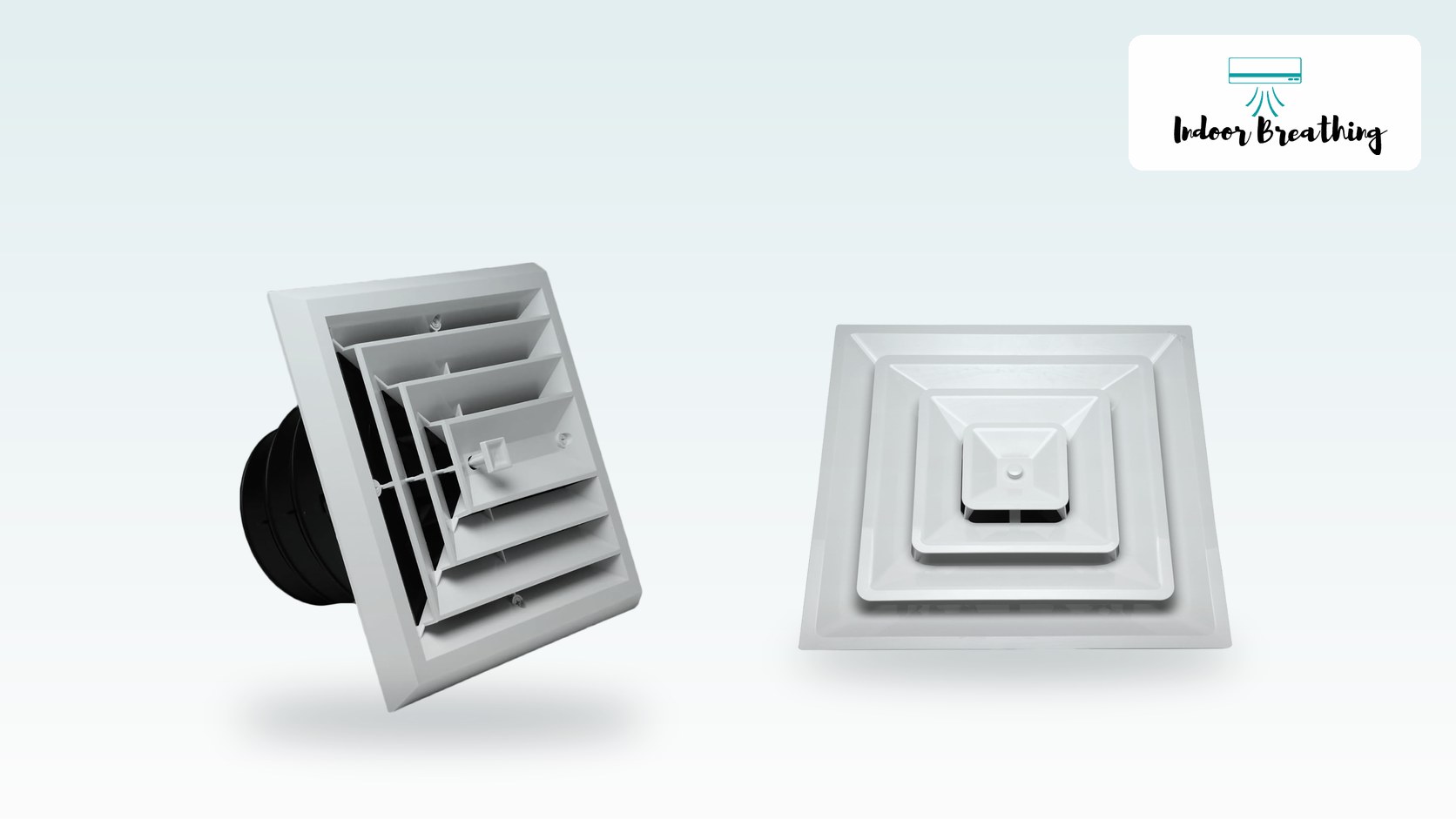
Prices, ratings and stock were checked on Amazon on October 22, 2026. Match the neck size to the duct before you buy.
The right diffuser stops drafts and whistling. Here are five in stock, how to size one and what to check before you order.
Table of Contents
What Is a Diffuser?
A diffuser is the vent that spreads air from a duct into the room. It shapes the air pattern, cuts noise and keeps drafts off people. The ducts and fan are in how HVAC systems work. The diffuser is where it all lands in the room.
Diffuser, Register or Grille?
A diffuser spreads air in a pattern, often on the ceiling. A register has an adjustable damper. A grille is a plain cover, often for return air. Many people mix up the words, so check what your duct needs.
What to Look for in a Diffuser
- Neck size: must match the duct opening.
- Pattern: 1-way, 3-way or 4-way spreads air differently.
- Material: steel or aluminum last longer near heat. Plastic is cheaper.
- Mount: lay-in for a grid ceiling, surface for drywall.
- Throw: check how far the air reaches in the product specs.
Here is where HVAC diffusers are heading: easier retrofit parts. Plastic units like the RectorSeal TRUaire 81913 cost $35.78 and come with the ceiling box built in, and a 2×2 lay-in model costs $58.00. Contractors want parts that snap in, and homeowners want to swap a tired grille without a ceiling cut.
5 HVAC Diffusers
Rechecked on Amazon on October 22, 2026. Prices, ratings and buttons are below.
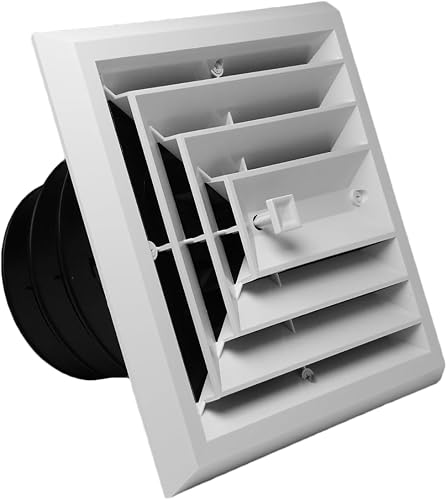
Price on Amazon: $35.78 | 4.6 stars from 176 ratings (checked October 22, 2026)
The RectorSeal TRUaire 81913 is a plastic ceiling diffuser with a built-in damper control and an incorporated ceiling box. It costs $35.78, rated 4.6 (176).
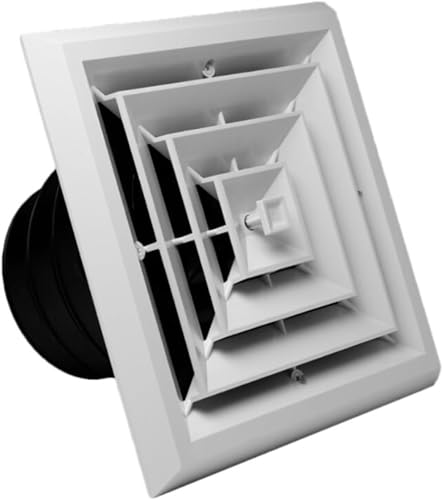
Price on Amazon: $39.39 | 4.5 stars from 244 ratings (checked October 22, 2026)
The RectorSeal TRUaire 81914 is the plastic grille and damper version with a ceiling box. It costs $39.39, rated 4.5 (244).
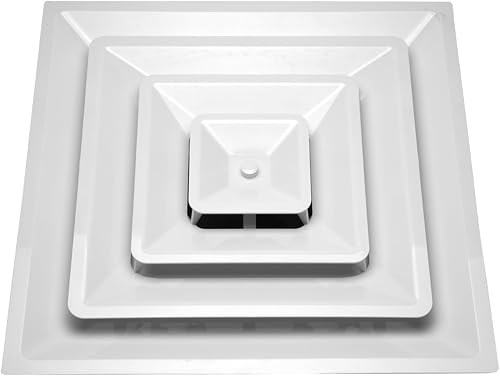
Price on Amazon: $58.00 | 4.6 stars from 430 ratings (checked October 22, 2026)
The 2×2 lay-in 3-cone supply diffuser drops into a ceiling grid and comes with an 8 inch pre-molded boot. It costs $58.00, rated 4.6 (430).
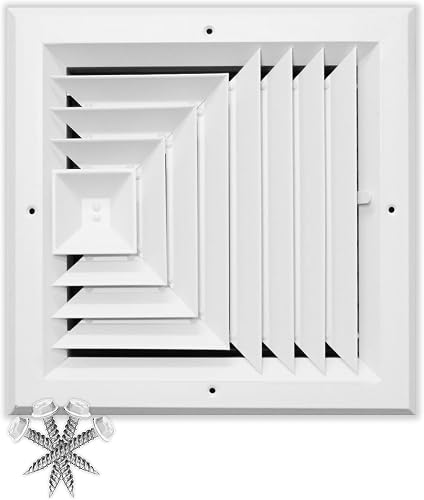
Price on Amazon: $79.95 | 4.4 stars from 174 ratings (checked October 22, 2026)
The 10×10 square diffuser is an adjustable 3-way metal diffuser. It costs $79.95, rated 4.4 (174).
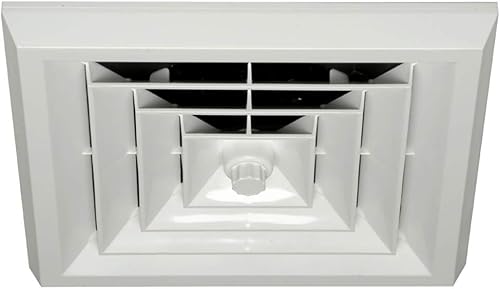
Price on Amazon: $30.00 | 3.9 stars from 33 ratings (checked October 22, 2026)
The HaVACo 12 inch quick-connect diffuser is an ABS plastic square diffuser with a reducing boot. It costs $30.00, rated 3.9 (33).
The downside is bad sizing and bad airflow. A diffuser that is too small makes noise and drafts, and one that is too big loses throw and leaves dead spots. Cheap plastic diffusers can warp or yellow near hot ducts. Expect more mismatched neck sizes, whistling vents and cold spots from people who buy by look rather than duct size. Measure the neck, not the face.
Measure Before You Buy
Measure the duct opening, not the old cover. The neck size is the number that counts, such as 6, 8 or 10 inches. Measure the ceiling cutout for a retrofit. If the old diffuser is a different shape, an adapter or a new boot may be needed.
Airflow and Noise
Whistling usually means too much air through too little opening. Check the damper, the duct size and the filter. A clogged filter forces more strain on the fan, see MERV 13 furnace filters for the trade-offs. Zoned systems need careful sizing, see HVAC zone dampers.
Keep It Clean
Dust and grease build up on the vanes. Vacuum and wipe each diffuser each season. Mold spots near a diffuser point to a damp duct; look at UV lights for HVAC and cost-effective HVAC maintenance.
How to Pick
Retrofit with a built-in box? The RectorSeal 81913 or 81914. Drop ceiling? The 2×2 lay-in. Metal look? The 10×10. Tight budget? HaVACo, with a lower rating to keep in mind.
FAQ
What is the difference between a diffuser and a register?
A diffuser shapes the air pattern. A register has a damper you can adjust.
How do you size a diffuser?
Match the neck size to the duct opening.
Why does a diffuser whistle?
Too much air for the opening, or a clogged filter. Check the damper and the filter first.
Can you replace a diffuser yourself?
Often yes, if the neck size matches. Turn the system off first.
Final Word
Measure the duct neck, pick the pattern and match the mount.
What comes next: more low-noise designs and more adjustable patterns. Better airflow starts with the right size, and a diffuser cannot fix a duct that is too small.
Related Guides
Keep going with HVAC zone dampers, how HVAC systems work, cost-effective HVAC maintenance, UV lights for HVAC and MERV 13 furnace filters.