

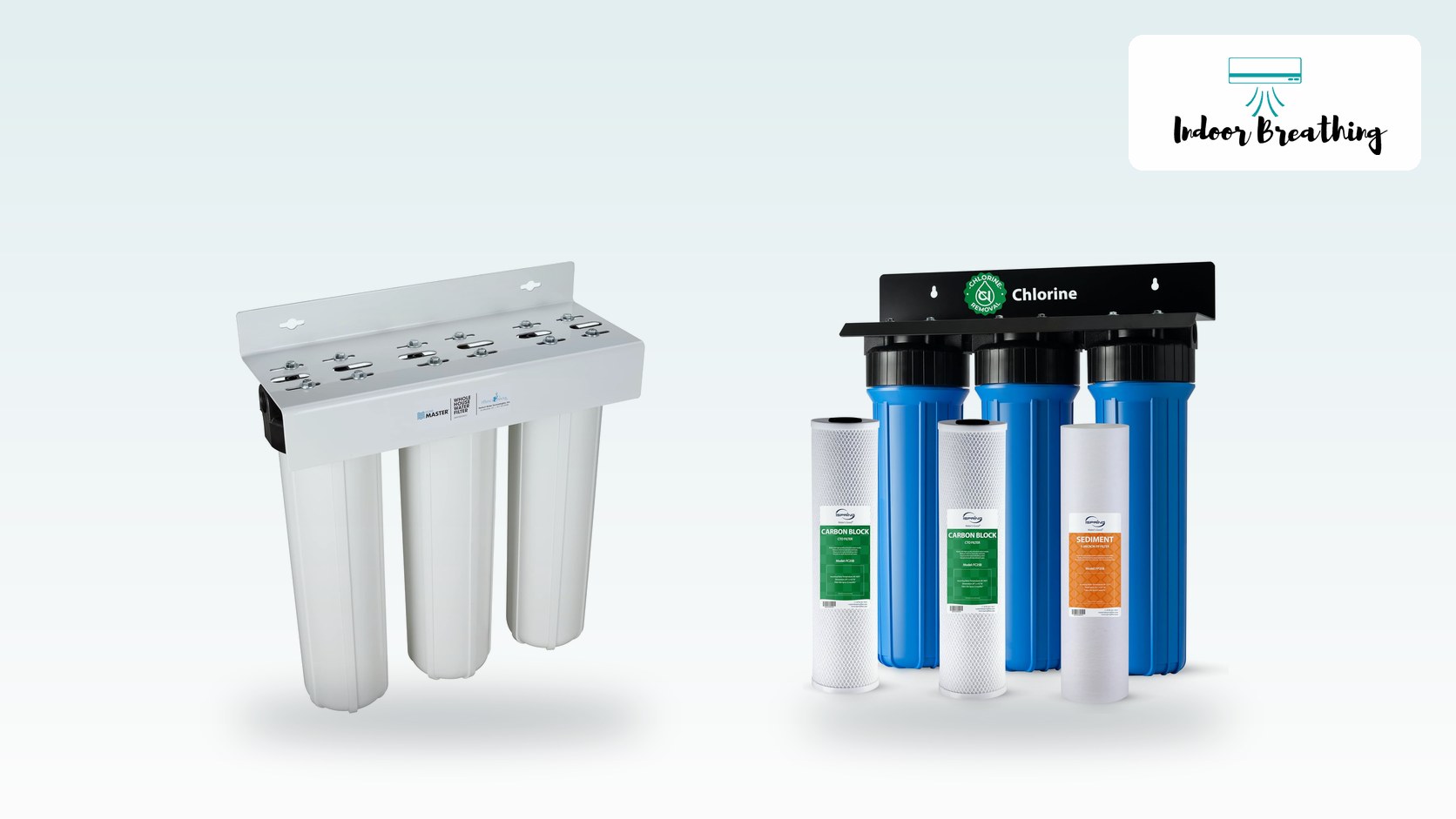
Four systems below were checked on Amazon on October 10, 2026. The four dealer systems are sold on maker sites, so details are the makers’ claims and prices were not re-checked. The older Amazon links for SpringWell and the Crystal Quest Eagle now show unusual listings, so they were replaced. A filter alone does not make a well safe to drink. Test the water first.
A well gives you freedom, and the job of treating the water. What comes out depends on the rock and soil around it. Common problems are sediment, iron, manganese, hardness and sulfur smell. Less common but more serious are bacteria and nitrates. Here is how to choose a whole-house filter for a well, step by step.
Table of Contents
Step 1: Test the Water
Get a lab test. At minimum ask for: coliform bacteria, nitrate, iron, manganese, hardness, pH, total dissolved solids and, in some areas, arsenic and radon. The CDC suggests testing a private well at least once a year for bacteria, nitrates and other items. The test tells you what to treat, and how big the system must be.
Step 2: Match the Problem to the Treatment
- Sediment, cloudy water: a sediment filter. See sediment filters for well water.
- Iron and manganese: an iron filter, such as catalytic media or air injection. See iron filters for well water.
- Hardness: a softener. See water softeners for well water.
- Chlorine taste or chemical odor: a carbon filter.
- Bacteria: UV or another disinfection step. A filter alone does not do it.
- Nitrates: RO or ion exchange at the point of use.
Looking ahead, more homes are leaning on private wells as city bills rise, and well owners are getting better tools. Cheap test kits, app-linked filters and bundled iron, sediment and UV systems are all on the market. The catch is that every well is different. A system sized for one neighbor can foul on yours within months, and a nice-looking tank can hide a poor test.
Step 3: Size the System
Check the flow rate. A family house can use 8 to 12 gallons a minute at peak. A system rated for 5 gallons a minute will drop pressure. Ask for the system’s flow rating at your pressure, and check the pipe size, usually 1 inch.
4 Systems on Amazon
Prices and ratings were checked on Amazon on October 10, 2026.
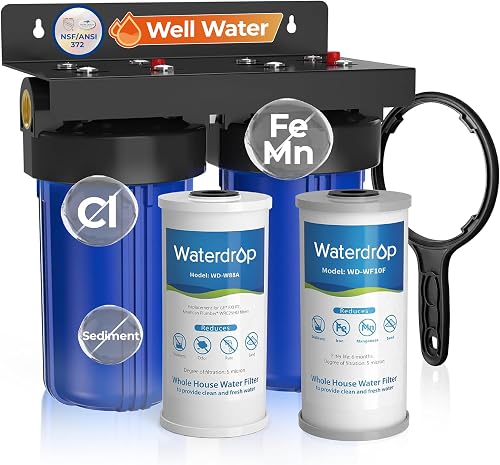
Price on Amazon: $138.99 | 4.4 stars from 1,586 ratings (checked October 10, 2026)
The Waterdrop WHF21-FG is a two-stage whole-house filter. The listing says it reduces iron by 96.4 percent and manganese by 98.2 percent, which are maker numbers. It is the lowest-cost pick here.
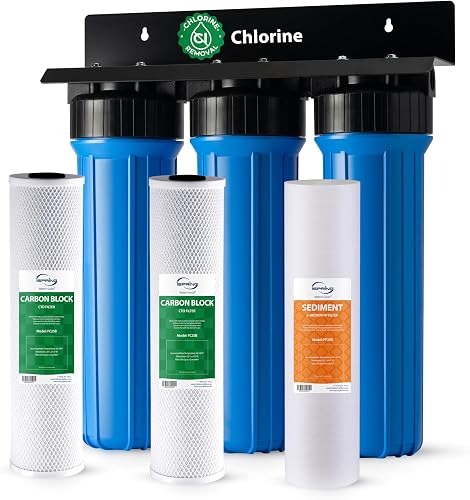
Price on Amazon: $420.00 | 4.7 stars from 2,244 ratings (checked October 10, 2026)
The iSpring WGB32B is a three-stage Big Blue housing set with sediment and carbon cartridges. It has a high rating and a large rating count, and is aimed at sediment and chlorine, not heavy iron.
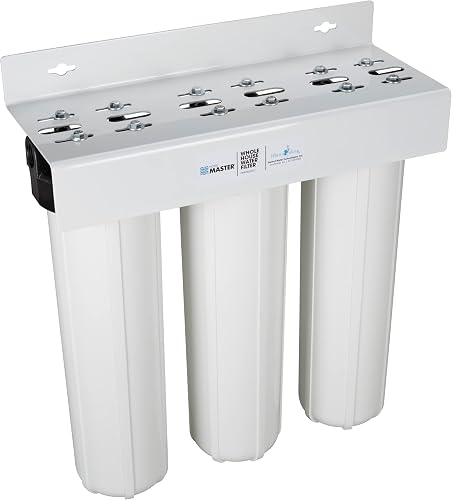
Price on Amazon: $503.85 | 4.4 stars from 207 ratings (checked October 10, 2026)
The Home Master HMF3SDGFEC is a three-stage system with fine sediment, iron and carbon cartridges.
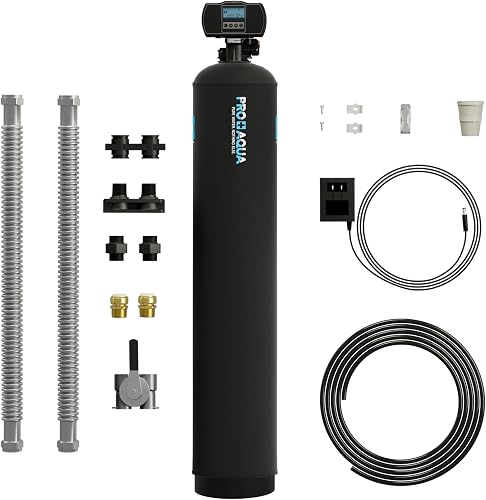
Price on Amazon: $630.20 | 4.1 stars from 465 ratings (checked October 10, 2026)
The PRO+AQUA Heavy Duty is a well water system sold for larger homes. Ask the seller about the media and the flow rate for your iron level.
The risk to watch is treating taste and not safety. Many whole-house filters cut sediment, iron and chlorine, and none of those steps kills germs. A well with bacteria or nitrates can look clear and taste fine. Expect more sales pitches that promise pure water from one tank. Test the water, treat in order and add UV when the test calls for it.
4 More Systems From Makers and Dealers
The details below come from maker pages. Confirm the media, the flow rate and the iron limit before you buy.
1. SpringWell Whole House Iron Filter
An iron and manganese filter from SpringWell that uses air injection, per the maker. It is meant for wells with iron and sulfur. Ask for the exact limits for your water.
- Iron and manganese focus
- Air injection, per the maker
- Ask for the limits
2. Aquasana Rhino Well Water System with UV
A well water system that pairs filtration with a UV stage for germs. It is a higher-priced pick for homes that need disinfection.
- Filtration plus UV
- Targets bacteria
- Higher price
3. Crystal Quest High Flow Whole House Filter
A high-flow whole-house filter from Crystal Quest. Ask for the flow rate at your pressure and the media options.
- High flow
- Whole-house
- Ask for the media
4. Crystal Quest Turbidity Whole House Filter
A sediment-focused whole-house filter from Crystal Quest for cloudy or turbid water. A good first stage ahead of other treatment.
- Sediment focus
- First stage
- Pair with other media
Install Tips
- Put the sediment filter first, ahead of any media tank.
- Add a bypass valve so you can service the system without shutting off water.
- Use a pressure gauge to watch for clogging.
- Retest the water a few weeks after install.
- Re-test every year for bacteria and nitrates.
FAQ
Do you need a softener and a filter for a well?
Often both, if the water is hard and has sediment or iron. A softener can handle some iron. See whole house water filter systems.
Does a whole-house filter kill bacteria?
No. UV, chlorination or another disinfection step does.
How often do you change the cartridges?
Sediment cartridges every 3 to 6 months, carbon every 6 to 12 months, or sooner if flow drops.
Final Word
Test first, treat in order and retest after install. Size the system for the flow your home needs. Our guide on water softeners for well water covers the hardness side.
What happens next: shoppers will compare flow rate, filter life and the cost of the next cartridge before the sticker price. Heavy iron and manganese will push more people to catalytic or air-injection filters. A good plan starts with a lab test and ends with a retest after install.
Related Guides
Keep going with iron filters for well water, sediment filters for well water, water softeners for well water and whole house water filter systems.