
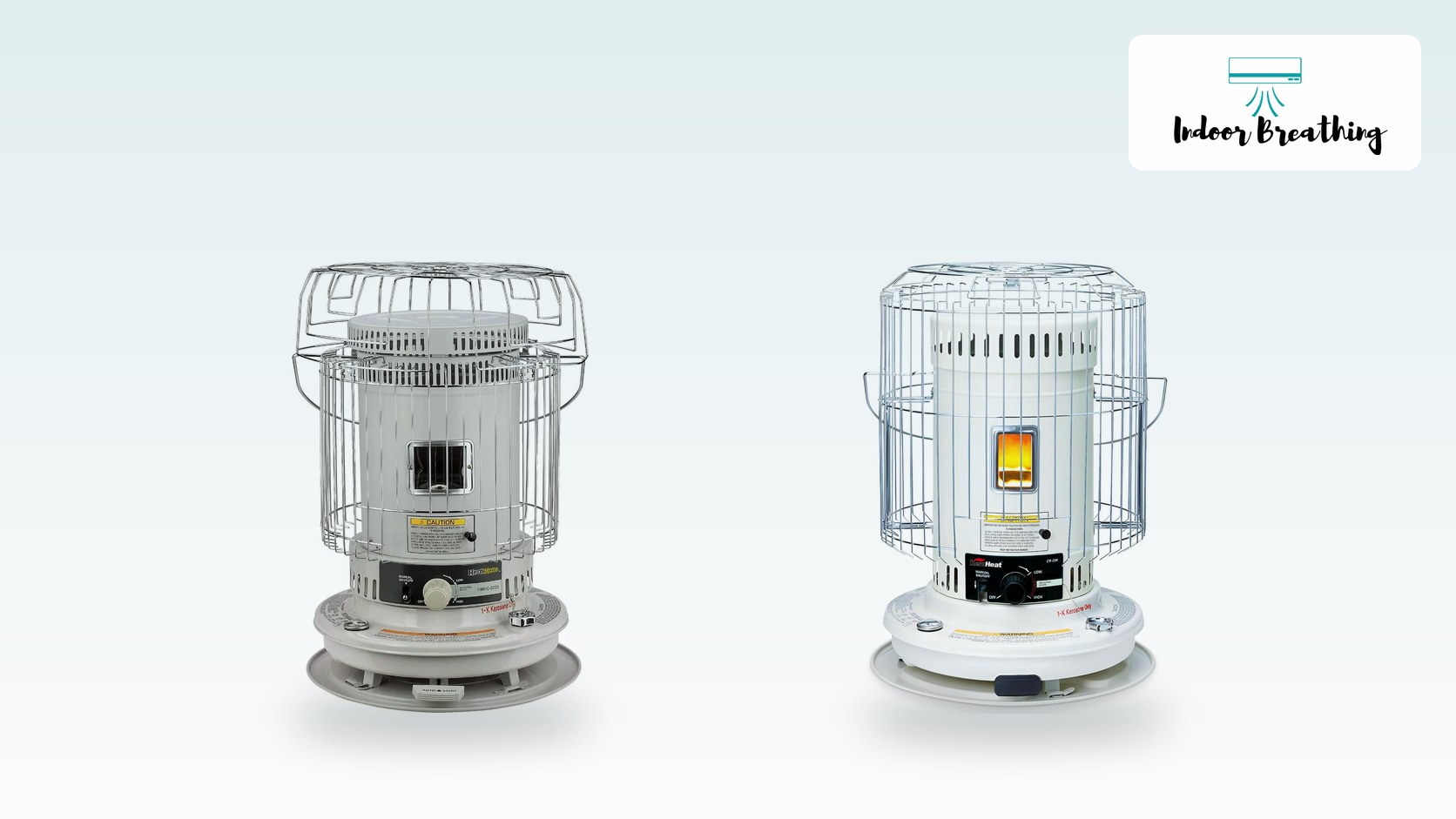
Four kerosene heaters below were checked on Amazon on October 10, 2026. Four older picks (the Alpaca TS-77 and three Dyna-Glo models) are gone or now point to different products, so the list is shorter and the title was updated. Safety points follow U.S. Consumer Product Safety Commission style guidance. Local rules vary, so check yours.
Kerosene heaters have been around for decades and still sell every time a winter storm knocks out the power. They are strong and cheap to buy, but they burn fuel in your living space, and that makes the rules different from electric heaters. Here is what to know and which four heaters to look at.
Table of Contents
How a Kerosene Heater Works
A wick or burner draws liquid kerosene up and burns it. A convection model pushes warm air out through a chimney-like column. A radiant model throws heat from a reflector. A forced-air model uses a fan and a burner to blow hot air. All of them use room air and put exhaust into the room. That is why fresh air and a carbon monoxide alarm are not optional.
Looking ahead, kerosene heaters are a backup, not a daily heater. Power outages are getting longer in many regions, and that keeps demand up. The catch is that rules are tightening too. Some cities, states and apartment leases already ban or limit indoor kerosene use, and insurers can ask about it after a fire.
Safety Rules
- Use only K-1 kerosene. It is clear. Gasoline or other fuels can cause a fire or explosion. Red-dyed fuel is not for indoor heaters.
- Refuel outdoors, when the heater is off and cool, and wipe up spills.
- Ventilate. Open a window an inch or two. A sealed room can run low on oxygen.
- Alarm. Put a working carbon monoxide alarm in the room and near the bedrooms.
- Clearance. Keep it on a flat, hard floor, at least 3 feet from curtains, furniture and bedding.
- Never run it while sleeping. Turn it off before bed.
Smells matter too. A strong kerosene odor can mean a dirty wick, old fuel or a poor flame, and it can be a sign of bad indoor air. See our notes on heating smells that mean your home is making you sick.
4 Kerosene Heaters on Amazon
Prices and ratings were checked on Amazon on October 10, 2026.
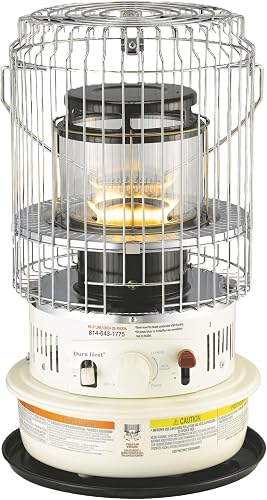
Price on Amazon: $108.99 | 4.2 stars from 68 ratings (checked October 10, 2026)
The Dura Heat DH1051 is a 10,500 BTU indoor kerosene heater. The rating comes from only 68 ratings, so it has less history than the Sengoku models.
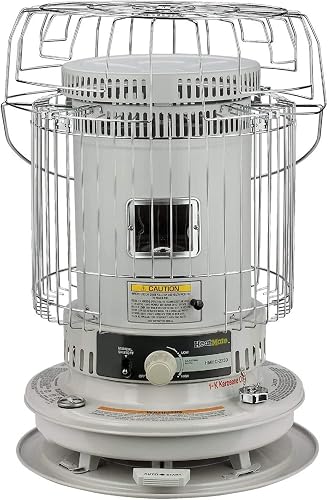
Price on Amazon: $199.99 | 4.4 stars from 869 ratings (checked October 10, 2026)
The Sengoku HeatMate is a 23,000 BTU cordless unit for homes, garages and outages, per the listing. It needs no electricity, which is the main reason people buy kerosene.
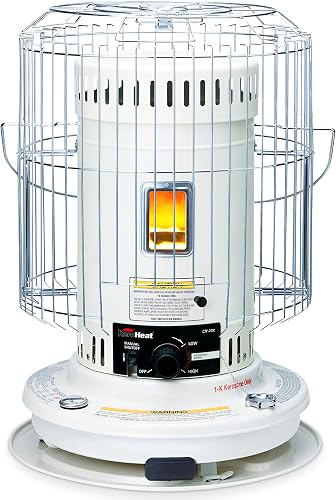
Price on Amazon: $239.95 | 4.4 stars from 1,026 ratings (checked October 10, 2026)
The Sengoku KeroHeat CV-23K is a 23,500 BTU portable convection heater with more than 1,000 ratings at 4.4 stars. It is the best-documented choice here.
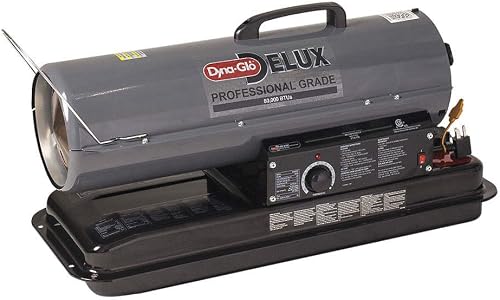
Price on Amazon: $214.99 | 4.6 stars from 1,188 ratings (checked October 10, 2026)
The Dyna-Glo KFA80DGD is an 80,000 BTU kerosene forced-air heater with a 4.6 rating from over 1,100 ratings. It is built for shops, garages and job sites with plenty of fresh air, not for living rooms or bedrooms.
The risk to watch is bad fuel and a bad room. Old kerosene, gasoline by mistake or a sealed bedroom can turn a handy heater into a carbon monoxide source, and a smoky flame can leave soot on walls and lungs. Expect more safety notices, and plan for a carbon monoxide alarm, fresh air from a cracked window and K-1 fuel only.
Sizing and Fuel Use
A common rule is about 20 BTU per square foot in a cold climate. A 23,000 BTU heater suits roughly 1,000 square feet of well-insulated space, and a 10,500 BTU heater suits around 500. Kerosene holds about 135,000 BTU per gallon, so a 23,000 BTU heater at full burn uses about a sixth of a gallon per hour. Check the fuel price near you to estimate the cost of an evening.
Care and Storage
- Trim or replace the wick as the manual says. A worn wick gives a smoky, smelly flame.
- Use fresh fuel. Kerosene older than a year can gum up the wick.
- Store fuel in a blue, approved container, away from the house and heat.
- Test the heater and the alarm before the first cold night, not during it.
Are Kerosene Heaters Legal?
Not everywhere. Some states and cities ban or limit unvented indoor kerosene heaters, and some apartment leases and insurers do the same. Check with the local fire department before you buy. For a safer daily heater, look at the most efficient space heaters, or read about propane heaters.
FAQ
Is a kerosene heater safe indoors?
It can be, with K-1 fuel, fresh air, clearance and a carbon monoxide alarm. It has more risk than an electric heater, so many people keep it for outages.
Can you use regular kerosene?
Only clear K-1 grade. Do not use red-dyed fuel, gasoline or diesel in an indoor heater.
Why does the heater smell strong?
Usually old fuel, a dirty wick or a spill. Turn it off, air the room and clean or replace the wick.
Does a kerosene heater need ventilation?
Yes. Crack a window and keep a carbon monoxide alarm running. A home test also helps, see air quality testing.
Final Word
A kerosene heater is great outage insurance and a poor everyday heater. Choose by room size, buy K-1 fuel, keep the alarm on and check local rules.
What happens next: more homes will keep a kerosene heater as outage insurance, while everyday heat shifts to electric and heat pumps. If you buy one, treat it like a tool you store and test, not an appliance you leave running.
Related Guides
Keep going with propane heaters, radiant heaters, most efficient space heaters, heating smells that mean your home is making you sick and air quality testing.