

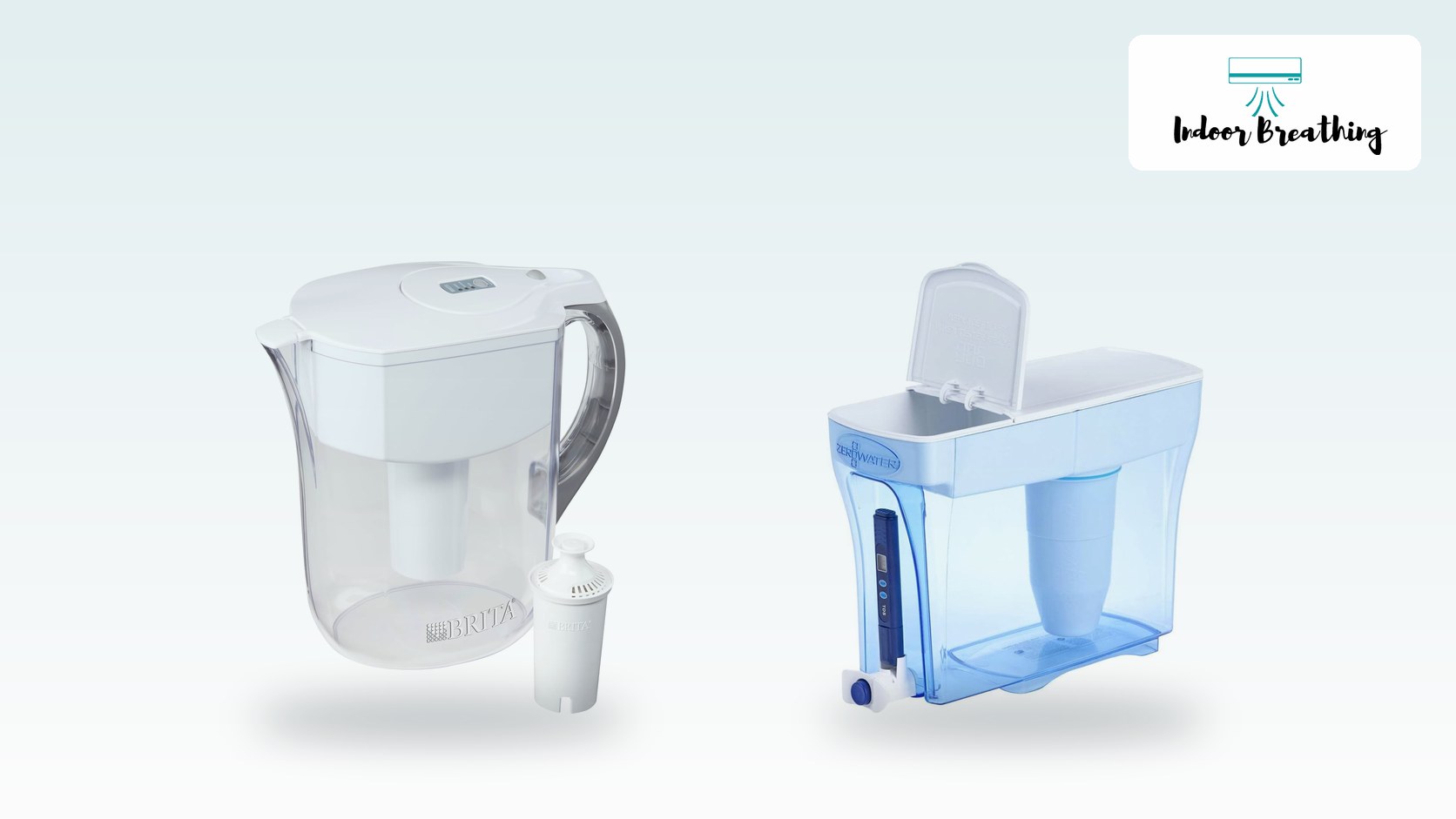
Five pitchers below were checked on Amazon on October 10, 2026. The seven dealer pitchers are sold on maker sites, so their specs are the makers’ claims and were not re-priced. Claims such as 99.99 percent or viruses and bacteria removal from older versions of this guide were removed, because a pitcher is not a disinfectant unless it is certified as one.
A pitcher needs no tools and fits in the fridge. That is why it is the most popular filter in the kitchen. It is also the one with the most confusing claims. This guide explains what a pitcher can do, how to read the label and which twelve to look at.
Table of Contents
What a Pitcher Filter Does
Most pitchers use activated carbon and an ion-exchange resin. The carbon catches chlorine, some chemicals and bad taste. The resin can pull out metals such as lead and copper. Gravity moves the water through, so the flow is slow, and finer filters are slower.
- Taste and smell. Almost every pitcher improves chlorine taste.
- Lead. Only pitchers certified to NSF/ANSI 53 for lead should be trusted here.
- PFAS and fluoride. A few pitchers claim reductions. Look for named test results, not general claims.
- Dissolved solids. ZeroWater is built to cut them. Most carbon pitchers do not.
- Bacteria and viruses. Not covered unless a product is certified as a purifier. Do not use a pitcher on water that is not safe to drink.
Looking ahead, pitchers are changing from simple carbon jugs into tested, certified filters. Lead, PFAS and fluoride claims are now common on the box, and makers are publishing lab results to back them up. The catch is that the stronger the filter, the slower the flow and the shorter the filter life, so a pitcher that does a lot also costs more to run.
How to Read the Label
- Find the standard. NSF/ANSI 42 is taste. NSF/ANSI 53 is health, such as lead. NSF/ANSI 401 covers emerging contaminants. NSF/ANSI 473 covers PFOA and PFOS.
- Read the list. A certificate names each contaminant and the amount cut. A general claim does not count.
- Check filter life. It is given in gallons, usually 40 to 150.
- Check the price of the next filter. It is the real cost of the pitcher.
5 Pitchers on Amazon
Prices and ratings were checked on Amazon on October 10, 2026.
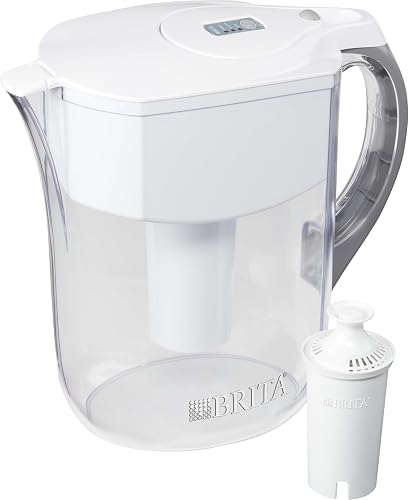
Price on Amazon: $29.99 | 4.7 stars from 7,753 ratings (checked October 10, 2026)
The Brita Large 10 Cup is the standard pitcher. It improves taste and cuts chlorine. The standard Brita filter is not made for lead, and Brita sells a separate Elite filter for that.
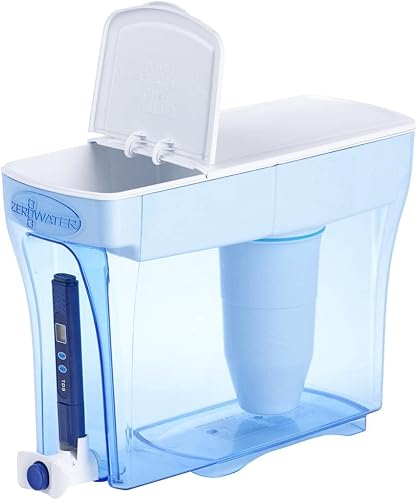
Price on Amazon: $40.99 | 4.4 stars from 1,011 ratings (checked October 10, 2026)
The ZeroWater 30 Cup uses a multi-stage filter with ion exchange to cut total dissolved solids, and ships with a TDS meter so you can see when it is time to change the filter. Filters cost more.
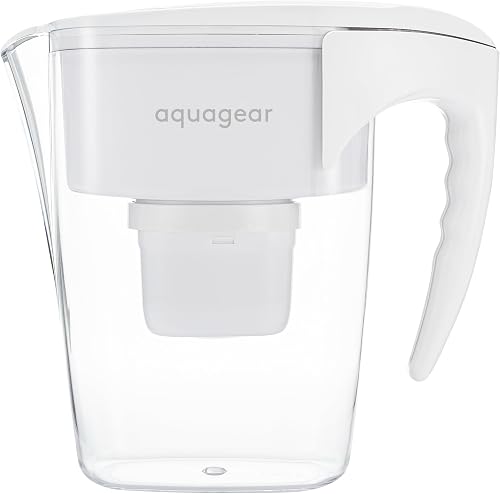
Price on Amazon: $69.95 | 4.3 stars from 5,595 ratings (checked October 10, 2026)
The Aquagear pitcher lists lead, chloramine and PFOA/PFOS in its title. Read the maker’s test data to see how much it cuts.
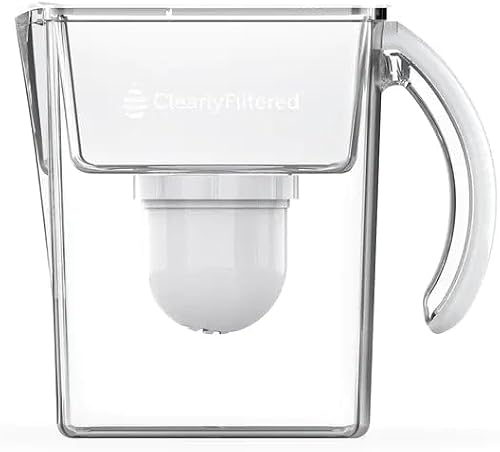
Price on Amazon: $109.99 | 4.2 stars from 1,594 ratings (checked October 10, 2026)
The Clearly Filtered pitcher says it was tested to NSF standards 42, 53, 401 and 473 and lists fluoride, lead and PFAS among targets. It costs more up front.
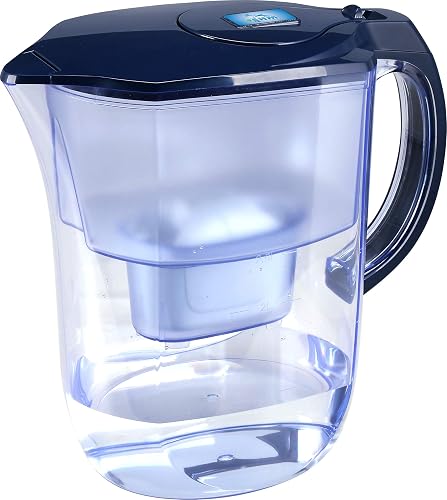
Price on Amazon: $34.99 | 4.5 stars from 6,723 ratings (checked October 10, 2026)
The Ehm Alkaline pitcher adds minerals and raises the pH. It is more for taste than for health. See our alkaline water pitcher guide.
The risk to watch is the filter that is past due. A pitcher with no reminder, in a house where nobody counts gallons, keeps pouring while the cartridge is full. A used-up cartridge stops catching what it was meant to catch, and trapped material can slip back out. Expect more digital timers and app reminders. Pick one you will actually follow.
7 Pitchers From Makers and Dealers
The details below come from maker pages. Confirm the certificate, the filter life and the price before you buy.
1. Epic Nano Water Filter Pitcher
A pitcher from Epic, a brand that publishes lab data. The older page claimed 99.999 percent removal and virus removal, which no longer stands. Check the maker page for the tested contaminants and the percent cut. Its filter lasts about 150 gallons, per the maker, with a timer in the lid.
- Filter timer in the lid
- About 150 gallons per filter, per the maker
- Slow flow
2. ProOne Water Filter Pitcher
A ceramic-based pitcher with a filter chamber and a water chamber, per the older page. Capacity is about 0.92 gallons in total.
- Ceramic element
- BPA-free
- Check the test list
3. Waterdrop Chubby Water Filter Pitcher
A pitcher with a multi-stage filter that the maker says is tested to NSF standards. Check the certificate for the exact list.
- Multi-stage filter
- Easy fill lid
- Check the certificate
For other tested options, see our guide to countertop water filters.
4. Crystal Quest Water Pitcher Filter System
A large pitcher from Crystal Quest. The older page claimed a filter life near 2,000 gallons, which is far above other pitchers, so confirm the number with the maker before you rely on it.
- Large pitcher
- Long filter life claim
- Confirm the number
5. Frizzlife FP40 Water Filter Pitcher
A three-in-one filter that the maker says cuts chlorine, fluoride and lead and keeps minerals. Check the certificate.
- Three-in-one filter
- Keeps minerals, per the maker
- Check the certificate
6. AquaBliss 10-Cup Water Filter Pitcher
A low-price pitcher with one filter. The older page said it does not remove lead, so it is for taste, not for lead.
- Single filter
- Not for lead
- Low price
7. Invigorated Water pH RESTORE Alkaline Pitcher
An alkaline pitcher with zeolite, ion-exchange resin, carbon and mineral stones, per the older page. It raises pH and changes the taste. Health claims for alkaline water are weak.
- Raises pH
- Mineral stage
- Taste choice
Pitcher Pros and Cons
Pros: low cost; no install; portable; good for taste.
Cons: slow; small capacity; filters add up; limited by certificate; need to be kept clean and cold.
Care Tips
- Rinse and soak a new filter as the maker says.
- Wash the pitcher by hand every week or two.
- Change the filter on time, even if the water still tastes fine.
- Keep it in the fridge, not on a sunny counter.
FAQ
Do pitchers remove lead?
Only if they are certified to NSF/ANSI 53 for lead. See our lead water filter guide.
Do pitchers make water safe from bacteria?
No. A pitcher is not a disinfectant unless it says so on a certificate.
How often do you change the filter?
Every 40 to 150 gallons, or every 2 to 6 months, depending on the model.
Final Word
A pitcher is a good first step. Test your water, match the certificate to your concern and count the filter cost. For more choices, see our water filters guide.
What happens next: shoppers will compare the yearly filter bill and the certificate before the price of the pitcher. A cheap pitcher that costs $100 a year in filters is not cheap. Test your water or read your utility report, then choose the pitcher that is certified for what is in it.
Related Guides
Keep going with alkaline water pitchers, countertop water filters, lead water filters and water filters.