

One system below was checked on Amazon on October 10, 2026. The seven others are sold on maker or dealer sites, so details are the makers’ claims and prices were not re-checked. The KFLOW listing from older versions of this guide is gone and was removed. Check each certificate for the exact contaminants a unit is tested to reduce.
Countertop RO is the easy way to get reverse osmosis water. There is nothing to install, so it works for renters, dorms and small kitchens. This guide covers how these units work, what to look for and which ones to consider.
Table of Contents
How a Countertop RO System Works
You pour tap water into a tank. A pump pushes it through pre-filters, an RO membrane and a final carbon filter. Clean water goes to a second tank, and the rejected water goes to a waste tank or a drain tray. A few models connect to the sink faucet, and some heat the water.
Pros and Cons
Pros: no installation; portable; strong reduction of dissolved solids; no drain line in most models.
Cons: uses counter space; needs power; you refill and empty tanks by hand; slower than under-sink models; the water can taste flat without remineralization; filters add up.
Looking ahead, countertop reverse osmosis is the fastest-growing way to get RO water without a plumber. Renters and apartment dwellers drive demand, and makers keep adding tankless pumps, touch screens and remineralizing stages. The catch is that a unit on the counter still needs filter changes, a place near an outlet and a habit of cleaning the tank.
7 Countertop RO Systems From Makers and Dealers
The details below come from maker pages. Certificates, filter prices and tank sizes change, so confirm on the product page before you buy.
1. AquaTru Countertop RO System
A countertop RO unit with no plumbing. The maker lists testing to NSF/ANSI standards against a long list of contaminants. Check the product page for the exact standards and the current contaminant list.
- No installation
- Countertop tank
- Filters need regular changes
2. Frizzlife WA99 Countertop RO
A countertop RO unit with a modern look and a touch display, per the maker. Check the certificate for the contaminants it is tested against.
- Modern design
- No plumbing
- Filters need regular changes
3. Waterdrop Countertop RO System
A countertop RO unit from Waterdrop. The maker lists a quick fill and a compact body. Check the certificate on the product page.
- Compact
- No plumbing
- Check the certificate
The risk to watch is neglect. A tank that is never cleaned can grow slime, and a filter used past its life lets contaminants through. Expect shoppers to buy on looks and a big contaminant list, and to skip the upkeep. Check the certificate for what the unit is tested to remove, and put filter dates on the calendar.
4. RKIN Zip Countertop RO Filter
A countertop RO unit sold through a water filter dealer. Check the filter life and the certificate before you buy.
- Countertop
- No plumbing
- Dealer-sold
5. NU Aqua Efficiency Series Tankless 600GPD RO
A tankless RO system listed with a 2:1 pure-to-waste ratio, per the maker. It is an under-sink style rather than a true countertop unit, so check the install needs.
- Tankless
- 2:1 pure to waste per the maker
- Needs a drain
6. Crystal Quest Portable RO System
A portable RO unit for people who want RO water on the counter. Confirm the stages and certificate for your version.
- Portable
- No plumbing
- Confirm the certificate
7. Waterdrop G3 Tankless RO
A tankless RO unit made to go under the sink. The maker lists NSF/ANSI 58 certification for TDS reduction. It is not a counter unit, so plan for a drain and power.
- Tankless
- Under-sink install
- Needs power
1 System You Can Price on Amazon
Price and rating were checked on Amazon on October 10, 2026.
| Model | Best for | Price | Rating |
|---|---|---|---|
| APEC RO-CTOP-C Countertop RO | Countertop RO, no installation | $289.99 | 4.4 (191) |
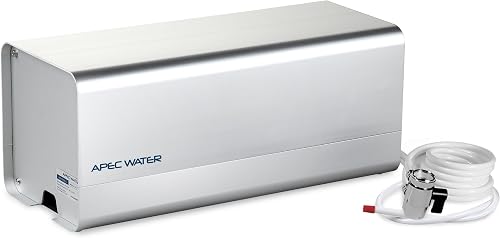
Price on Amazon: $289.99 | 4.4 stars from 191 ratings (checked October 10, 2026)
The APEC RO-CTOP-C is a portable countertop RO unit that needs no installation. It has a lower rating count, so read recent reviews on the listing.
What to Consider Before Buying
- Know your water. A utility report or lab test tells you what you need. See our RO systems guide.
- Read the certificate. Look for NSF/ANSI 58 and the contaminant list for your concern.
- Check the footprint. Measure the counter and the space above, for filling.
- Ask about waste water. Countertop units reject water into a tank you empty.
- Check taste. A mineral stage helps. A plain RO taste is flat.
- Count the filter cost. Add the yearly cost to the sticker price.
Upkeep
Empty and rinse the tanks regularly, wipe the unit and change filters on the maker’s schedule. Use the unit only with cold, potable water. A rinse of a new filter is usually needed before first use.
FAQ
Do countertop RO systems remove fluoride?
Most RO membranes reduce fluoride. Check the certificate for the model.
Do you need a drain?
Most true countertop units do not. They hold the waste water in a tank.
Is countertop RO better than a pitcher?
It removes more dissolved solids, but it costs more and needs more upkeep. See countertop water filters for other options.
Final Word
Countertop RO gives strong filtering with no plumbing. Match the certificate to your water and plan for upkeep. For another no-install option, read about water distillers.
What happens next: more countertop units will come with instant-heat taps, app alerts and mineral add-back, and prices at the low end will keep falling. Pick the unit that fits your counter and your water report, not the longest feature list.
Related Guides
Keep going with reverse osmosis systems, AquaTru countertop review, countertop water filters and water distillers.