

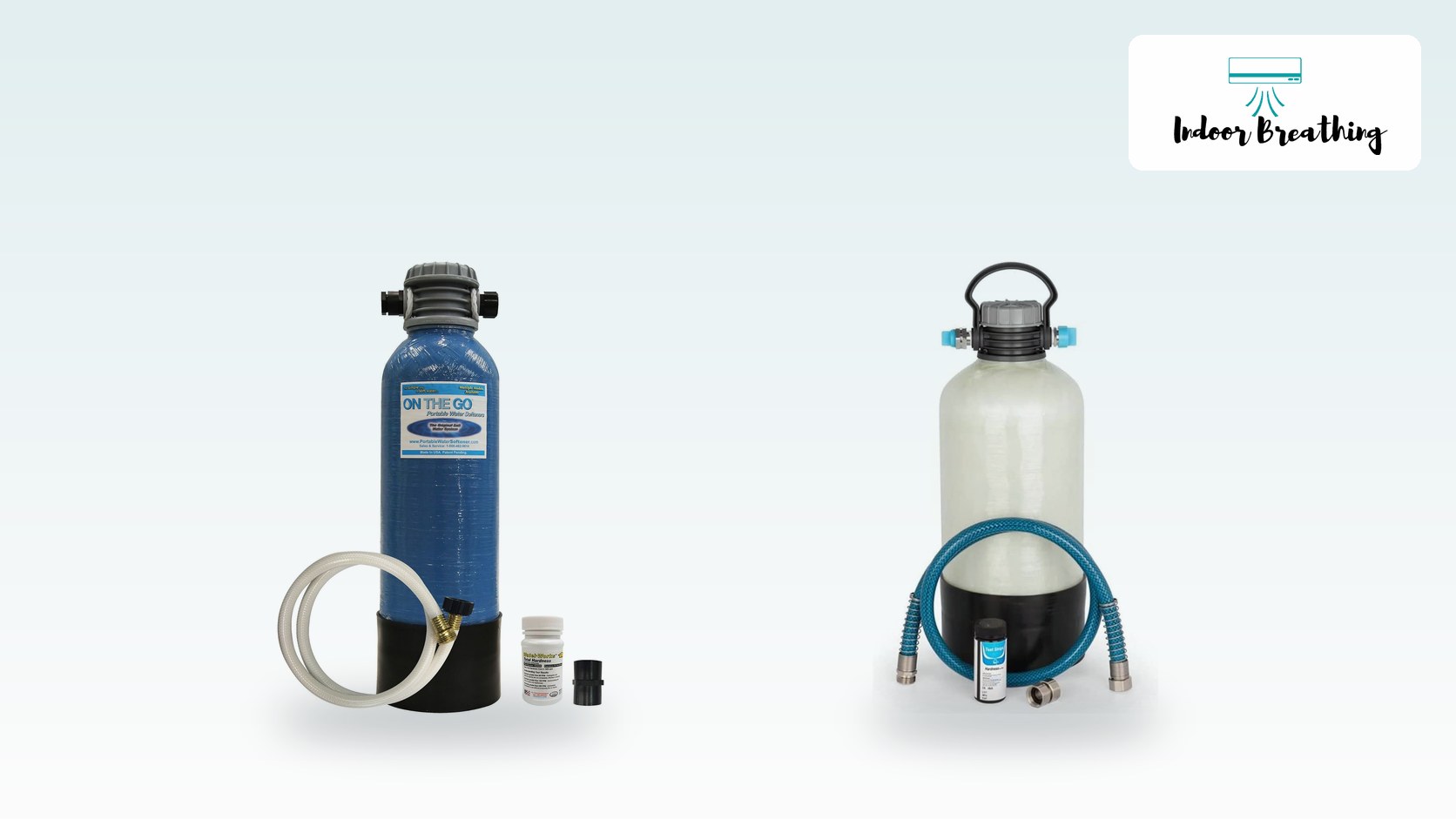
Five softeners below were checked on Amazon on October 10, 2026. One dealer softener is sold on the maker site, so its details are the maker’s claims and the price was not re-checked. Capacity numbers are in grains and are the maker’s ratings. Real capacity depends on your hardness and salt dose.
Hard water leaves white scale in the water heater, clogs shower heads and spots the windows. In an RV, that scale can shorten the life of the heater and the faucets. A portable softener hooks up between the spigot and the rig, and it is a good fit for long stays. Here is how it works, how to size one and which six to look at.
Table of Contents
How an RV Softener Works
Water flows through a tank of resin beads. The beads hold sodium ions and swap them for calcium and magnesium, which cause hardness. When the beads are full, you recharge them with salt, rinse and go again. Portable units have no electronic head. You regenerate by hand with a bucket or the supplied hose.
How to Size It
- Test hardness. Use strips or a kit. Many include strips. Check water hardness by state for a rough idea.
- Divide the capacity by hardness. A 16,000 grain unit at 16 grains per gallon (gpg) softens about 1,000 gallons, in theory. Real figures are lower, often 60 to 80 percent of that.
- Estimate your use. Two people in an RV use about 20 to 40 gallons a day. At 30 gallons a day, 800 gallons lasts about 25 days.
For a house, use our guide on how to size a water softener.
Looking ahead, more people are living and working from RVs, and more campgrounds sit on hard well water. Portable softeners are getting lighter, with better valves and easier salt refills. The catch is that a small softener is a small tank. A strong hard-water site can use up a 10,000 grain unit in a few days, and many campgrounds now ban dumping the salty rinse water on the ground.
5 Softeners on Amazon
Prices and ratings were checked on Amazon on October 10, 2026.
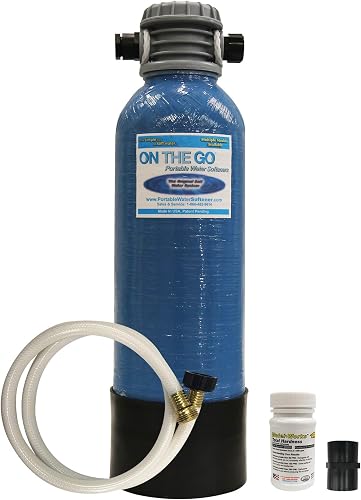
Price on Amazon: $175.00 | 4.7 stars from 592 ratings (checked October 10, 2026)
The On The Go OTG3NTP3M has a 4.7 rating from close to 600 ratings on Amazon. Check the listing for its grain capacity.
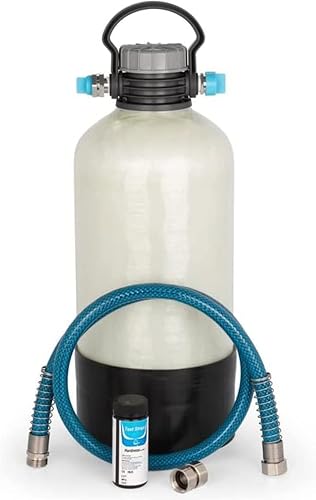
Price on Amazon: $165.79 | 4.5 stars from 222 ratings (checked October 10, 2026)
The Camco TastePURE is a compact 4 GPM kit with a carry handle, a 4-foot hose and 50 test strips, per the listing.
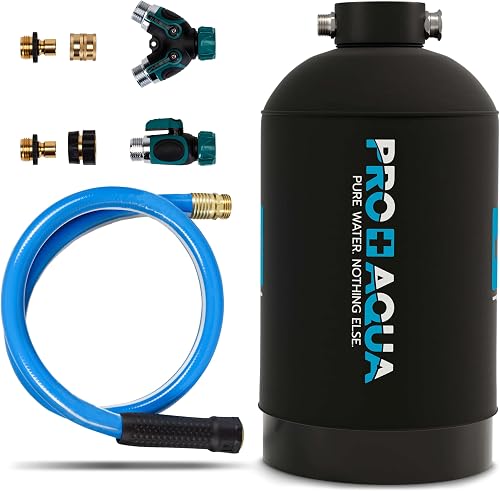
Price on Amazon: $279.95 | 4.4 stars from 1,261 ratings (checked October 10, 2026)
The PRO+AQUA 16,000 grain unit has a large rating count and is sold for RVs, trailers and boats.
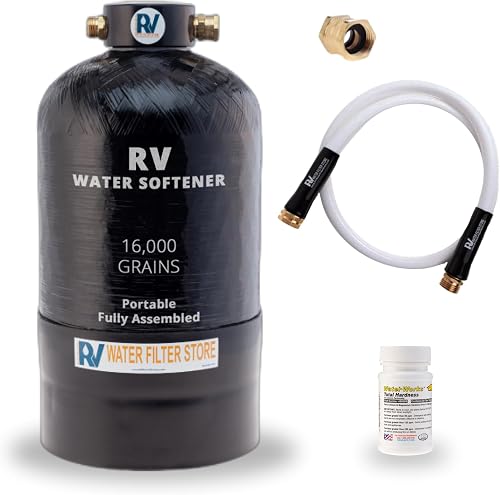
Price on Amazon: $299.95 | 4.4 stars from 230 ratings (checked October 10, 2026)
The RV Water Filter Store softener is a 16,000 grain unit. The listing says it comes with a custom hose and 3/4 inch fittings.
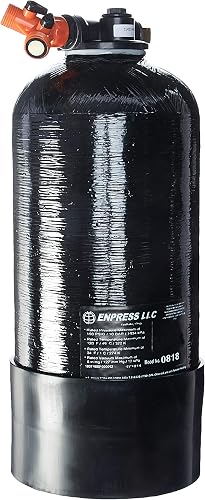
Price on Amazon: $316.99 | 4.3 stars from 330 ratings (checked October 10, 2026)
The Watts RV PRO-1000 is a 10,000 grain unit from a known brand. It is a smaller size, so it suits shorter stays or softer water.
The risk to watch is salt and scale at the same time. Skipping the softener lets scale build in the water heater and fixtures. Pouring brine on the site can break campground rules and harm plants. Expect more parks to post rules on salt use, and expect more RV owners to carry a hardness test strip and a plan for the brine. Check before you regenerate.
1 More Softener From the Maker
1. SoftPro Portable RV Water Softener
A portable softener from SoftPro, a brand known for home softeners. Check the product page for the grain capacity, the flow rate and the size.
- Known softener brand
- Portable
- Check the capacity
Things to Know Before You Buy
- Flow rate. Most portable units run 3 to 5 gallons a minute. That is enough for most RVs.
- Pressure. Add a pressure regulator to protect the RV plumbing.
- Pre-filter. A sediment filter ahead of the softener keeps the resin clean.
- Brine. Many campgrounds forbid dumping brine on the ground. Ask first, or regenerate at home.
- Freezing. Resin and fittings can crack in a freeze. Drain and store indoors.
- Sodium. Soft water has a bit more sodium. Use a separate drinking water filter if you prefer.
Do You Need One?
If your water tests above 7 gpg, and you stay on one site for weeks, it can pay off. For short stays, a good portable water filter may be all you need, and it will not cut hardness. For a house, read about water softeners.
FAQ
How often do you recharge a portable softener?
When capacity is used up. A hardness test at the outlet tells you.
Does a softener remove chlorine?
No. Add a carbon filter for taste.
Is soft water bad for an RV water heater?
No. It reduces scale. Check the anode rod and the manual.
Final Word
Test your water, do the math and respect campground rules on brine. A portable softener is a good tool for long stays on hard water.
What happens next: a lighter, higher-capacity softener and a simple way to track gallons used will win. For short trips a good filter may be enough. For long stays on hard water, a portable softener pays off in a few seasons.
Related Guides
Keep going with water softeners, water hardness by state, portable water filters and how to size a water softener.