

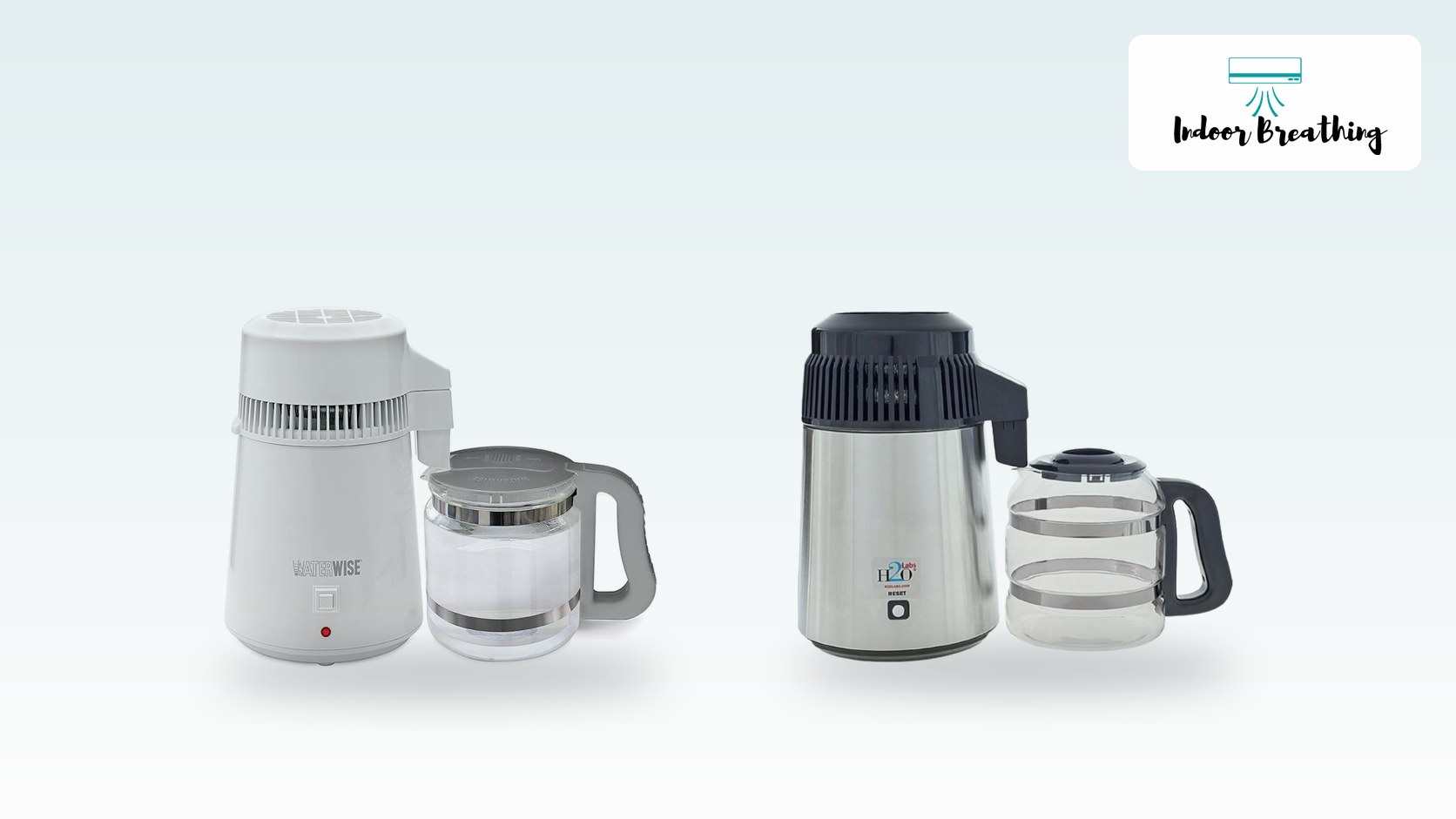
Four distillers below were checked on Amazon on October 10, 2026. The CO-Z models are sold on the CO-Z site, so their specs are the maker’s claims and prices were not re-checked. The ROVSUN and one VEVOR listing from older versions of this guide are gone, and the old Waterwise 3200 link now leads to a different product, so those were removed.
A distiller copies the water cycle on your counter. Water boils, the steam rises and cools in a coil, and drops of clean water fall into a jug. It is slow and simple, and it works. Here is how it compares, what it costs and which units to look at.
Table of Contents
How a Water Distiller Works
- Boil. Tap water heats in a chamber until it makes steam.
- Condense. The steam passes through a cooling coil or fins and turns back to liquid.
- Collect. Clean water drips into a jug. Minerals and metals stay behind as a crust in the boiling chamber.
- Filter. Many units pass the water through an activated carbon filter at the end, to catch gases that rode up with the steam.
What Distilled Water Removes
- Minerals and hardness, including calcium and magnesium.
- Metals such as lead, arsenic and mercury.
- Fluoride and nitrates.
- Most bacteria and viruses, since they do not travel with the steam.
It is not perfect. Chemicals with a boiling point lower than water, such as some solvents and pesticides, can evaporate with the steam. A good carbon post-filter catches many of them, which is why it matters. If your water has a chemical problem, ask a lab what is in it before you choose.
Looking ahead, distillers are making a quiet comeback. Interest in PFAS, fluoride and microplastics is pushing people to look at the one method that boils water clean of nearly everything that does not evaporate. More makers now add carbon post-filters and stainless steel parts. The catch is that a distiller is slow, hot and uses a fair amount of power for each gallon.
What It Costs to Run
A typical 750 watt unit that makes a gallon in about five hours uses around 3.75 kWh. At 17 cents per kWh, that is about 64 cents a gallon. Add the carbon filter and the water you start with, and a gallon costs about 70 to 80 cents. Bottled distilled water is often $1 to $2 a gallon, so a home unit pays off if you use several gallons a week.
4 Distillers on Amazon
Prices and ratings were checked on Amazon on October 10, 2026.
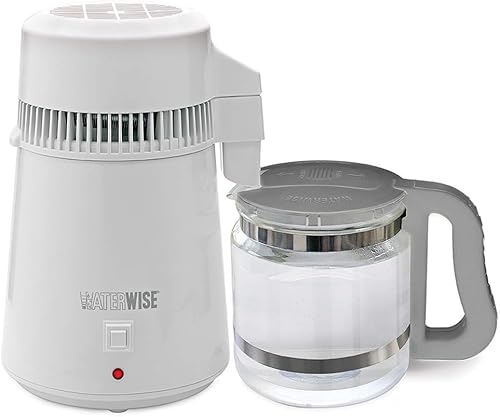
Price on Amazon: $469.00 | 4.3 stars from 270 ratings (checked October 10, 2026)
The Waterwise 4000 is a long-running countertop distiller. It has a lower rating count than the budget units, and it costs more.
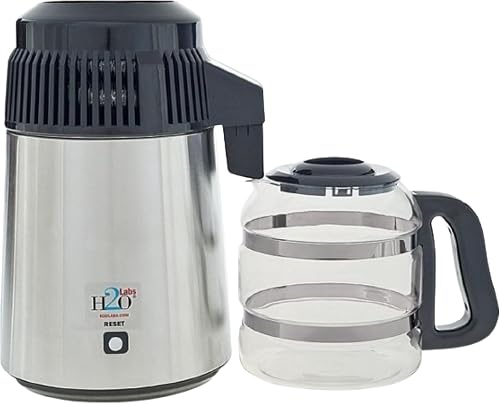
Price on Amazon: $329.00 | 4.5 stars from 1,012 ratings (checked October 10, 2026)
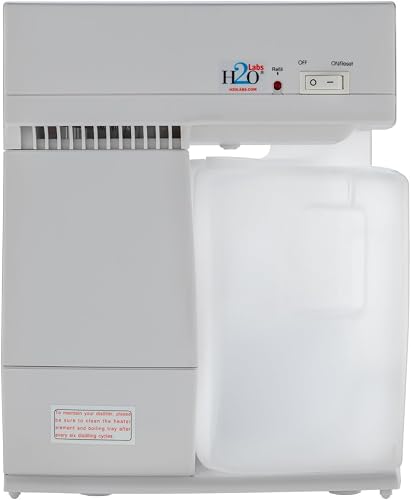
The H2oLabs distiller uses a stainless steel body and has just over a thousand ratings.
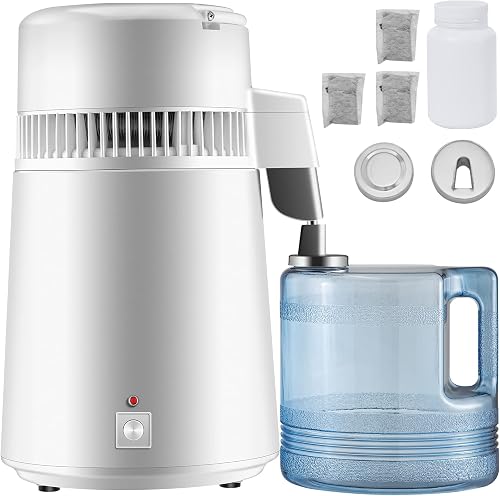
Price on Amazon: $66.90 | 4.2 stars from 4,308 ratings (checked October 10, 2026)
The Vevor 750W is the budget pick, with a large rating count on Amazon. Budget units often have a plastic collection jug and a thin carbon filter, so read the listing.
Price on Amazon: $229.00 | 4.1 stars from 389 ratings (checked October 10, 2026)
This lightweight countertop distiller is listed under a long marketing title. Check the listing to confirm the brand and model before you buy.
The risk to watch is the wrong expectation. Distilling is not a cure-all, because some chemicals evaporate with the steam and can end up in the finished water unless a carbon filter catches them. Some buyers also run a distiller for hours in a closed kitchen, which adds heat and moisture. Expect more questions about energy cost and mineral loss. Plan for a vented spot, a regular descale and a way to add taste back.
2 Distillers From the Maker
CO-Z sells its units on its own site. The details below come from the maker and the older version of this guide.
1. CO-Z Brushed Stainless Steel Water Distiller
A countertop distiller with a stainless steel body, listed by the maker as a top pick on the older page. Confirm the capacity, the wattage and the type of jug on the product page.
- Stainless steel body
- Countertop
- Check the jug material
2. CO-Z Stainless Steel Water Distiller
A second CO-Z model with a similar design. Compare the two on the maker page for capacity, jug and filter.
- Stainless steel
- Countertop
- Compare models
Distiller or Reverse Osmosis?
| Feature | Distiller | Reverse osmosis |
|---|---|---|
| Speed | About a gallon in 4 to 6 hours | Fast, on demand |
| Waste water | None, but a mineral crust to clean | Drain water, often 1 to 3 gallons per gallon |
| Power | 600 to 750 watts | Little to none |
| Install | None | Under sink or countertop |
| Upkeep | Descale, change carbon filter | Change filters and membrane |
See our reverse osmosis guide for the other side of this choice.
What to Use Distilled Water For
- CPAP machines and humidifiers. It prevents mineral build-up. It is also the best fix for the white dust some humidifiers leave. See why humidifiers leave white dust.
- Irons and steamers. No scale.
- Drinking and cooking. Safe, with a flat taste. Add a pinch of mineral drops or salt-free minerals if you want taste back.
- Plants and aquariums. Not for fish, and plants may need added nutrients.
Care Tips
- Descale the boiling chamber every few weeks with white vinegar or citric acid, as the manual says.
- Change the carbon filter on schedule.
- Store the water in a clean glass or stainless container with a lid.
- Run it in a ventilated spot, away from kids and pets.
FAQ
Is distilled water safe to drink?
Yes. It lacks minerals, but most minerals come from food.
Does a distiller remove fluoride?
Yes, it removes it well. See fluoride water filters for other options.
Do distillers need a hookup?
No. Fill the tank, plug it in and wait.
Final Word
A distiller is a simple, no-waste way to get very clean water for drinking, CPAP and humidifiers. Plan on the time and the power bill, add a carbon filter and descale it. For a wider look, read our water filters guide.
What happens next: shoppers will choose between distillers and reverse osmosis on cost per gallon and waste. A distiller wastes no water down the drain and works with no pressure, but it uses power. If you only need a few gallons a week for drinking, a CPAP or a humidifier, it is a sound pick.
Related Guides
Keep going with why humidifiers leave white dust, reverse osmosis systems, fluoride water filters and water filters.