
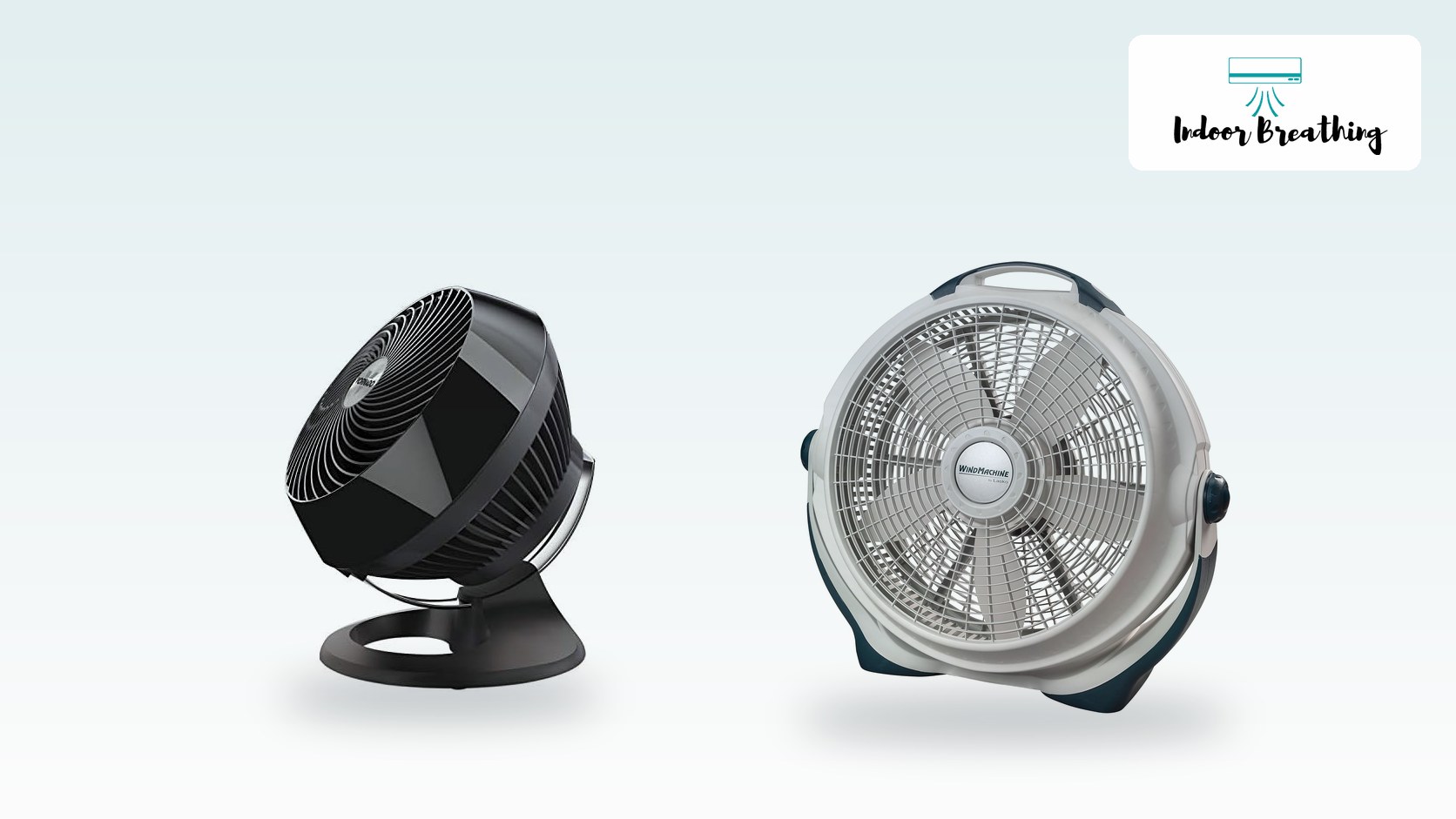
To choose fans that cool like air conditioners, focus on two numbers first: airflow volume (CFM) and how far the fan throws air. Then match the type to your room — whole-room air circulators like the Vornado 660 for even mixing, high-velocity floor fans for raw power, quiet towers for bedrooms, and evaporative coolers if your climate is dry. Fans move air; they don’t chill it.
This guide is based on verified airflow specs, manufacturer data, and buyer feedback, not lab or field testing. Prices and ratings were last checked in August 2026 and can change, so confirm the live price on Amazon before you buy.
Fans get dismissed as the weak option next to air conditioning, and that is only half right. A powerful, well-placed fan closes a surprising amount of the comfort gap for a fraction of the cost and none of the installation. The 12 models below were chosen by comparing published airflow, noise ratings, throw distance, and thousands of owner reviews.
Table of Contents
Why a Fan Can Feel Like Air Conditioning
An air conditioner removes heat from the air and dumps it outside. A fan does neither — it moves air across your skin, and moving air pulls heat and moisture away from your body far faster than still air does. That is the wind-chill effect working in your favor: on an 80°F day, a 4 mph breeze across your skin feels closer to 74°F. The room is still 80, but you are not.
There is a second mechanism that matters in larger fans: circulation. A room is rarely one temperature — heat stratifies, with warm air pooling near the ceiling and cooler air at the floor. A true air circulator keeps the whole volume of air moving, which breaks up those layers and makes the space feel uniform, unlike a cheap fan that just pushes a narrow column of air at whatever is in front of it.
The honest limit: if the air itself is hot and humid, a fan blowing that air on you does very little, and above roughly 95°F it can make you feel worse. Fans also do nothing about humidity. If you have wondered whether other appliances help, our explainer on whether air purifiers cool the room walks through the same physics — any appliance with a fan moves air, but none lower the temperature the way a compressor does.
Airflow and Throw Distance: The Numbers That Matter
The spec that tells you the most is CFM (cubic feet per minute) — the volume of air the fan moves. A small desk fan pushes 150 to 300 CFM; a serious room fan moves 1,000 to 2,000 CFM; 20-inch high-velocity fans exceed that. More CFM means the fan stirs a bigger room and is still felt from across it.
Throw distance is the other half. Vornado rates its 660 to move air up to 100 feet, so a single unit conditions a whole room rather than one seat; Dreo’s Nomad One reaches about 25 feet, and Shark’s FlexBreeze claims more than 70 feet in boost mode. If you want to cool a room, not a person, throw distance is the number to chase. Be wary of a fan that quotes a high face velocity but a tiny CFM — a narrow jet that feels strong up close and does nothing 10 feet away.
Looking ahead, fans are getting quieter and smarter, with DC motors, app control and sleep modes that cut power use. More people are also buying a fan to ease the load on an air conditioner. The catch is that a fan cools people, not rooms, so it only helps where someone is sitting in the airflow.
Fan Types: Circulator vs Tower vs Pedestal vs Bladeless
Air circulators are compact, blocky fans that bounce a tight beam of air off walls and ceilings so the whole room’s air keeps rotating. Vornado invented the category. They are the closest thing to “AC-like” whole-room comfort, but most do not oscillate.
Tower fans are tall, slim, and oscillate over a wide arc, spreading a moderate breeze across a seating area. They take up little floor space, run quietly, and suit bedrooms and living rooms, but rarely match a circulator for raw throw.
Pedestal and floor fans move the most air for the money. A 20-inch high-velocity fan or an adjustable pedestal fan out-blows almost any tower, at the cost of size, looks, and often noise.
Bladeless fans (Dyson and its imitators) hide the impeller in the base and project a smooth, buffet-free stream. They are quiet at low speed, easy to clean, safe around kids, and expensive. If you also want ceiling-level air movement, a dedicated ceiling fan is more efficient — our guide to the best ceiling fans for any room covers that route, and pairing one with a portable fan below is the most effective no-compressor setup there is.
Noise: What the Decibel Numbers Mean
Fan noise is rated in decibels (dB), usually at the lowest and highest speeds. For reference, 30 dB is a quiet bedroom, 40 dB a library, 50 dB a refrigerator hum, and 60 dB normal conversation. The quietest towers here, the Dreo Nomad One and Levoit Classic 36, start around 25 to 28 dB, while a 20-inch high-velocity fan on high is more like 55 to 60 dB — fine for a workshop or a daytime living room, too much for sleeping. The important thing: almost every fan is quiet on speed one and loud on its top speed, and the cooling you want usually comes from the higher speeds, so read the high-speed number rather than the “whisper quiet” headline.
Best Fans That Cool Like Air Conditioners: Comparison
Whole-Room Air Circulators
If your goal is genuinely “feels like AC,” start here. A circulator does not point a breeze at you — it keeps every cubic foot of air turning over, which evens out hot and cold spots and keeps a light breeze everywhere. For a room up to about 300 square feet, this is the category to try first.
The Vornado 660 is the overall pick. It moves a rated 584 CFM and, thanks to the inlet cone and spiral grille, pushes a coherent airstream Vornado rates to 100 feet, so one unit stirs a whole room. The head tilts a full 90 degrees on a chrome glide bar — aim it at the ceiling to de-stratify a warm room, or straight ahead to sit in the flow. It holds a 4.7-star average across roughly 8,900 Amazon ratings and carries a five-year warranty. On high it is audible at 54 dB, similar to a window AC, but the low speeds are easy to sleep through. Our hands-on Vornado 660 review goes deeper on build quality and cleaning.
Pros
- True whole-room circulation
- Airstream reaches ~100 ft
- 90-degree tilt range
- Five-year warranty
Cons
- Does not oscillate
- 54 dB on high
- Pricier than basic fans
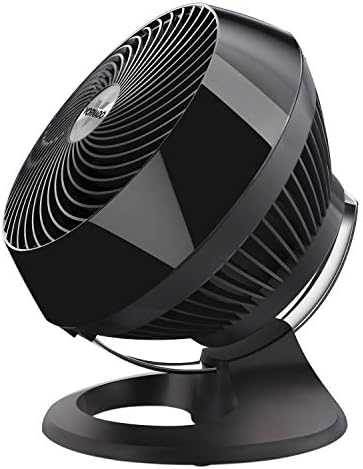
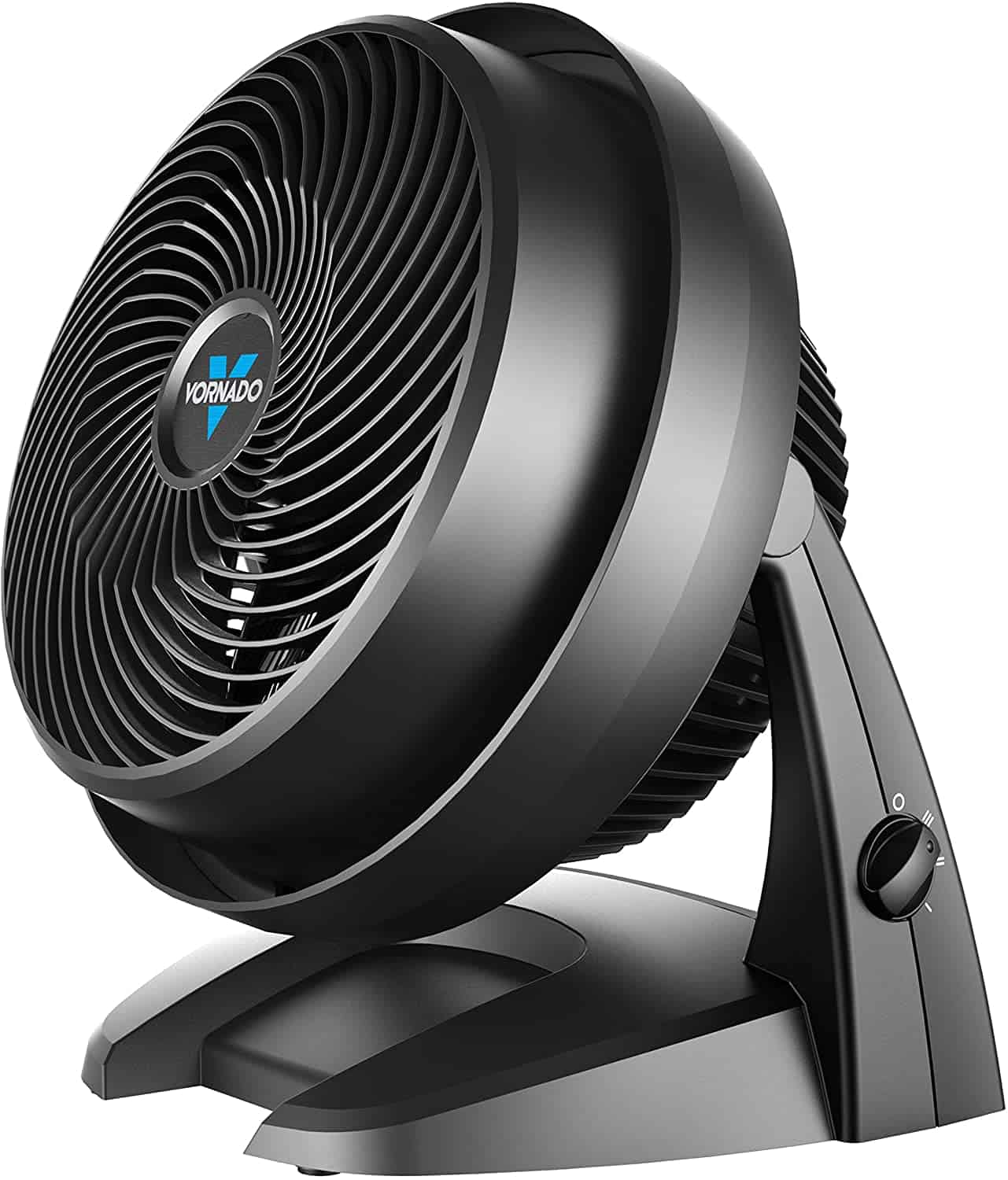
Need to cover a bigger space or want the fan on the floor? The Vornado 723 is the full-size version of the same idea — a floor-standing circulator moving a rated 583 CFM with the same 90-degree tilt. It runs around $131, holds a 4.7-star average, and belongs in a great room or open-plan kitchen and living area. If noise is your priority instead, the Vornado 6303DC ($144, 4.5 stars) uses a brushless DC motor rated at 45 dB with stepless variable speed, so you can leave it on low overnight without the drone of an AC-motor fan.
High-Velocity Floor Fans for Maximum Power
When you want the most air movement per dollar and do not care about looks, a 20-inch high-velocity fan is unbeatable. These can make a hot garage, workshop, or sunroom tolerable in minutes.
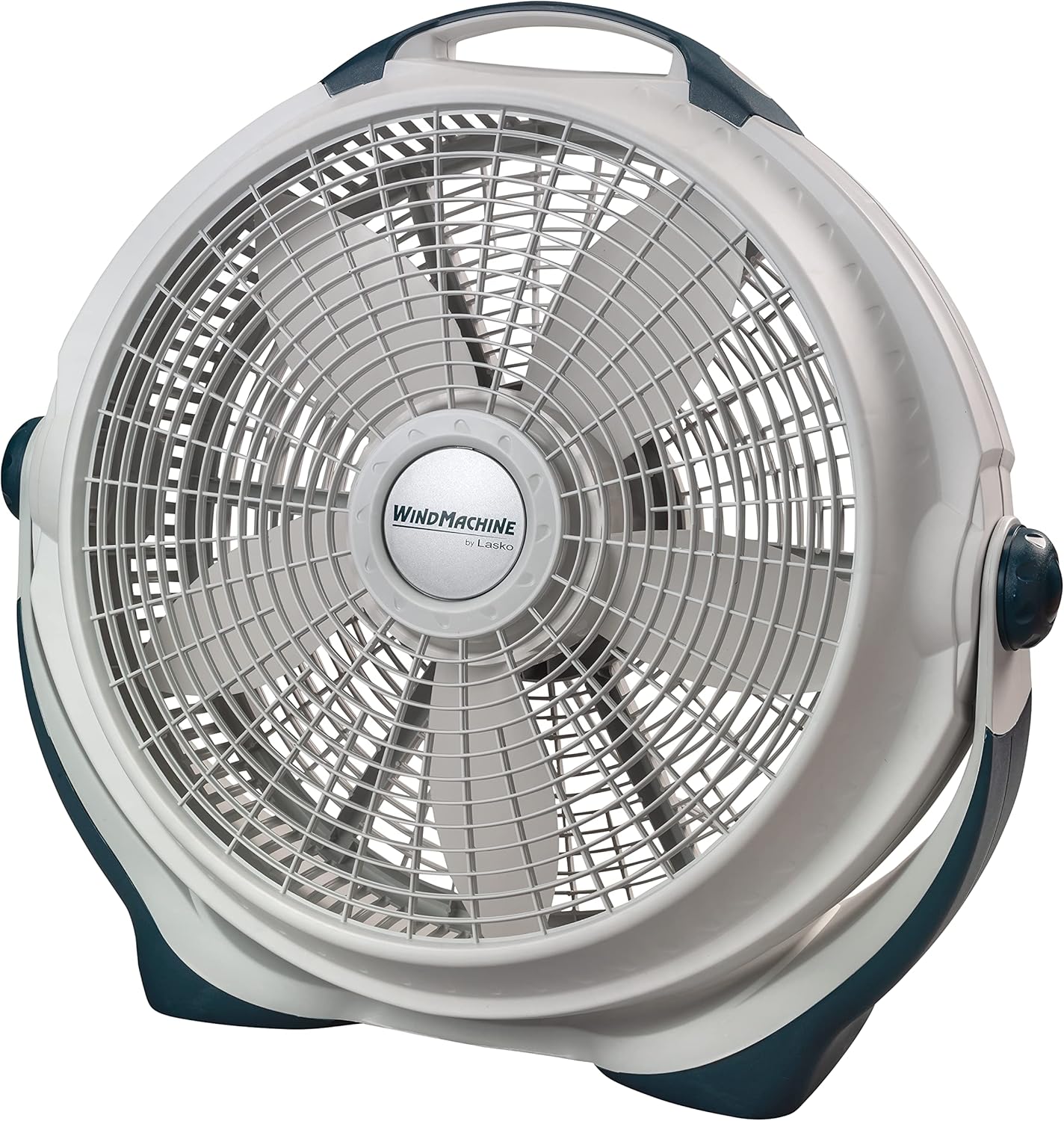
The Lasko Wind Machine 3300 is the one that keeps winning on value: a 20-inch three-speed fan with a pivoting head that moves a rated 1,985 CFM — more than triple the Vornado 660 — for around $50. The pivot lets you aim it from floor to ceiling, and owners routinely use one to cool an entire open floor. Its noise spec is a low 35 dB, though the top speed is clearly audible in practice. With more than 19,000 ratings at 4.4 stars, it is a proven workhorse.
Pros
- Huge 1,985 CFM output
- Around $50
- Pivots floor to ceiling
- Proven, 19,000+ ratings
Cons
- Loud on high
- Bulky, utilitarian look
- No oscillation or remote
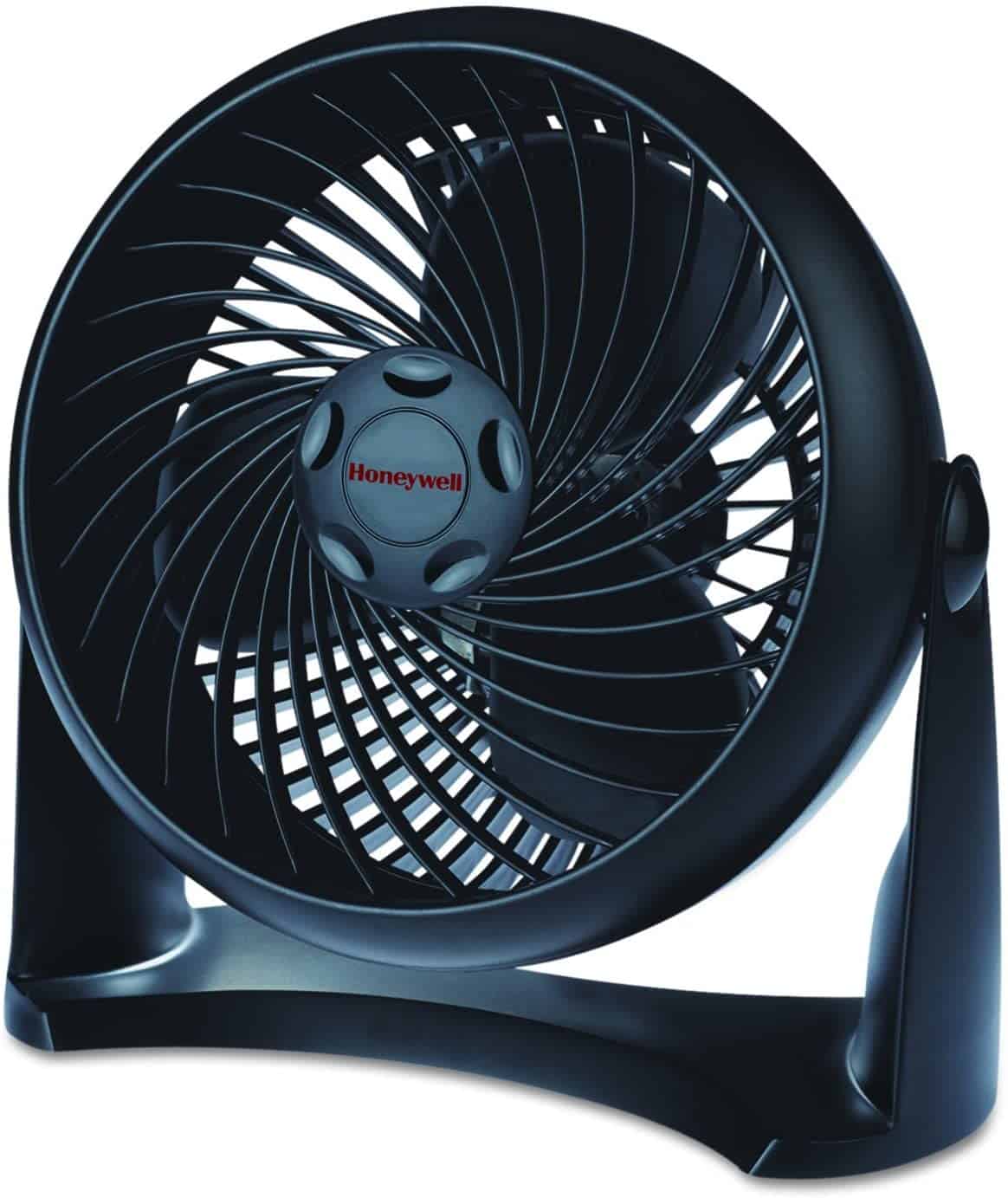
For a desk, nightstand, or small room on a budget, the Honeywell HT-900 TurboForce is the value benchmark: a compact 185-CFM circulator with a 90-degree pivoting head, under $20, with over 130,000 ratings at 4.6 stars. It will not cool a living room, but aimed at one or two people it delivers a firm, focused breeze that feels much stronger than its size suggests.
Tower Fans: Quiet, Slim, and Whole-Room
Tower fans are the right answer for bedrooms and any room where the fan has to stay quiet and look reasonable. They oscillate over a wide arc, sweeping a moderate breeze across the whole seating area.
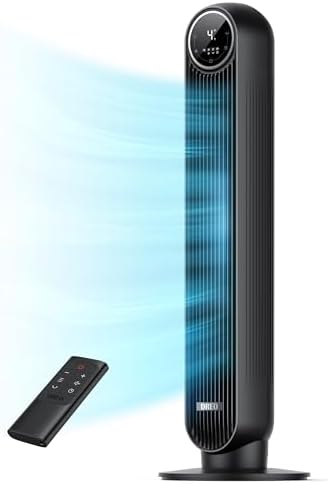
The Dreo Nomad One (model DR-HTF007) is the best value in the category: a 36-inch bladeless-style tower rated at 1,158 CFM and 28 ft/s air velocity, with 90-degree oscillation, a 25 dB low setting, eight speeds, a remote, and a timer, for around $65. It has over 95,000 Amazon ratings at 4.5 stars, and for a bedroom it is genuinely quiet on low while still moving real air on high. Our full Dreo tower fan review covers the app control and sleep mode.
Pros
- Quiet 25 dB on low
- 1,158 CFM, 8 speeds
- Remote, timer, sleep mode
- About $65
Cons
- Less throw than a circulator
- Tall footprint can tip
- Controls beep unless muted
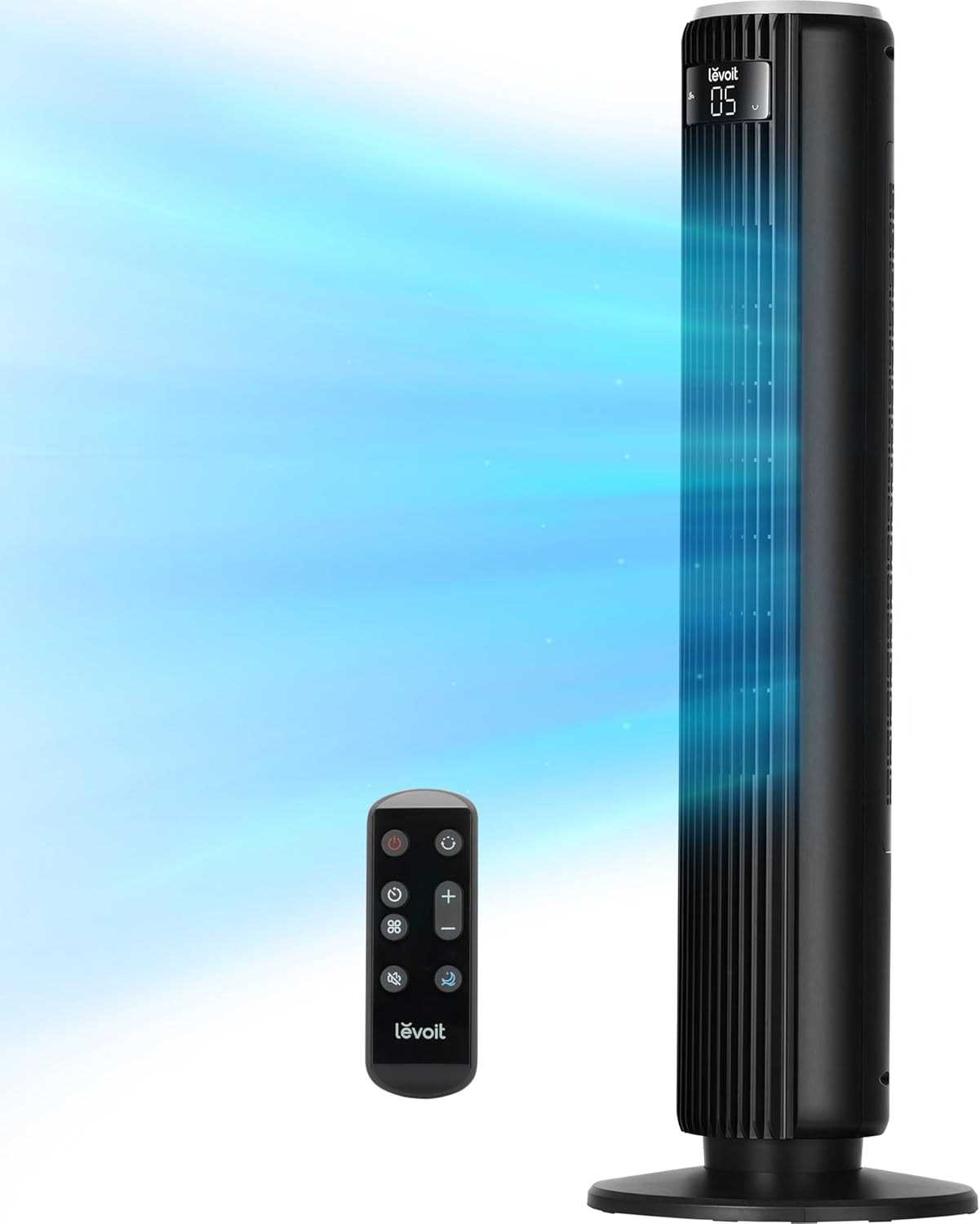
The Levoit Classic Tower 36-inch (LTF-F361) is the closest competitor and the pick if the Dreo is out of stock: 1,044 CFM, a 28 dB low setting, five speeds, a slim 6.5-inch base that fits between furniture, and about $75. Its display fully dims for sleep, and with nearly 12,000 ratings at 4.5 stars it is every bit as reliable.
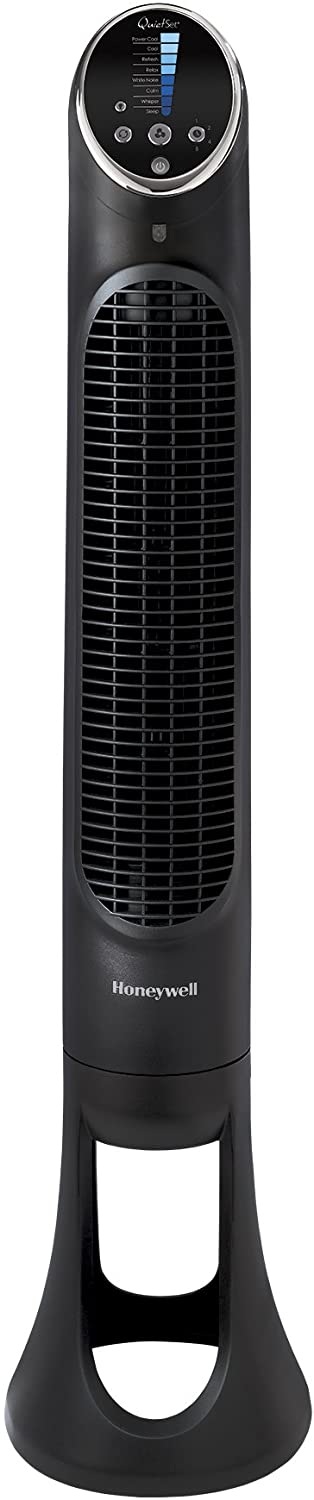
The Honeywell QuietSet HYF290B is the established name here — a 40-inch whole-room tower with eight discrete speed and sound settings, an included remote, and a spec-sheet rating around 45 dB. Honeywell does not publish a CFM figure, so it ranks below the Dreo and Levoit on measured airflow, but it has more than 64,000 ratings at 4.4 stars, its lowest setting is one of the quietest in any tower, and it sells for about $84.
Bladeless and Smart Fans
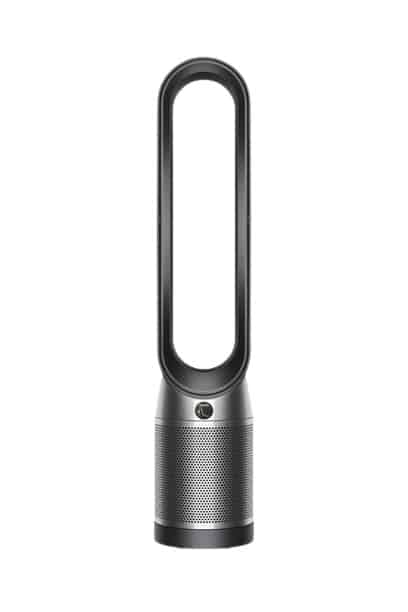
The Dyson Purifier Cool TP07 is the current successor to the discontinued AM07 and AM09 tower fans, and it now bundles a sealed HEPA and carbon air purifier into the same tower. It projects a smooth, blade-free stream, oscillates up to 350 degrees, runs from a phone app or voice assistant, and reports air quality on its display. It is quiet at low speed and noticeably louder on high. At around $600 it costs as much as a decent portable air conditioner, so buy it for the purification, design, and app control — not for raw airflow, where a $65 tower competes. If humidity is also a problem in your space, the Dyson PH2 Humidify+Cool adds a humidifier to the same platform.
Pros
- Smooth bladeless airflow
- Sealed HEPA + carbon purifier
- Up to 350-degree oscillation
- App and voice control
Cons
- Around $600
- Loud on high speeds
- Replacement filters add cost
Indoor/Outdoor and Long-Throw Fans
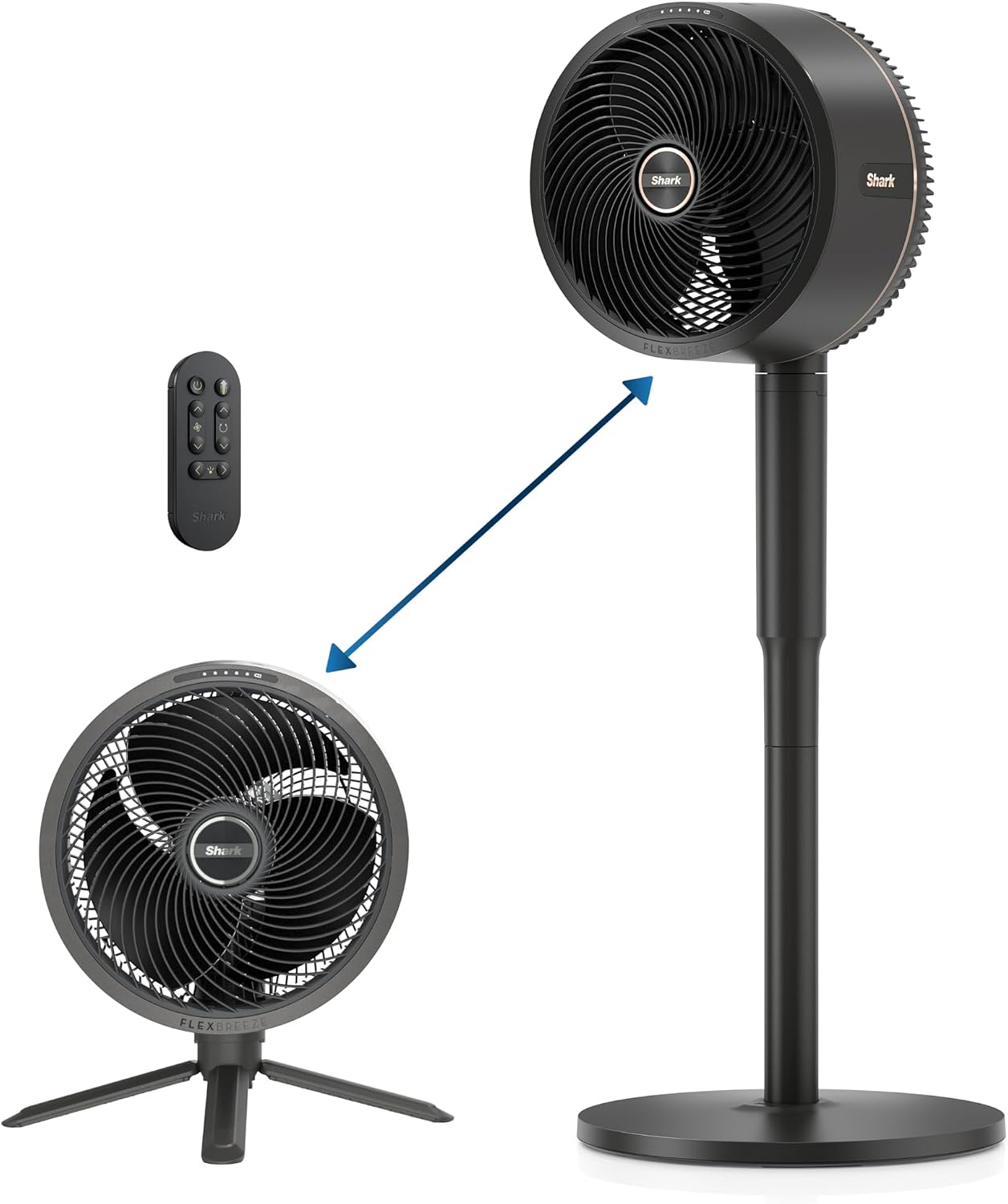
The Shark FlexBreeze FA202 is the most versatile fan here. It converts between a full-height pedestal and a tabletop unit, runs on a cord or a rechargeable battery for up to 24 hours, and is weather-resistant enough to live on a covered patio. It moves a rated 941 CFM across five speeds, oscillates 180 degrees, and its BreezeBoost mode is claimed to push air more than 70 feet — the longest throw of any non-industrial fan on this list. At about $175 it is not cheap, but it replaces two or three fans, and a misting version (FlexBreeze Mist) adds evaporative spray for outdoor use.
Pros
- Pedestal or tabletop
- Corded or 24-hr battery
- Weather-resistant for patios
- 70+ ft boost throw
Cons
- About $175
- Heavier than a plain pedestal fan
- Battery adds to the price
The risk to watch is humidity. In a humid home, a fan moves damp air around without drying it, and an evaporative cooler adds even more moisture. Expect hotter, stickier summers to push people to use fans where they do not help, so check your humidity first.
Evaporative (Swamp) Coolers: The Fans That Do Lower Temperature
This is the one category that actually drops the air temperature. An evaporative cooler pulls air through a water-soaked pad; as the water evaporates it absorbs heat, and the air leaving the front can be 10 to 20 degrees cooler than the air going in. The catch is humidity: evaporative cooling only works when the air is dry — excellent in Arizona, Nevada, and the high desert, nearly useless on a humid Gulf Coast afternoon, where it just adds moisture to an already muggy room. You also need a cracked window so the humid exhaust air can escape.
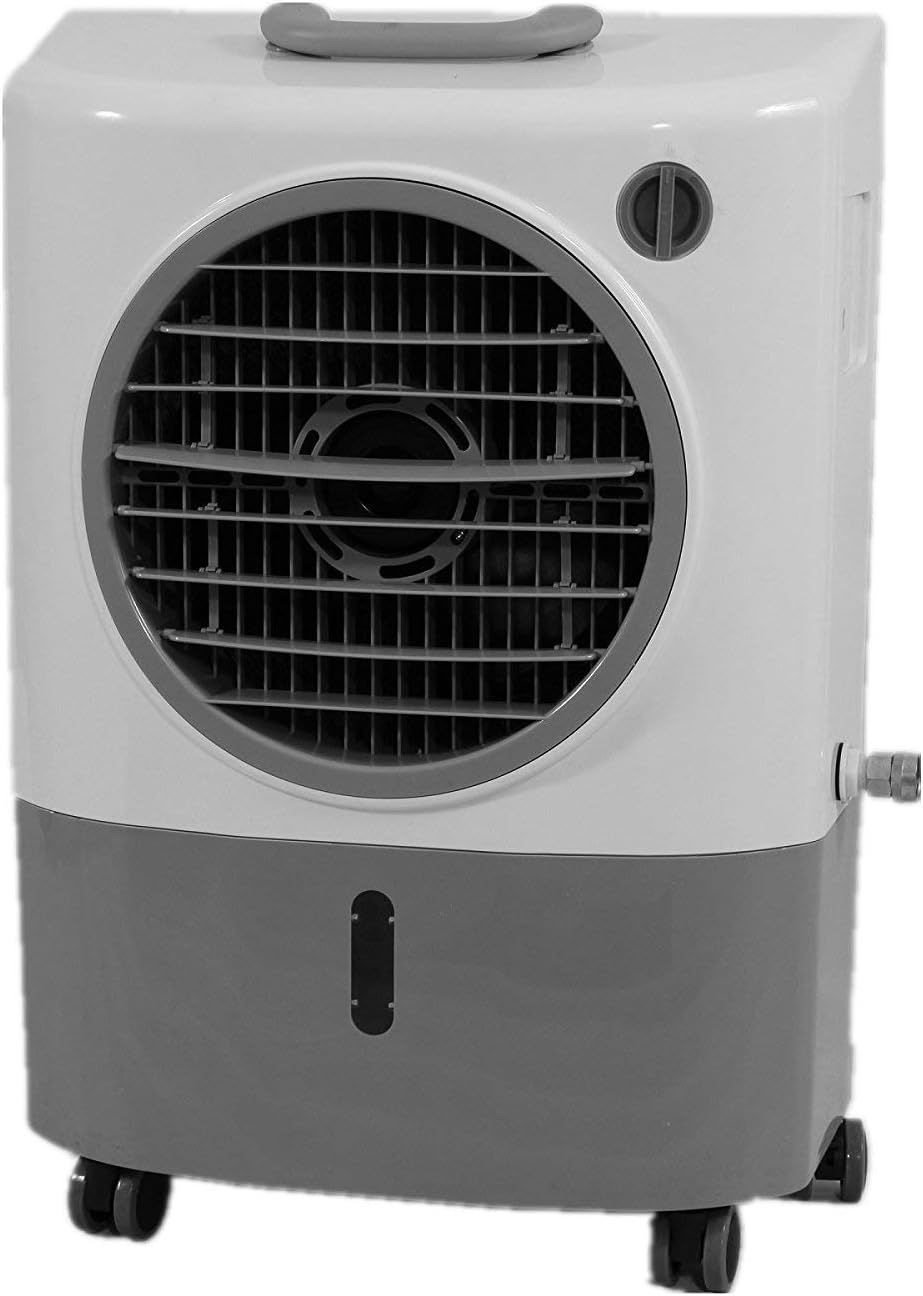
The Hessaire MC18M is the entry point: a portable cooler that moves a rated 1,300 CFM, covers up to about 500 square feet of open or semi-open space, holds several gallons of water, and runs around $192. Owners use it in garages, workshops, patios, and carports across the dry Southwest with good results. On a covered patio at 100°F and 15 percent humidity, it makes a real, measurable difference.
Pros
- Actually lowers air temperature
- 1,300 CFM, up to ~500 sq ft
- Rolls anywhere, no install
- Cheap to run
Cons
- Dry climates only
- Needs a window or door open
- Pads and tank need upkeep
For an indoor room in a dry climate, the Honeywell CL201AEW is a tidier option: an enclosed evaporative cooler with a remote, an ice compartment to boost the effect, and a roughly 470 CFM output for about $249. Its 3.7-star average reflects how badly these disappoint buyers in humid states, so be honest about your climate. In a humid region, skip this category — a small window air conditioner or a portable air conditioner is the only thing that will actually cool a muggy room.
How Much Should You Spend?
Under $50: A compact circulator like the Honeywell HT-900 or a basic 20-inch box fan — personal or small-room cooling only, but the HT-900 punches well above its price.
$50 to $100: The sweet spot. The Lasko Wind Machine 3300 for raw power, or the Dreo Nomad One and Levoit Classic 36 for quiet whole-room tower cooling. Almost everyone should shop here first.
$100 to $200: A Vornado 660 or 723 circulator for the most AC-like whole-room feel, a Shark FlexBreeze for indoor/outdoor flexibility, or a Hessaire evaporative cooler if you live in the desert.
$200 and up: A Dyson for purification and design in one unit, or a higher-capacity evaporative cooler. Past this point you are usually better off buying an actual air conditioner.
Placement Tips That Actually Help
Where you put the fan matters as much as which fan you buy. In the evening, set a fan in an open window facing out to exhaust the hot air your house absorbed all day, and crack a window on the opposite side to pull cooler air through. During the day with windows closed, aim a circulator at the ceiling or a far wall rather than at yourself. And run a ceiling fan counterclockwise with a floor fan feeding it — the two together move far more air than either alone.
FAQ
Can a fan really cool a room like an air conditioner?
Not in the literal sense. A fan does not lower the air temperature — only an air conditioner or, in a dry climate, an evaporative cooler does that. What a strong fan does is move air fast enough across your skin that you feel four to seven degrees cooler than the thermometer reads. For a lot of situations that is enough, and it costs a few dollars a season to run.
Which type of fan feels the most like AC?
A whole-room air circulator like the Vornado 660. Because it keeps the entire room’s air moving instead of pointing a jet at one spot, the whole space feels consistently breezy, which is closer to the even comfort an air conditioner gives you than a fan that only cools the person sitting in front of it.
Do bladeless fans like Dyson cool better than regular fans?
No. Bladeless fans deliver a smoother, quieter airstream and are safer and easier to clean, but they do not move more air than a good conventional fan — and a $600 Dyson moves less air than a $65 Dreo tower. You pay for the design, the app control, and, on the Purifier models, the built-in HEPA filter.
What CFM do you need to cool a bedroom?
For a typical 150 to 250 square foot bedroom, a fan rated around 1,000 CFM — most 36-inch towers and any 20-inch floor fan — gives a strong breeze from the bed. Circulators list lower CFM but reach farther, so a 500 to 600 CFM Vornado also works well.
Are evaporative coolers worth it?
Only if you live somewhere dry. In the desert Southwest an evaporative cooler genuinely drops the air temperature by 10 to 20 degrees for very little electricity. In a humid climate it adds moisture to the air and makes the room feel worse, so check your typical summer humidity before buying one.
How can you make any fan cool better?
Put a frozen water bottle in front of it for a short-term chilled breeze, exhaust hot air out a window in the evening, close blinds on sun-facing windows by day, and pair the fan with a ceiling fan. Lowering the room’s heat load does more than upgrading the fan.
Related Guides
Keep going with bedroom ceiling fans, portable air conditioners and energy-saving window air conditioners.
What happens next: as summers heat up, more homes will use fans along with air conditioning, raising the thermostat a few degrees and letting a fan do the rest. Pick a fan by airflow and night-time noise, not looks, and turn it off when the room is empty.
Bottom Line
If you want one fan that comes closest to air-conditioned comfort, buy the Vornado 660 — it circulates a whole room instead of one chair. Want maximum airflow for $50? The Lasko Wind Machine 3300. Need quiet for a bedroom? The Dreo Nomad One or Levoit Classic 36. And if you live in the dry Southwest, a Hessaire evaporative cooler is the only option on this list that will actually lower the temperature. Just keep expectations honest: a fan changes how the air feels, not how hot it is.