
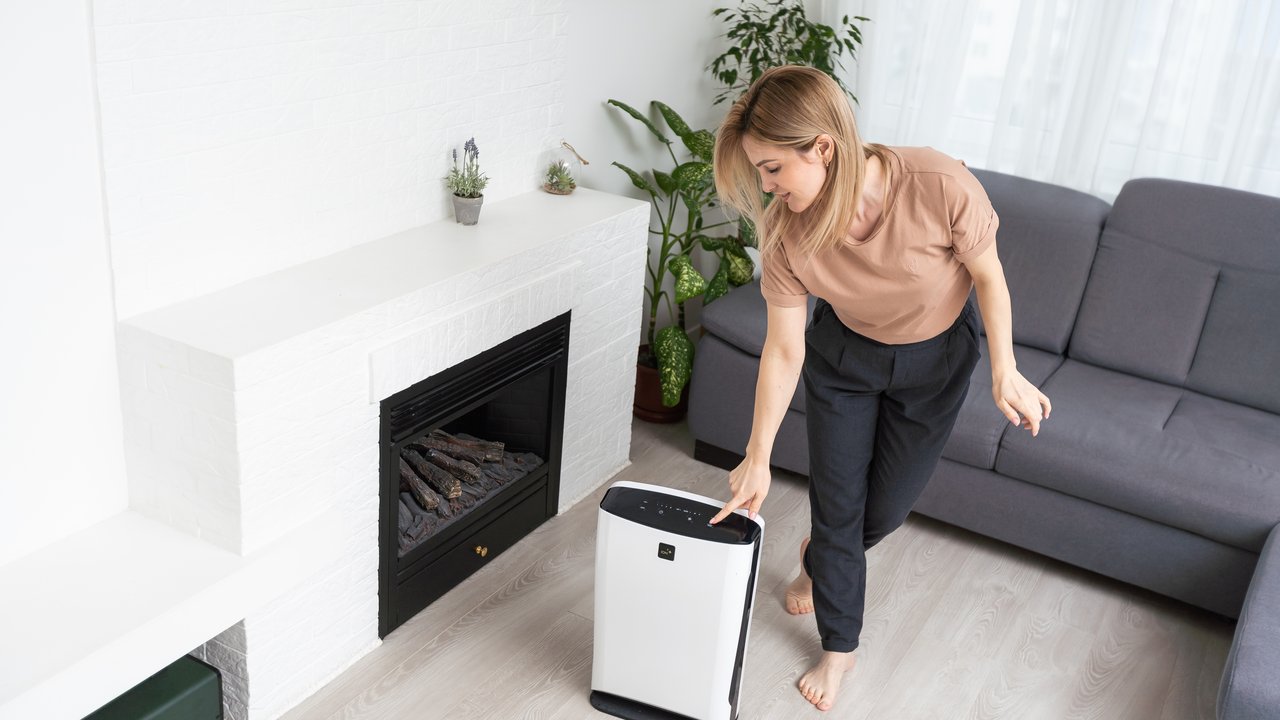
To choose an air purifier for dust, match a true HEPA unit’s clean air delivery rate to your room so it filters the air at least four times an hour, and favor a model with a washable pre-filter to catch hair and lint. The top pick is the Coway Mighty AP-1512HH: true HEPA, a washable pre-filter, and enough airflow for most bedrooms and living rooms.
Want cleaner air from the vents too? Best MERV 13 furnace filters for allergies.
Every pick here is checked against verified manufacturer specs, true HEPA filtration documentation, current Amazon listings, and buyer feedback. This guide does not involve hands-on lab or field testing.
Household dust is a mix of skin flakes, fabric fibers, pet dander, pollen tracked in from outside, and dust mite droppings. Most of it is heavy enough to settle within minutes, which is why you can wipe a shelf and see a fresh layer a week later. An air purifier works on the fraction that is still floating, and on the plume you kick up every time you walk across a rug, make the bed, or run the vacuum. Catch those particles before they land and you get less buildup on surfaces and less of the fine stuff you actually breathe. For the biology behind one of the worst offenders, our explainer on what dust mites are covers where they live and why bedrooms are the hot spot.
Affiliate disclosure: IndoorBreathing may earn a commission when you buy through links on this page, at no extra cost to you. Picks are chosen for dust-capture performance, documented filtration, and value, not commission rate.
Table of Contents
How These Air Purifiers for Dust Were Picked
Filtration that can be verified came first. Every unit here uses a true HEPA filter rated to capture 99.97% of particles at 0.3 microns, the size that is hardest to trap, which means it does even better on the larger particles that make up most visible dust. From there, clean air delivery rate was weighed against real room sizes, whether the model has a washable or easily replaced pre-filter to handle the coarse debris that clogs a HEPA element early, noise on a livable setting, and filter cost over a couple of years. Each one was also confirmed as currently sold at a real price, and a note marks where a model is the current version of an older favorite. For the wider category beyond dust, our main best air purifiers for home guide compares several of these same models on all-around performance.
Best Air Purifiers for Dust: Comparison Table
Here is how the six picks line up on the numbers that matter for dust. Coverage figures are the manufacturer’s own; prices and ratings are current Amazon figures at the time of writing and will move.
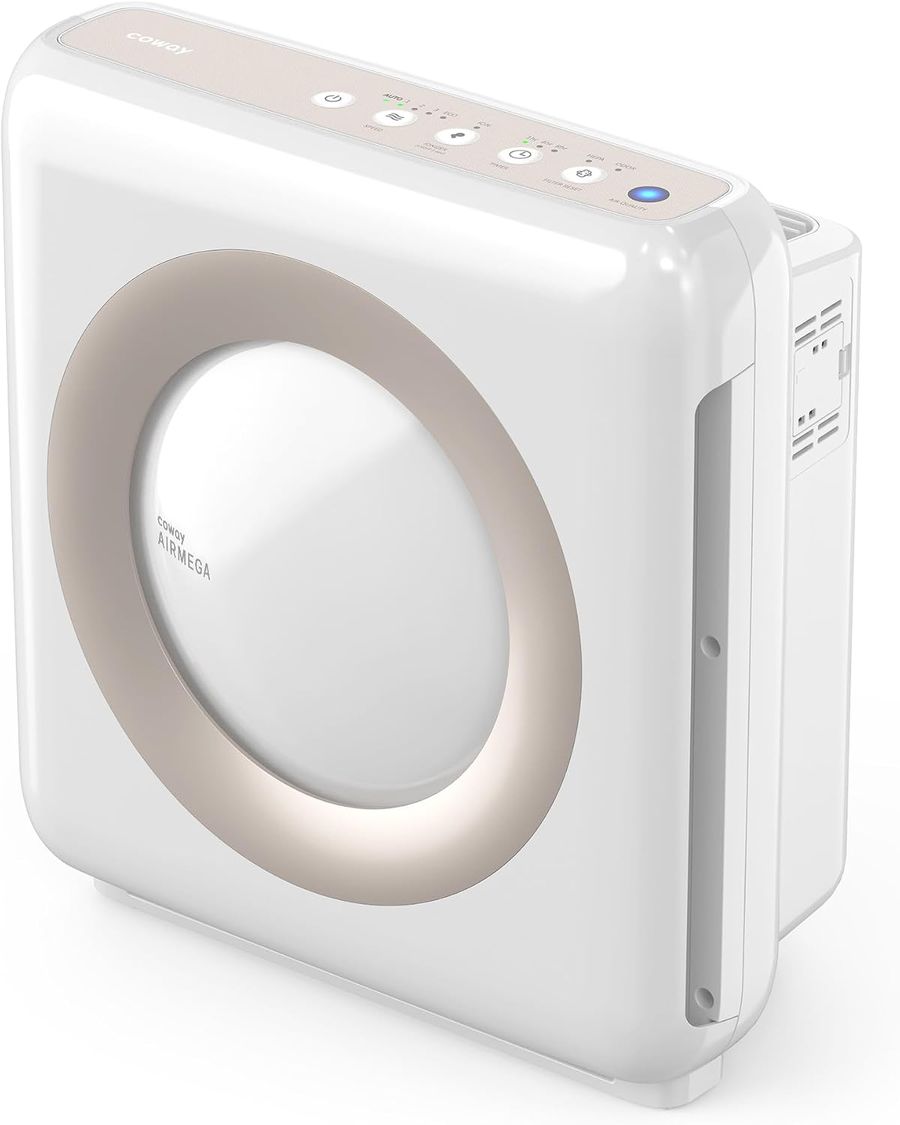
Coway Mighty AP-1512HH — Best Overall for Dust
The Coway Mighty is the one to hand most people because it gets the fundamentals right at a fair price. Air passes through a washable pre-filter first, then a carbon deodorization layer, then a true HEPA filter that captures 99.97% of particles down to 0.3 microns. That pre-filter is the part that matters for a dusty home: it catches lint, hair, and the largest debris so the HEPA element is not clogged in three months. Coway lists coverage as 1,748 square feet in an hour, which is one air change; for the four to five changes an hour you want for dust control, plan on a room of roughly 350 to 450 square feet. A filter indicator tells you when the HEPA needs replacing and, separately, when to vacuum the pre-filter. The unit also has a bipolar ionizer, and if you would rather not run one, a single button turns it off and the HEPA does the work regardless.
It is a boxy unit that only comes in white or black, the top-mounted outlet means you cannot set anything on top, and full speed is loud enough that most owners run it on medium and step it up while cooking or cleaning. Genuine replacement filter sets run around $50 and last about a year in normal use.
Pros
- Real washable pre-filter
- True HEPA plus carbon
- Ionizer has an off switch
- Separate pre-filter and HEPA alerts
- Reasonable filter cost
Cons
- Loud at full speed
- Bulky, top outlet
- Only white or black
- No air quality readout
How to Choose an Air Purifier for Dust
Four things decide whether a purifier actually lowers the dust in your home. Get these right and the brand matters far less.
True HEPA, not “HEPA-type.” A true HEPA filter is tested to trap 99.97% of particles at 0.3 microns. Labels like “HEPA-type,” “99% HEPA,” or “HEPA-like” are not held to that standard and can leak fine dust back into the room. Every pick here uses a genuine HEPA filter or, in Blueair’s case, a tested HEPASilent system that meets the same particle-capture bar. For the full picture on the rating, our guide to how a HEPA filter works breaks down the 0.3-micron number and why it is the hardest case.
Clean air delivery rate matched to your room. The clean air delivery rate, or CADR, is the volume of filtered air a unit puts out per minute. For dust you want enough of it to turn the room’s air over four to five times an hour. A rough rule that skips the math: your dust CADR in cubic feet per minute should be at least two-thirds of the room’s square footage, so a 300-square-foot living room wants a dust CADR near 200 and a 150-square-foot bedroom is fine around 100. Manufacturers quote a headline coverage number based on a single air change, so the room you should actually use it in is smaller than the box says. That is why the Levoit Core 300, with a 153 dust CADR, is a bedroom unit and the Blueair 211i Max belongs in a great room. Our air purifier sizing guide has a calculator that does this for you.
A pre-filter you can clean. Coarse dust, hair, and lint are what shorten a HEPA filter’s life. A washable pre-filter that you vacuum or rinse every few weeks takes that load off the expensive filter behind it. The Coway, Winix, and Blueair picks all have one; the Levoit Core models fold the pre-filter into the main cartridge, so you replace it along with the HEPA.
Enough airflow to run quietly. A purifier only helps while it is on, and a unit that is only tolerable on its lowest setting is not moving enough air. Buy one rated well above your room size so it can hold the dust down on a mid setting you will actually leave running overnight.
Looking ahead, expect purifiers to add real-time dust sensors and auto fan control, which help the machine ramp up after vacuuming. The catch is that auto modes can run quieter than the dust load needs.
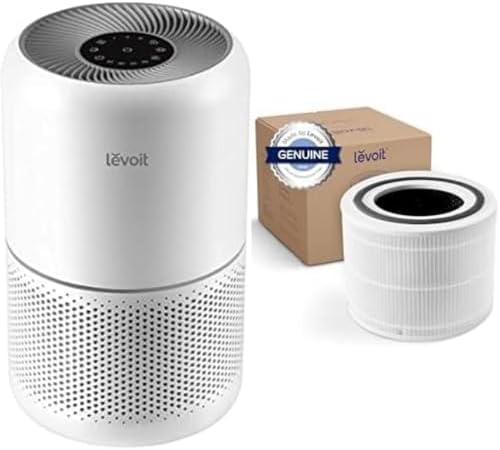
Levoit Core 300 — Best for Bedrooms and Small Rooms
The Core 300 is the default small-room pick for good reason: it is under $100, it is genuinely quiet, and it uses a real three-in-one filter with a pre-filter, true HEPA, and a light carbon layer. Levoit’s own AHAM-verified figures put its dust CADR at 153 cubic feet per minute, which cycles a 222-square-foot room close to five times an hour. That covers most bedrooms, nurseries, and home offices. On its sleep setting it drops to a measured 24 decibels, quiet enough that you forget it is there, and the display lights switch off.
The tradeoffs are what you would expect at the price. There is no air quality sensor or app, the filter is not washable so the whole cartridge gets replaced every six to eight months at around $25, and it does not have the muscle for a big living room. For a bedroom, though, it is hard to beat. A deeper look is in our full Levoit Core 300 review.
Pros
- Under $100
- Very quiet on sleep mode
- True HEPA plus carbon
- Small footprint
- Huge owner track record
Cons
- Bedroom-sized only
- No sensor or app
- Pre-filter not washable
- Filter is a yearly-ish cost
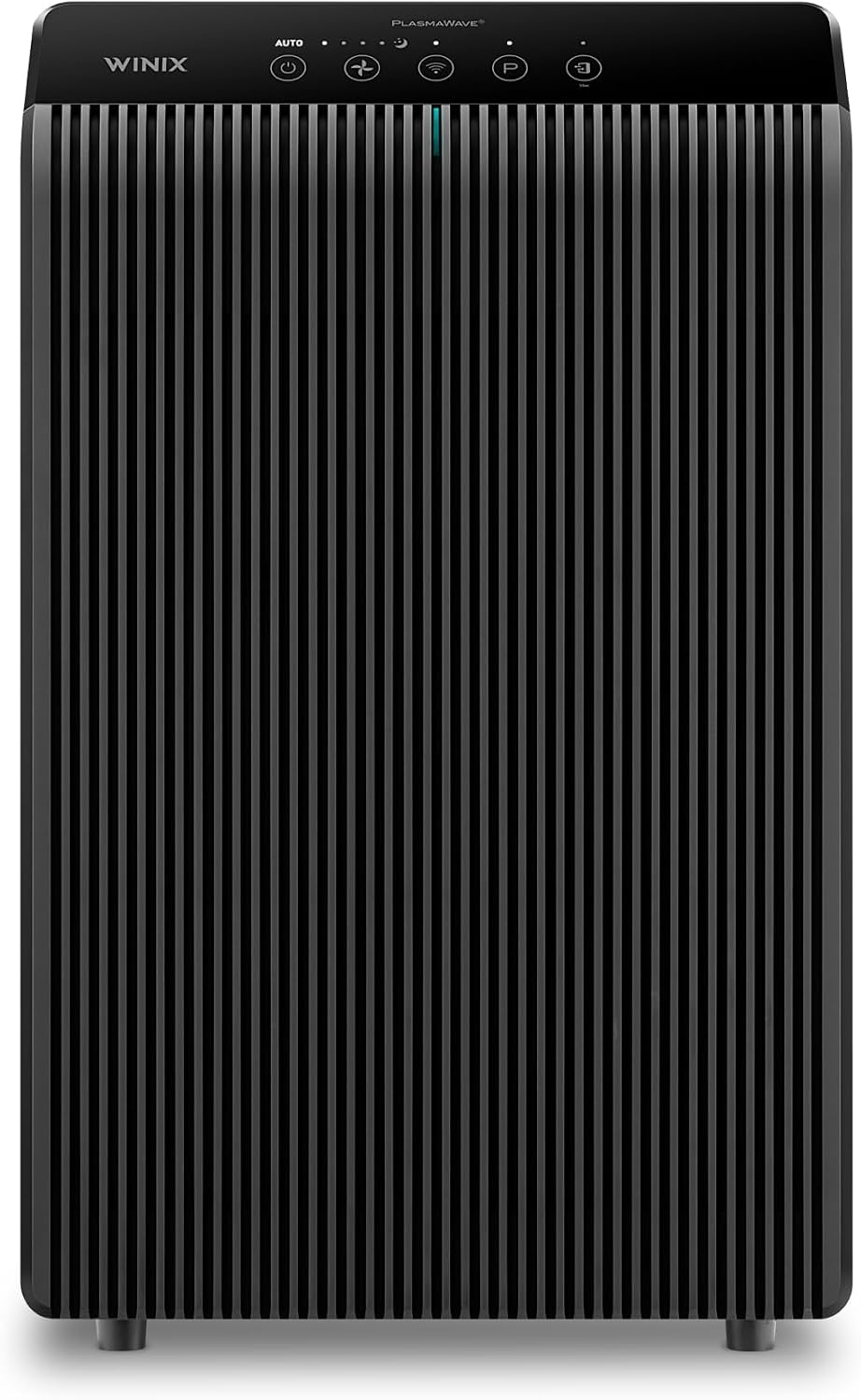
Winix 5510 — Best Value
The Winix 5510 is the current version of the long-running 5500-2, one of the most recommended mid-size purifiers of the last decade, now with app support and an air quality indicator added. You get a washable fine-mesh pre-filter, a carbon filter for odors, and a true HEPA filter, plus Winix’s PlasmaWave ionizer that you can switch off. Winix has it AHAM-verified for a 392-square-foot room and lists a one-hour coverage figure of 1,881 square feet. A built-in particle sensor drives an auto mode that ramps the fan when it detects a dust plume and settles back down when the air clears, so you are not choosing between constant noise and running it by hand.
It is a plain-looking unit, the carbon filter is thin and needs replacing a few times a year if odors matter to you, and the sensor is less sensitive than the laser sensors on pricier models. For the money, it is the most purifier you can point at a living room. Winix’s PlasmaWave technology also shows up in our Winix C545 review if you want to see how the smaller sibling compares.
Pros
- Washable mesh pre-filter
- True HEPA plus carbon
- Auto mode with dust sensor
- App and AQI light
- Proven design lineage
Cons
- Thin carbon filter
- Sensor less sensitive than laser
- Plain styling
- PlasmaWave on by default
Why a Washable Pre-Filter Matters in a Dusty Home
A HEPA filter is a fine, folded mat of fibers. When coarse dust and hair pack into those folds, airflow drops, the fan works harder, and the unit’s real coverage shrinks even though the indicator still says the filter is fine. A pre-filter is a coarse screen that sits in front and stops that debris before it gets there. If it is washable, you pull it out every few weeks, vacuum or rinse it, let it dry, and put it back, and the HEPA behind it lasts closer to its rated life. In a home with pets, carpet, or forced-air heat, that can be the difference between six months and twelve on a $50 filter. On the Levoit Core models the pre-filter is bonded to the HEPA cartridge, so vacuuming the outside of the filter each month helps but does not fully substitute. If your home runs especially dusty, our overview of air purifier filter types explains which layer does what.
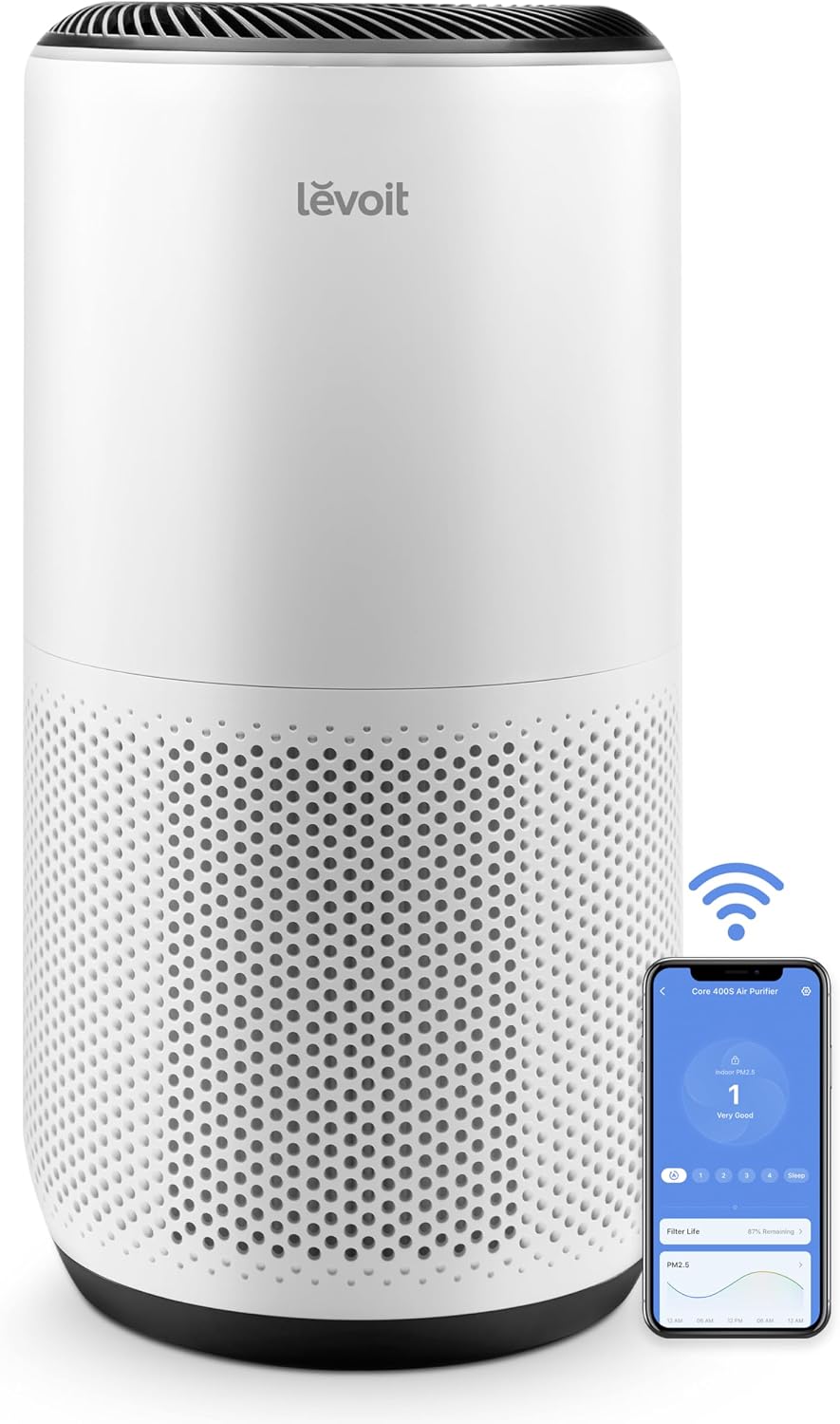
Levoit Core 400S-P — Best Smart Pick
If you want the purifier to manage itself, the Core 400S-P is the value leader for smart features. It has a laser particle sensor that reads PM2.5 continuously, shows the number on the front panel, and feeds an auto mode that is genuinely responsive: walk across the room and you can watch the reading jump and the fan react. Levoit’s AHAM-verified dust CADR is 240 cubic feet per minute, enough for a room around 400 square feet at four changes an hour, and the app logs air quality and lets you schedule quiet hours. It uses the same style of three-in-one filter as the Core 300, scaled up.
The pre-filter is not separately washable, the replacement filter is a larger $50-ish part, and the ring of status light can be too bright in a bedroom until you dim it in the app. As a set-and-forget unit for a main living space, though, it does more than models costing $100 more.
Pros
- Responsive laser sensor
- PM2.5 shown on panel
- Strong dust CADR
- Useful app and scheduling
- Good value for features
Cons
- Pre-filter not washable
- Larger replacement filter cost
- Status light bright by default
- No carbon-heavy option
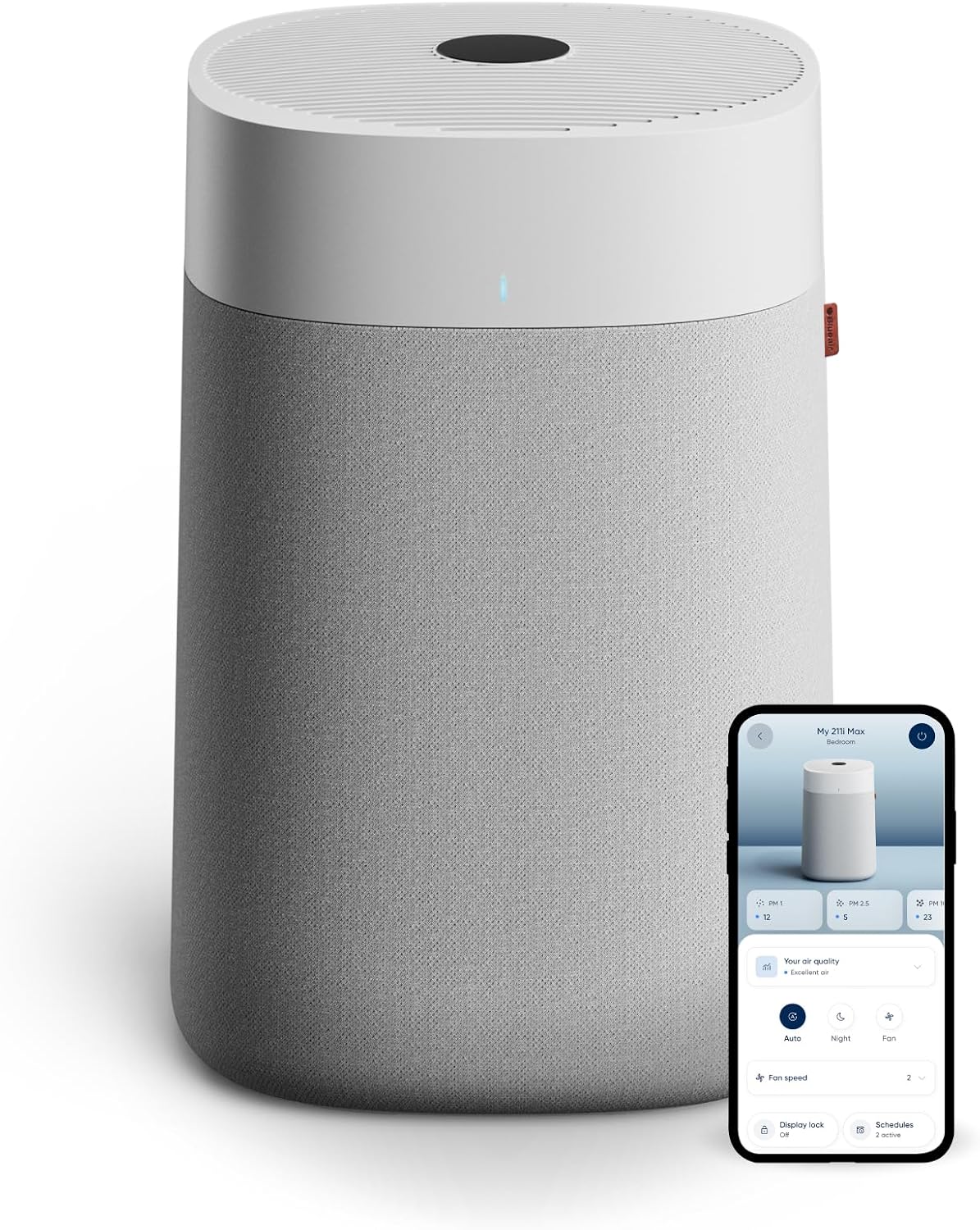
Blueair Blue Pure 211i Max — Best for Large Rooms and Open Plans
When the space is a great room, a finished basement, or a studio apartment, you need a unit that moves serious air, and the 211i Max does. Blueair rates it to clean a 674-square-foot room in about 12 minutes, or 3,235 square feet once an hour, which means in a normal living room it is doing five or six air changes an hour on a low, quiet setting. It uses Blueair’s HEPASilent approach, which gives particles a light electrical charge and then catches them on a less dense filter, so airflow stays high and the unit stays quiet. The washable fabric pre-filter doubles as the outer shell and comes in a few colors.
It is physically large, the replacement filters are Blueair-specific, and the electrostatic charging step is one some buyers avoid on principle, though Blueair states ozone output stays well below the applicable UL and CARB limits. If your dust problem is really a whole-floor problem, this is the pick, and it also performs well against wildfire smoke, which our guide on whether an air purifier helps with smoke gets into.
Pros
- Huge clean air output
- Quiet for its power
- Washable fabric pre-filter
- App and auto mode
- 360-degree intake
Cons
- Large footprint
- Electrostatic step not for everyone
- Proprietary filters
- Overkill for a bedroom
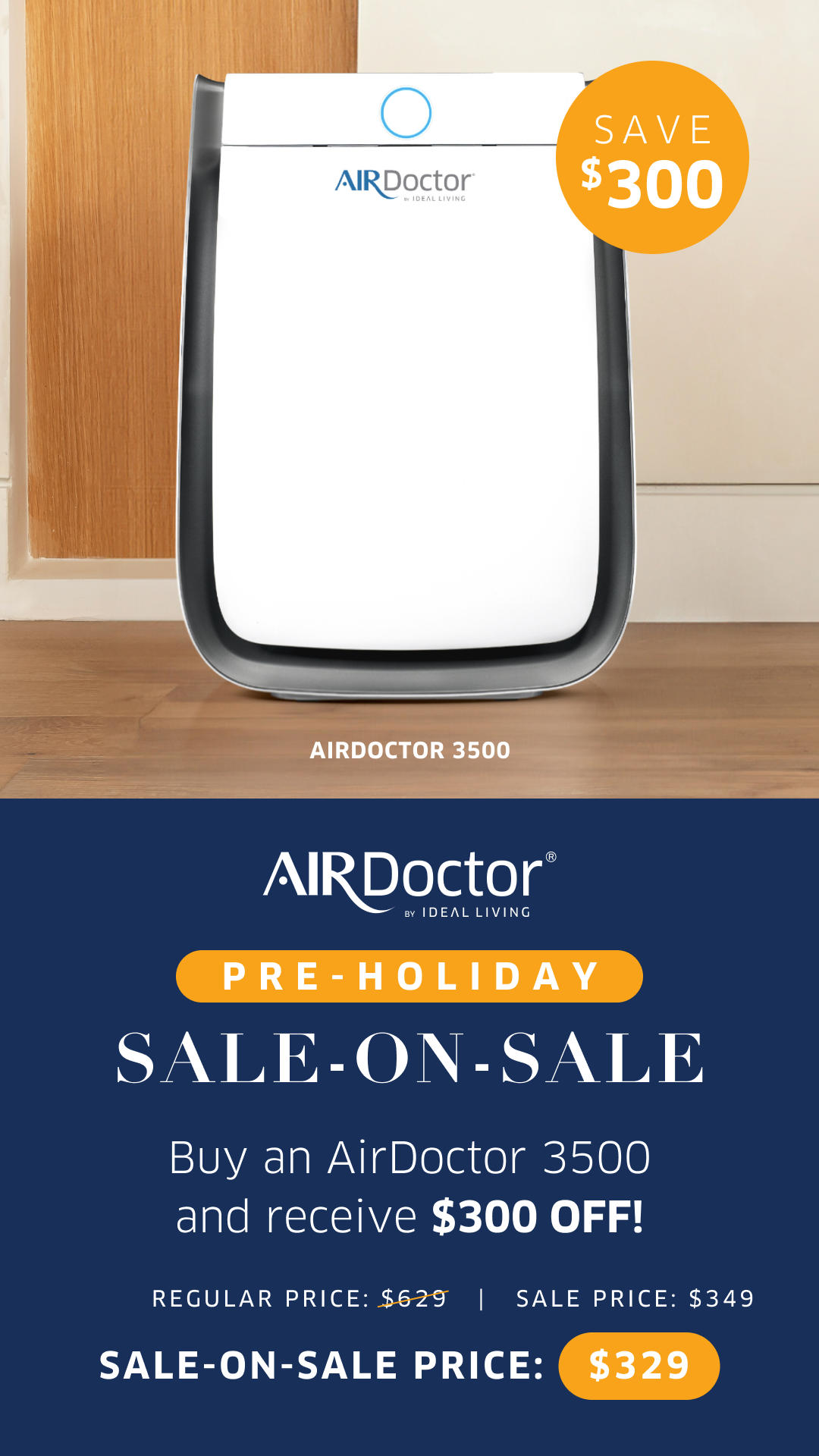
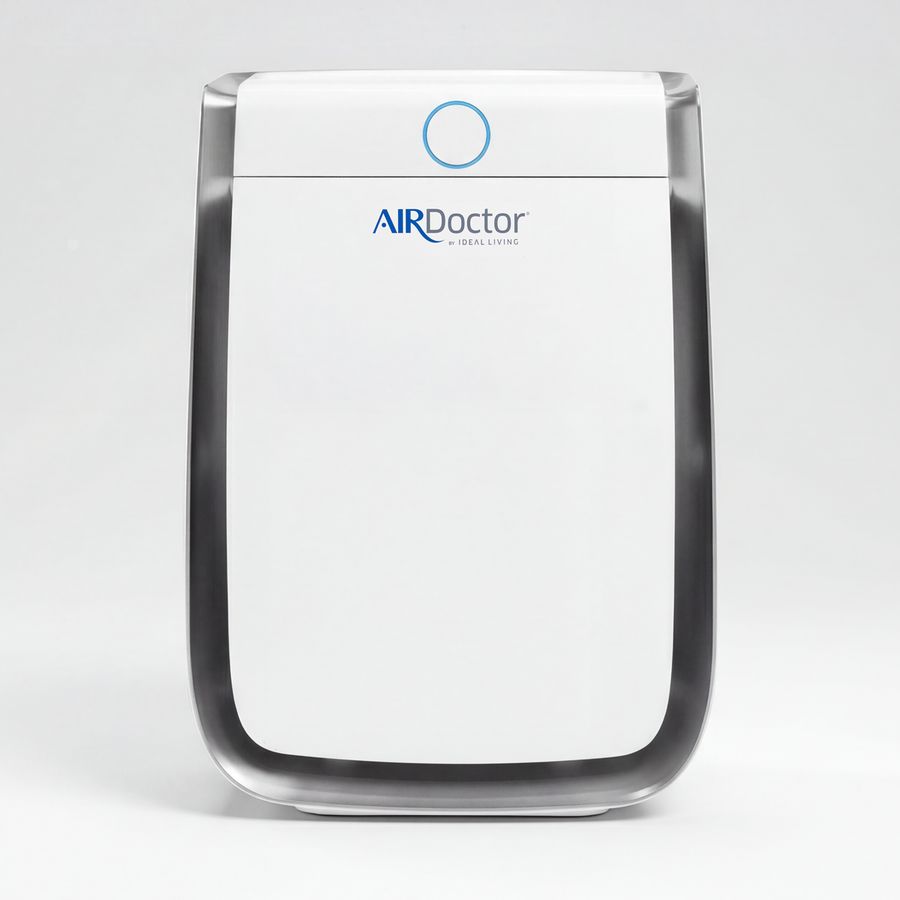
AirDoctor 3500 — Best for Fine and Ultrafine Dust
Most true HEPA filters are tested at 0.3 microns. AirDoctor’s UltraHEPA filter is third-party tested to capture 99.99% of particles down to 0.003 microns, a hundred times smaller, which is the range of the ultrafine dust from cooking, candles, printer toner, and traffic that a standard filter passes some of. The 3500 pairs that filter with a heavy activated-carbon and potassium-permanganate stage for gases and odors, plus a pre-filter for the coarse stuff. AirDoctor lists it for rooms up to about 2,500 square feet at one air change, so figure a 500-to-600-square-foot room for real dust control. It runs quietly on auto and uses a sealed housing so air does not slip past the filter.
It is the most expensive pick here at around $475, the UltraHEPA and carbon filters replace on separate schedules that add up over a year, and it is a tall, wide unit. If your concern is the dust you can see, a cheaper HEPA model is enough. If it is the haze you cannot, this is the one. Our AirDoctor review covers the filter system in more detail.
Pros
- Captures ultrafine dust
- Heavy carbon and VOC stage
- Sealed housing, no bypass
- Quiet on auto
- Third-party tested
Cons
- Expensive up front
- Two filter schedules to track
- Large unit
- Overkill for visible dust only
Where to Put an Air Purifier for Dust
Placement changes how much a purifier actually does. Keep it off the wall and out of corners, with a foot or more of clear space around the intake and the outlet, so it can set up a circulation loop instead of pulling its own clean exhaust straight back in. In a bedroom, put it within a few feet of the bed, since that is where you spend eight hours breathing and where bedding sheds fibers. In a living room, near the sofa or the main walking path catches the plume from foot traffic. If you have one unit and two rooms, the room where you sleep wins. Run it around the clock on a low or medium auto setting rather than blasting it for an hour, because dust is generated continuously and a room re-fills with particles within a couple of hours of the fan stopping.
An Air Purifier Alone Won’t Fix Dust
A purifier removes airborne particles, but most of your home’s dust is sitting on surfaces, and that reservoir keeps feeding the air every time it is disturbed. The rest of the plan matters as much as the machine. Vacuum carpets and upholstery weekly with a sealed HEPA vacuum so you remove dust instead of blowing it around; our roundup of the best HEPA vacuums for dust explains why the seal matters more than the filter. Wash bedding weekly in hot water and put your mattress and pillows in dust mite encasements so the biggest single dust source in the house stops shedding. Dust hard surfaces with a damp or microfiber cloth, not a dry duster that just relaunches everything. Keep indoor humidity between 40 and 50 percent, since dust mites struggle below that. And change your furnace or HVAC filter on schedule with at least a MERV 11, because that system moves more air through your house every day than any portable purifier. If shedding pets are a big part of your dust, our guide to the best air purifiers for pets covers dander and hair in more depth.
Filter Costs and Upkeep
The sticker price is only the start. Budget for a true HEPA replacement about once a year on most of these, in the $40 to $60 range for the Coway, Winix, and Levoit models, and more for the Blueair and AirDoctor because their filters are proprietary and, in AirDoctor’s case, split into two parts on different schedules. A washable pre-filter has no recurring cost but does need the actual washing; one left to clog cancels out its own benefit. Set a reminder to vacuum the pre-filter monthly and to check the HEPA every few months. If a purifier has a filter light, treat it as a floor, not a ceiling, since it counts run hours and does not know how dusty your home is. Our air purifier maintenance guide lays out a full schedule, and our filter replacement cost guide breaks down the real yearly spend by brand.
The risk with cheap HEPA-style filters is that the label can promise more than the media delivers. Expect more third-party test labels, and do not be surprised if some brands stay vague.
FAQ
Do air purifiers actually reduce dust?
Yes. They reduce airborne dust and, over time, how fast it settles on surfaces, as long as the unit has a true HEPA filter and enough clean air delivery rate for the room. They do not remove dust that has already landed, so you will still dust and vacuum, just less often.
What size air purifier is needed for dust?
Aim for a dust CADR, in cubic feet per minute, equal to at least two-thirds of the room’s square footage, which gets you four to five air changes an hour. A 200-square-foot bedroom wants a dust CADR around 135; a 400-square-foot living room wants about 265. Buying bigger lets you run it quieter.
Is HEPA or an ionizer better for dust?
HEPA. A true HEPA filter physically traps dust and holds it. An ionizer charges particles so they stick to walls and surfaces, which clears the air but moves the dust rather than removing it, and some ionizers produce ozone. Use HEPA as the main method and switch any ionizer off if you prefer.
Where should an air purifier go to cut dust?
In the room you use most, usually the bedroom, with at least a foot of clear space around the intake and outlet, and near the bed or the main walking path where dust gets stirred up. Keep it out of corners and off the wall.
Will an air purifier help with construction or renovation dust?
It helps with the fine dust that stays airborne after the work stops, but it will be overwhelmed during active sanding or demolition. Seal the work area, use a shop vacuum at the source, and let the purifier handle the residual haze afterward. Expect to change the filter early after a project.
How often should the filter be replaced in an air purifier used for dust?
In a dusty home, plan on a true HEPA filter once a year, sometimes every eight months, and vacuum a washable pre-filter monthly. A clogged filter quietly loses capacity, so do not wait for a smell or a noise.
Can one air purifier cover a whole house?
No. Purifiers are room devices. A single unit cannot pull dusty air through walls and hallways fast enough to matter elsewhere. Put one in the bedroom, add units in the rooms where you spend the most time, or lean on your HVAC filter for whole-house coverage.
What happens next on filters: replacement costs are the quiet bill. Expect more washable pre-filters and longer-life media, but plan on a filter change at least once a year in a dusty home.
Bottom Line
For most homes, the Coway Mighty AP-1512HH is the air purifier to buy for dust: true HEPA, a real washable pre-filter, and enough airflow for a typical bedroom or living room at a fair price. If you only need a bedroom covered, the Levoit Core 300 does it for under $100; if the room is large or open-plan, the Blueair Blue Pure 211i Max has the output for it. Whichever you choose, match its clean air delivery rate to your actual room, keep the pre-filter clean, and pair it with weekly vacuuming and hot-washed bedding. The purifier handles the dust in the air; the rest of the plan handles the dust that keeps feeding it.
Editorial note: Prices, ratings, and availability change after publication — confirm the current listing before buying.