
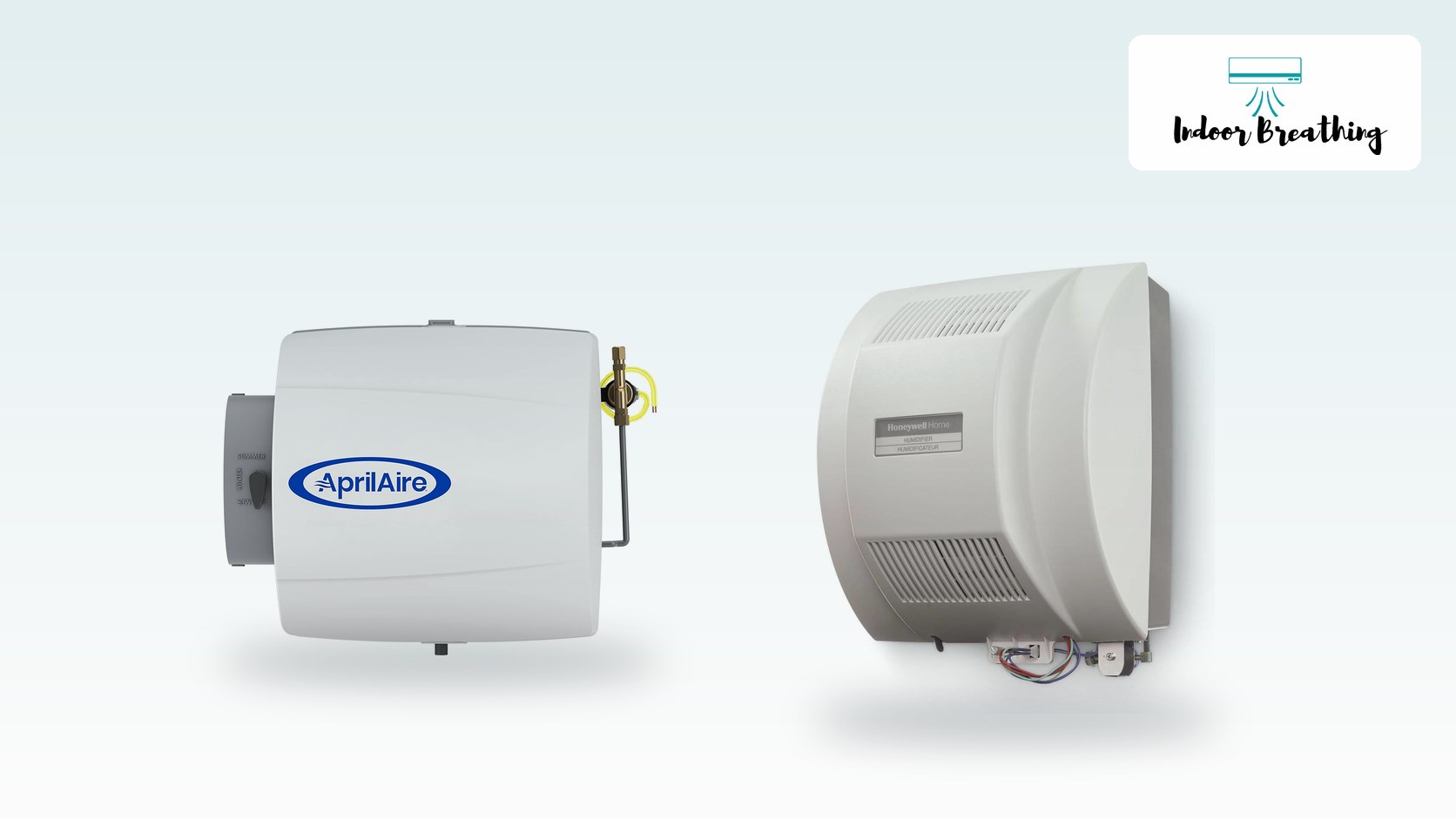
The calculator uses a common sizing rule and gives an estimate. Product prices and ratings change, so check the listing.
Dry winter air is hard on skin, throats and wood floors. Use the calculator below to find the GPD output a whole-house humidifier needs for your home.
Loose: older home, visible gaps, noticeable drafts. Average: typical construction, standard windows and insulation. Tight: newer or recently sealed/insulated home with modern windows — needs less GPD for the same square footage since less humidified air escapes.
Humidifier output you need
Square footage
2,000 sq ft
Construction
Average
Adjustments
None
Table of Contents
Real humidifiers that clear this GPD rating
GPD = 0.005 × (sq ft × construction multiplier) − 3, where the multiplier is 4 for loose, 2 for average, or 1 for tight construction — then scale by Ceiling Height ÷ 8, and add 15% for very cold/dry winter climates (design temp below 10°F), since AprilAire’s own chart assumes a 20°F outdoor design temperature.
How This Humidifier GPD Calculator Works
GPD means gallons per day: how much water the humidifier can add to the air in 24 hours. The calculator starts from a sizing rule used for whole-house humidifiers. It multiplies your floor area by a looseness factor for how drafty your home is, then subtracts a fixed amount, with a floor of 6 GPD.
Formula: GPD = (0.005 × sq ft × construction factor − 3) × (ceiling height ÷ 8)
The construction factor is 1 for tight homes, 2 for average and 4 for loose, drafty ones. Cold climates add 15 percent. The result is rounded to the nearest half gallon.
Here is where whole-house humidifying is heading: smarter controls that read outdoor temperature and adjust on their own, plus Wi-Fi models that send alerts. Homes are also getting tighter, which holds moisture in and changes how much output you need.
Worked Examples
- 2,000 sq ft, average construction, 8-ft ceilings. 0.005 × 2,000 × 2 − 3 = 17 GPD.
- 3,000 sq ft, tight construction. 0.005 × 3,000 × 1 − 3 = 12 GPD.
- 2,500 sq ft, loose construction, 9-ft ceilings, cold climate. About 61 GPD. That is beyond any single whole-house unit, so you would plan on several zones or a commercial system.
Notice how much the tightness of the house moves the answer. Sealing drafts can lower the size you need.
What Counts as Tight, Average or Loose?
- Tight: newer or well-sealed home, good windows and weatherstripping.
- Average: typical home built in recent decades with a few drafts.
- Loose: older home, single-pane windows, visible gaps and drafts.
If you are not sure, pick the next looser setting. It is safer to go one size up than to buy a unit that never catches up in winter.
Where Humidity Should Land
Aim for 30 to 50 percent relative humidity. Lower than that and dry air bothers skin and throats. Higher than that, especially in cold weather, and you may see window fog or damp spots. A small hygrometer tells you the truth in each room. See monitoring temperature and humidity for simple ways to track it.
The downside is too much of a good thing. Over-humidifying leads to window fog, damp walls and mold, and tighter homes make that easier to do. Hard water also leaves scale and white dust, and a neglected pad or tank can grow germs. A big unit is not a safer unit. Expect more problems from oversized systems that nobody monitors. Keep indoor humidity in the 30 to 50 percent range and watch your windows.
Whole-House vs Portable
This calculator is for furnace-mounted units, which need a plumbing and duct hookup. For a single room, a portable unit is easier. Read how to choose the right size humidifier for that route. If your air is too damp instead, switch to the dehumidifier pint calculator or read how to choose the right size dehumidifier. Seeing white dust? Check why a humidifier leaves white dust.
FAQ
What does GPD mean for a humidifier?
Gallons per day. It is the amount of water the unit can add to the air in 24 hours.
Is a bigger humidifier better?
No. Too much output can cause window fog, damp spots and mold. Size it to your home.
What humidity level should you aim for?
About 30 to 50 percent relative humidity indoors.
Do you need a pro to install a whole-house unit?
Usually yes, since it ties into the furnace, a water line and a drain or drain-free setup.
Final Word
Size the unit with the math, then check the result with a hygrometer. Aim for 30 to 50 percent humidity and no foggy windows.
What comes next: more sensors, more app control and more service plans. Size the unit with the math below, then buy a cheap hygrometer to check the result.
Related Guides
Keep going with how to choose the right size humidifier, how to choose the right size dehumidifier, monitoring temperature and humidity, dehumidifier pint calculator and why a humidifier leaves white dust.