
For most homes the Levoit Core 400S-P is the one to buy: real HEPA-and-carbon filtration, an AHAM-verified clean-air rate that suits rooms up to about 360 square feet, and roughly $50 a year in replacement filters. Air purifiers only clean the room they sit in, so the job is to pick one strong enough for your particular room. A quick square-footage check gets you the number you need.
Figures here come from manufacturer and AHAM Verifide data, current Amazon pricing, and owner reviews. This is not based on in-house lab testing. Prices and availability shift, so check the current listing before you buy.
A home air purifier only cleans the room it sits in, which makes the decision simple: match the clean-air rate to that room, insist on real HEPA plus genuine activated carbon, check the noise number, and total up the yearly filter cost. The eight picks below cover every room size and budget.
Quick picks
- Best overall: Levoit Core 400S-P — balanced CADR, genuine HEPA and carbon, quiet, cheap filters
- Best for large rooms: Blueair Blue Pure 211i Max — very high airflow for open-plan spaces
- Best budget: Levoit Core 300-P — true HEPA for a small bedroom at around $104.99
- Best for allergies and dust: Coway Airmega AP-1512HH — long track record, washable pre-filter, sensor
- Best quiet pick for a bedroom: Levoit Vital 200S-P — large-room CADR at a low sleep-mode noise level
- Best value: Winix 5510 — the lowest yearly filter cost in this guide
- Best for odors and VOCs: Austin Air HealthMate — 15 pounds of carbon and zeolite, five-year filter
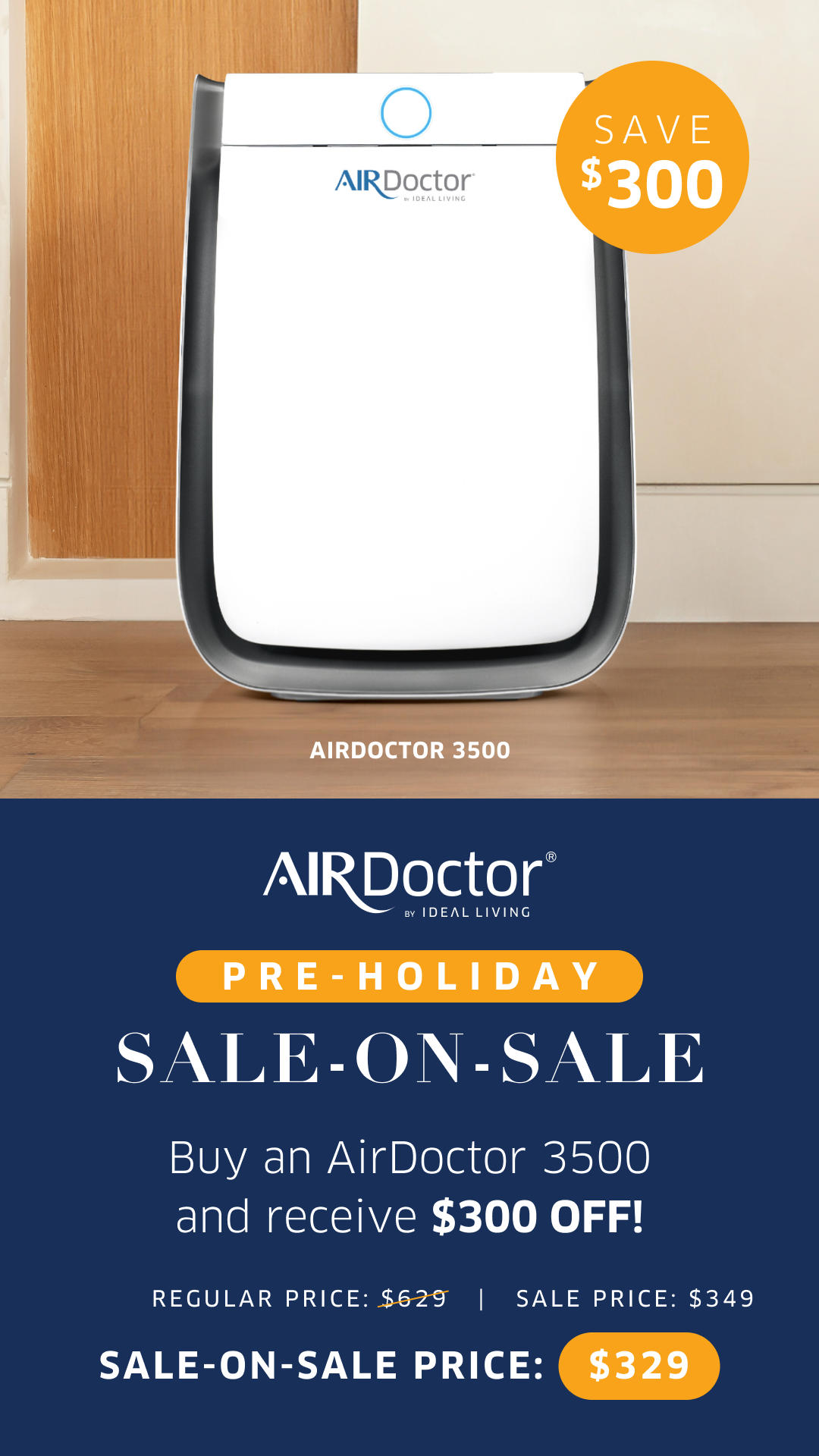
- Best premium: AirDoctor 3500 — sealed UltraHEPA plus a heavy gas and VOC filter
Table of Contents
Best Air Purifiers for Home: Comparison
The table lines all eight up on the numbers that decide the purchase: CADR for smoke, dust, and pollen; the room size that CADR covers at four to five air changes an hour; filter type; a realistic annual filter cost; the published noise range; current price; and buyer rating.
How the Best Air Purifiers for Home Were Picked
These units have not been run in a test chamber. The picks come from manufacturer spec sheets, the AHAM Verifide directory of independently confirmed CADR numbers, current Amazon pricing and ratings, and what owners report after months of use. Where a company publishes only a partial CADR or skips AHAM, the guide says so: the Austin Air HealthMate and the AirDoctor 3500’s dust and pollen figures are both in that group.
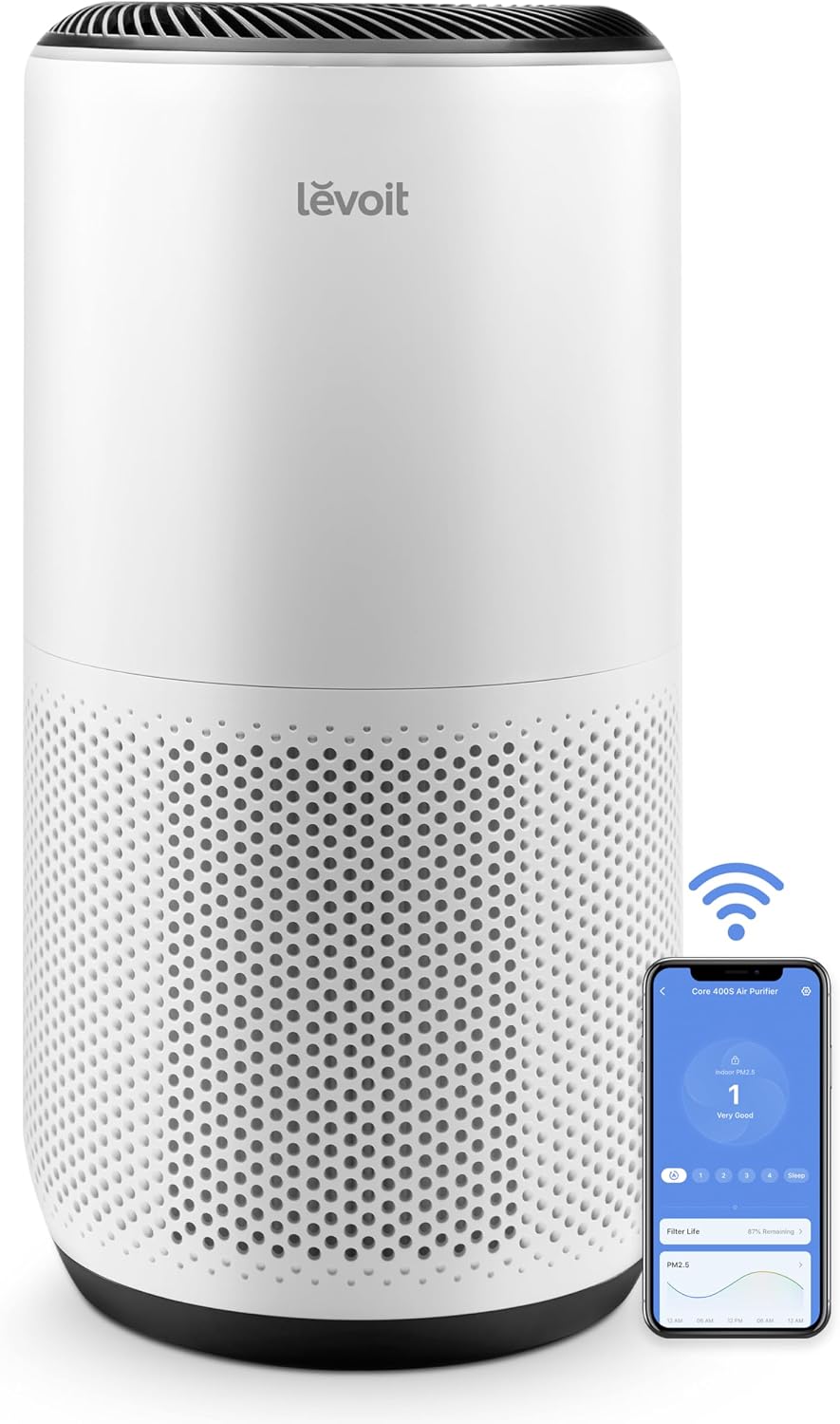
Best Overall: Levoit Core 400S-P
For the typical living room, bedroom, or home office, this is the one to buy. The Levoit Core 400S-P pairs a genuine H13 HEPA layer with real activated carbon in one 3-in-1 filter, and its AHAM-verified CADR of 231 for smoke, 240 for dust, and 259 for pollen covers roughly 360 square feet at nearly five air changes an hour. A laser sensor drives a PM2.5 readout and auto mode, and sleep mode drops to about 22 decibels with the display off. The replacement filter is about $50 a year. Downsides are minor: the app wants an account, the carbon layer is thin next to a dedicated odor unit, and it is audible at top speed.
Pros
- AHAM-verified CADR for real rooms
- Genuine HEPA plus carbon filter
- Near-silent on sleep mode
- Accurate auto mode and sensor
- Cheap yearly filter
Cons
- App requires an account
- Thin carbon layer for odors
- Loud at top speed
For a room closer to 200 square feet the Core 300-P below saves money; for a 500-square-foot great room, jump to the Blueair or the Vital 200S-P. To size it precisely, run your room through our CADR calculator.
Looking ahead, expect home air purifiers to get quieter, cheaper and smarter, with more models sold with sensors and auto modes at mid prices. The catch is that smart features often hide the one number that matters, the smoke CADR.
Best for Large Rooms: Blueair Blue Pure 211i Max
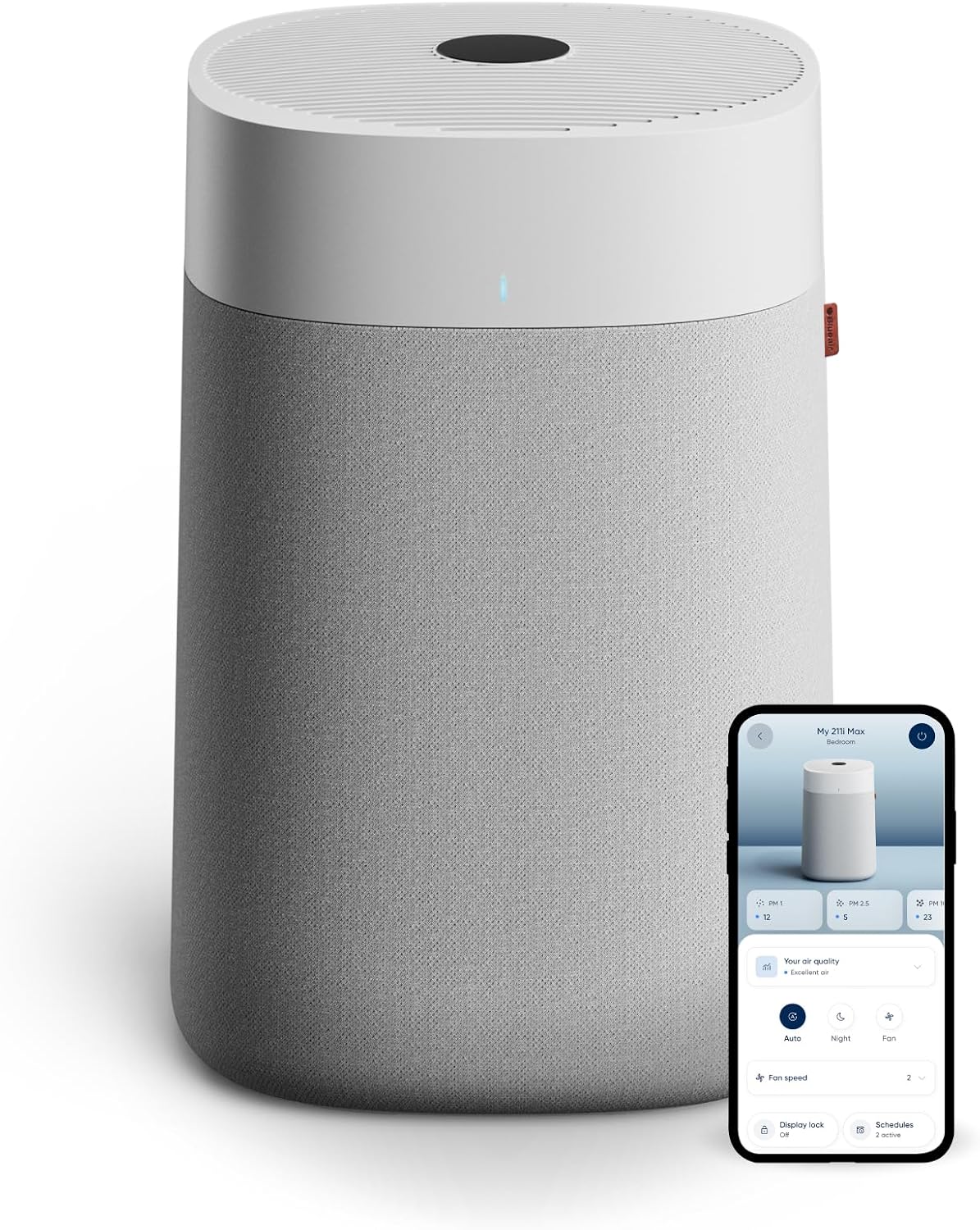
Open-plan living areas defeat most purifiers because the CADR is not there. The Blueair Blue Pure 211i Max solves that with airflow: its HEPASilent approach lightly charges incoming particles and catches them in a less dense mechanical filter, so the fan moves a lot of air for the noise and wattage. Blueair publishes a CADR of 435 for smoke, 452 for dust, and 450 for pollen, rates the unit for rooms around 650 square feet, and lists noise topping out near 53 decibels. It is Wi-Fi connected with auto mode, a washable fabric pre-sleeve, and one particle-and-carbon filter. The catch is running cost: that filter is $60 to $90 every six to nine months, so budget $80 to $120 a year. HEPASilent includes a light ionizing step; Blueair states its units meet the strict California ozone limit.
Best Budget: Levoit Core 300-P
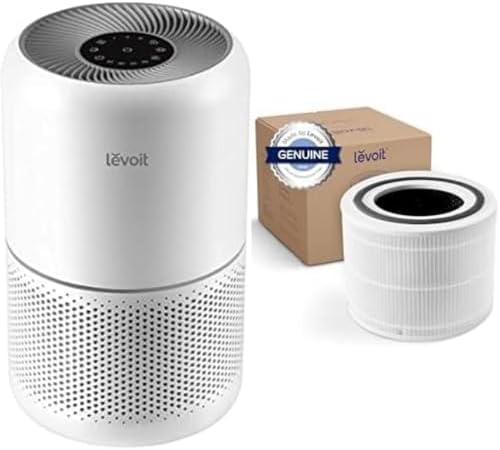
The Levoit Core 300-P is the pick when the budget is tight or the room is a small bedroom. At around $104.99 it still uses a real HEPA-and-carbon 3-in-1 filter, not a “HEPA-type” pad, and its CADR of about 133 for smoke, 141 for dust, and 145 for pollen covers up to roughly 215 square feet at five air changes an hour. It is plain: three speeds, a timer, a filter-life light, no Wi-Fi or sensor. It is also the most reviewed air purifier on Amazon by a wide margin, at 4.7 across more than 100,000 ratings. Filters are about $30 every six to eight months, so figure $45 to $60 a year. Do not stretch it to cover a living room; buy two units for two rooms first.
Best for Allergies and Dust: Coway Airmega AP-1512HH
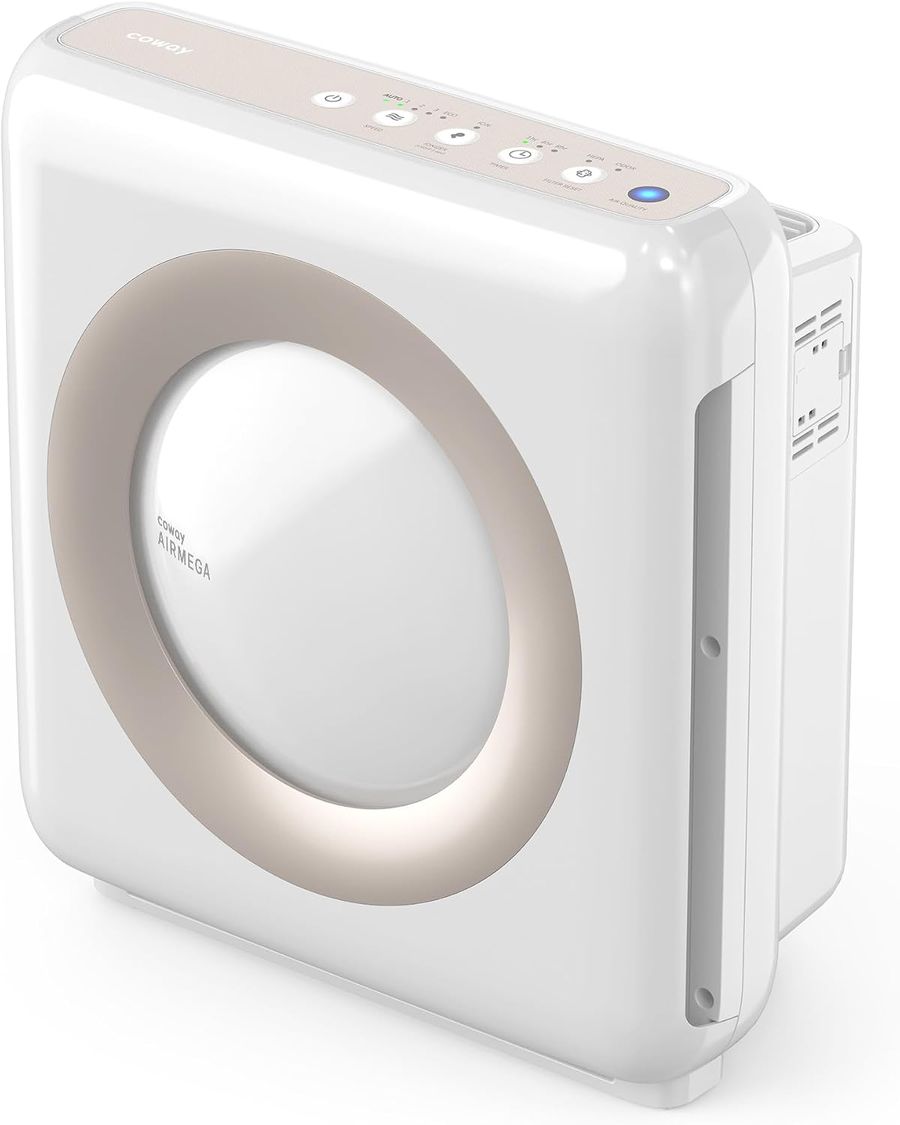
The Coway Airmega AP-1512HH, sold as the “Mighty,” has been a default allergy pick for close to a decade. Its AHAM CADR is 246 for dust, 240 for pollen, and 233 for smoke, covering 361 square feet at nearly five air changes an hour. What sets it apart for allergy households is the filter stack: a washable mesh pre-filter you rinse every couple of weeks catches hair and coarse debris before it reaches the HEPA layer, so the expensive filter lasts. Genuine replacement sets run $50 to $70 a year, a sensor drives auto mode, and the ionizer has a labeled off button — leave it off. Our guide to the best air purifiers for allergies covers placement and filter choices in more depth.
Best Quiet Pick for a Bedroom: Levoit Vital 200S-P
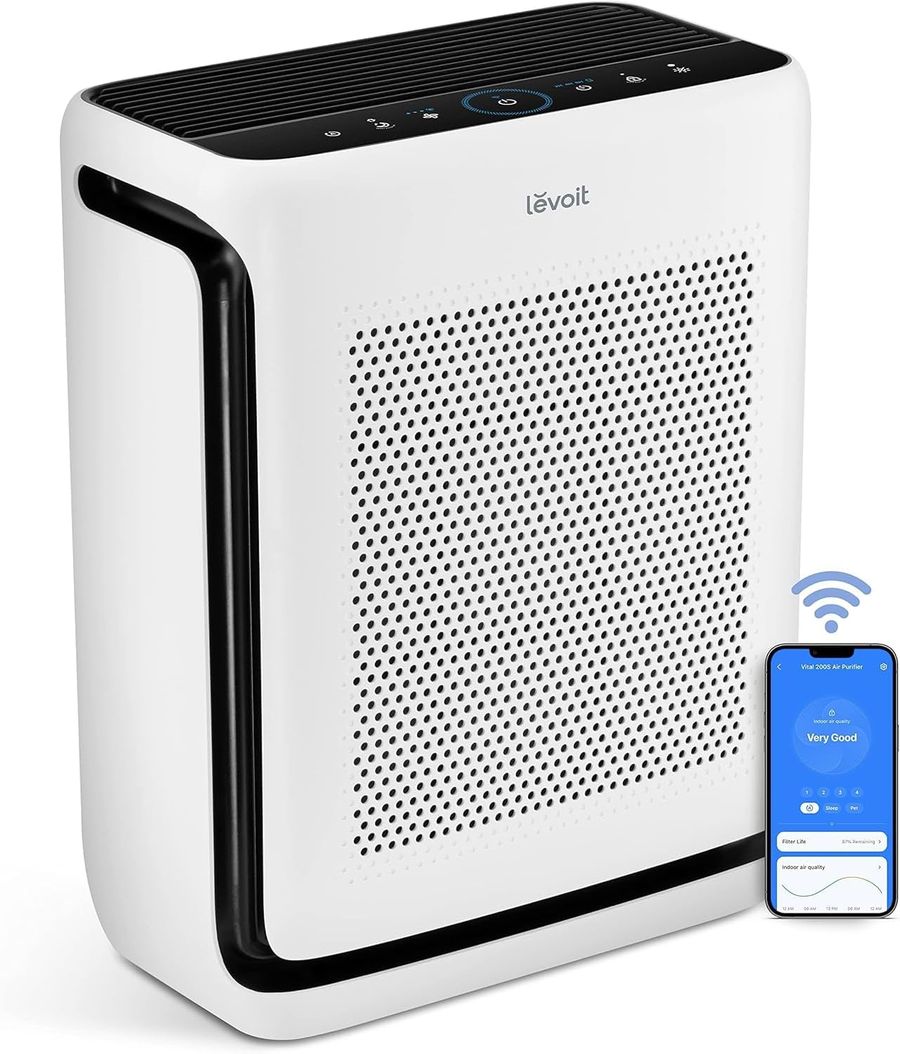
The Levoit Vital 200S-P is the one for a bedroom too big for a Core 300. Its AHAM-verified CADR is 250 for smoke, 254 for dust, and 289 for pollen, enough for a room close to 380 square feet, yet its lowest setting is rated at 27 decibels, quiet enough to disappear behind a ceiling fan. It has a washable pre-filter, a genuine HEPA-and-carbon filter, an air-quality sensor, a display-off button, and a top handle. Filters run $55 to $70 a year; the footprint is bulkier than the Core line. If a quiet bedroom is the whole reason you are shopping, our roundup of the best air purifiers for the bedroom compares sleep-mode noise across more models.
Best Value: Winix 5510
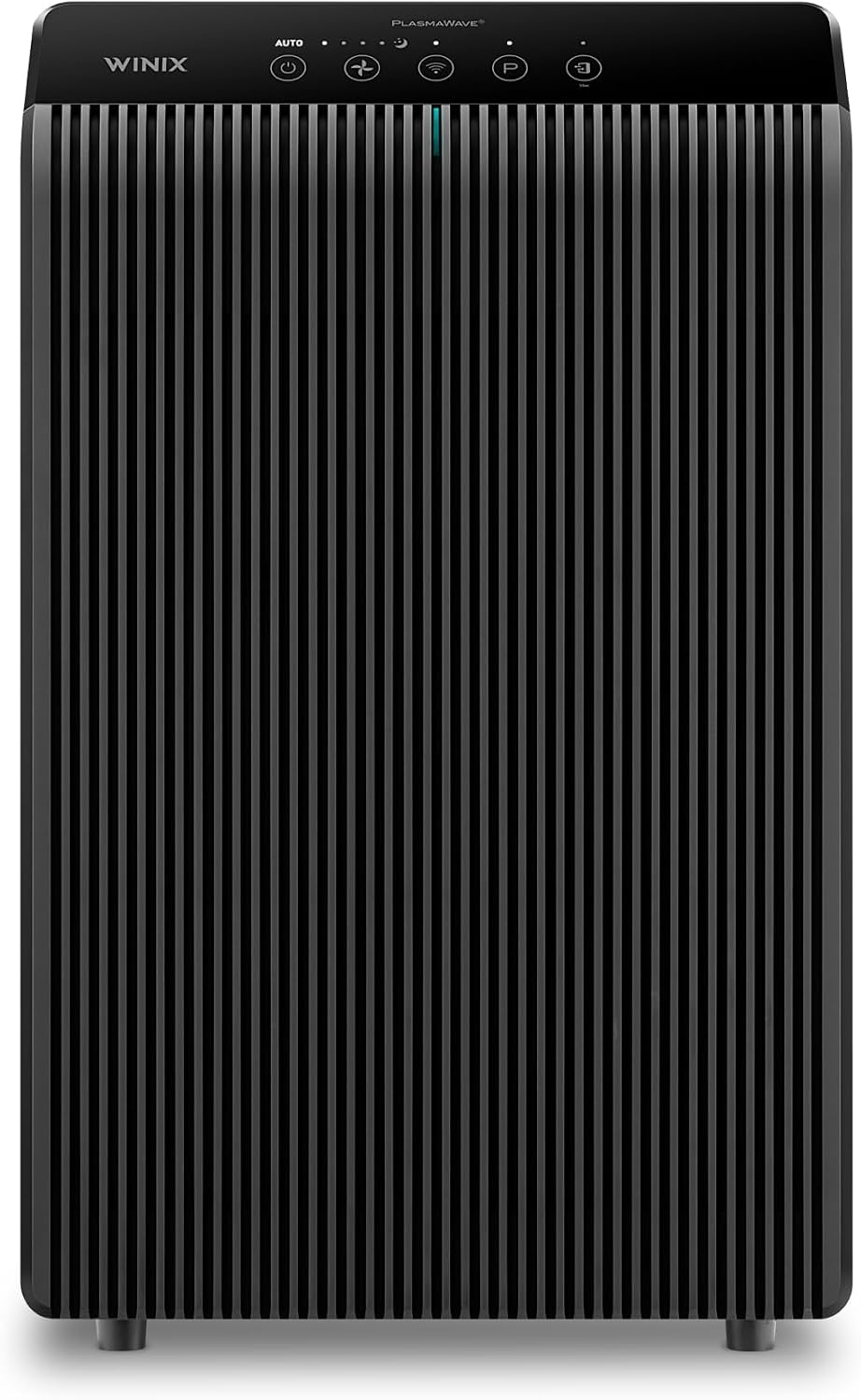
The Winix 5510 is the current version of the long-running 5500-2, and it is the pick when the Core 400S-P is sold out or over budget. Winix’s AHAM Verifide listing puts it at 253 smoke, 252 dust, and 247 pollen CADR, enough for about 390 square feet, and its washable carbon filter keeps running costs the lowest here at roughly $35 to $55 a year. Two caveats: switch off the PlasmaWave ionizer, and note that independent testing measured top-speed noise past 60 decibels, so run it on auto or low.
Best for Odors and VOCs: Austin Air HealthMate
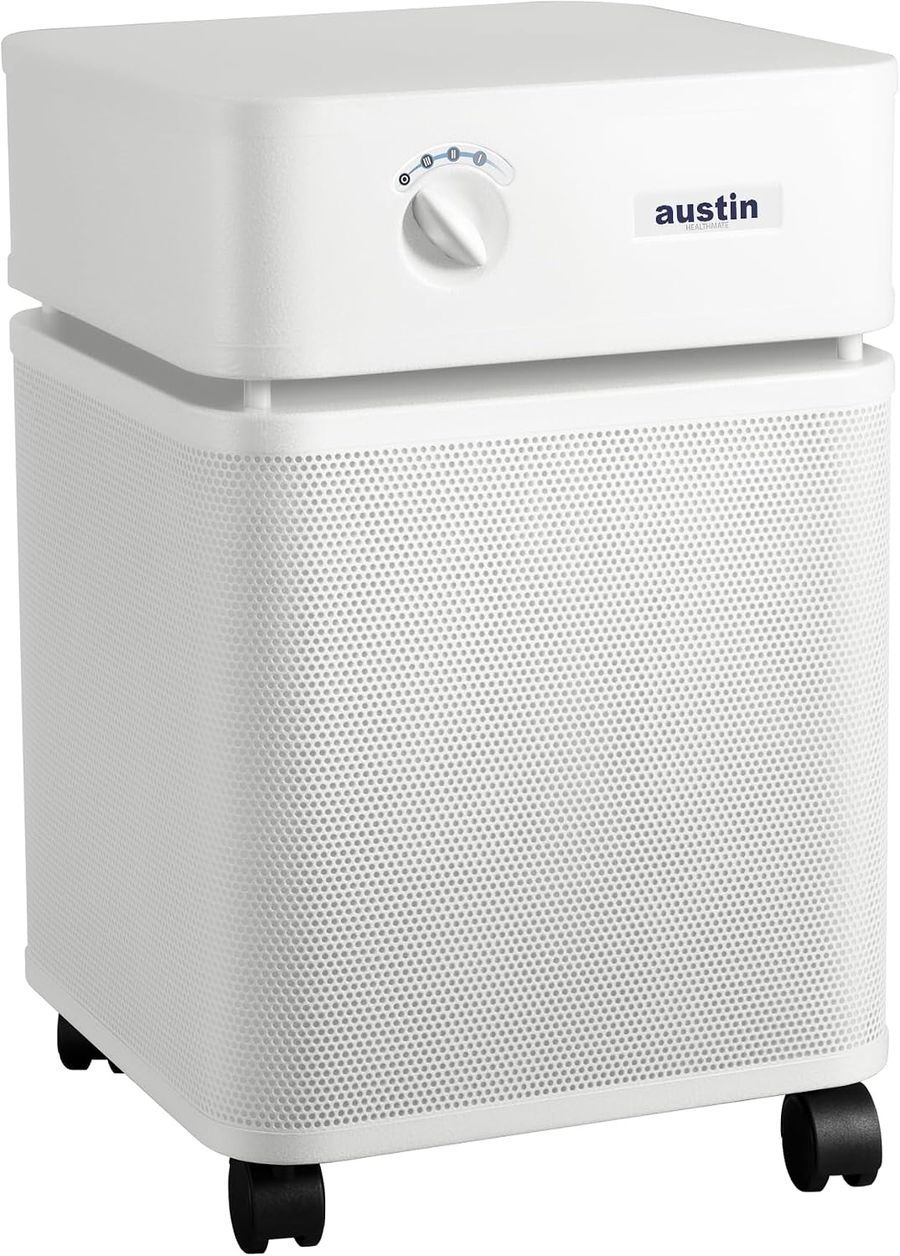
Most home purifiers carry a few ounces of carbon, which handles cooking smells but saturates fast near a real chemical source. The Austin Air HealthMate carries 15 pounds of activated carbon blended with zeolite behind a true HEPA layer, in a steel cabinet. That is the machine for persistent smoke, off-gassing from new furniture or flooring, wildfire season, or chemical sensitivity. Austin does not submit its units to AHAM, so there is no verified smoke or pollen number; the “up to 1,500 square feet” claim holds only at low turnover, so plan on about 750 square feet for four to five air changes an hour. The single filter lasts five years; a replacement runs $400 to $470, about $80 to $95 a year. It is heavy, plain, sensorless, and loud at speed. You buy it for the carbon.
Best Premium: AirDoctor 3500
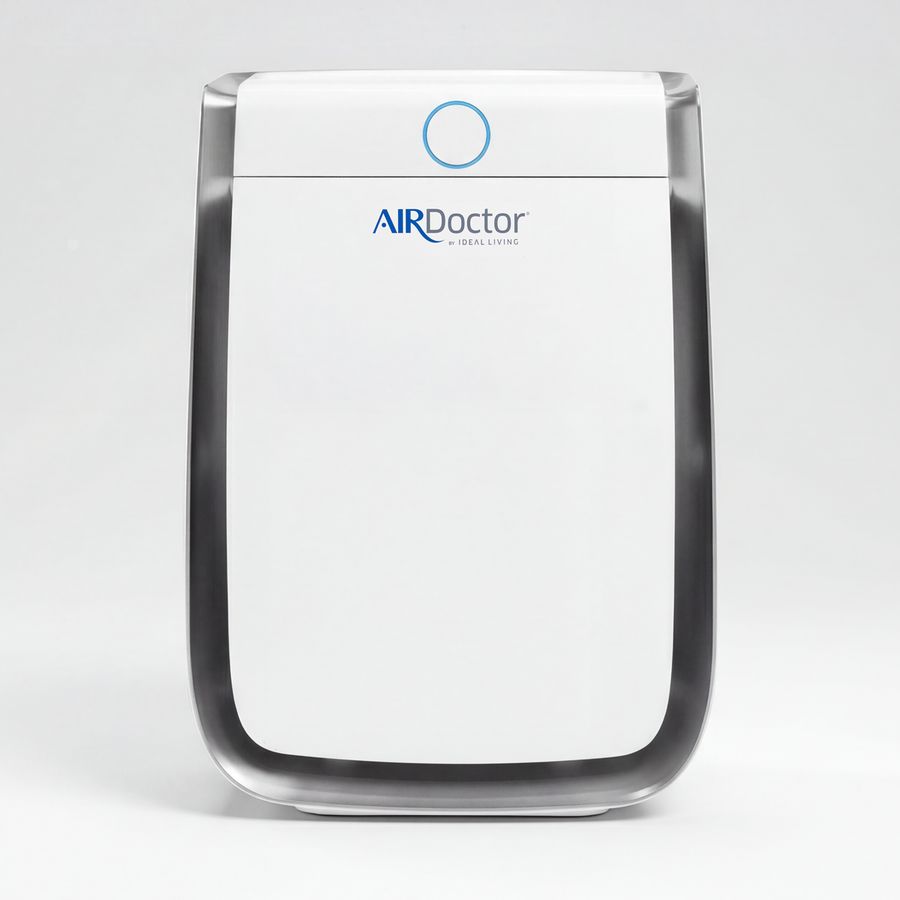
The AirDoctor 3500 is the upgrade pick for a large main room where you want strong particle capture and serious gas handling in one unit. It uses a sealed UltraHEPA filter that AirDoctor rates at 99.99% capture down to 0.003 microns, backed by a dual-layer carbon and VOC filter with potassium permanganate for gases. AirDoctor lists a CADR of 340 and says it turns over about 630 square feet four times an hour; it does not publish separate dust and pollen figures. Noise runs 39 to 59 decibels with auto mode and a sensor. The real cost is filters: you replace an UltraHEPA filter roughly once a year and a separate carbon/VOC filter about every six months, which puts running cost well over $200 a year, the highest here. Our full AirDoctor 3500 review digs into the sealed-housing claims and filter schedule.
Match CADR to Your Room Size
CADR is the number that matters most, and the one marketing buries under a big “cleans up to 1,700 sq ft” headline. AHAM measures it in cubic feet per minute, separately for smoke, dust, and pollen; smoke is the hardest particle to catch, so everything here is sized off the smoke number. The rule: multiply the room’s square footage by 0.66. That is the minimum smoke CADR you want, and it delivers roughly five air changes an hour with an eight-foot ceiling. A 300-square-foot bedroom needs about 200; a 500-square-foot great room about 330. The maker’s “up to X square feet” claim is figured at one or two air changes an hour, so cut it by half to two-thirds first.
Two air changes an hour makes the air “better.” Four to five is what matters if someone has asthma or hay fever, because allergens are generated continuously and a lower rate always chases a backlog. So size up: if the math says 200, buy 250 to 280 and run it on a quieter speed. To check your room against verified numbers, see our list of air purifiers ranked by CADR.
True HEPA vs “HEPA-Type”
A true HEPA filter captures at least 99.97% of particles at 0.3 microns, the hardest size to catch. “HEPA-type,” “HEPA-like,” and “99% at 2 microns” are phrases for a filter that misses that bar and passes a meaningful fraction of fine particulate. Every unit here uses genuine HEPA; Levoit and Winix label theirs H13, which is tighter still.
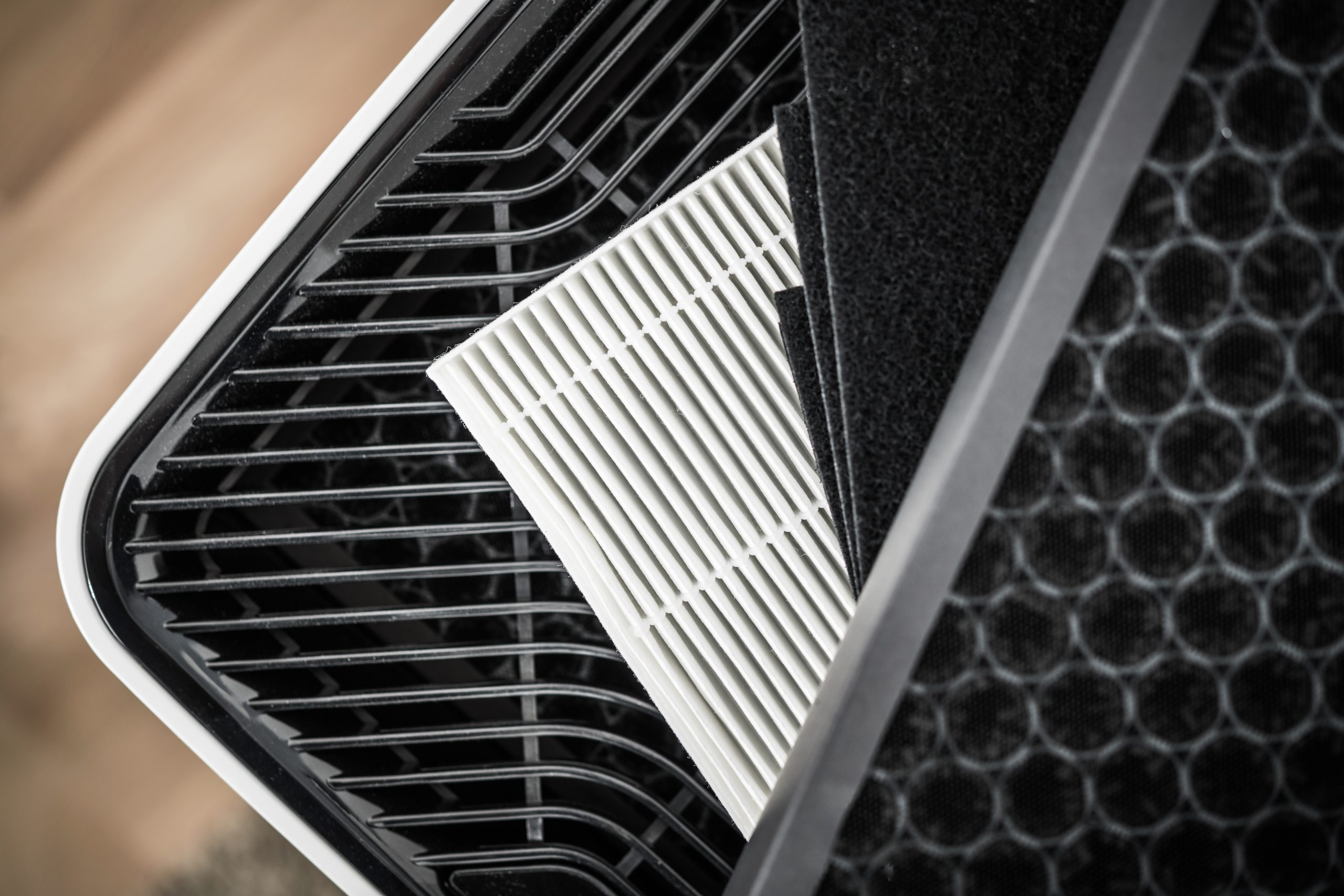
HEPA is rated at 0.3 microns because that is the worst case; it captures both larger and much smaller particles at even higher efficiency, including most bacteria and virus-carrying droplet nuclei. It traps rather than neutralizes, which is why filter changes matter. Our guide to air purifiers for bacteria and viruses covers what that realistically means against pathogens.
Activated Carbon for Odors, Smoke, and VOCs
HEPA does nothing for gases and smells. Cooking odor, cigarette or wildfire smoke, paint fumes, and off-gassing from new furniture are gas-phase, and only activated carbon adsorbs them. A thin carbon-coated mat, which most compact units use, freshens a kitchen for a few months and then stops doing much; a dedicated odor machine like the Austin Air HealthMate carries pounds of pelletized carbon and works for years. If odors or smoke are your main reason for buying, weight the decision toward carbon mass and expect to replace that layer more often than the HEPA. If particles are the point, the standard carbon layer in the Core 400S-P or Coway is fine.
What Replacement Filters Really Cost Per Year
The sticker price is a third of the story. Filters are the real cost of ownership, and the spread is large. Here is the yearly math for three picks, using genuine filters at current prices and the maker’s schedule.
Levoit Core 400S-P: one 3-in-1 filter at about $50, once a year. About $50 a year — the cheap end, and a big reason the Core line is easy to recommend.
Blueair Blue Pure 211i Max: one particle-and-carbon filter at $60 to $90, every six to nine months. About $80 to $120 a year. The airflow is excellent, but you pay for it.
AirDoctor 3500: an UltraHEPA filter about once a year plus a carbon/VOC filter about every six months. Well over $200 a year, the highest here.
Vacuuming the pre-filter monthly helps the main filter reach its rated life. Our air purifier filter replacement cost guide lists per-year figures for most current models and covers whether third-party filters are worth it.
Noise and Running It in a Bedroom
A purifier that is too loud gets turned down or off, and then it is not cleaning anything. Check the sleep-mode rating: at or below about 25 decibels it disappears at night, and the Core 400S-P, Core 300-P, and Vital 200S-P are all there. The Winix 5510 and Austin Air both pass 60 decibels wide open. Buy enough CADR that your target air-change rate happens on speed one or two, and high-speed noise stops mattering.
Skip Ozone, and Be Skeptical of Unproven Tech
Do not buy an air purifier that deliberately produces ozone. Ozone is a lung irritant, health agencies are clear that ozone generators sold as air cleaners are not safe to run in occupied rooms, and “activated oxygen” does not change that. Several purifiers include a switchable ionizer, which still produces trace ozone and mostly makes particles stick to your walls rather than removing them; on the Coway, Winix, and Blueair units here, leave it off.
Caution is also due with purifiers built around a proprietary reactive coating or photocatalytic process sold as destroying pollutants at the molecular level. Some have drawn advertising complaints, and independent testing often comes back underwhelming next to a plain HEPA-and-carbon unit at the same price. When a company will not publish an AHAM CADR, treat the silence as information.
Features Worth Paying For, and Where to Put the Unit
A real particle sensor with auto mode is worth paying for: it runs the fan hard when you cook or vacuum and idles it when the air is clean. A display-off button matters in a bedroom, and a carry handle is underrated. Skip UV-C lamps, ionizer toggles, and fragrance cartridges.
Placement is simple. Put the unit in the room where people spend time, not a hallway, with a foot or two of clearance on the intake and output sides, and raise it slightly off the floor. Keep the door closed for the fastest cleanup, and run it continuously, because the air load rebuilds within an hour of shutting it off.
The downside of proprietary filters is the long tail of cost. Expect more brands to lock replacement filters behind their own shops, and do not be surprised if a bargain purifier turns out to need a pricey refill.
FAQ
Do air purifiers really work?
Yes, for airborne particles. A correctly sized HEPA air purifier for home use measurably lowers PM2.5, pollen, dust, pet dander, and smoke particles in the room it occupies. It does little for gases without a carbon filter, cannot fix mold or moisture at the source, and only helps in that one room with the door closed.
What CADR does a room need?
Multiply the room’s square footage by 0.66 and shop for a smoke CADR at or above that number. A 150-square-foot bedroom needs about 100, a 300-square-foot room about 200, a 500-square-foot great room about 330. Going 20 to 30 percent above the minimum lets you run it on a quieter speed.
True HEPA vs HEPA-type?
True HEPA is a tested standard: at least 99.97% of particles captured at 0.3 microns. “HEPA-type” or “HEPA-like” is a looser filter that misses that bar and passes more fine particulate. If a listing avoids the word “true” or quotes efficiency at 2 microns instead of 0.3, assume it is the weaker kind.
How often do filters need replacing, and what does it really cost?
Most combined HEPA-and-carbon filters last about a year; carbon layers and the filters in high-airflow units often need changing every six months. Real annual cost runs from roughly $45 to $50 for a Levoit Core, to $80 to $120 for a Blueair 211i Max, to more than $200 for an AirDoctor 3500.
Are ionizers safe?
Ozone generators are not safe in occupied rooms and should be avoided entirely. Ionizers are milder but still produce trace ozone and mainly deposit particles onto surfaces rather than removing them. If a purifier has a switchable ionizer, HEPA is doing the real work; turn the ionizer off.
Should an air purifier run 24/7?
Yes. The particle load in a room rebuilds within an hour of switching off, so continuous running is what keeps levels down. Use auto mode or a low speed most of the time; energy use on low is small, and steady running is easier on the filter than repeated high-speed bursts.
One big air purifier or several small ones?
For a whole house, several right-sized units, one per room you use, beat a single large one trying to serve a floor, because air does not move freely between rooms with doors in the way. The exception is a true open-plan space, where one high-CADR unit like the Blueair 211i Max is the better answer.
What happens next: more shoppers will compare AHAM numbers, and brands without them will have to explain why. Expect labels to get clearer, but expect marketing words like molecular and photocatalytic to hang around too.
Bottom Line
Size the purifier to your largest lived-in room, insist on a true HEPA filter with real activated carbon, and add up the yearly filter cost before you buy. For most homes the Levoit Core 400S-P is the right balance of verified CADR, quiet operation, and a cheap annual filter. Move up to the Blueair 211i Max for a great room, drop to the Core 300-P for a small bedroom, pick the Coway AP-1512HH for allergies and dust, and step up to the Austin Air HealthMate or AirDoctor 3500 only if odors, smoke, or VOCs are why you are shopping. Whatever you pick, run it continuously and leave any ionizer off.