
Price, rating and room-size numbers were checked against the current Amazon listing on October 10, 2026.
There are so many models of air purifiers out there that it can be a complicated decision to make, mainly if you have seen a few advertisements for them.
You have probably seen Air Doctor 3500 (Formerly Air Doctor Pro and Air Doctor 3000) air purifier ads on the web, social media, or TV. These ads claim it is among the best air purifiers on the market, outperforming most competitors.
Is that true?
So does it stand out? Here is what the specs, the listing and the filter costs show.
On paper it is one of the stronger home air purifiers in its price range, with a large-room rating, a sensor and a three-stage filter. The listing says it removes dust, smoke, pet dander, pollen and odors, which makes it a good fit for homes with pets.
Pros
- A high-quality air filtration operation
- Auto sensor with an indicator for air quality
- 24-hour timer
- The strong fan has 4 speeds.
- Extremely quiet when operating
- Energy Star Certified
Cons
- No remote control (New model AD3500i has it)
Table of Contents
AirDoctor AD3500 Price Check
Price on Amazon: $480.74 | 4.7 stars from 481 ratings (checked October 10, 2026)
Looking ahead, expect air purifiers like the AD3500 to lean harder on connected features, sensor displays and independent test results, because shoppers now compare CADR, filter costs and app support side by side. The catch is that the real cost of a purifier is the filters, so a higher sticker price with a pricey yearly filter pack can end up costing more than it first seems.
Air Doctor 3500 Design, Size
Design is subjective – one may like it, and another may dislike it. The Air Doctor AD3500 has a clean, modern look.
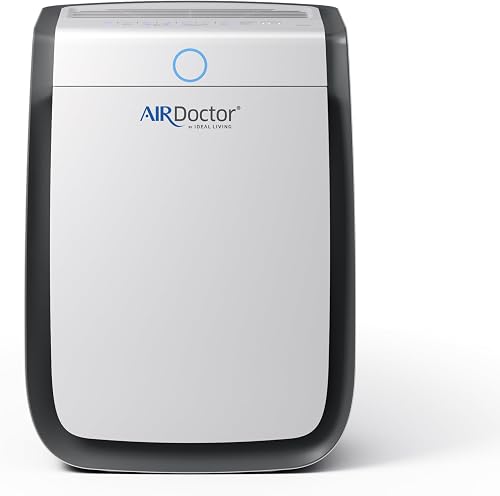
It is 23.5″ high, 16″ wide, and 8.5″ in depth. It has a “boxy” look about it, but rounded edges and corners make it blend into any space in your home, and it weighs around 20 pounds, which makes it easy to move around. The two-tone gray and white finish blends into most rooms.
The machine has two vents in the front, drawing in the air before expelling it from the top when it is cleaned.
The air sensor is built-in on one side, and an indicator is on the front.
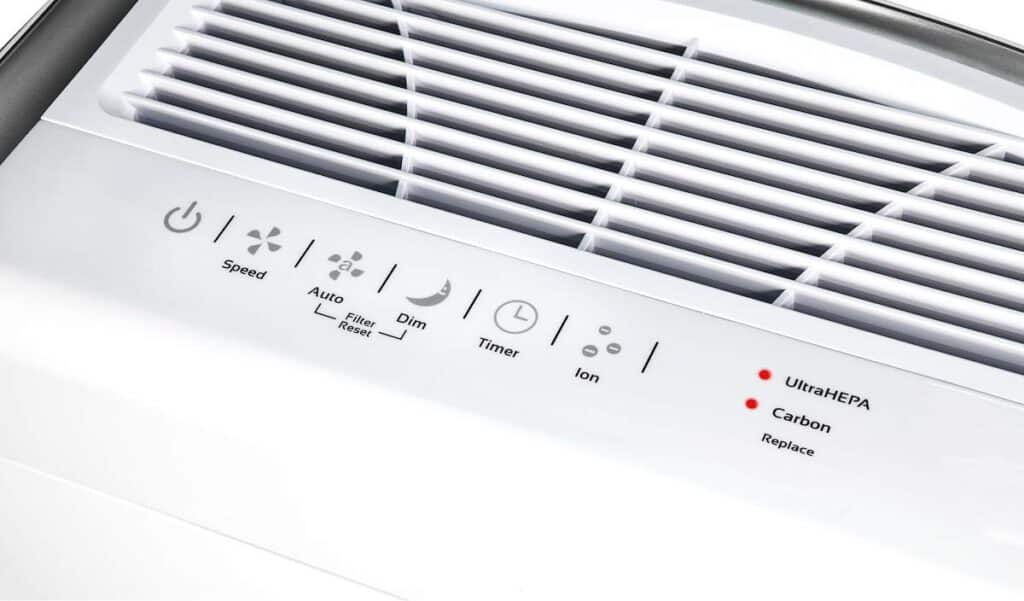
All control buttons are on the top of the unit; they are simple, with understandable symbols and instructions. More about each button can be read in the Key Features section.
Placement
As a rule, place an air purifier close to the pollution source. For example, place your AirDoctor next to your dog’s bed to trap pet dander.
If you don’t have any specific airborne particles you want to eliminate, you should place an air purifier closer to the middle of the room.
But the AirDoctor 3500 air purifier you can place everywhere in your room as it is powerful enough to suck air from every corner of your place.
Per the AirDoctor user manual, avoid placing your device closer than 1 foot from the walls, and don’t put it under direct airflow from a fan or AC.
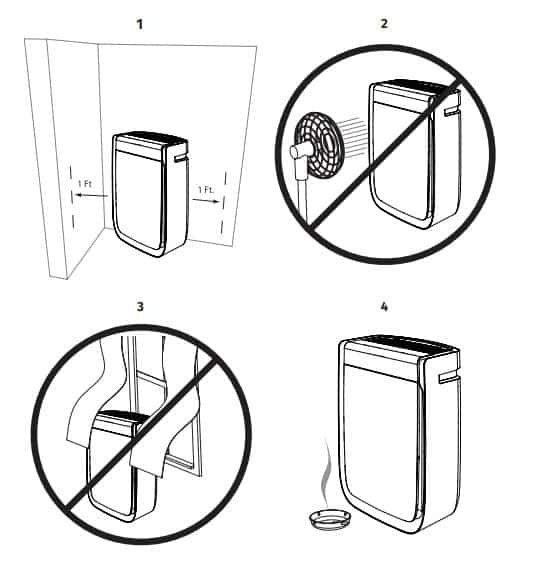
Also, check if the air inlet or outlet grill is not too close to the curtains or drapery.
How Does Air Doctor 3500 Work, And What Sources of Indoor Pollution Destroy?
True HEPA filters trap 99.97% of particles at 0.3 microns. The Amazon listing says the AD3500 UltraHEPA filter captures 99.99% of particles down to 0.003 microns, which the maker says is 100 times smaller than the HEPA standard.
So Air Doctor AD3500 can trap larger particles such as dust, pollen, mold spores, pet dander, and pet hair and capture the smallest ones – volatile organic compounds, viruses, and bacteria, including swine flu, enterovirus, etc.
So you won’t have to worry about increasing the air quality in the room where you will use AirDoctor 3500 as it destroys plenty of indoor pollution.
How is that possible?
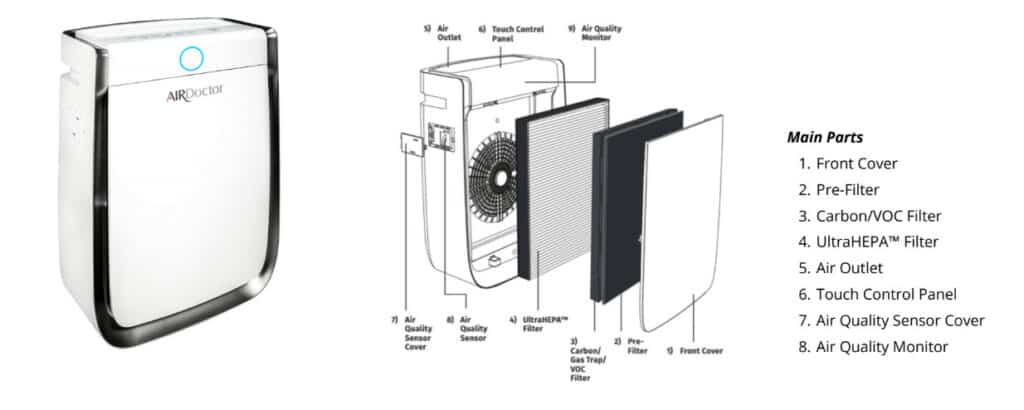
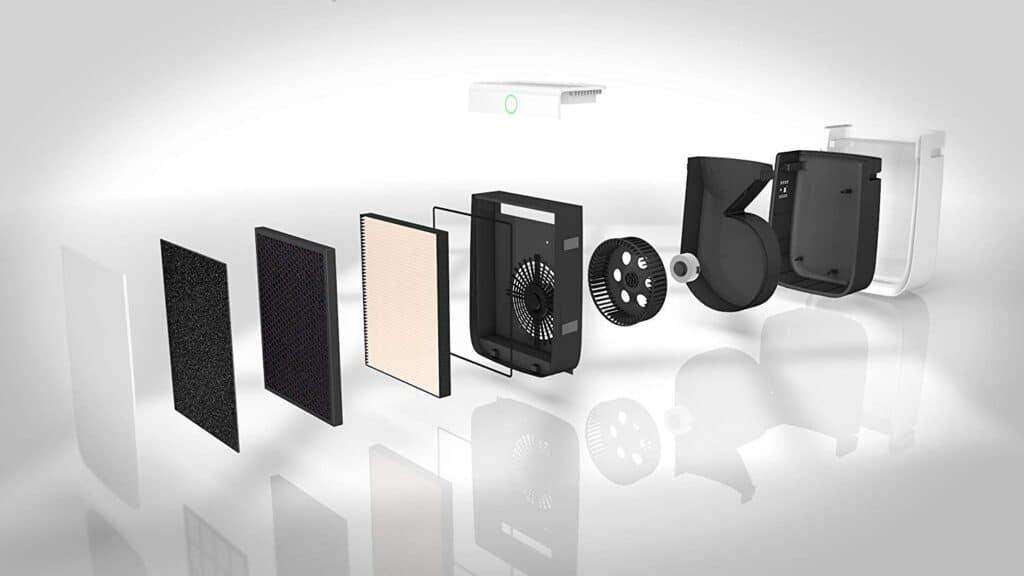
Thanks to its purification system. The AirDoctor 3500 purifier uses a cleanable pre-filter, a Dual-action carbon/gas trap filter, and an UltraHEPA filter, independently tested to eliminate all microscopic particles floating around in the air.
Let’s take a closer look at the filters:
- Pre-Filter. Its task is to trap the most extensive airborne particles, such as dust and hair, to extend the life of other internal filters. The pre-filter is cleanable and reusable.
- Carbon Filter (Gas Filter). As the name says, it removes gasses and not only. Carbon Filter also eliminates odors, volatile organic compounds, and dangerous ozone. Under regular use, it can serve for six months.
- UltraHEPA filter. It captures 99.99% of 0.003-micron particles, per the listing.
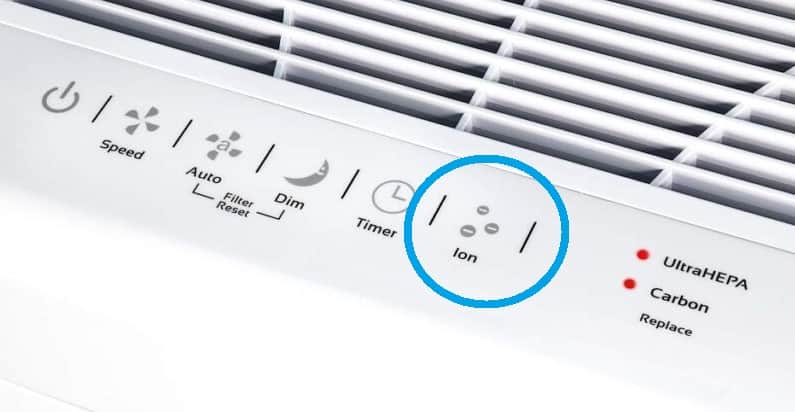
- Ionizer. It helps to remove smells and odors by sending negatively charged ions into the air.
So overall, AirDoctor 3500 air cleaner does an excellent job of cleaning the air. The UltraHEPA filter does most of the work here.
Few purifiers in this price range pair a filter this fine with a sensor and a quiet fan.
Read below in the Maintenance section for more about AirDoctor 3500 filters and the necessity to change the filters; read below in the Maintenance section.
Air Doctor 3500 Ion
What is ion on AirDoctor?
Nowadays, many air purifiers have an ionizer function, and AirDoctor 3500 is no exception. The ionizer electrically charges air molecules and is invented to help filter and remove microbes, aerosols, and other particles from the air.
Does AirDoctor release ozone?
You are probably aware that ionizers produce ozone. And yes, also AirDoctor.
But here is the good thing about AirDoctor 3500. It has been tested for this, and with the ionizer turned on, the ozone increase was tiny, per the maker’s test.
For comparison, the FDA limit for indoor medical devices is 0.05 ppm, so the AirDoctor figure sits well below it.
So it is safe to use AirDoctor 3500 with an ionizer on, but if you still doubt that, you can turn it off any time with a push of a button.
Air Doctor 3500 Key Features
AirDoctor 3500 has the features you may need for your air purifier. Let’s take a look at them.
Auto Mode
Auto mode is close to a must-have today. Why would you want to check the air purifier or your air quality sensor several times a day if you can leave it on auto mode and let it do its job?
AirDoctor 3500 has an auto mode, which works perfectly because it works with a built-in air quality sensor. So it reads the current air quality in your room and adjusts the fan speed automatically for you.
Air Quality Sensor/Monitor
The air quality sensor and monitor work together – one makes measurements, and the other shows results.
As noted above, the automatic air quality sensor monitors the air quality around you. To make it work, you need to switch to auto mode, and the air purifier will immediately adjust the correct filtration level based on the room’s current air quality.
It is illustrated as a colored circle on the face of the unit. The color tells you about the current air condition.
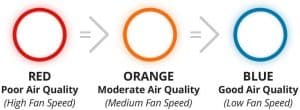
- Red color – Poor air quality, highest fan speed
- Orange color – Moderate air quality, medium fan speed
- Blue color – Good air quality, low fan speed
Overall, AirDoctor 3500 has 4 Fan speeds. Turbo, high, medium, and low settings for the fan. If you don’t want to use the auto mode, you can switch between fan speeds manually.
Timer
AirDoctor 3500 has a 24-Hour Timer. You can set the amount of time you want the cleaner to run. It can automatically switch the unit off after 1 to 24 hours.
Filter Indicator Light
AirDoctor 3500 comes with two lights. One is for the UltraHEPA filter, and the second is for the Carbon filter. Lights alert you when the filter needs to be replaced.
Night Mode
Night mode dims the control panel so you can sleep better. It is a simple but necessary feature if you use AirDoctor in the bedroom. Light sleepers will like it.
Anything Missing?
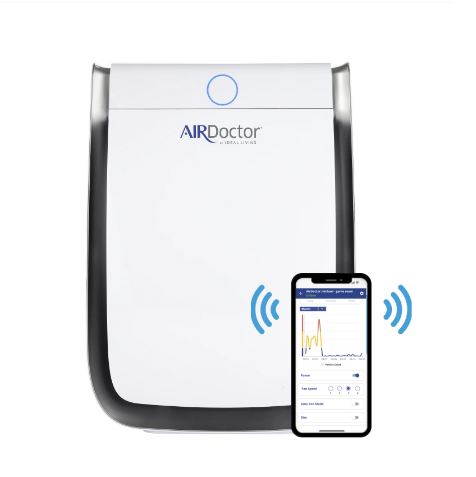
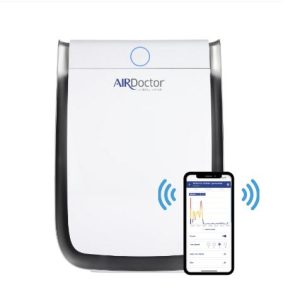
The original AD3500 has no remote or app, but the newer AD3500i adds both. AirDoctor recently announced their new family member AD3500i, which is identical to AD3500, with a connected app.
With the app, you can now see real-time air quality on your phone, filter change alerts, and all air purifier controls.
The risk to watch is the ionizer. Even with low ozone numbers, some buyers want none at all, and indoor ozone rules may tighten. Expect more brands to ship with the ionizer off by default, as AirDoctor does, and do not be surprised if filter packs and sensor accuracy become the next fight between brands.
Air Doctor 3500 Noise Level
The Air Doctor uses what the maker calls WhisperJet fans.
The Air Doctor 3500 is a good choice if you want a quiet purifier. It is quiet on the low and medium settings, at around 39 dB, according to the maker. Anything below 40dB is considered to be quiet.
However, if the fans are turned on in the high or turbo settings, the noise level can increase to around 59 dB. That’s like an ordinary spoken conversation.
To put that in context, compare AirDoctor noise to that of other home appliances. For example, a refrigerator works with about 50dB of noise, an air conditioner 50-75dB, and a dishwasher 55- 70 dB.
Most appliances, such as vacuum cleaners, hair dryers, etc., are louder.
Air Doctor 3500 Power Consumption
At the lowest fan speed, AirDoctor 3500 consumes only 11 watts; at the highest, it consumes 110 watts. That’s less than the industry’s average.
Remember that AirDoctor works only a few minutes on the highest fan speed and then switches to a lower one. So it doesn’t consume 110 watts all the time.
For comparison, a 55-inch TV can draw around 100 watts, and a desktop computer 100 to 450 watts.
Let’s make a quick calculation. Say you run the AirDoctor 24/7 at 17 cents per kWh.
Here is the monthly cost at the lowest and highest speeds:
| Fan speed | Cost per month, running 24/7 at 17 cents per kWh |
|---|---|
| Lowest speed (11 W) | $1.35 |
| Highest speed (110 W) | $13.46 |
So you can easily let your AirDoctor 3500 run all day and night. It won’t drastically hurt your monthly electricity bills.
AirDoctor 3500 CADR, ACH, and Room Coverage
ACH And Room Coverage
ACH stands for air changes per hour, which means how often the air purifier can exchange all air in the room in one hour.
Here is how many times per hour (ACH) and how large rooms Airdoctor 3500 can clean.
| Air changes per hour | Room size (8-foot ceiling) |
|---|---|
| 1 ACH (1 time an hour) | 2,520 sq. ft. |
| 2 ACH (2 times an hour) | 1,260 sq. ft. |
| 3 ACH (3 times an hour) | 840 sq. ft. |
| 4 ACH (4 times an hour) | 630 sq. ft. |
| 5 ACH (5 times an hour) | 504 sq. ft. |
Usually, it is good to have the air cleaned at least 2-3 times every hour so that you can use AirDoctor 3500 for 850-1200 square feet in large rooms.
If your air is very polluted, you might aim for 4-5x air changes per hour; in this scenario, you will be able to purify 500-630 square feet of large spaces with this air purifier.
For more on how coverage claims work, see our CADR guide and CADR calculator.
CADR
You will also want to know about the ratings of the CADR or the Air Doctor 3500 purifier’s clean air delivery rate. This would be important since it can help you determine how effective it will be in your home.
Here are the CADR ratings that this air purifier has:
- Smoke – 326 CFM
- Pollen – 373 CFM
- Dust – 343 CFM
Those are strong numbers for a home unit. As a result, AirDoctor 3500 will be highly effective in cleaning the air in the home of all dust, pollen, and smoke in small to medium-sized spaces.
Air Doctor 3500 Maintenance and Upkeep
 How Long Do the AirDoctor 3500 Filters Last?
You should also ensure that you are thinking about the upkeep and maintenance of the Air Doctor 3500 purifier.
The UltraHEPA filter needs to be replaced once per year, and the VOC/gas trap/carbon filter needs to be replaced every six months.
Filters change very quickly if you are following the user manual.
You must clean the pre-filter every few months, soaking it in warm, soapy water and drying it before re-inserting it.
You can also extend the UltraHEPA and Carbon filter’s life by cleaning the pre-filter more frequently and saving money.
An indicator will turn on when the AirDoctor filters must be replaced, ensuring you have an additional one on hand to replace it immediately.
How Do You Clean an AirDoctor Sensor?
The air sensor will need to be maintained and cleaned regularly, and you can figure out if it needs to be cleaned if the LED doesn’t change from one color to another. If it is, you need to unplug the purifier, find the panel door, and suction any dirt or dust out using a vacuum.
Overview of Air Doctor filters:
- Pre-Filter. Clean regularly; it doesn’t need to be changed.
- Carbon filter. Replace once every six months. A genuine one-year filter pack (two carbon filters with pre-filters and one UltraHEPA filter) is $169.19 on Amazon.
- UltraHEPA filter. Replace once a year. The replacement filter costs $59.95 if you buy the original from AirDoctor.
AirDoctor Filters’ life can be shorter or longer, depending on your air quality. On average, plan on about $170 a year, which matches the one-year filter pack.
That is not cheap, but strong air purifiers come with large filters that cost money to replace.
People Also Ask
Does an Air Doctor 3500 come with filters?
Yes, it comes with filters. They are packed in protected plastic packaging. Just remove the packaging and quickly place them into the air purifier.
Does Air Doctor 3500 emit ozone?
The maker says the ionizer adds only a tiny amount of ozone, less than 0.005 ppm (parts per million), well under the 0.05 ppm limit the FDA sets for medical devices. By default the ionizer is off, and while it is off it emits no ozone.
Does the Air Doctor 3500 work?
Yes, it works. It is a strong performer for rooms up to its rated size, and it is built to improve indoor air quality.
Summary
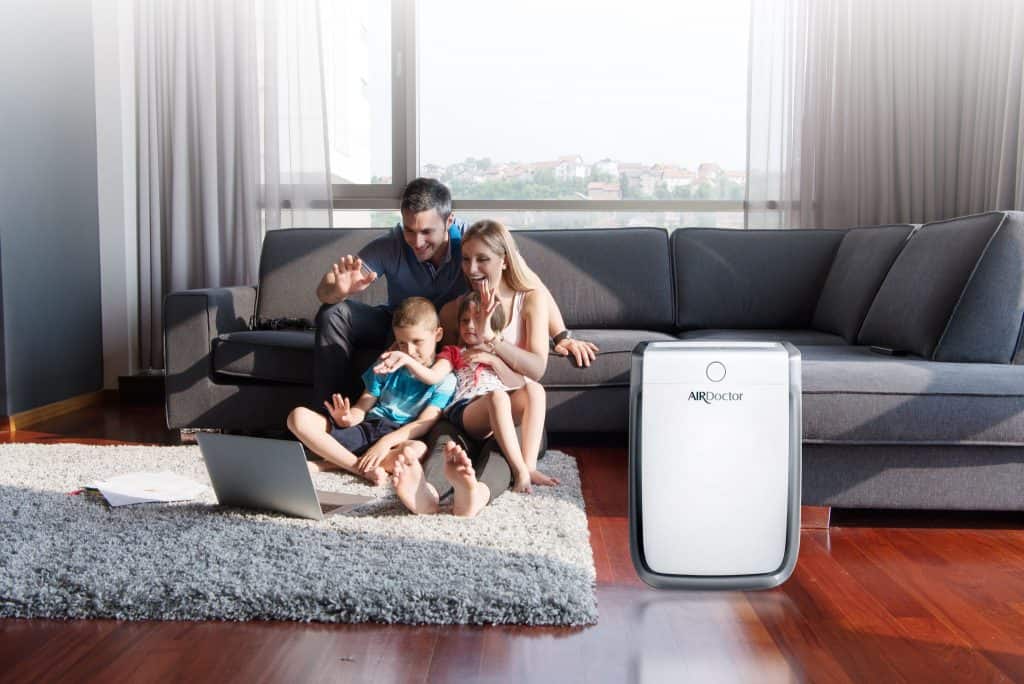
If you are looking for an air purifier that will be simple, then the Air Doctor 3500 purifier is perfect. It requires very little maintenance, but it is also straightforward to operate, and there are 4 levels of fan usage.
It is very quiet and can clean an entire room of around 900 square feet at least 3 times every hour, which is excellent for the size.
It is a good fit for a small apartment or RV that needs something simple.
Those who want a WiFi-connected app version go for the AD3500i model.
AirDoctor 3500 compared to AD1000, AD2000, and AD5500.
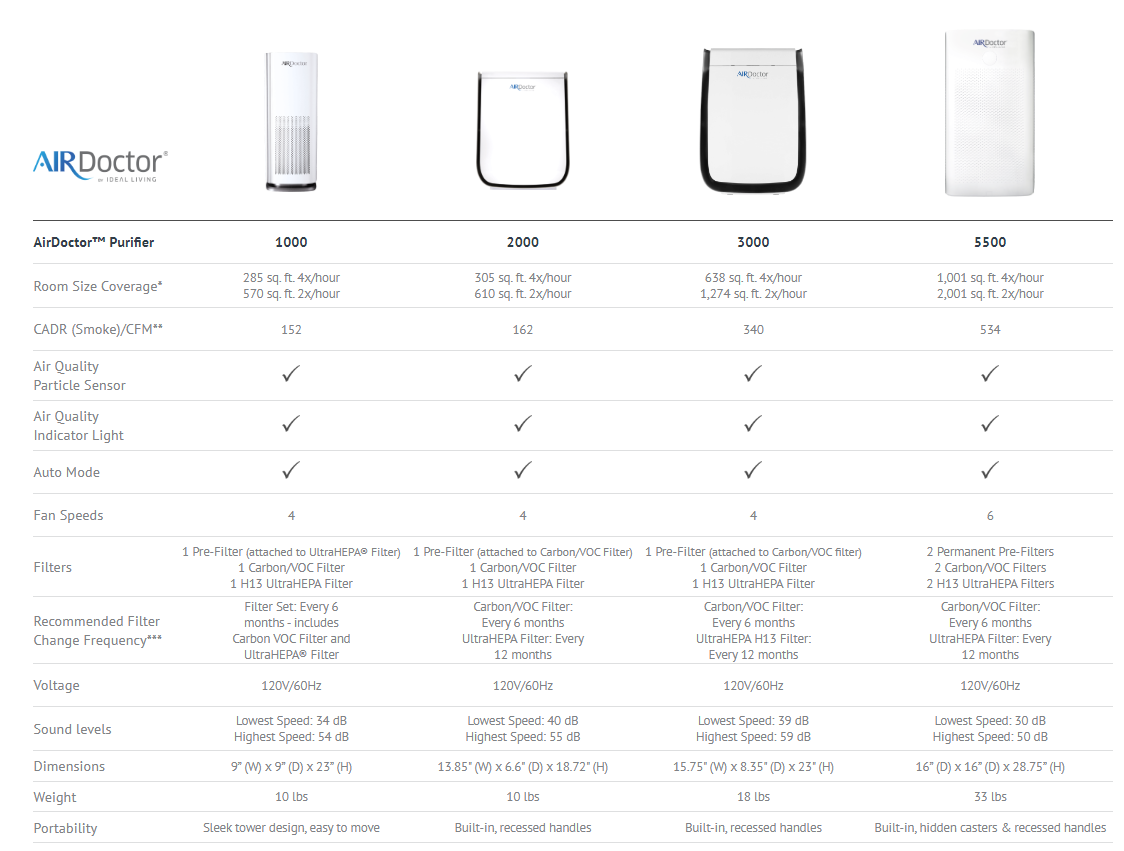
Here is how the AD3500 compares with other brands:
- AirDoctor 3500 compared to Dyson Pure Cool™ TP01 Air Purifier
- AirDoctor 3500 compared to Hathaspace HSP002 Air Purifier
- AirDoctor 3500 compared to BlueAir Pure 211+ Air Purifier
If you need an air purifier for a smaller room, look at the AD1000 air purifier review or AirDoctor 2000 air purifier review, and if you need one for large spaces, look at the AD5500 air purifier review.
Related AirDoctor Guides
Compare the AD3500 head to head in our reviews of the Dyson Pure Cool TP01, Hathaspace HSP002 and BlueAir Pure 211+, or see AD2000 vs AD3500 and the whole AirDoctor lineup. Smaller room? Read the AD1000 or AD2000 reviews. Bigger room? Read the AD5500 review. For the Wi-Fi version, see Wi-Fi AirDoctor reviews. Not sure where to put it? Read where to place an air purifier, and for upkeep see AirDoctor replacement filters and the filter replacement cost guide.
What happens next: wildfire smoke and tighter indoor air standards will keep demand high for strong purifiers, which can mean higher prices and thin stock in late summer. If you plan to buy, check the filter pack price first and set a calendar reminder for the six-month carbon change, not just the yearly HEPA.