
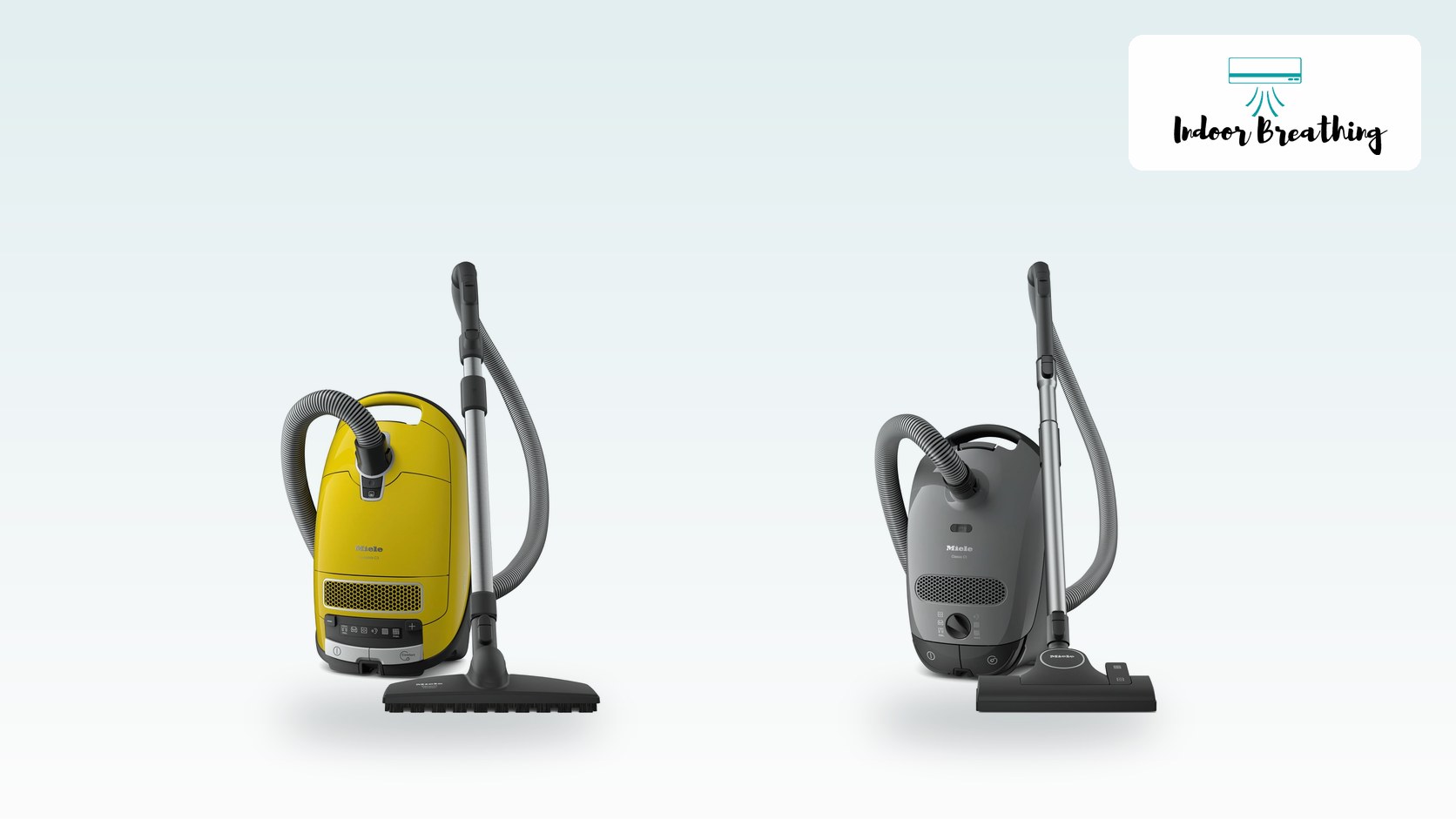
The best HEPA vacuum for dust mites is a sealed-system machine, not just one with a HEPA filter dropped inside. The pick is the bagged Miele Complete C3 Calima canister: its AirClean sealed body forces every bit of air through the HEPA element instead of leaking fine dust around it, and the self-sealing bag contains what you pick up.
This guide draws on manufacturer sealed-system and filtration specs, AAFA “asthma & allergy friendly” certification listings where they exist, current Amazon pricing, and owner reviews — not hands-on lab testing. Prices, ratings, and availability were checked against live Amazon listings as of this update and change over time.
A HEPA vacuum for dust mites only helps if it is built so that all of the air passes through the filter. Plenty of inexpensive vacuums advertise a “HEPA filter” while their housings leak fine dust straight back into the room through seams around the lid and the motor. The eight vacuums below are the ones worth considering for an allergy household, and the sections before them cover the decisions that determine which one you should buy.
Table of Contents
Why a Sealed System Matters More Than the Filter
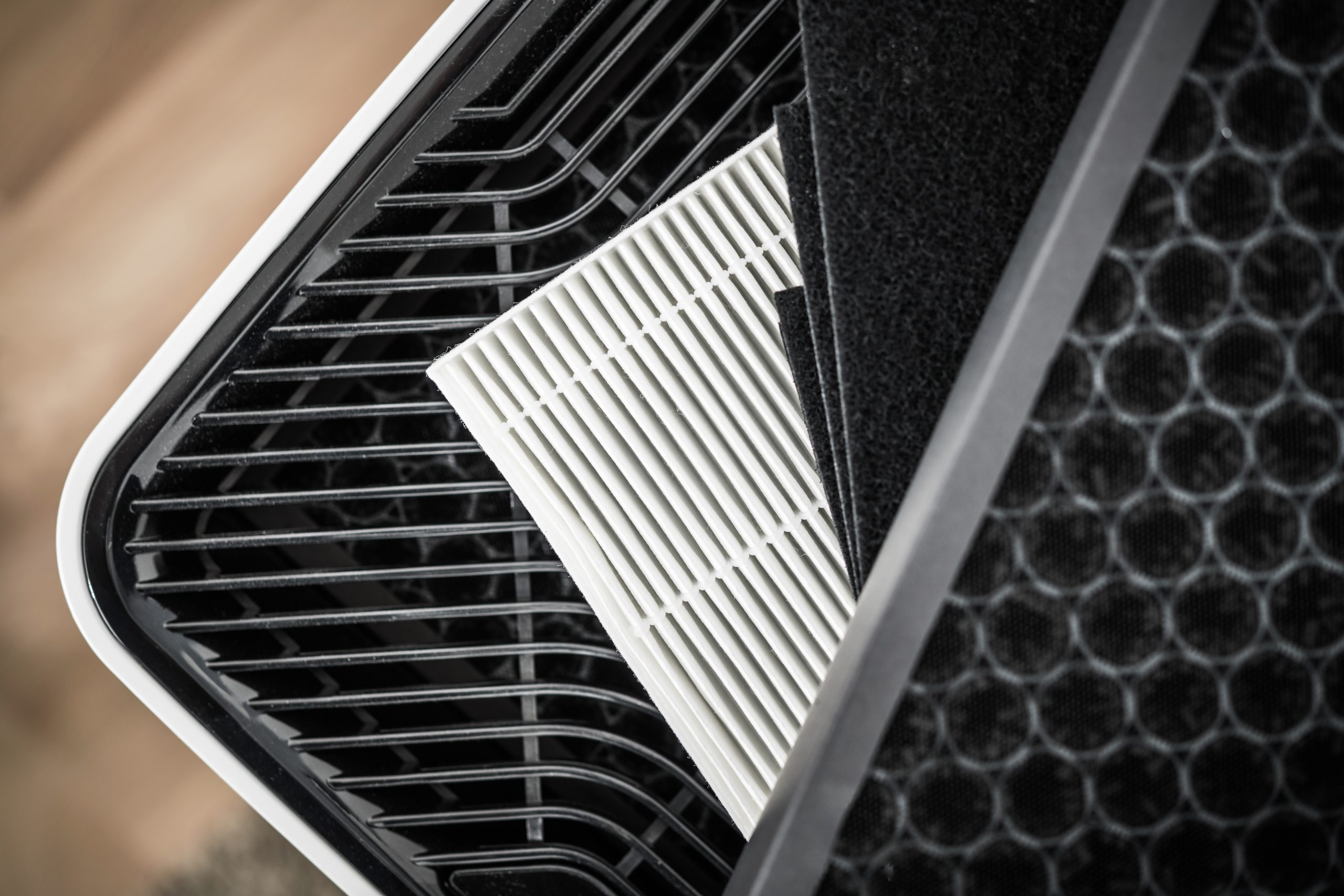
“True HEPA” means the filter captures at least 99.97% of particles at 0.3 microns. That standard is worth insisting on, but it describes the filter media on a test bench, not what happens once it is bolted into a vacuum.
Here is the problem. A running motor pulls a strong vacuum inside the machine and the fan pushes exhaust out, and air takes any path it can find. In a vacuum that is not sealed, a meaningful share of that airflow slips past the filter through gaps around the dust bin, the lid gasket, and the motor housing, carrying the finest dust, including fragments of dust mite droppings, straight back into your breathing zone. You can have a perfect HEPA filter and still fill the room with allergen.
A sealed system closes those paths so 100% of the airflow is forced through the filter before it leaves the machine. Manufacturers use their own names: Miele’s AirClean Sealed System, Shark’s Anti-Allergen Complete Seal, Kenmore’s Completely Sealed System, SEBO’s S-Class. An Asthma and Allergy Foundation of America “asthma & allergy friendly” certification tests filtration integrity and the plume released during emptying, so that mark is a useful shortcut. As our explainer on what dust mites are makes clear, the trigger is not the live mite but the accumulated dust of droppings and carcasses that a leaky vacuum aerosolizes.
Bagged vs Bagless: Why Bags Win for Allergies
Bagless vacuums dominate the shelves, but for allergies a bag is the better choice, and the reason is the moment you empty the machine. Emptying a bagless dust cup releases a visible cloud of the exact dust you just collected, held right in front of your face, usually indoors over a trash can, and you re-expose yourself every week or two. A bag avoids that: Miele’s GN and SEBO’s Aera-Pure bags have a self-sealing collar that snaps shut as you pull the bag out, so you drop it in the trash and touch nothing. The bag is also the first stage of filtration, trapping coarse material before it reaches the HEPA element and keeping suction steadier as it fills.
Genuine Miele bags run about $4 to $6 each in a box with filters included, so budget $30 to $60 a year for a bagged machine. If you choose bagless for the lower running cost, commit to emptying it outdoors, wearing a mask, and washing the filter on schedule.
Upright, Canister, or Cordless
Uprights are the right answer for wall-to-wall carpet. The motor and brushroll sit over the floor, so they drive more agitation and airflow into a pile than anything else, and they cost less for a given level of filtration. They are heavier to push, louder, awkward on stairs, and they eat closet space.
Canisters trail the body on a hose. They are quieter, far better on hard floors, stairs, and upholstery, gentler on delicate surfaces, and with a powered head they still clean carpet well. You pay more and drag the body around corners.
Cordless sticks are about frequency: a light vacuum on a wall dock gets used for quick passes several times a week. The compromises are a small bin, 40 to 60 minutes of runtime, less deep-carpet power, and filters that need washing. Robots sit below all of this, useful for maintenance, not a substitute for a deep clean.
Best HEPA Vacuums for Dust Mite Allergies: Comparison
The table lines up all eight vacuums on what matters for an allergy household: whether the whole system is sealed or just the filter, bagged or bagless, weight, reach or runtime, price, and buyer ratings.
Best Overall: Miele Complete C3 Calima
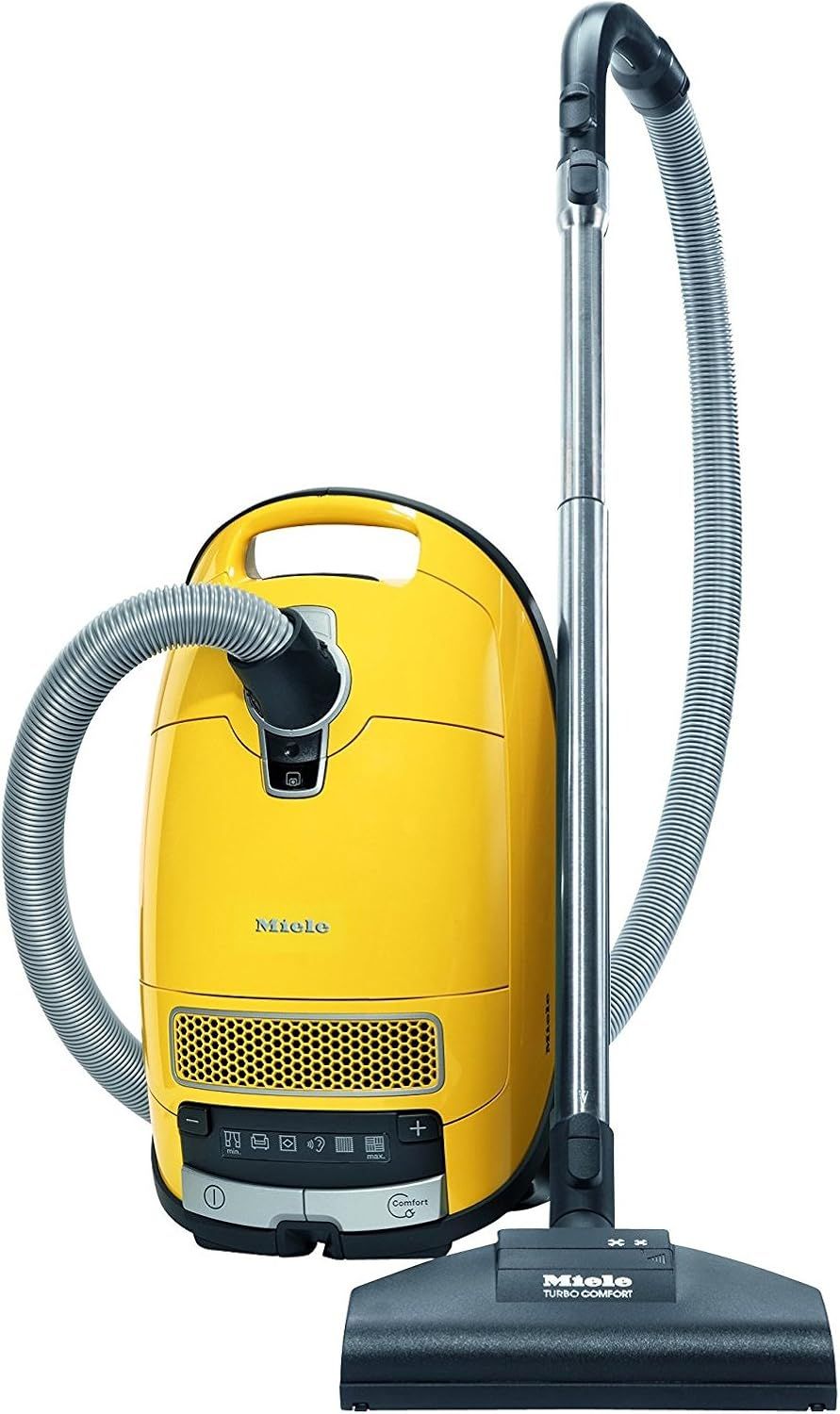
This is the one to buy if the budget allows. The Miele Complete C3 Calima is a bagged canister built around Miele’s AirClean Sealed System: the entire air path from the floor head to the exhaust is gasketed, with a genuine HEPA AirClean filter at the end of it. Miele rates that filter at up to 99.999% retention of fine particles, and because the housing is sealed, that number actually reaches the room.
The 4.5-liter self-sealing FilterBag matters most for allergies: it closes automatically as you lift it out, so changing it does not release a plume. A 1,200-watt motor with six suction settings covers thick rugs on the Turbobrush head and bare floors on the Parquet head, and the 36-foot cleaning radius means you plug in once per floor. It weighs about 16 pounds, runs quiet at roughly 64 decibels, and holds a 4.2-star average. The downsides: at around $752 it is expensive, the bags are an ongoing cost, and the entry-level Calima omits the electric powerhead of higher C3 trims, so on deep pile it takes an extra pass.
Pros
- Fully sealed AirClean system
- Genuine HEPA filter included
- Self-sealing bag, no dust plume
- Very quiet for a vacuum
- Excellent on hard floors and stairs
Cons
- Expensive up front
- Ongoing bag and filter cost
- No powered brush head at this trim
Price on Amazon: $752.00 | 4.2 stars from 523 ratings (checked October 10, 2026)
A sealed vacuum handles settled dust; the fraction it stirs into the air is a job for a filter running continuously in the room, so pair a machine like this with a bedroom air purifier sized using our air purifier buying guide and its CADR rating guide.
Looking ahead, expect vacuums sold for allergies to be judged on sealed construction and independent testing, not just a HEPA label. Certification groups and shoppers are getting better at telling a sealed system from a filter that simply sits inside a leaky machine. The catch is that the best sealed canisters stay pricey, and cordless models keep winning on convenience even when they filter less well.
The Sealed-System Bargain: Miele Classic C1 Pure Suction
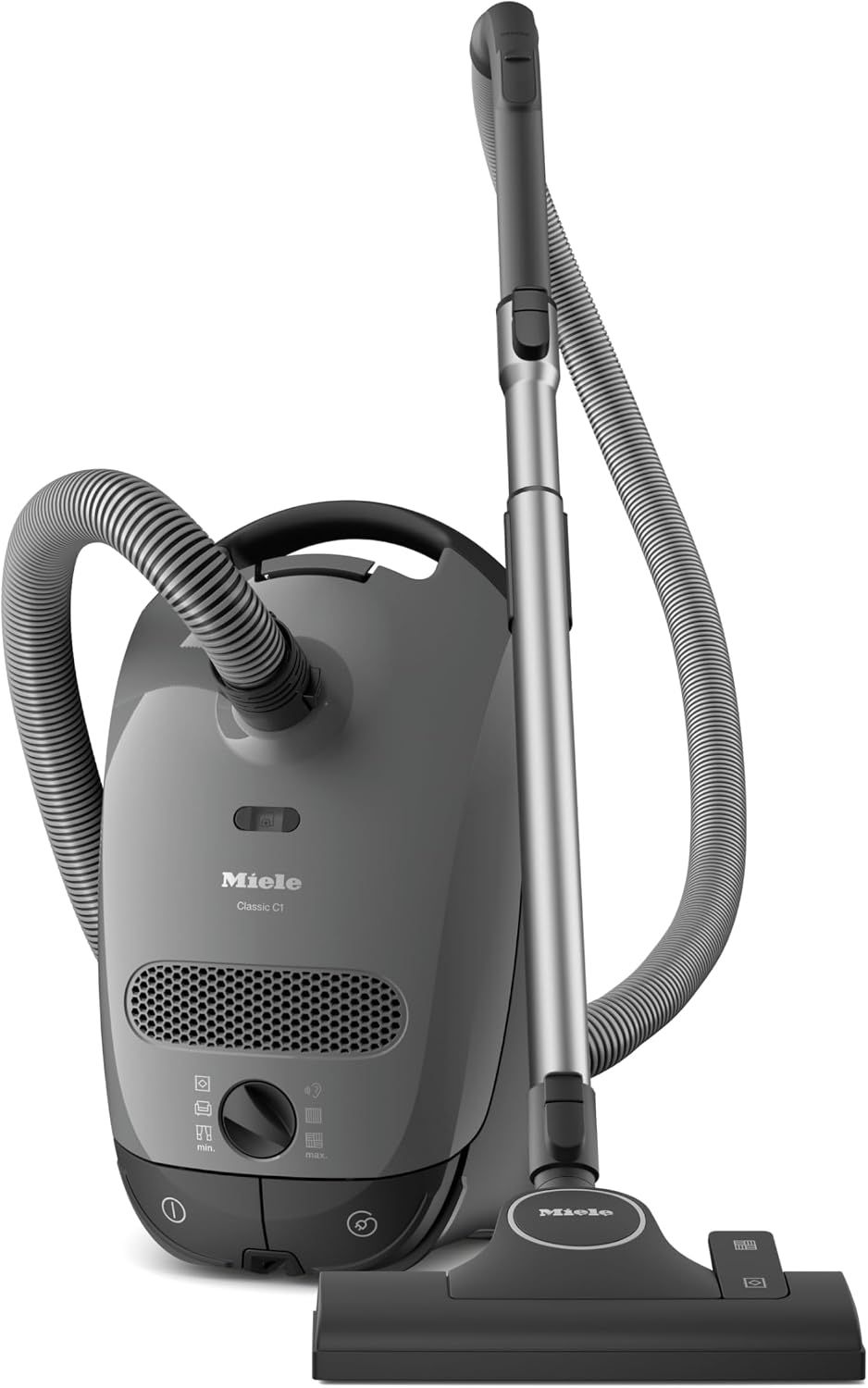
You do not have to spend $750 for Miele’s sealed construction. The Miele Classic C1 Pure Suction uses the same AirClean Sealed System body for around $310, with a 1,200-watt motor, six power settings, a 4.5-liter bag, and a combination floor head with a foot-pedal switch for carpet or hard floors. It weighs about 12 pounds and holds a 4.4-star average across more than 7,000 ratings.
One caveat: the Classic C1 ships with Miele’s standard AirClean exhaust filter, not the HEPA one. The sealed housing is identical, so no unfiltered air escapes, but for certified HEPA-grade exhaust you add the genuine Miele HEPA AirClean SF-HA 50 filter, roughly $60, which drops into the same slot. Do that and you have a fully sealed HEPA canister for under $375, the best value in this guide.
Price on Amazon: $309.99 | 4.4 stars from 7,517 ratings (checked October 10, 2026)
Best Bagged Upright for Carpet: Kenmore Intuition
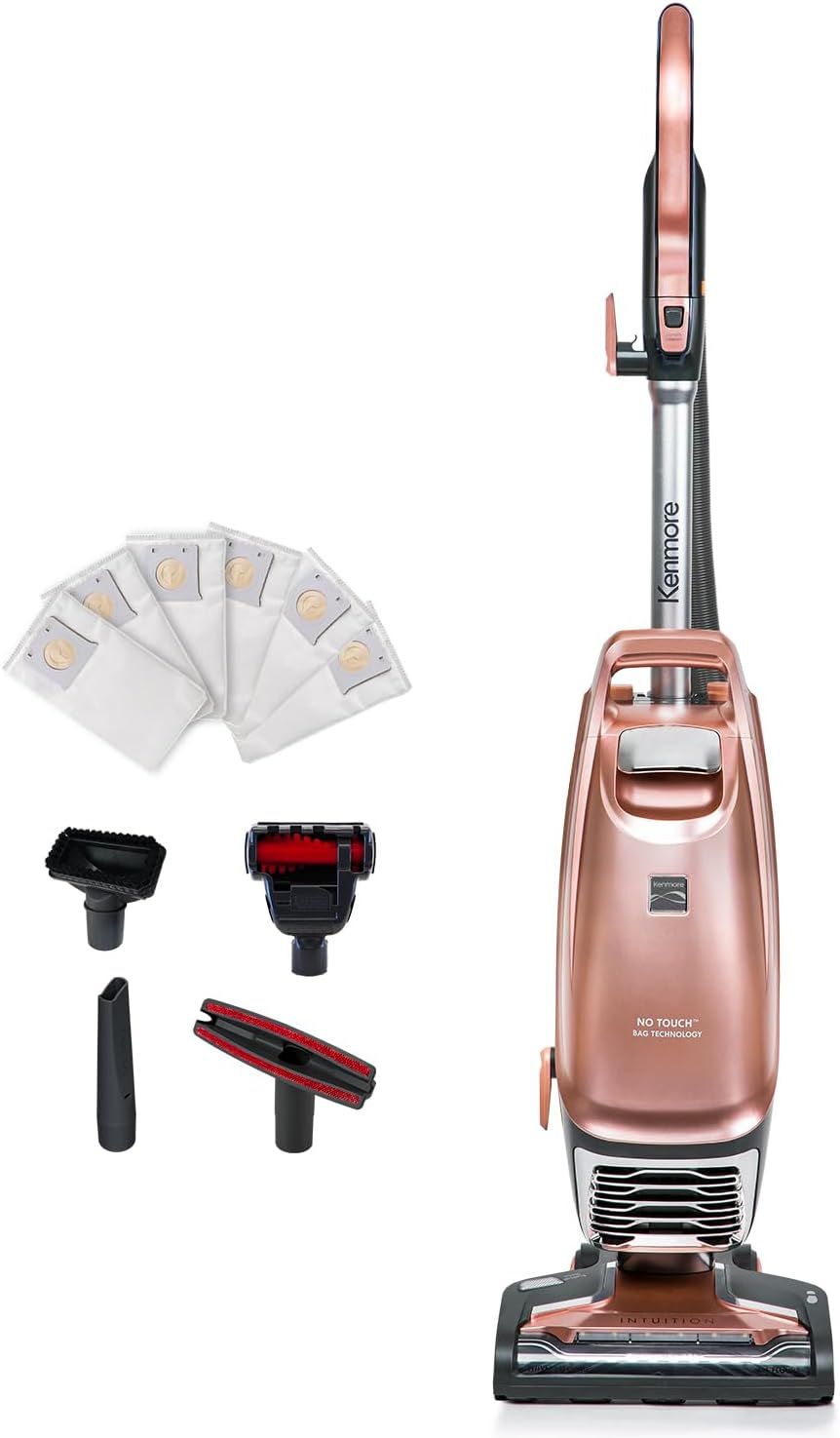
For a mostly carpeted home where an upright beats dragging a canister, the Kenmore Intuition BU4050 is the value pick at around $190. Kenmore describes it as a completely sealed system with an advanced HEPA filter that traps 99.97% of dust down to 0.3 microns inside the machine. It is bagged, and the no-touch bag technology seals and ejects the bag with one button press. It weighs about 14 pounds, with a lift-up pod for stairs and swivel steering. The 4.2-star average across roughly 4,000 ratings reflects a machine built to a price, so expect more plastic and noise than the German options.
Price on Amazon: $187.62 | 4.2 stars from 4,243 ratings (checked October 10, 2026)
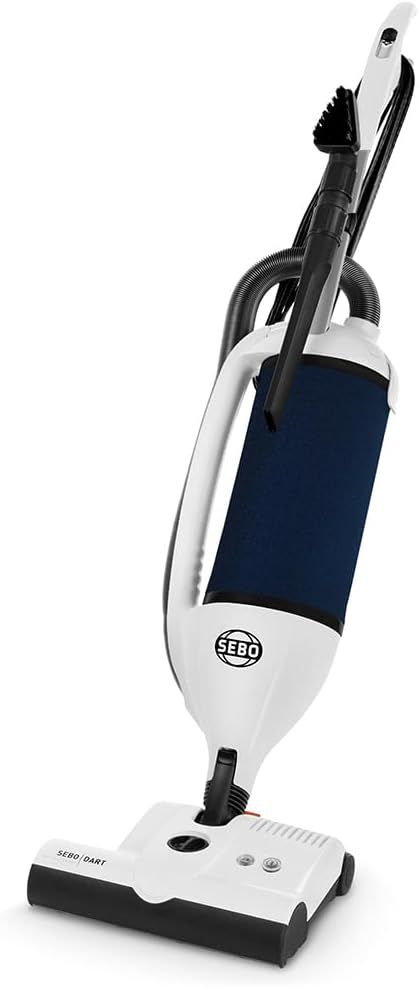
For an upright that will still run in fifteen years, step up to the SEBO 9855AM Dart at about $649: a bagged, S-Class-filtered German upright rated to remove 99.97% of particles at 0.3 microns, with a brushroll you can rebuild without tools, an instant-use hose, and a 7-year warranty on both motors. At 4.5 stars it has the highest rating in this guide. It is heavy at 18 pounds and the up-front cost stings, but per year of service it is cheap. Prefer a canister at this tier? Look at the SEBO AIRBELT K3 (around $949) or the bagged Kenmore Elite 700 Series canister (around $400), both sealed HEPA systems.
Price on Amazon: $649.00 | 4.5 stars from 102 ratings (checked October 10, 2026)
Best Bagless Uprights: Shark Detect Pro and Navigator NV352
Shark made sealed filtration affordable. Its Anti-Allergen Complete Seal Technology pairs a gasketed body with a HEPA filter, and Shark cites ASTM F1977 testing showing 99.9% of dust and allergens trapped down to 0.3 microns. Both models here are bagless, so the sealed body does its job while you vacuum, but you still get a plume at the bin, which means emptying outdoors or into a bag.
The Shark Detect Pro Lift-Away ADV (LA802) is the one to get if the budget reaches around $400. It has a two-brushroll DuoClean head with sensors that raise suction and brush speed over hidden dirt or an edge, a genuine HEPA seal, and a detachable Lift-Away pod, in a 15-pound body. It holds a 4.4-star average and lists at about $399.
The Shark Navigator Lift-Away NV352 is the budget champion at roughly $180, with a 4.4-star average across nearly 31,000 ratings. It has the same Anti-Allergen Complete Seal and HEPA filter, a Lift-Away pod, swivel steering, and a brushroll shutoff, in a 12.5-pound body. You give up the auto-sensing head and some polish, but for pure sealed-HEPA value it is hard to beat.
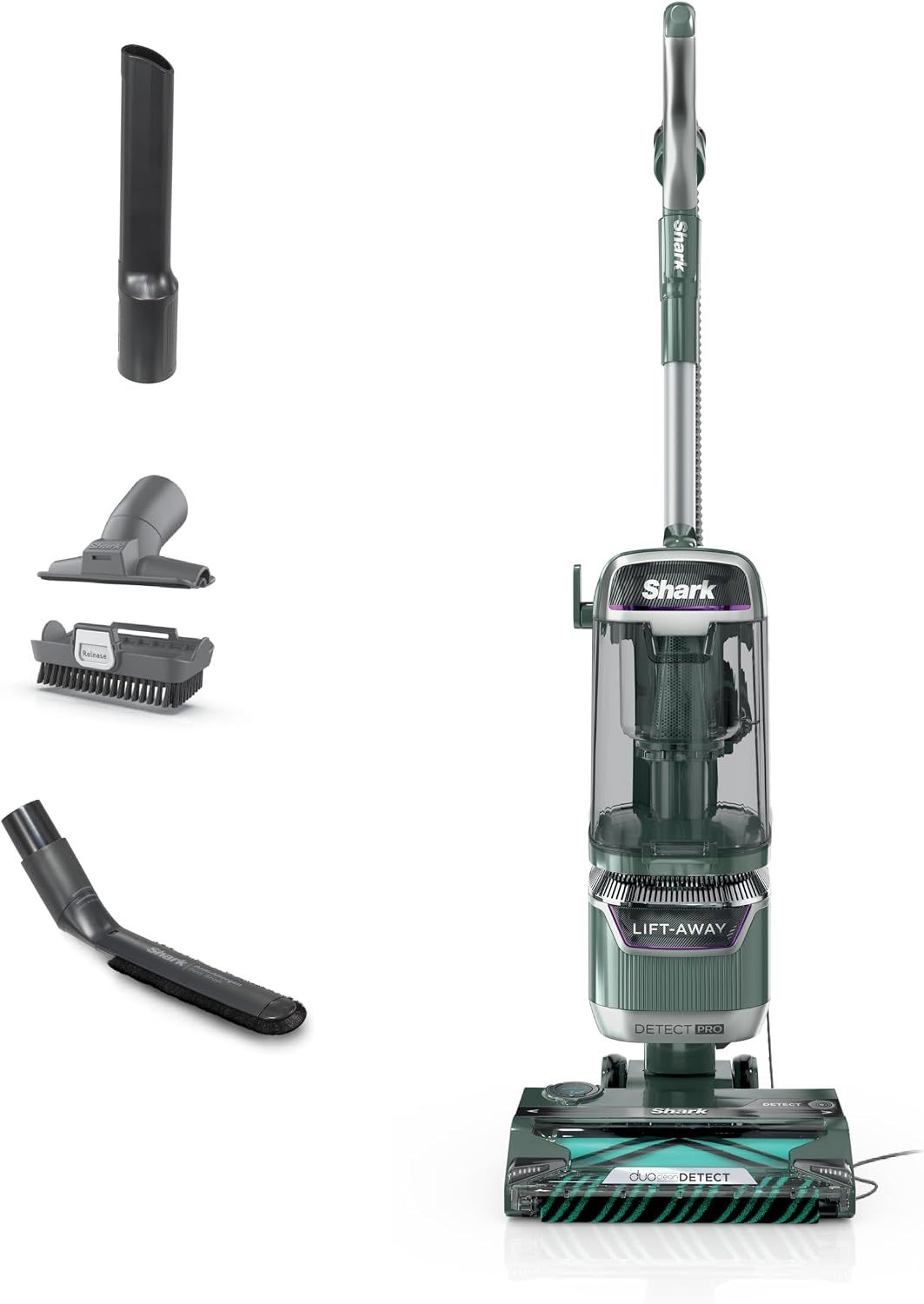
Price on Amazon: $399.00 | 4.5 stars from 601 ratings (checked October 10, 2026)
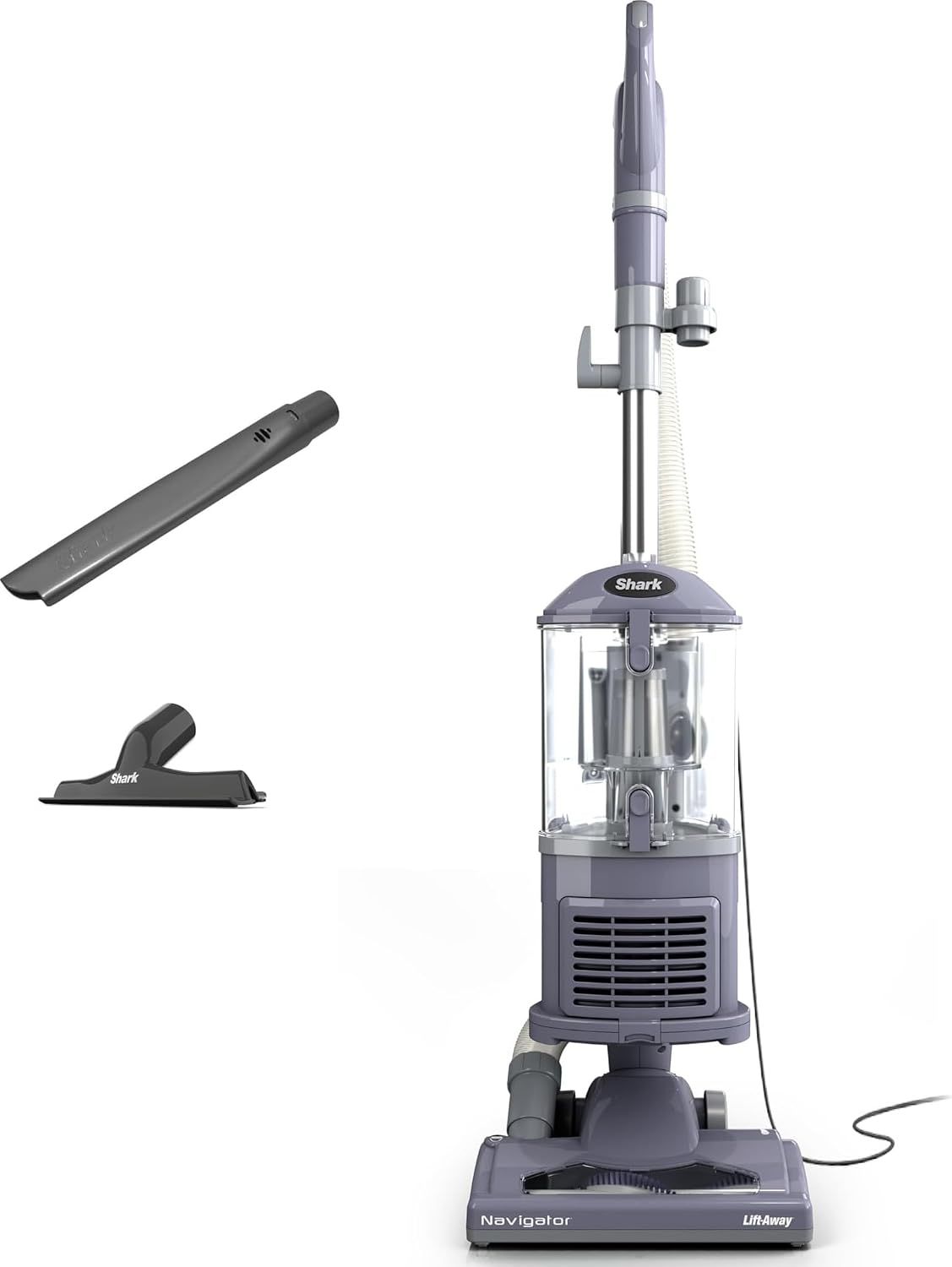
Price on Amazon: $179.99 | 4.4 stars from 31,137 ratings (checked October 10, 2026)
Best Cordless: Dyson V15 Detect
Among cordless sticks, the Dyson V15 Detect is the only cordless pick here for an allergy household, because Dyson seals the whole machine, not just the filter. Its whole-machine filtration is rated to capture 99.99% of particles as small as 0.3 microns and expel cleaner air than it draws in. Dyson’s cordless line has a long record of AAFA “asthma & allergy friendly” certification, so check the certified-products directory for the exact configuration you buy.
It gives you up to 60 minutes of runtime, a particle count on the LCD so you can see when a patch of carpet is actually clean, and a bin that ejects with a lever so your hand stays out of the dust, though the release still puffs, so do it outside. At about $779 it costs as much as the Miele, with less deep-carpet staying power. Buy it for the convenience and the sealed filtration, not because it out-cleans a canister.
Pros
- Sealed whole-machine filtration
- Lever bin eject, less hand contact
- Light and quick to grab
- Particle sensor shows real progress
Cons
- Expensive
- Bin still puffs on release
- Short runtime on high power
- Small capacity, frequent emptying
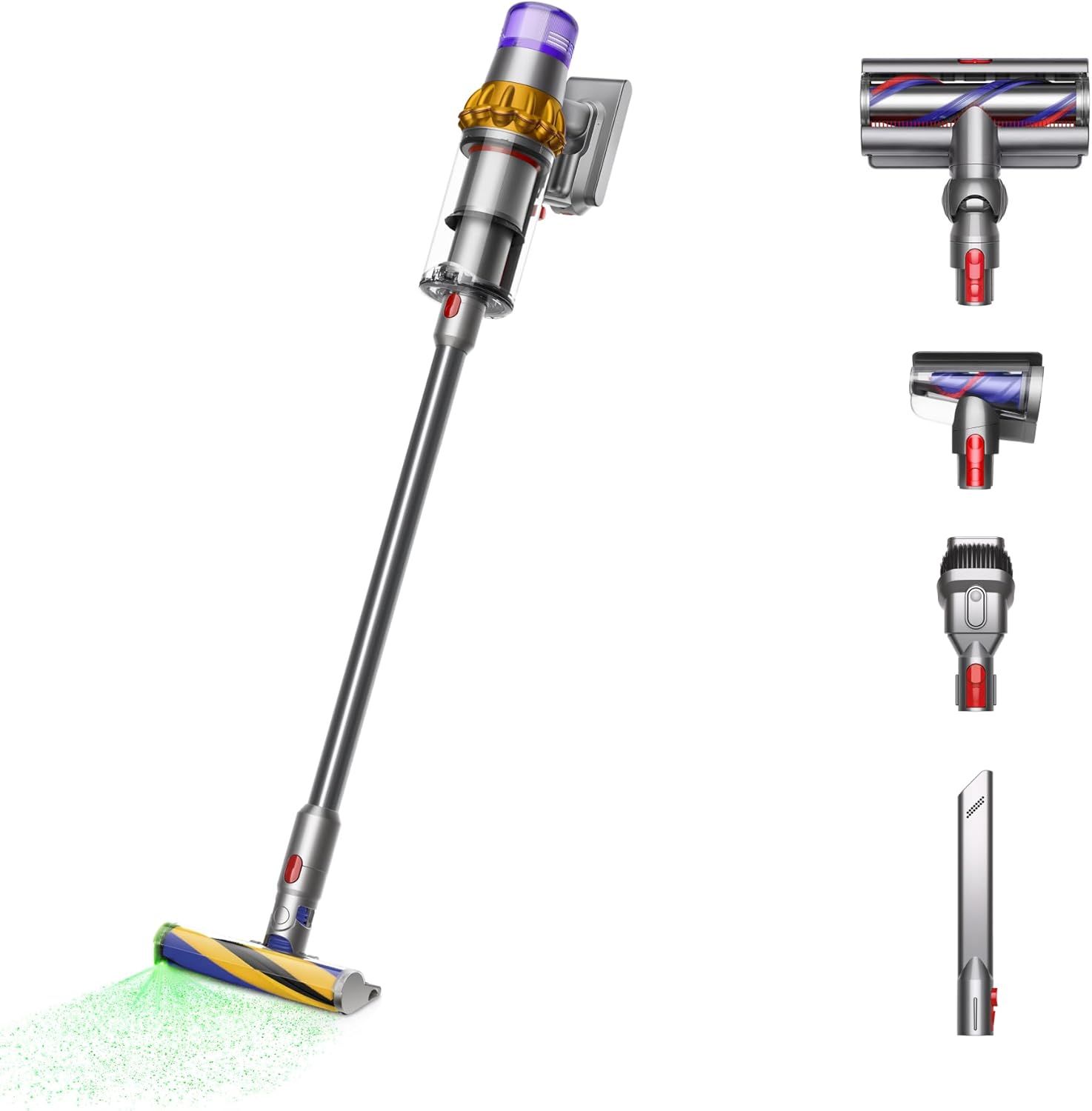
Price on Amazon: $779.00 | 4.3 stars from 1,797 ratings (checked October 10, 2026)
If $779 is out of reach, several Shark cordless models in the $250 to $350 range carry the same Anti-Allergen Complete Seal and a true HEPA filter, and they are a reasonable step down.
Robot Vacuums With HEPA: Helpful, Not a Replacement
There is a real benefit to a robot, but be clear about what it is. Most robots, including the popular Roborock Q7 M5+ at around $250, run a small washable filter not rated to true HEPA, and the body is not sealed. What the Q7 M5+ brings is a self-emptying dock with a 2.7-liter sealed dust bag, so debris goes from the robot into a bag you handle only every seven to nine weeks, which cuts your exposure sharply versus a bagless handheld you empty weekly.
If you want HEPA in a robot, the Shark AV2501S AI Ultra (around $407) markets true HEPA filtration in its bagless self-empty base, capturing 99.97% of dust and allergens down to 0.3 microns. Either way, treat a robot as daily maintenance between real cleans, and still run a sealed HEPA upright or canister over the carpet once a week.
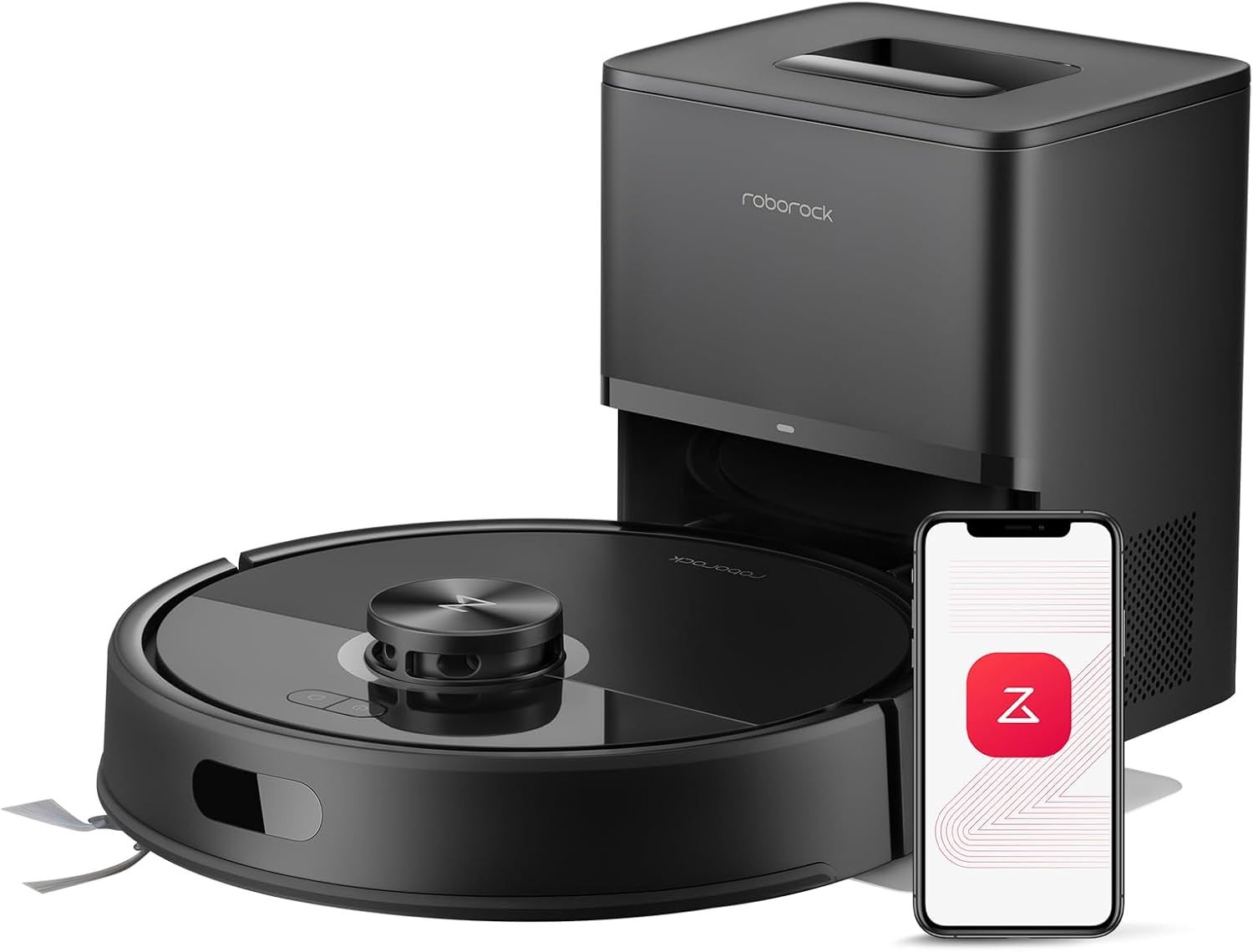
Price on Amazon: $249.99 | 4.0 stars from 25,422 ratings (checked October 10, 2026)
The risk to watch is false comfort. A vacuum lifts dust mites from carpet and bedding, but it also stirs fine dust into the air, and dead mites and their droppings are what trigger allergies, so one pass will not cure a mite problem. Expect more robot vacuums with self-emptying docks, and do not be surprised if bag and filter costs become the main way brands make money.
Carpet, Hard Floors, and Mattresses
Carpet is the main dust mite reservoir, because it holds humidity, skin flakes, and warmth. Getting allergen out of a pile takes brushroll agitation plus strong airflow and several slow passes, not one quick sweep. Uprights and canisters with a powered head do this best, and a height-adjustable brushroll lets you match the pile so the head does not skate on top.
Hard floors are easier, but a spinning brushroll flicks fine dust into the air. A canister with a soft parquet brush, or an upright with a brushroll shutoff, keeps that dust where the suction can get it.
Mattresses need managed expectations. An upholstery tool removes surface dust, dead skin, and some mites, cutting the food supply and loose allergen, but it does not reach mites deep in the batting, and aggressive vacuuming can stir buried allergen toward the surface. The real fix is a zippered barrier: see our guide to the best dust mite mattress encasements, then wash sheets weekly at 130 degrees Fahrenheit. The payoff from getting the bedroom right is large, as our piece on how indoor air quality affects sleep explains.
Filter Maintenance and Ongoing Cost
A sealed HEPA vacuum only stays sealed and HEPA if you maintain it. On bagged machines, Miele’s HEPA AirClean filter has a timestrip indicator and is replaced about once a year or every 50 hours, roughly $50 to $70, and SEBO includes a fresh exhaust microfilter in every box of bags; feeding a Miele or SEBO runs about $60 to $90 a year with bags.
Bagless machines have no bag cost but a washable HEPA filter that needs rinsing every three months and a full 24 hours to air-dry before it goes back in, or you grow mold inside the vacuum. Dyson filters wash monthly. Budget one replacement filter every year or two, $20 to $40. Either way, never bang a HEPA filter clean or nurse a torn one; a compromised filter turns a sealed system back into a leaky one.
How Loud Is It?
Canisters are quietest, with the Miele C3 around 64 decibels; full-size uprights run 70 to 80 decibels, and the Dyson V15 is loud on high power. If anyone in the house is sound-sensitive, that alone argues for a canister.
How Much to Spend on a HEPA Vacuum for Dust Mites
Under $200: The Shark Navigator NV352 or the Kenmore Intuition, both a genuine sealed system with a HEPA filter. Enough for most allergy households if you are disciplined about emptying the bin outside.
$250 to $400: The Shark Detect Pro for a smarter bagless upright, or the Miele Classic C1 plus its HEPA filter for a fully sealed bagged canister that lasts decades. The Classic C1 is the pick here.
$650 and up: The Miele Complete C3 Calima for the best all-around sealed HEPA canister, the SEBO Dart for the most durable upright, or the Dyson V15 Detect for cordless convenience.
FAQ
Does a HEPA vacuum actually help with dust mite allergies?
Yes, when it is a sealed system used consistently. On carpet and soft furnishings, regular vacuuming with a sealed HEPA machine lowers the reservoir of mite droppings and shed skin that feed the population. It works alongside hot-washing bedding, encasements, and keeping humidity below about 50%. A vacuum alone will not clear an allergy, but a leaky vacuum can make a room worse.
Do you really need a sealed system, or is a HEPA filter enough?
You need the sealed system. A HEPA filter only cleans the air that goes through it, and in an unsealed vacuum a large fraction of the airflow leaks around the filter through gaps in the housing. Look for a specific sealed-system claim such as Anti-Allergen Complete Seal, AirClean Sealed System, or S-Class, or an AAFA “asthma & allergy friendly” certification, which tests the whole machine.
Bagged or bagless for allergies?
Bagged, if you can live with buying bags. A self-sealing bag lifts out and goes in the trash without releasing dust, while emptying a bagless bin puts a cloud right in front of you, week after week. Bags also add a stage of filtration. If you buy bagless for the lower running cost, empty it outdoors while wearing a mask.
Will vacuuming remove dust mites from your mattress?
Only partly. An upholstery tool lifts surface dust, dead skin, and some mites, cutting the food supply and loose allergen on top, but it cannot reach mites deep in the batting, and vacuuming hard can pull buried allergen toward the surface. The effective fix is a tightly woven, zippered encasement that seals the mites and their waste away from you, plus weekly hot washing of bedding.
How often should you replace or clean the HEPA filter?
For a bagged Miele, replace the HEPA AirClean filter about once a year; a timestrip tells you when. SEBO refreshes its exhaust microfilter with every box of bags. For bagless Shark uprights, rinse the washable HEPA filter every three months and dry it a full 24 hours before reinstalling; Dyson recommends washing monthly. Never tap a HEPA filter out or reuse a torn one.
Are cordless stick vacuums good enough for allergy sufferers?
A sealed one can be, as a supplement. The Dyson V15 Detect seals the whole machine and filters to 99.99% at 0.3 microns, and its light weight means it actually gets used often. The limits are a small bin, shorter runtime, and less deep-carpet extraction. Many allergy households run a cordless for daily touch-ups and a sealed canister or upright for the weekly deep clean.
Related Dust and Allergy Guides
Pair the vacuum with the right air purifier: see our best air purifiers for dust, the best air purifiers for home and the CADR rating guide. Keep upkeep in check with the air purifier maintenance guide and the filter cost guide. To learn more about the pest itself, read what dust mites are.
What happens next: bags and replacement filters will matter more than the sticker price. Add up the yearly cost of bags and filters before you buy, and keep a spare on hand. Pair the vacuum with hot-washing bedding weekly and an air purifier in the bedroom, because no single machine solves a dust mite allergy alone.
Bottom Line
The one rule for a dust mite allergy: buy a sealed system, not a vacuum that merely contains a HEPA filter. The overall pick is the Miele Complete C3 Calima, a bagged canister that seals the full air path and disposes of what it collects without a plume. Drop to the Miele Classic C1 with its add-on HEPA filter for the best value, the Kenmore Intuition or Shark Navigator NV352 for a sealed upright under $200, the SEBO Dart for a machine that outlives its warranty, or the Dyson V15 Detect for sealed cordless convenience.
Whatever you pick, pair it with mattress and pillow encasements, weekly hot laundry, humidity under 50%, and a HEPA air purifier in the bedroom to catch what is still floating. Our roundup of the best air purifiers is the place to start on that half of the plan.