
This tool gives an estimate. Always follow the heater maker’s manual and your home’s electrical limits.
A heater that is too small never warms the room, and one that is too big wastes power. Use the calculator below to find the wattage that fits your room.
Garages, basements, and three-season rooms usually fall under Poor insulation even in an otherwise well-insulated home.
Heater size you need
Square footage
150 sq ft
Watts per sq ft used
10
Climate / insulation
Moderate / Average
Table of Contents
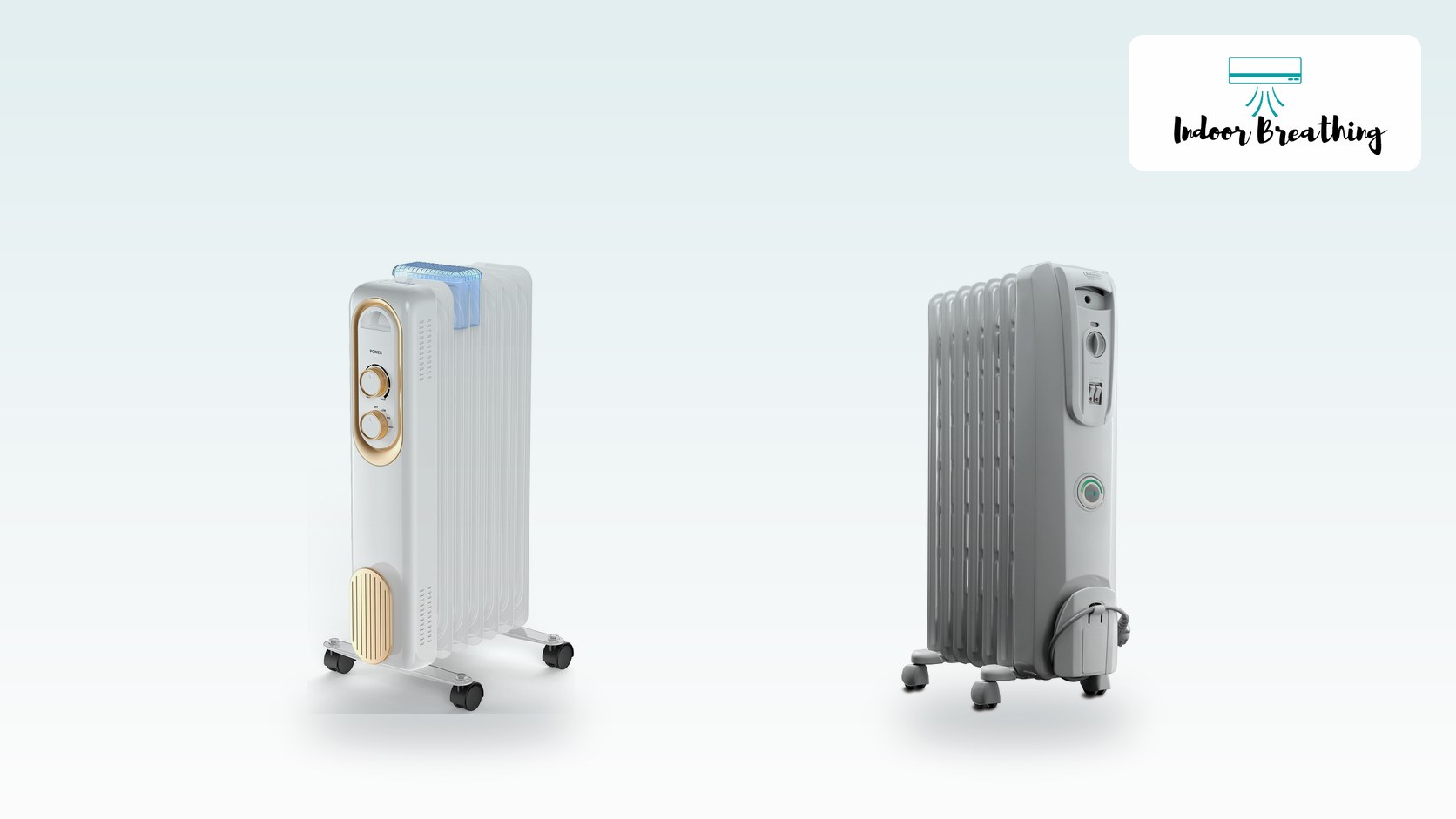
Real space heaters that clear this wattage
Ceiling Height ÷ 8. A standard 120V household outlet safely supports up to 1,500W continuously — anything higher needs either a dedicated 240V unit or a different heating solution entirely.
How This Space Heater Wattage Calculator Works
The calculator uses a watts-per-square-foot rule. It picks a base number for your climate, then adjusts for insulation and ceiling height.
Formula: watts = sq ft × watts per sq ft × insulation factor × (ceiling height ÷ 8)
- Watts per sq ft: mild 7, moderate 10, cold 13, very cold 17.
- Insulation factor: poor 1.25, average 1.0, good 0.8.
The answer rounds up to the next 50 watts. It also shows the same number in BTU (watts × 3.412).
Here is where space heating is heading: smarter thermostats, tip-over and overheat shutoffs on almost every new unit and more homes using heat pumps for the main load. Space heaters are slowly moving from the main heat source to the spot-heat backup.
Worked Examples
- 150 sq ft bedroom, moderate climate, average insulation. 150 × 10 = 1,500 watts. A standard 1,500 watt heater fits.
- 120 sq ft room, mild climate, good insulation. 120 × 7 × 0.8 = 672, rounded up to 700 watts. A small 750 watt heater is plenty.
- 200 sq ft room, cold climate, poor insulation. 200 × 13 × 1.25 = 3,250 watts. That is more than a standard outlet can give, so you would need a 240-volt heater, two units on separate circuits or a different heating plan.
The 1,500 Watt Limit
A normal 120-volt household circuit is usually 15 amps. That supports roughly 1,800 watts, and most plug-in heaters stop at 1,500 watts to leave some room. If the calculator tells you more than 1,500 watts, one portable heater on a wall outlet will not do the job on its own.
What Running It Costs
A 1,500 watt heater uses 1.5 kilowatt hours for every hour at full power. At 16 cents per kWh, that is about 24 cents an hour. Eight hours a day for 30 days is roughly $58 a month. Your rate and thermostat use will change that, so read how much electricity space heaters use and the space heater electric bill guide to plan.
Safety Basics
- Keep at least three feet of clear space around the heater.
- Plug it directly into the wall, not into an extension cord or power strip.
- Pick a unit with tip-over and overheat shutoffs.
- Never leave it running while you sleep or are away.
The downside is overload and cost. A 1,500 watt heater uses most of what a standard 15-amp circuit can give, and plugging in a second heater or other big appliance can trip the breaker or overheat a cord. Electric heat is also pricey to run all day. Expect more bills and more tripped breakers when people use several small heaters in place of a properly sized system. Plug the heater straight into the wall, and never run a cord under a rug.
Pick the Right Style
The calculator gives watts, not a style. Oil-filled, ceramic and infrared heaters all use watts the same way, but they feel different. Read how to choose the right size space heater for the full picture, most efficient space heaters for running cost tips and best space heaters for large rooms if your answer is high.
FAQ
How many watts do you need to heat a room?
A common starting rule is about 10 watts per square foot, adjusted for climate, insulation and ceiling height.
Can you use two space heaters in one room?
Yes, if each is on its own circuit and the total stays within what the room and breaker can handle. Never daisy-chain them on one cord.
What is the biggest plug-in heater?
Most are 1,500 watts, which is about the top of what a standard 120-volt outlet supports safely.
Does a heater with higher watts heat better?
It heats faster, but it also costs more to run. Pick the size the room needs.
Final Word
Find your watts, check the circuit limit and pick a heater with the safety features. One properly sized unit beats three small ones.
What comes next: more smart plugs, more room-by-room zoning and more rules about safety features. Use the wattage answer to pick one heater that fits the room and the circuit.
Related Guides
Keep going with how to choose the right size space heater, how much electricity space heaters use, space heater electric bill, most efficient space heaters and best space heaters for large rooms.