

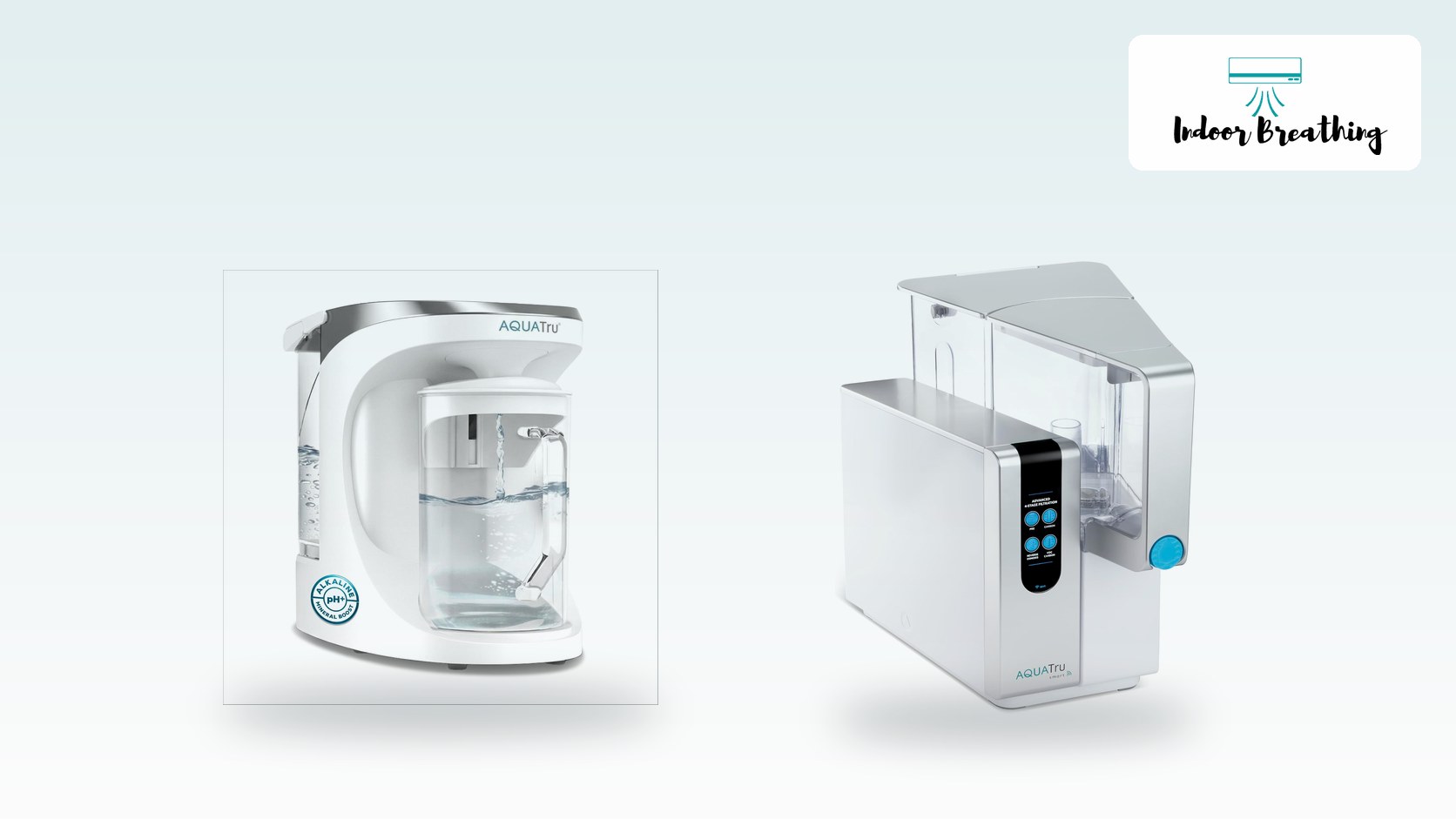
AquaTru Carafe details come from AquaTru’s performance data sheet and the Amazon listing, checked on October 10, 2026. Test results on contaminants are the maker’s numbers, not our own lab work. Filter life figures on the listing differ from older figures on this page, so the listing is used here. Prices and ratings were checked on Amazon.
The AquaTru Carafe is a small RO unit that sits on the counter. You fill a tank, press start and get purified water in a glass carafe. It is aimed at apartments, small kitchens and anyone who does not want to cut into plumbing. Here is a plain look at what it does, what it costs to run and who it suits.
Table of Contents
What You Get
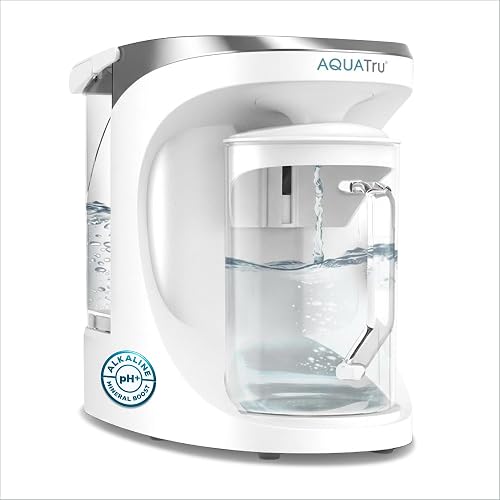
Price on Amazon: $375.25 | 4.3 stars from 287 ratings (checked October 10, 2026)
The Carafe is about 14 by 12 by 14 inches and weighs near 16 pounds, per the older page. It holds about a gallon of tap water in the feed tank and about three-quarters of a gallon of clean water in the carafe. The glass carafe fits in most fridge doors, and the unit plugs into a standard outlet. There is no drilling and no drain line.
The Four Stages
- Stage 1: pre-filter. A mechanical filter that catches sand, rust and sediment, to protect the rest.
- Stage 2: carbon. Removes chlorine, chloramine and some chemicals. This stage is why RO membrane life is long.
- Stage 3: RO membrane. Removes dissolved solids and many contaminants, including lead, arsenic, fluoride, nitrate and PFAS, according to AquaTru’s data.
- Stage 4: VOC carbon. Polishes taste and catches volatile chemicals. On the Alkaline version, a mineral stage adds back some minerals.
Looking ahead, countertop RO is getting smaller and prettier. Glass carafes, app control, mineral add-back and fridge-friendly shapes are now common, because renters and small kitchens are the biggest buyers. The catch is that the cost shifts to filters over time, and a small unit means more refills for a busy household.
What It Removes
AquaTru publishes a performance data sheet. For the Carafe it lists numbers such as about 99 percent for lead, about 97 percent for chlorine and about 93 percent for fluoride. The Amazon listing says it reduces 84 contaminants, including PFOA and PFOS. These are maker numbers tested under set conditions. Your results depend on your feed water. Look at the maker’s data for the specific contaminant you care about, and see our reverse osmosis guide for how to read certificates.
Filter Life and Cost
The Amazon listing gives this schedule:
- Pre and carbon filter: every 6 months or 300 gallons.
- RO filter: every year or 600 gallons.
- VOC carbon filter: about every year.
The older version of this page said the RO filter lasts two years or 1,200 gallons. The listing is more current, so plan on the shorter life. The one-year filter combo was $89.87 on Amazon on October 10, 2026.
Using It
- Setup. Rinse the tanks, install the filters and flush the first batches, as the manual says.
- Running. Fill the feed tank, press start and wait for a batch. It is slow, so run it ahead of need.
- Noise. The pump makes a low hum while it runs.
- App. The older page noted app alerts for filter changes on the Carafe.
- Water waste. AquaTru lists a lower waste ratio than many RO units. The rejected water goes into a tray you empty.
The risk to watch is the tank you forget. A carafe or tank that is never rinsed can build a slimy film, and a filter past its date lets contaminants through while the water still looks clear. Expect more app reminders. Rinse the tanks often, change filters on the maker schedule and keep the unit out of direct sun.
Maintenance
- Rinse the tanks and the carafe every week or two.
- Empty the waste tray each time you refill.
- Wipe the unit and the lid.
- Change the filters on schedule.
AquaTru Carafe vs Classic
The Classic has a larger tank and a plastic carafe. The Carafe has a glass carafe that stores in the fridge. Both use the same four-stage idea. See our AquaTru Classic review and our guide to countertop reverse osmosis systems for a wider look.
Prices and Related Items on Amazon
Prices and ratings were checked on Amazon on October 10, 2026.
Price on Amazon: $375.25 | 4.3 stars from 287 ratings (checked October 10, 2026)
The AquaTru Glass Carafe is the model reviewed here. The Amazon listing calls it a four-stage RO purifier that reduces 84 contaminants, including PFOA, PFOS, lead and microplastics, and adds alkaline minerals.
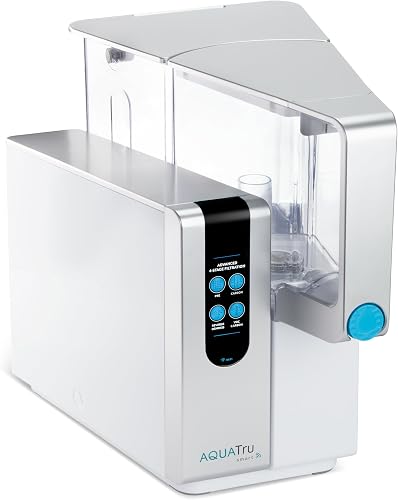
Price on Amazon: $451.25 | 4.3 stars from 130 ratings (checked October 10, 2026)
The AquaTru Classic is the larger sibling with a bigger tank. See our AquaTru Classic review for details.
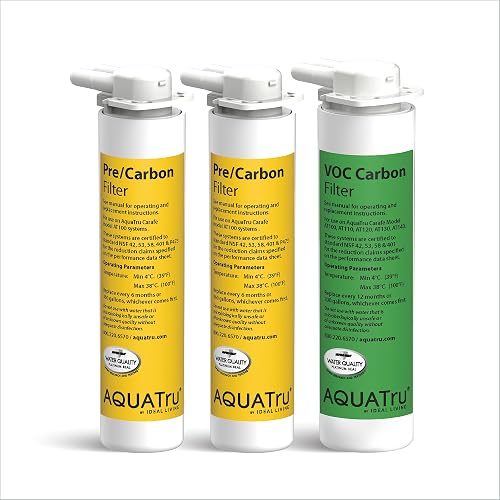
Price on Amazon: $89.87 | 4.7 stars from 253 ratings (checked October 10, 2026)
The One-Year Filter Combo contains a pre-carbon filter (stages 1 to 2) and a VOC carbon filter (stage 4) for the Carafe, per the listing.
Pros and Cons
Pros: no plumbing; small footprint; glass carafe; strong tested reductions; lower waste than many RO units; fridge friendly.
Cons: high price; small batches; filter cost adds up; needs regular rinsing; flat taste without the mineral stage.
FAQ
Does the AquaTru Carafe remove fluoride?
The maker lists about 93 percent in its data sheet.
Does it need a drain?
No. The reject water collects in a tray.
Is it better than a distiller?
It is faster and uses less power, but a distiller removes a bit more and has no filters. See water distillers.
Final Word
The Carafe is a good fit for a small household that wants RO without plumbing. Plan for the filters, rinse the tanks and read the maker’s data for your contaminants.
What happens next: more RO makers will add mineral stages and publish test data, and buyers will compare yearly filter cost and waste water. The AquaTru Carafe fits that trend, and it is a good match for a small household that wants RO without plumbing.
Related Guides
Keep going with AquaTru Classic review, countertop reverse osmosis systems, reverse osmosis systems and water distillers.