

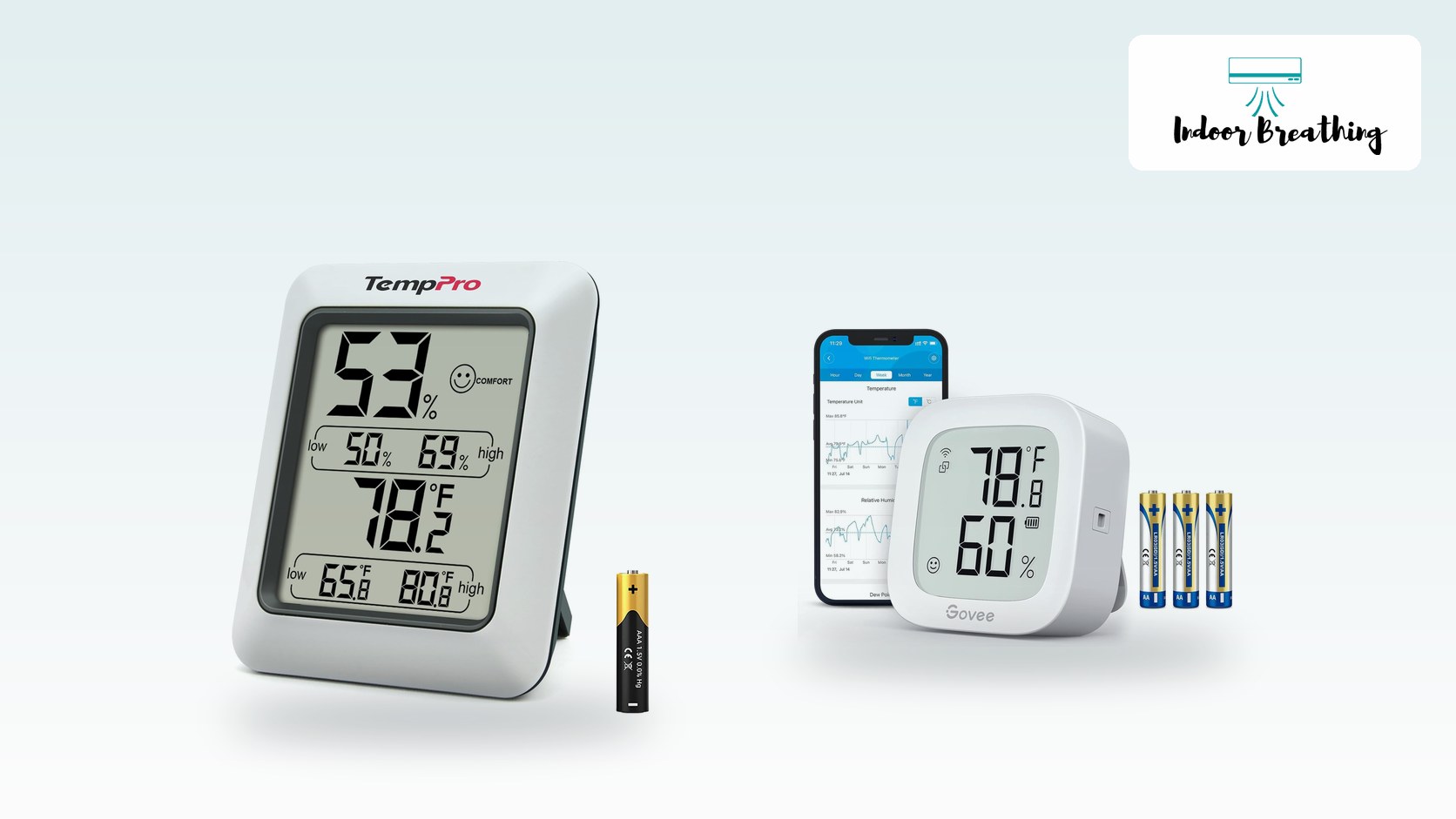
Prices, ratings and stock were checked on Amazon on October 22, 2026. Humidity ranges follow general EPA guidance.
A hygrometer shows if your home is too dry or too damp. Here are five good ones, what the numbers mean and where to put them.
Table of Contents
What Is a Hygrometer Used For?
A hygrometer measures relative humidity, which is how much water vapor the air holds compared with the most it can hold. Most also show temperature. It is a $10 tool that tells you whether your home is too dry, too damp or fine.
Why It Matters
Air that is too dry dries out skin, eyes and throats. Air that is too damp feeds mold and dust mites, and can warp wood and floors. The EPA suggests keeping indoor humidity between 30 and 50 percent. A hygrometer shows when you drift out of range. If mold is already a worry, see getting rid of mold spores.
What Is a Normal Reading?
Aim for 30 to 50 percent. In winter, 30 to 40 percent helps avoid window condensation. In summer, stay under 50 percent. Above 60 percent for days is a mold risk.
Here is where hygrometers are heading: cheaper, smarter and everywhere. A TempPro TP50 sits near $10 with more than 155,000 ratings, and Wi-Fi models like the Govee H5103 add phone alerts for under $40. Humidity is turning into a number that people check like the weather.
5 Hygrometers Worth Buying
Rechecked on Amazon on October 22, 2026. Prices, ratings and buttons are below.
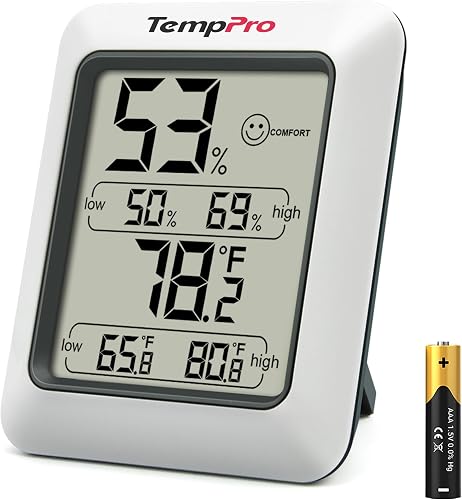
Price on Amazon: $10.49 | 4.6 stars from 155.9K ratings (checked October 22, 2026)
The TempPro TP50 shows temperature and humidity on a small LCD. It costs $10.49, rated 4.6 (155.9K). It is the default recommendation here for a simple room sensor.
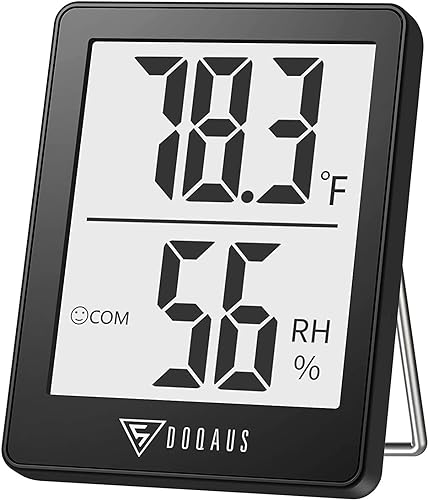
Price on Amazon: $6.99 | 4.4 stars from 19.7K ratings (checked October 22, 2026)
The DOQAUS hygrometer is a small digital gauge. It costs $6.99, rated 4.4 (19.7K).
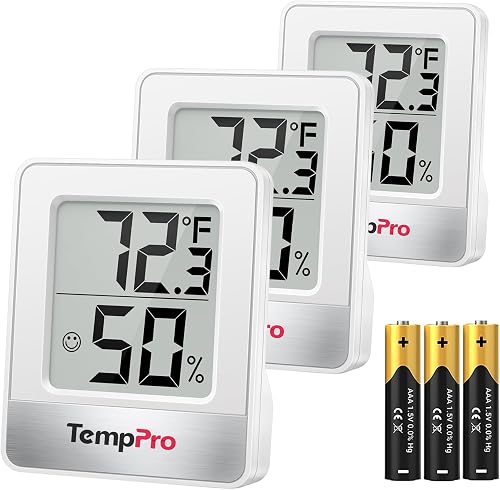
Price on Amazon: $20.89 | 4.6 stars from 8K ratings (checked October 22, 2026)
The TempPro TP49 3-pack lets you watch the bedroom, basement and living room. It costs $20.89, rated 4.6 (8K).
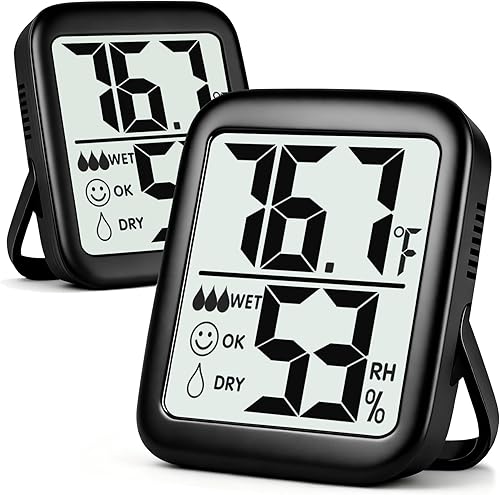
Price on Amazon: $9.97 | 4.5 stars from 36.1K ratings (checked October 22, 2026)
The 2-pack room thermometer gives two small gauges for a low price. It costs $9.97, rated 4.5 (36.1K).
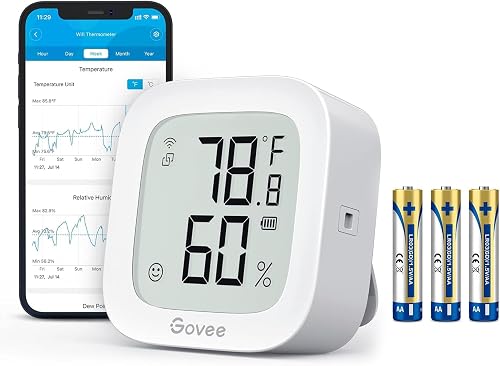
Price on Amazon: $37.99 | 4.2 stars from 1.9K ratings (checked October 22, 2026)
The Govee H5103 has an electronic-ink display and sends data to a phone app. It costs $37.99, rated 4.2 (1.9K).
The downside is false confidence. Cheap sensors can drift by several percent, and two units on the same shelf can disagree. A wrong reading can lead you to run a dehumidifier all summer for no reason, or to stop one that you need. Expect more cheap sensors with no calibration data, and more people trusting an app over their own eyes. Test two units side by side before you rely on either.
Where to Put a Hygrometer
Place it at about eye level, away from windows, vents, heaters, bathrooms and direct sun. Keep it off a wall that gets cold. Give a new unit an hour to settle before you trust it. If two readings disagree, check them with how to calibrate a digital hygrometer.
Accuracy, Honestly
Budget hygrometers are often off by a few percent. That is fine for a ballpark, not for lab work. Buy two cheap ones for the same room and compare. If they differ by more than 5 points, one of them is off.
Wi-Fi or Not?
A basic LCD gauge is enough for most homes. Wi-Fi models help in a basement, nursery or crawl space where you do not want to walk. See monitoring temperature and humidity for a setup guide.
How to Pick
One room? The TP50. Several rooms? The 3-pack. Basement alerts? The Govee. Fix damp rooms with a dehumidifier from the best dehumidifiers for damp homes. Want outside temperature too? See indoor outdoor thermometers.
FAQ
What humidity should a house have?
The EPA suggests 30 to 50 percent.
Are cheap hygrometers accurate?
Within a few percent, usually. Compare two units to check.
Where should you put a hygrometer?
At eye level, away from windows, heaters and bathrooms.
How often should you check it?
Daily in the first week, then whenever the weather changes.
Final Word
Buy two cheap units, compare them and keep the air between 30 and 50 percent.
What comes next: more Wi-Fi hubs, more alerts tied to dehumidifiers and humidifiers and more multi-room packs. The best habit is still simple. Check the number, check the room and fix the cause.
Related Guides
Keep going with how to calibrate a digital hygrometer, monitoring temperature and humidity, best dehumidifiers for damp homes, indoor outdoor thermometers and getting rid of mold spores.