
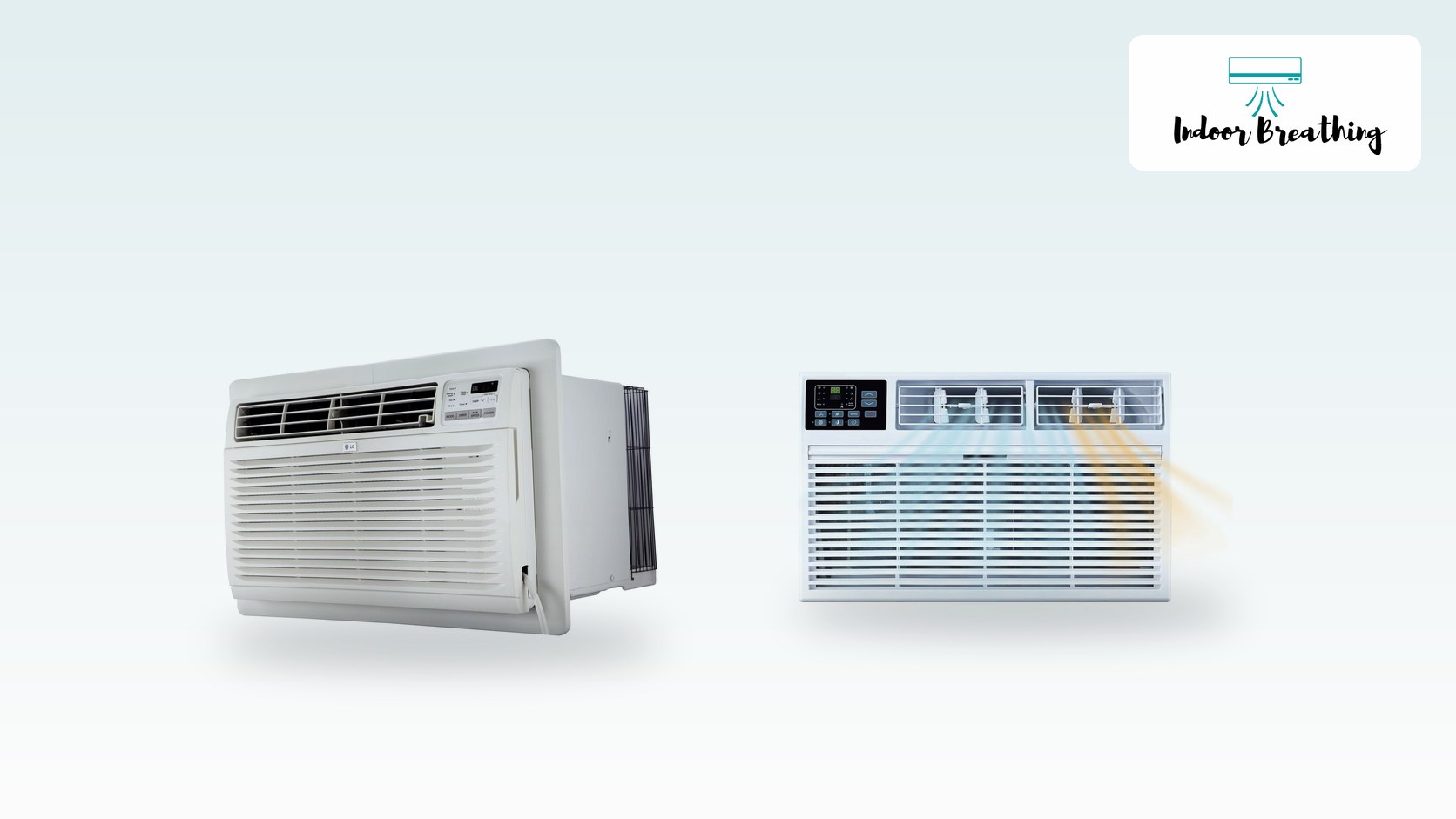
Prices, ratings and specs were checked on the Amazon listings on October 10, 2026. Two of these have very few ratings, so treat their scores as early. Room sizes are the makers’ claims.
If your room has no good window, or you want the window back, a through-the-wall air conditioner is a smart answer. It sits in the wall, seals tightly and stays there all year. Here is how it works, what to look for and five units you can buy now.
Table of Contents
What Is a Through-the-Wall Air Conditioner?
A through-the-wall (TTW) air conditioner is a complete cooling unit with the compressor, the coil and the fans in one box. It slides into a wall sleeve, a thin metal box set into an opening in the outside wall. The front faces the room and the back faces outdoors. It is also called a wall AC or a wall-mounted unit.
How it works
It works much like a window unit. A fan pulls warm room air across a cold coil, which cools the air and pulls out moisture. The unit pushes the cool air back into the room through the top of the front. The heat it removes goes out the back. A TTW unit vents out the back and the side vents are sealed, while a window unit vents out the sides and back. That is why a window unit should never go into a wall sleeve. It is not designed for it, and it can overheat. The LG listing says so plainly: it is suited for through-the-wall installation and is not properly vented for a standard window.
Looking ahead, through-the-wall units are changing. The newer models use R-32 refrigerant, add Wi-Fi control and meet stricter efficiency rules that took effect in recent years. The catch is that some older sleeves and 230-volt needs make a swap harder than it looks, and a new unit can cost more to fit than to buy.
Top 5 Through-the-Wall Air Conditioners
Prices and ratings were checked on Amazon on October 10, 2026.
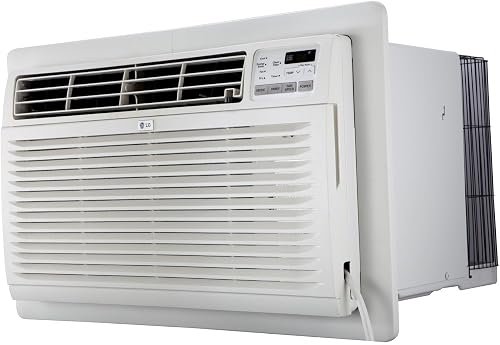
Price on Amazon: $499.00 | 3.9 stars from 589 ratings (checked October 10, 2026)
The LG is the long-time pick for a small bedroom or den. Its listing shows an EER of 10.7, R-32 refrigerant, a remote, 3 cooling speeds and a washable filter. It plugs into a standard 115-volt outlet and the maker says it cools up to 440 square feet. Ratings are mixed at 3.9 stars from 589 reviews, so read the recent ones. See our LG LT1016CER review.
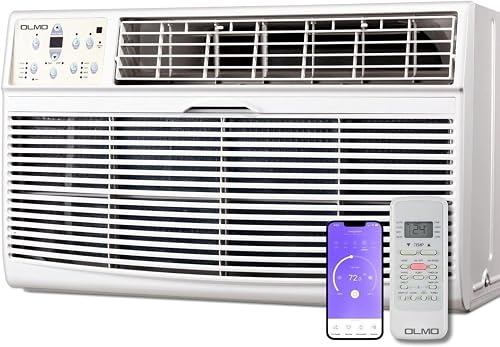
Price on Amazon: $478.97 | 3.8 stars from 32 ratings (checked October 10, 2026)
The OLMO is a cooling-only 12,000 BTU unit that runs on standard 115 volts, so no special wiring. It has a smart kit and a remote. The listing notes the wall sleeve is not included. At 3.8 stars from 32 ratings, it is a newer, less proven option.
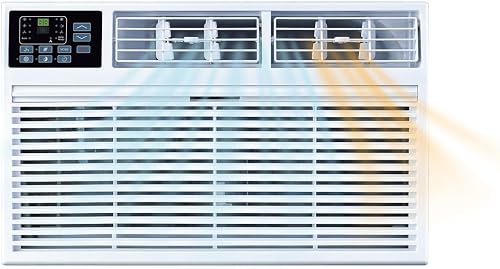
Price on Amazon: $599.99 | 4.5 stars from 9 ratings (checked October 10, 2026)
The Whirlpool offers 12,000 BTU of cooling and a supplemental electric heater, with 8-way louvers, an Eco mode and a sleep mode. It needs 230 volts and fits sleeves 24.5 to 27 inches wide. The maker says the heat is not meant to be the main source in the coldest months. It has only 9 ratings so far.
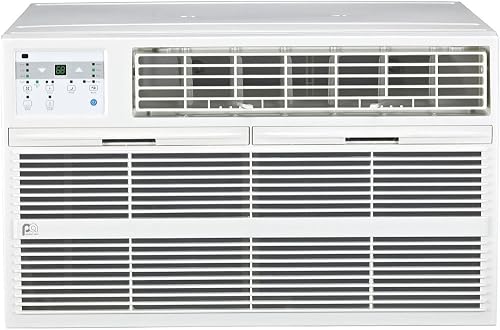
Price on Amazon: $689.95 | 4.0 stars from 8 ratings (checked October 10, 2026)
The Perfect Aire adds 10,600 BTU of supplemental heat to 14,000 BTU of cooling for rooms of 550 to 700 square feet. It fits standard sleeves and needs a 230-volt, 20-amp outlet. It has a remote with a built-in thermostat and a check-filter light. Ratings are few at 8.
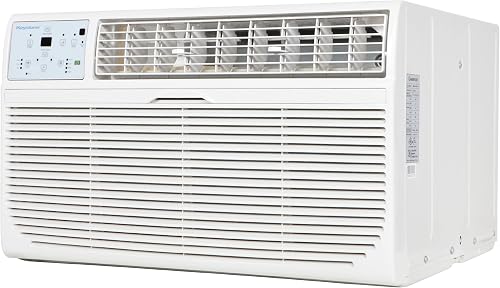
Price on Amazon: $985.30 | 3.7 stars from 132 ratings (checked October 10, 2026)
The Keystone is the big unit for rooms up to 700 square feet. It removes moisture too, at 2.9 pints an hour per the listing, and has a remote that senses the temperature where you sit. It needs a 230-volt, 20-amp outlet. Ratings are mixed at 3.7 stars from 132 reviews.
Two units from older versions of this page are off the list. The Friedrich Uni-Fit UE10D33C has only 2 ratings on Amazon, which is too few to judge, and the Koldfront WTC8001W listing we used before is gone. Read our Friedrich review and Koldfront WTC8001W review if you find one from a dealer.
How to Choose
Size it by BTU
Measure the floor area, then match it to the ENERGY STAR sizing chart:
| Room size | Cooling needed |
|---|---|
| 100 to 150 sq ft | 5,000 BTU |
| 250 to 300 sq ft | 7,000 BTU |
| 350 to 400 sq ft | 9,000 BTU |
| 450 to 550 sq ft | 12,000 BTU |
| 550 to 700 sq ft | 14,000 BTU |
Then adjust. Add about 10 percent for a sunny room and subtract about 10 percent for a shady one. Add 600 BTU for each person beyond two, and about 4,000 BTU for a kitchen. High ceilings need more. These steps follow the standard ENERGY STAR guidance.
Check the power
Smaller units use a standard 115-volt outlet. Many 12,000 BTU and larger units, especially those with heaters, need a 230-volt outlet, often 20 amps. An electrician may have to run a new circuit, so add that cost.
Check the sleeve
The sleeve is usually a separate purchase. Units of the same width fit the same sleeve, and many are about 24 inches wide, 14 to 15 inches high and 20 inches deep. Match the sleeve to the unit’s depth and width. A good sleeve is insulated and sealed against drafts.
Look at efficiency
Higher EER or CEER means less power for the same cooling. Here is a rough running cost at 17 cents per kWh. A 10,000 BTU unit with an EER of about 10 uses roughly 1,000 watts when the compressor runs. Eight hours at that rate is 8 kWh, about $1.36. The compressor cycles, so a typical month of daily use lands somewhere around $25 to $45. See our window AC comparison for the same math.
Noise
Most wall units run around 50 to 60 dB. Look for a sleep mode if the unit will be in a bedroom.
The risk to watch is the wrong size. A unit that is too big cools fast, shuts off and leaves the air clammy. One that is too small runs all day. Expect more big-BTU units priced low and sold for “up to” room sizes that only hold in a mild climate.
Heating Options
Some TTW units add an electric heating element or a reverse-cycle heat pump. A heating element is simple and costs more to run. Either is a supplement to your main heat, not a replacement. The Whirlpool listing says its heat is not meant to be the main source in the coldest months.
Benefits of a Wall Unit
- It frees the window. Keep your view and your fresh air.
- Tight seal. The sleeve keeps drafts out, and the unit is hard to dislodge, which is a plus for security.
- All-year use. The unit stays in place, with no seasonal removal.
- Zone cooling. Cool one room without running central air.
Installation and Care
Can you install one yourself?
If a sleeve is already in the wall, sliding the unit in is a two-person job. Cutting a new opening is a bigger project. It means framing, a lintel, weatherproofing and often wiring, and it is wise to hire a pro. Check for studs, pipes and wires before you cut. Never plug the unit in until it is fully installed.
Sealing
Use the foam strips that come with the unit and seal gaps around the sleeve with weatherproof caulk. A trim kit finishes the inside.
Cleaning
Clean the filter every two weeks in dusty or pollen seasons. Unplug the unit, pull off the front grille, slide the filter out and rinse it in warm water with a little soap. Let it dry fully. Vacuum the front and the coil fins gently. See our guide to the best through-the-wall air conditioners for more.
FAQ
Are wall air conditioners more powerful than window or portable units?
Power comes from the BTU rating. A 12,000 BTU wall unit and a 12,000 BTU window unit cool about the same. Portable units are usually less efficient for the same BTU.
Can you sleep with a wall AC on?
Yes. Pick one with a sleep mode, and size it right so it does not cycle on and off often.
Can a window AC go in a wall?
No. A window unit is vented out the sides and needs open air there. A sleeve boxes it in and can overheat it.
Final Word
Choose the BTU by room size, check the voltage before you buy and budget for a sleeve. Done right, a wall AC is a quiet, tidy way to cool a room for years. The alternatives are in our window air conditioner guide.
What happens next: heat pump versions of wall units should become more common as electric heating grows, and prices of 230-volt wiring jobs will matter more than the unit itself. Count the electrician in the budget before you click buy.
Related Guides
Keep going with best through-the-wall air conditioners, LG LT1016CER review, Friedrich through-the-wall review and best window air conditioners.