

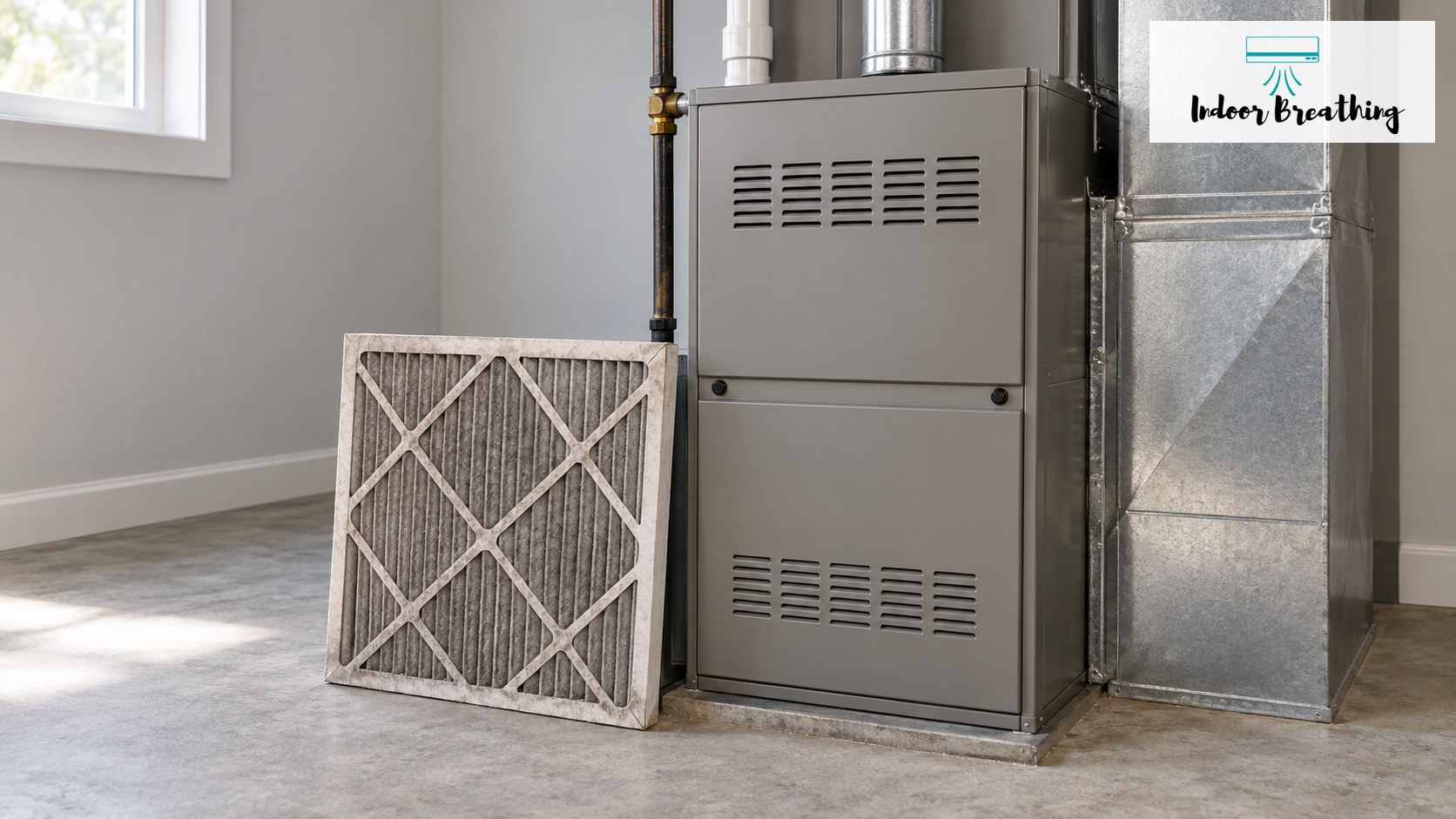
First cold morning of the year. You crank the thermostat, the furnace kicks on, and your house smells like a toaster that lost an argument. Take a breath. Most of the time, it is just dust.
Quick answer: a light burning-dust smell on the first heat of the season is common. It should fade as the furnace runs. A smell that gets stronger, smells like plastic, or comes with smoke, a gas odor, or a carbon monoxide (CO) alarm is a different story. Those mean stop and act. The checklist below tells you which is which.
Table of Contents
Furnace Smells Like Burning Dust: What to Do Right Now
| What you notice | What to do |
|---|---|
| Mild dusty smell on the first heat of the year, clearly fading | Stay nearby and watch it for a short while. Check the filter once the system is off and cool. |
| Smell keeps coming back, airflow feels weak, or the furnace keeps shutting off | Turn the furnace off and book HVAC service. |
| Burning plastic, rubber, or a sharp electrical smell | Turn the system off if it is safe to reach. Call an HVAC pro. |
| Smoke, flames, or a fire alarm | Get out. Call 911 from outside. |
| Rotten eggs or a sulfur smell (possible gas leak) | Get out without touching switches. Call the gas company or 911 from outside. |
| CO alarm goes off, or anyone feels dizzy or sick | Get everyone into fresh air. Call 911. |
A table cannot sniff your furnace for you. If the smell is hard to describe, pick the safer row. Nobody ever regretted calling a pro too early.
Why Does a Furnace Smell Like Burning Dust the First Time?
Your furnace takes the summer off. Dust does not. It settles on the heat parts all season long, and when the burners fire up again, that dust cooks off. Hello, burnt-toast smell.
Timing is the clue. Long break, light dusty smell, fading as it runs? That fits. A sharp smell that shows up in January, halfway through a normal winter? That does not.
One warning: “first time this year” is not a safety pass. A furnace can have a real problem on the same day it burns off dust. Watch the sounds, the airflow, the alarms, and whether the smell changes.
Also skip the urge to stick your face in a vent to figure it out. Smell it from where you normally stand.
How Long Should the Burning Dust Smell Last?
There is no magic number. Some guides say a few minutes, some say an hour. The honest answer: watch the trend. A mild dusty smell should clearly fade. If it stays strong, gets sharper, or starts to smell like something electrical, shut the system off.
Do not run the furnace for hours just to “burn it off” when the smell is unexplained. And if the smell vanishes, that does not prove everything inside is healthy. A yearly checkup still matters.
Handy tip: write down when it started and whether the furnace had been off for months. A technician can do a lot more with “started at 7 a.m., first heat since April, still there after an hour” than with “it smelled weird.”
Burning Plastic or Electrical Smell: Shut It Down
Plastic or rubber smells can mean overheating wires or parts. This is not a “wait and see” smell. Turn the furnace off if you can reach it safely and call for service. Do not restart it to test whether the smell comes back.
Visible smoke or flames are even simpler: leave the house and call 911 from outside. Do not stay behind to grab things or find the source.
Rotten Egg or Gas Smell: Leave First, Ask Questions Later
Natural gas has no smell on its own, so utilities add a rotten-egg scent on purpose. If you catch it, treat it as an evacuation.
- Do not flip switches or change the thermostat.
- Do not use a phone inside.
- Do not try to light anything.
- Get everyone out, pets too, if it does not slow you down.
- Call the gas company or 911 from outside, away from the house.
Do not go back in to hunt for the source. It might be another gas appliance or a pipe, even if the smell seemed to start with the furnace. Wait for the pros to say it is safe.
Yes, this means the usual advice to “turn the furnace off when it smells” has one big exception. A switch can make a spark. Getting out beats everything else.
Carbon Monoxide Has No Smell at All
Carbon monoxide (CO) is colorless and odorless. A dusty smell tells you nothing about CO, and clean-smelling air does not rule it out. Common signs of CO poisoning are headache, dizziness, weakness, upset stomach, vomiting, chest pain, and confusion.
If a CO alarm sounds, or anyone feels those symptoms with no alarm, get outside into fresh air and call 911. Do not stay inside to inspect the furnace. A quiet alarm afterward does not mean the danger is over. Wait for responders to tell you when it is safe to go back in.
Put CO alarms on every level of the home and outside sleeping areas. Follow the instructions on the box. Choose battery-powered models or ones with battery backup, and consider interconnected alarms so all of them sound at once.
A smoke alarm and a CO alarm are two different jobs. Check that a combo unit says it does both. And no, an air quality monitor with a pretty screen is not a replacement for a real CO alarm. If you are shopping for monitors anyway, here is how they compare: best indoor air quality monitors.
Easy Furnace Checks You Can Do Yourself
Only after you have ruled out smoke, gas, and CO. Keep it to the simple stuff your furnace manual says homeowners can do. No opening burner panels, no touching wires, no working around hot parts. If the manual is not clear, ask your service company.
1. Check the furnace filter
Turn the system off and let it cool. Look at the size printed on the filter frame and the airflow arrow before pulling it out. Some homes keep the filter at a return grille instead of next to the furnace.
Swap a dirty disposable filter for the right size. Wash a reusable one only if its instructions say you can, and let it dry fully. Never run the furnace with no filter while waiting for a new one to arrive.
A clogged filter cuts airflow, adds wear on the blower motor, and raises energy use. Finding a dirty one does not prove it caused the smell, though. An unexplained or repeating burning smell still needs a pro. Not sure how often to swap it? See our filter replacement guide.
One more thing: higher MERV is not always better. Check what your furnace maker allows. A thicker, denser filter can choke airflow in some systems. The new filter should fit snug with no gaps and no bent frame.
2. Look for blocked vents and returns
Move rugs, furniture, and laundry off the grilles. Do not reach deep into ductwork or poke around with tools. If a kid dropped a toy into a vent, tell the technician where.
Blocked airflow can cause overheating and short cycling. A clogged vent is worth a look, but frequent shutdowns can have other causes too.
3. Clear the space around the furnace
Keep stored stuff back from the furnace by the clearance in its manual. Do not lean cleaning supplies, cardboard, or plastic bins against it.
4. Write down what changed
A recent remodel, a filter change, or a long stretch without heat gives the technician context. Snap a photo of the model label if you can read it without opening anything.
New Furnace Smells During Startup
New equipment can have a short-lived startup odor. That claim should come from the installer and the manual, not from guessing. A plastic-like smell is not something to shrug off, so stop the unit and ask the installer to take a look.
Ask which startup smells are normal for your exact model, how long they should last, and what means shut it down. Report anything that sticks around. A warranty does not make a bad smell safe.
Have an oil furnace? An oily or exhaust-like smell is a service call. Tell the company the fuel type so they do not apply gas-furnace advice to an oil burner.
What If the Smell Returns Every Heating Cycle?
A smell that repeats is more serious than a one-time startup odor. Tell the technician when it shows up: at ignition, while the blower runs, or near shutdown. Notice it during normal use only. Do not keep cycling the furnace to collect clues.
Mention weak airflow, new noises, uneven heating, and repeated stops, too. All of those point toward a repair.
A useful report sounds like this: “Started yesterday after weeks of normal heat, and it returns every cycle.” A useless one sounds like: “Must be a cracked heat exchanger.” That is a guess. Let the inspection decide. If the furnace is declared unsafe, keep it off.
Do You Need Duct Cleaning or an Air Purifier?
Usually not. Dusty ducts alone are not a reason for a whole-house cleaning. It makes more sense when there is heavy contamination, pests, or lots of debris blowing out of the vents. A dusty return grille by itself does not mean the whole system needs cleaning. Furnace service and duct cleaning are separate jobs, so ask for proof before paying for a package deal.
An air purifier is not a fix for a burning smell either. Find the source first. And skip candles and sprays. They hide the smell and make changes harder to notice.
Want something for the everyday dust that floats around the house? Start with our guides to the best air purifiers for dust and how to read CADR. Treat that as a separate purchase from deciding whether the furnace is safe to run. Curious about your home’s air in general? Air quality testing is a good next read.
Useful Amazon Picks for Furnace Season
Two things are worth having: a filter that fits and a working CO alarm. They are maintenance buys, not tools to certify a bad furnace as safe.
CO alarm: the Kidde COBD is a battery-powered carbon monoxide alarm with a digital display. Check the model and the install instructions before buying. Find Kidde CO alarms on Amazon (this opens a search page, so other brands may show up too).
Furnace filter: Browse furnace filters on Amazon. Add your exact size and the filter type your furnace allows to the search. Nominal and actual sizes can differ, so check the fit details, not the product photo.
Check the seller, the specs, and the return terms. Prices and stock change.
Stop the Problem Before the Next Cold Morning
- Book a yearly furnace tune-up before heating season, and ask what is included.
- Keep a simple log of filter swaps, service visits, and alarm replacement dates.
- Test alarms by the manual. The test button checks the circuit, not the sensor. Replace expired or damaged units.
- Do the first heat run while you are awake and home, so you can notice a problem early. If something seems off, pause and call for help. Do not leave a furnace to run unattended.
Frequently Asked Questions
Is a burning dust smell always normal?
No. A mild smell that fades after a long break can be seasonal dust. A strong, sharp, long-lasting, or repeating smell should not get the “dust” label. Smoke, gas odors, alarms, and symptoms change everything.
Should you open windows and keep the furnace running?
No. Fresh air does not prove the furnace is safe. For gas, fire, or CO emergencies, leave the house and call for help from outside.
Can you clean inside the furnace yourself?
Only the jobs your manual gives to homeowners. Burners, combustion parts, and wiring belong to a qualified pro. Being able to pop off a panel does not make it a DIY job.
Does a clean filter mean the problem is solved?
No. A clean filter removes one cause of weak airflow. It cannot check combustion, wiring, or a failing part. If the smell continues or returns, keep the system off and get it inspected.
What should you tell the service company?
Describe the smell, when it started, whether it faded, and any alarm or change in how the furnace runs. Share the fuel type and model if you know them, and say that you have stopped using the system.
The Bottom Line: Watch, Stop, or Leave
A light dusty smell that fades is usually just the furnace waking up. Everything else, including a smell that grows, plastic odors, gas, smoke, or a CO alarm, means stop and get help. Pattern and warning signs matter more than any minute count. When in doubt, shut it down and call.
Want to keep the whole house fresher once the furnace is sorted? See our best air purifiers for home and our smoke-focused picks for stubborn odors.
As an Amazon Associate, IndoorBreathing earns from qualifying purchases. This guide is for general information and is not a substitute for a licensed HVAC technician or emergency responders.