
Prices and ratings were checked on Amazon on October 10, 2026. This is a rewrite of the earlier Clarifion page; claims that could not be backed up were removed.
Indoor air can be as polluted as the air outside, and it is hard to see. Clarifion is one of the names that pops up when people search for a cheap, small fix. So what is it, and does it work?
Table of Contents
What Is Clarifion, and How Does It Work?
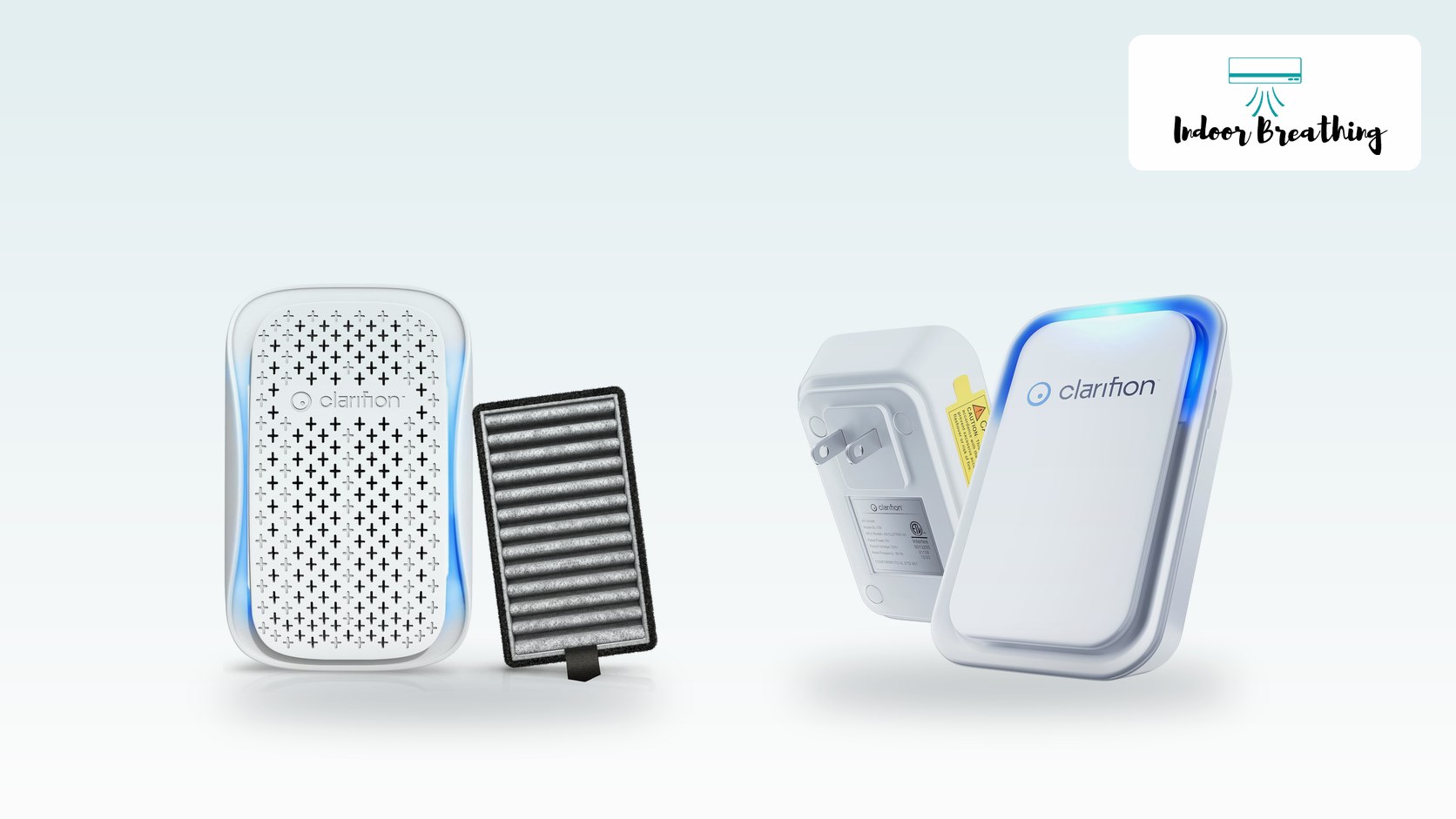
Clarifion sells compact air cleaners for bedrooms, dorms and offices. Two are common on Amazon. The Clarifion DSTx is a plug-in personal air purifier whose listing mentions an ionizer and a HEPA filter. The Clarifion Air Ionizer is a small negative-ion unit. Both are made for one small space, not for a living room.
An ionizer sends out charged particles called negative ions. They attach to dust and smoke, which makes the particles heavy so that they settle on floors, walls and furniture instead of floating in the air. The air tests cleaner near the unit, but the dust is still in the room until you wipe or vacuum it. A filter-based purifier works the other way: it pulls air through a filter and traps particles for good.
Does Clarifion Work?
For small jobs, a little. For a whole room, not much. Here is the honest picture.
- No published CADR. The clean air delivery rate (CADR) tells you how fast a purifier cleans a room. We could not find an AHAM-verified CADR for the Clarifion units, so there is no way to match them to a room size with confidence.
- Small size, small reach. A plug-in unit this size can only move a small amount of air. Think a desk or a nightstand, not a whole bedroom.
- Ionizers make a little ozone. The amount can be tiny, but ozone irritates the lungs, which matters for people with asthma. Look for a CARB (California Air Resources Board) certification on any ionizer you buy.
- Odors and gases. A thin carbon layer, if there is one, removes little. Do not expect it to clear cooking smells or smoke.
Looking ahead, expect small plug-in purifiers and ionizers to keep selling, because they are cheap, quiet and easy to hide on a desk. Newer models are adding HEPA-style filters and sensors. The catch is that most small units have no published clean air delivery rate, so buyers have little way to compare them with a proper purifier, and bold box claims will keep running ahead of the proof.
Is Clarifion a Gimmick?
Not a scam, but oversold in many ads. The units do what the box says in a narrow sense: they produce ions and, on some models, include a small filter. What they do not do is clean a room the way a purifier rated for that room does. Reviews on Amazon are mixed to good for the price, at 4.1 stars for the DSTx and 4.0 stars for the ionizer, which tells you buyers like them as cheap small add-ons.
Be careful of any page, including old versions of this one, that quotes studies, university trials or customer names without a source. If a claim has no source, treat it as marketing.
Clarifion vs. a Real HEPA Purifier
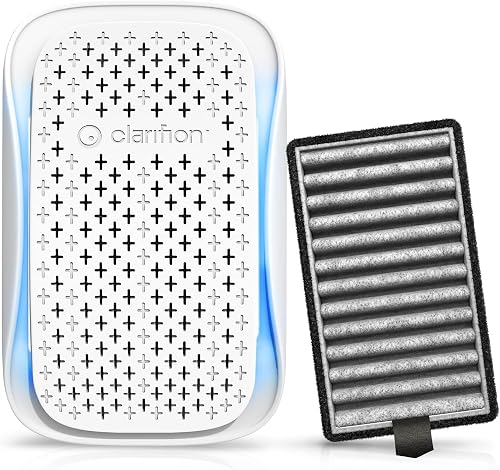
Price on Amazon: $54.90 | 4.1 stars from 2,767 ratings (checked October 10, 2026)
A true HEPA purifier like the Levoit Core 300 captures 99.97 percent of 0.3 micron particles, publishes its CADR and has a replaceable filter you can buy. It costs a bit more than the Clarifion units, and it handles a whole bedroom. For a long-term pick, that is the better buy. For a tiny space or a quick desk helper, the Clarifion units are low-risk, low-cost options.
The risk to watch is ozone. Ionizers can make a little ozone, and ozone is a lung irritant, so rules in California and elsewhere limit how much a purifier may emit. Expect more shoppers to check for CARB certification, and do not be surprised if ionizer-only units lose ground to filter-based designs. A small unit can also give a false feeling of clean air in a room that is far too big for it.
What the Ozone Rules Say
California’s air regulator, CARB, limits indoor air cleaners to an ozone output of no more than 0.050 parts per million, and lists the models that pass. That is the same level the FDA uses for medical devices. Many ionizers and combo units are certified, and many cheap imports are not. Search the CARB list for the exact model before you buy, and skip any ionizer you cannot find. If anyone in your home has asthma, a filter-only purifier is the safer choice.
What to Check Before You Buy a Small Air Cleaner
- A CADR number. No number means no way to match the unit to a room.
- The filter type. Look for a true HEPA filter, and check that replacements are sold and priced clearly.
- Room size. Divide the CADR by two-thirds to estimate the room it fits. Our CADR calculator does it for you.
- Noise. Look for the decibel level on low, since you will run it at night.
- Return window. A cheap unit is a low-risk buy only if you can send it back.
Who Should Buy Clarifion, and Who Should Skip It
- Good fit: a dorm desk, a car-sized closet office, a small guest room, or a second unit for a bathroom shelf.
- Skip it if: you have asthma or serious allergies, a pet that sheds, smoke in the house, or a room over about 100 square feet. Buy a filter-based purifier sized for the room instead.
How to Clean a Small Purifier or Ionizer
Always follow the manual for your model. As a general rule, unplug the unit first, wipe the outside with a dry or barely damp cloth, and let any washable part dry completely before you plug it back in. Replace filters on the schedule in the manual, and do not run the unit with a wet filter. See our guide to cleaning and replacing air purifier filters for more.
People Also Ask
Does Clarifion remove dust?
It can reduce dust near the unit, either by trapping some on a filter or by making particles settle. You will still need to dust and vacuum, since settled dust stays in the room.
Is an air ionizer the same as an air purifier?
No. An ionizer makes particles settle, and a purifier filters them out of the air. See air purifiers for allergies for filter-based options.
How long does a Clarifion last?
Small plug-in units often last a few years with normal use, but the listing and the manual are the source to trust. Filters, if your model has one, usually need replacing about once a year, sooner in a dusty home.
Conclusion
Clarifion is fine as a small, low-cost helper, but it is not a room cleaner. If you want real results, choose a HEPA purifier sized for your room and check the CADR. Our guides to the best air purifiers for home, bedroom air purifiers and CADR ratings are a good place to start, and running an air purifier all the time explains how to keep one working for you.
What happens next: more of the market will move to filter-first designs with a real CADR number, and ionizers will become an optional extra. If you want clean air, buy for room size and filter quality, not for a feature list. If you only want a little help at your desk, a small unit is fine as long as you keep your expectations small too.