
Most people have no idea what is floating around their rooms. They find out when the nose runs, or the stove smokes, or a candle turns the bedroom into a campfire. A small monitor can turn that guesswork into a color.
The Amazon Smart Air Quality Monitor costs $69.99 and tracks five things: PM2.5 particles, VOCs, carbon monoxide, humidity and temperature. Amazon shows a 4.2-star rating from more than 5,500 buyers. Here is what it does well and where it stops.
Table of Contents
Amazon Smart Air Quality Monitor at a glance
| Feature | Details | Price |
|---|---|---|
| Amazon Smart Air Quality Monitor | PM2.5, VOCs, CO, humidity, temperature; color LED; Alexa app and routines | ~$69.99 |
Prices checked October 2026 and change often.
What it measures
- PM2.5: fine particles from smoke, cooking and dust.
- VOCs: gases from paint, cleaners and new furniture.
- Carbon monoxide: a reading, not a safety alarm.
- Humidity and temperature: the basics for mold and comfort.
That last point on CO matters. A monitor that shows a CO reading is not a replacement for a UL-listed CO alarm. Keep alarms outside bedrooms and on every level.
How it works with Alexa
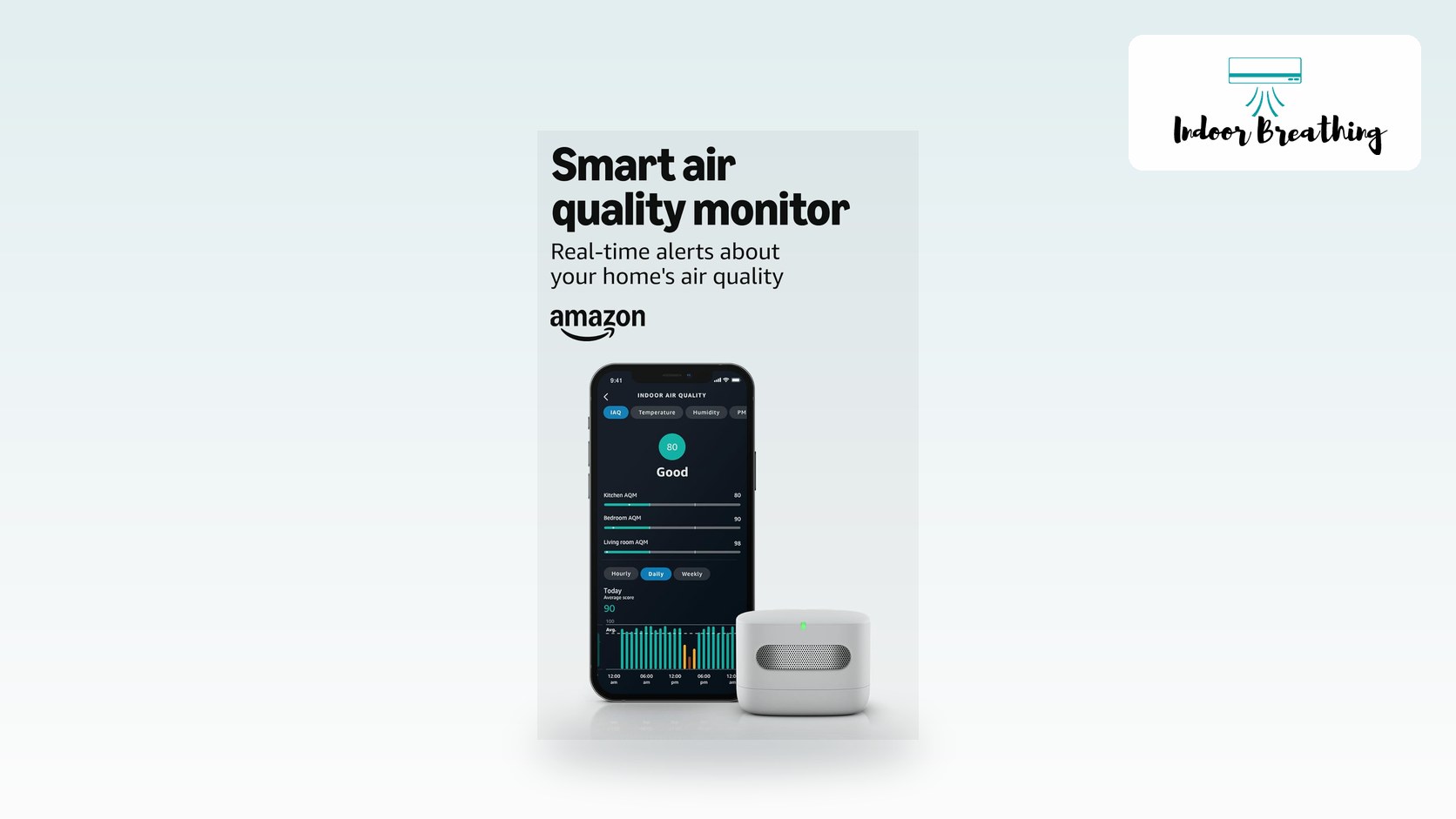
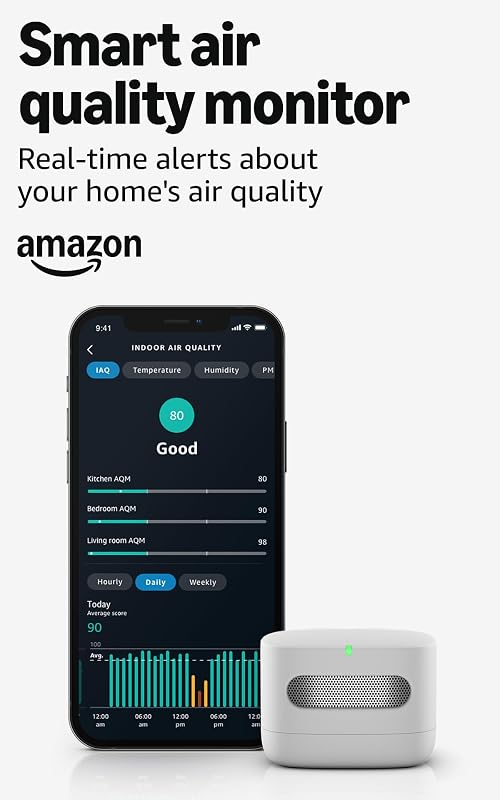
A color LED gives a quick read, and the Alexa app shows an air quality score. You can set alerts on a phone or announcements on Echo devices. Routines can turn on compatible air purifiers, fans or dehumidifiers when readings change. That is the best feature. A monitor that triggers a purifier is more useful than a monitor that just reports.
Where it falls short
- It needs the Alexa app, so it works best if you already use Alexa.
- Consumer sensors are good for trends, not lab-grade precision.
- VOC readings are a general index, not a list of chemicals.
- It does not measure CO2, which matters for stuffy bedrooms. See CO2 monitors for bedrooms.
For other choices, compare the best indoor air quality monitors.
What PM2.5 numbers mean
PM2.5 is measured in micrograms per cubic meter. The EPA’s 24-hour standard is 35 and its annual standard is 9. A spike while cooking is normal for a few minutes. If readings stay high, run an exhaust fan or a purifier, and look for the source.
Where air quality monitors are heading
Expect monitors to get cheaper and to plug into more devices. Thermostats, purifiers and range hoods can all react to a reading. In a few years that may mean fewer manual switches.
The risk is lock-in. A monitor tied to one voice assistant can lose features when the platform changes, and always-on sensors collect data about when you are home. Look for local controls and clear privacy settings.
Pros and cons
| Pros | Cons |
|---|---|
| Tracks PM2.5, VOCs, CO, humidity and temperature for $69.99 | Needs the Alexa app and a Wi-Fi connection |
| Routines can switch on purifiers, fans and dehumidifiers | CO reading is not an alarm |
| Color LED for a quick check | No CO2 reading |
| 4.2 stars from more than 5,500 buyers | Consumer-grade accuracy |
Where to put it
- Bedroom or main living area, at breathing height if possible.
- Away from the kitchen stove, bathroom steam and direct sun.
- A few feet from windows and vents.
- Plugged in where it can see the room’s normal airflow.
A simple way to use the readings
- Cooking spike: turn on the range hood and open a window.
- Constant high PM2.5: check the filter, run a purifier, look for a smoke or dust source.
- VOC spike after painting or a new couch: ventilate and run a carbon filter. See how long new furniture smell lasts.
- High humidity: run a dehumidifier.
Pair it with a purifier from our best air purifiers for home list for a hands-off setup.
Compared with other ways to check air
| Tool | Good at | Misses |
|---|---|---|
| Amazon Smart Air Quality Monitor | PM2.5, VOCs, CO reading, humidity, routines | CO2 |
| CO2 monitor | Stuffy rooms, ventilation checks | Particles and VOC detail |
| CO alarm (UL listed) | Carbon monoxide safety | Everything else |
| Hygrometer | Humidity only | Everything else |
Pairing a monitor with a certified CO alarm and a hygrometer covers most home needs. Our hygrometer picks show the cheaper end.
What happens next: expect monitors to feed thermostats, purifiers and range hoods without a human in the loop. That is convenient, and it also means more devices sharing data about when a home is occupied.
Frequently asked questions
Does it replace a carbon monoxide alarm? No. Use certified CO alarms for safety.
Does it need Wi-Fi? Yes, it connects through the Alexa app.
Can it control an air purifier? It can trigger routines for compatible Alexa devices when readings change.
Sources
- Amazon Smart Air Quality Monitor Amazon listing (checked October 2026)
- U.S. Environmental Protection Agency, PM2.5 National Ambient Air Quality Standards
- U.S. Consumer Product Safety Commission, carbon monoxide alarm guidance