
Yes, mold in your home can be dangerous, with severity depending on amount, health, and exposure. Most people get allergy-like symptoms: sneezing, coughing, skin irritation, burning eyes. People with asthma, allergies, or weakened immune systems face bigger risks, including lung infections. EPA says patches under 10 square feet are safe to clean yourself; larger mold needs a professional.
Prices in the tools table were re-checked on Amazon on October 10, 2026. Every health claim, threshold, and recommendation below is checked against current EPA, CDC, and AAFA guidance rather than repeated from older mold-remediation marketing copy. Where evidence is mixed or unproven, that’s stated explicitly instead of rounded up into a scarier claim.
Table of Contents
Is Mold in Your Home Dangerous? The Short Answer
A dark smudge under a bathroom sink can send anyone into a crawlspace with a flashlight, trying to work out whether it is “the bad kind” of mold. Often it is just surface mildew from a slow drain leak. But the panic is real, and it is a question readers ask all the time: is this actually dangerous, or is it a false alarm?
So is mold in your home dangerous? The honest answer is “it depends,” but not in a vague way. Public health agencies have specific, published guidance on who’s at risk, what symptoms actually mean, and when a patch of mold crosses from a weekend chore into a job for a licensed remediation contractor. This guide walks through the health risks backed by real research, how to tell mold symptoms apart from a cold or unrelated illness, and the EPA’s own rule of thumb for deciding whether to grab gloves and a spray bottle or call in a professional.
This piece is specifically about the health side of that decision — what mold exposure actually does to your body, who’s genuinely vulnerable, and where the line sits between a manageable nuisance and something a doctor or a certified contractor should weigh in on. If you’re further along and want to know how to test for mold in the first place, or which air purifier to run while you sort out the moisture problem, see the pieces on this site built specifically for that, including our mold test kit review, do air purifiers help with mold and how to get rid of mold spores in the air.
What Mold Actually Is, and Why It Shows Up Indoors
Mold is a fungus that reproduces by releasing spores into the air. Those spores are essentially everywhere, indoors and out, in nearly every home on earth — the CDC notes the most common indoor genera are Cladosporium, Penicillium, and Aspergillus. What turns background-level spores into an actual problem is moisture. Give mold a damp surface with something organic to feed on — drywall paper, wood, dust, carpet backing, the cardboard on the back of a box in storage — and it can begin colonizing within 24 to 48 hours of sustained wetness.
That’s why mold shows up in predictable places: around a leaking pipe, behind a washing machine, in a basement that floods every spring, along a window frame that fogs with condensation, or in a bathroom with an exhaust fan nobody bothers to run. Fix the moisture and you fix the root cause. Visible mold is really a symptom of a water problem you haven’t solved yet, not the primary problem itself — which is exactly why remediation that skips the moisture fix so often fails within a season.
The EPA’s own framing is worth repeating here because it undercuts a lot of the fear-based marketing around mold: “molds produce allergens (substances that can cause allergic reactions), irritants, and in some cases, potentially toxic substances (mycotoxins).” Note the “in some cases” — not every mold, in every home, at every concentration, is producing something toxic. What’s consistent across essentially all indoor mold, though, is that it produces allergens and irritants, which is why the health conversation should start with allergy and irritation, the far more common outcomes, rather than jumping straight to worst-case mycotoxin scenarios.
Looking ahead, expect indoor mold to get more attention from doctors, landlords and insurers. Wetter storms, flooding and tighter, better-sealed homes all trap moisture, and health agencies keep refining guidance on damp buildings. The catch is that the science on mold and vague symptoms is still thin, so expect more tests and gadgets sold with bold promises that outrun the evidence.
Mold Exposure Symptoms: What They Actually Feel Like
Not everyone reacts to mold the same way, and that distinction matters more than most articles on this topic let on. According to the CDC, mold exposure can cause “a stuffy nose, sore throat, coughing or wheezing, burning eyes, or skin rash” — and it can trigger these symptoms even in people who aren’t allergic to it, simply as a direct irritant response to spores and the compounds they release.
For people who are mold-allergic, the reaction looks more like hay fever: sneezing, a runny or stuffy nose, itchy and watery eyes, postnasal drip, and sometimes a skin rash. The Asthma and Allergy Foundation of America (AAFA) notes that symptoms often get noticeably worse in damp, humid rooms like a basement, and that unlike outdoor mold (which tends to peak in summer and fall), indoor mold exposure can trigger symptoms year-round.
People with asthma sit in a higher-stakes category entirely. The CDC is direct about this: “people with asthma or who are allergic to mold may have severe reactions.” In practice that can mean real wheezing, chest tightness, or a genuine asthma flare-up requiring rescue medication, not just a stuffy nose that clears up on its own.
Mold Symptoms vs. a Cold, Flu, or Something Else Entirely
Because mold symptoms overlap so heavily with a common cold, seasonal allergies, or a mild respiratory virus, timing and location are your best clues. Symptoms that consistently show up or worsen in one specific room, ease noticeably within a day or two of being away from the house (a work trip, a weekend elsewhere), and don’t come with the fever or body aches typical of a viral illness point toward mold or another indoor irritant rather than something you caught from a coworker. A cold usually runs its course in under two weeks regardless of where you are; mold-related symptoms tend to persist as long as you’re in the exposure environment and improve away from it.
When Symptoms Point to Something More Serious
A much smaller group of conditions sits above ordinary irritation and allergy. CDC/NIOSH research on people working or living in chronically damp buildings documents hypersensitivity pneumonitis: an immune reaction that inflames the lungs after repeated exposure, sometimes producing flu-like illness, cough, and breathlessness, and capable of causing lasting lung damage if it goes unaddressed. Separately, the CDC notes that “immune-compromised people and people with chronic lung disease may get infections in their lungs from mold” — actual fungal infections, not allergic reactions, that in rare severe cases can spread to other organs. Both are uncommon. Neither is the “mold made a family chronically ill with vague, unexplained symptoms” narrative that circulates online without a clear diagnosis behind it — a distinction worth holding onto so you can take real risk seriously without chasing an unfounded one.
| Exposure Type | Typical Symptoms | Who’s Most at Risk | Evidence Strength |
|---|---|---|---|
| Irritant response (non-allergic) | Eye, nose, throat irritation; cough | Anyone, allergic or not | Well established (CDC, EPA) |
| Allergic reaction | Sneezing, runny/stuffy nose, itchy eyes, rash | Mold-sensitized individuals | Well established (AAFA, CDC) |
| Asthma trigger/flare-up | Wheezing, chest tightness, breathlessness | People with existing asthma | Well established (CDC) |
| Hypersensitivity pneumonitis | Flu-like illness, cough, breathlessness | Repeated, chronic high exposure | Documented, uncommon (CDC/NIOSH) |
| Invasive fungal infection | Fever, lung infection, possible spread | Immunocompromised, chronic lung disease | Well established in this group (CDC) |
| “Toxic mold syndrome” (vague chronic illness) | Fatigue, brain fog, non-specific complaints | General population (claim) | Not established as causal (CDC) |
Who’s Most at Risk From Mold Exposure
Mold isn’t equally dangerous to everyone under the same roof, and knowing where you and your family fall on that spectrum changes how urgently you should act. The CDC identifies a specific higher-risk group in direct terms: immune-compromised people and people with chronic lung disease can develop actual lung infections from mold exposure, not just irritation.
Outside that group, people with asthma or existing pollen/mold allergies are next most likely to have a noticeably worse reaction than a healthy adult standing in the same room. Infants, young children, older adults, and anyone with a chronic respiratory condition like COPD round out the higher-risk list most public health guidance points to, largely because their airways are more reactive or less able to compensate for ongoing irritation.
Researchers have also tried to quantify mold’s role in asthma at the population level. A widely cited 2007 analysis by researchers Mudarri and Fisk, published in the journal Indoor Air, estimated that roughly 21% of current U.S. asthma cases could be attributed to damp, moldy housing conditions. That’s a modeled estimate built on multiple assumptions, not a diagnostic test result for your specific house, so treat it as population-level context rather than a personal risk score — but it’s a useful reminder that this isn’t purely an individual-symptom issue.
Age matters too, in both directions. Young children’s airways are smaller and more reactive, so the same spore concentration that barely registers for an adult can trigger more noticeable coughing or wheezing in a toddler. Older adults, meanwhile, are more likely to already have some degree of chronic lung or cardiovascular disease that mold-related irritation can aggravate. Pregnancy isn’t flagged as a distinct mold-risk category in CDC guidance, but general respiratory irritant avoidance is still reasonable advice during pregnancy, and it’s worth raising with an OB if a damp problem is ongoing in the home.
Is “Toxic Black Mold” Real? What the CDC Actually Says
This is the phrase that causes the most unnecessary panic, so it’s worth being precise about it. “Toxic black mold” isn’t a term the CDC uses or a formal medical diagnosis. The mold most often blamed, Stachybotrys chartarum, got its fearsome reputation from a cluster of infant pulmonary hemorrhage cases investigated in Cleveland in the 1990s that drew national media attention.
Here’s what the CDC’s own current guidance says about it: a “possible association between acute idiopathic pulmonary hemorrhage among infants and Stachybotrys chartarum has not been proven,” and “no test exists that proves an association between Stachybotrys chartarum and particular health symptoms.” The agency’s practical bottom line is blunt: “it is not necessary to determine what type of mold you may have growing in your home or other building. All molds should be treated the same with respect to potential health risks and removal.”
That doesn’t mean mycotoxins, the toxic compounds some mold species can produce under certain conditions, are fiction. The EPA acknowledges molds can produce “potentially toxic substances” alongside allergens and irritants. It means the species-specific “this particular black mold will poison your family” framing that shows up in a lot of remediation-company marketing isn’t backed by the evidence CDC currently has, and it shouldn’t be what drives your decision-making. Any indoor mold growth, regardless of color or species, is a signal to clean it up and fix the moisture behind it.
The risk to watch is overreaction in both directions. Some people panic over a small patch and pay for tests they do not need, while others ignore a damp, musty room until it spreads. Expect more consumer moisture sensors and cheap test kits, and do not be surprised if a clean-looking home with hidden leaks still turns out to be the real problem.
The EPA’s 10-Square-Foot Rule: DIY or Call a Professional?
The single most useful, concrete number in this whole topic comes straight from the EPA’s own mold cleanup guidance: “if the moldy area is less than about 10 square feet (less than roughly a 3 ft. by 3 ft. patch), in most cases, you can handle the job yourself.” That threshold isn’t arbitrary — past that size, effective containment typically requires sealed plastic barriers and HEPA-filtered negative air pressure to keep spores from spreading through the rest of the house during cleanup, equipment most homeowners don’t have and shouldn’t need for a single wall patch.
Beyond the square-footage rule, a few other situations push you into professional territory regardless of size:
- The mold or water damage was caused by sewage or other contaminated water — the EPA is explicit that this calls for a professional, no matter how small the visible patch is.
- You suspect the HVAC system itself is contaminated. Don’t run it; get it inspected first, since a contaminated system can redistribute spores through the whole house.
- Anyone in the household has asthma, mold allergies, a compromised immune system, or a chronic lung condition — the EPA specifically recommends consulting a health professional before you even start cleanup in this case.
- Mold keeps returning after you clean it, which almost always means the underlying moisture source was never actually fixed, not that you used the wrong cleaning product.
If your situation clears all of those bars — small area, clean water source, no household health concerns, first occurrence — the EPA’s own guide walks through the DIY steps: fix the moisture source first, wear an N95 respirator and gloves, contain the work area, and discard porous materials (drywall, carpet, ceiling tile) that have been wet for more than 48 hours rather than trying to clean them. For anything larger, EPA’s guidance for bigger jobs is Mold Remediation in Schools and Commercial Buildings, the same technical standard licensed remediation contractors are expected to follow.
On testing specifically: the EPA doesn’t generally recommend it. “In most cases, if visible mold growth is present, sampling is unnecessary,” largely because no federal exposure limit exists to compare results against. If you want a low-cost baseline read before deciding how worried to be, our guide to testing air quality at home and our deeper look at mold testing methods and choosing an air purifier for mold both cover the testing side of this in more depth than a health-risk piece like this one can — that’s the right next stop if identifying and filtering the mold, rather than understanding the health stakes, is your actual next step.
Tools for Investigating and Preventing Mold
None of these are “the best mold product” in a ranked sense — they’re genuinely useful, real tools people reach for at different stages of a mold problem: confirming a suspicion, finding hidden moisture before it becomes visible mold, and keeping conditions from getting bad again after cleanup.
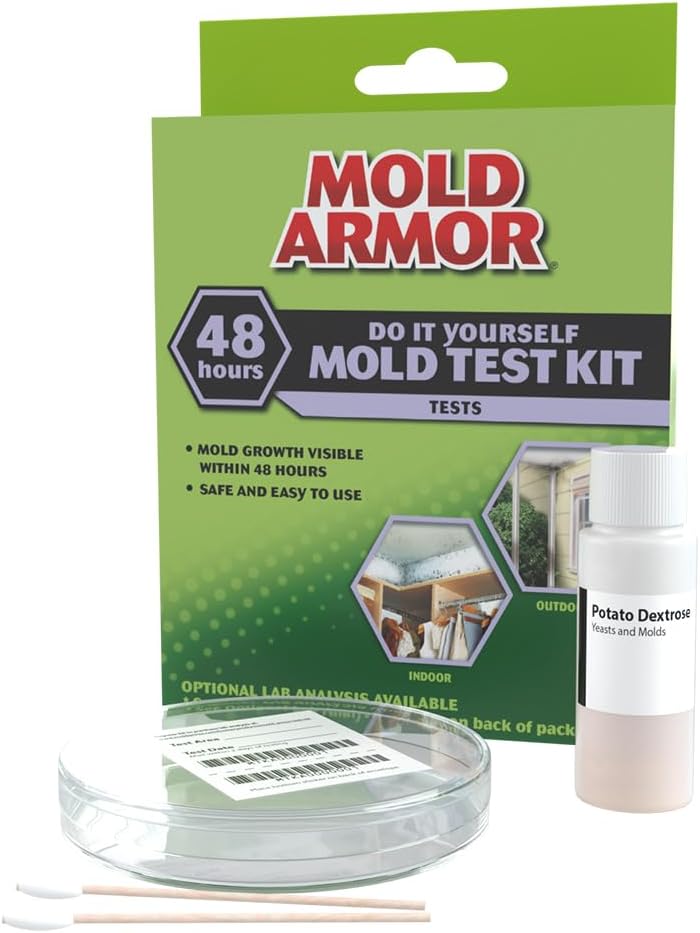
A kit like the Mold Armor Do It Yourself Mold Test Kit gives you a cheap first read using a petri-dish culture over about 48 hours. It won’t identify species or replace a professional inspection — and per the EPA guidance above, you often don’t need it if mold is already visible — but it’s a reasonable, low-stakes first step when you suspect hidden mold you can’t see, like behind a wall or in an HVAC return. Our full Mold Armor test kit review covers what the results do and don’t tell you.
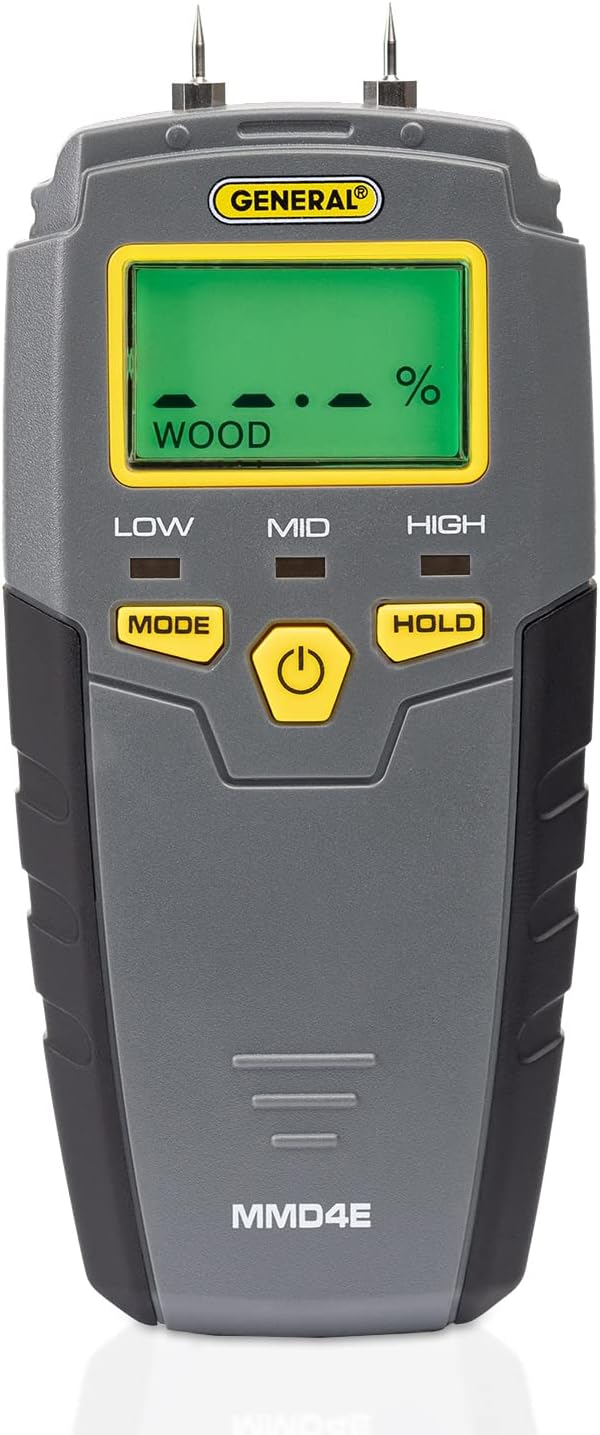
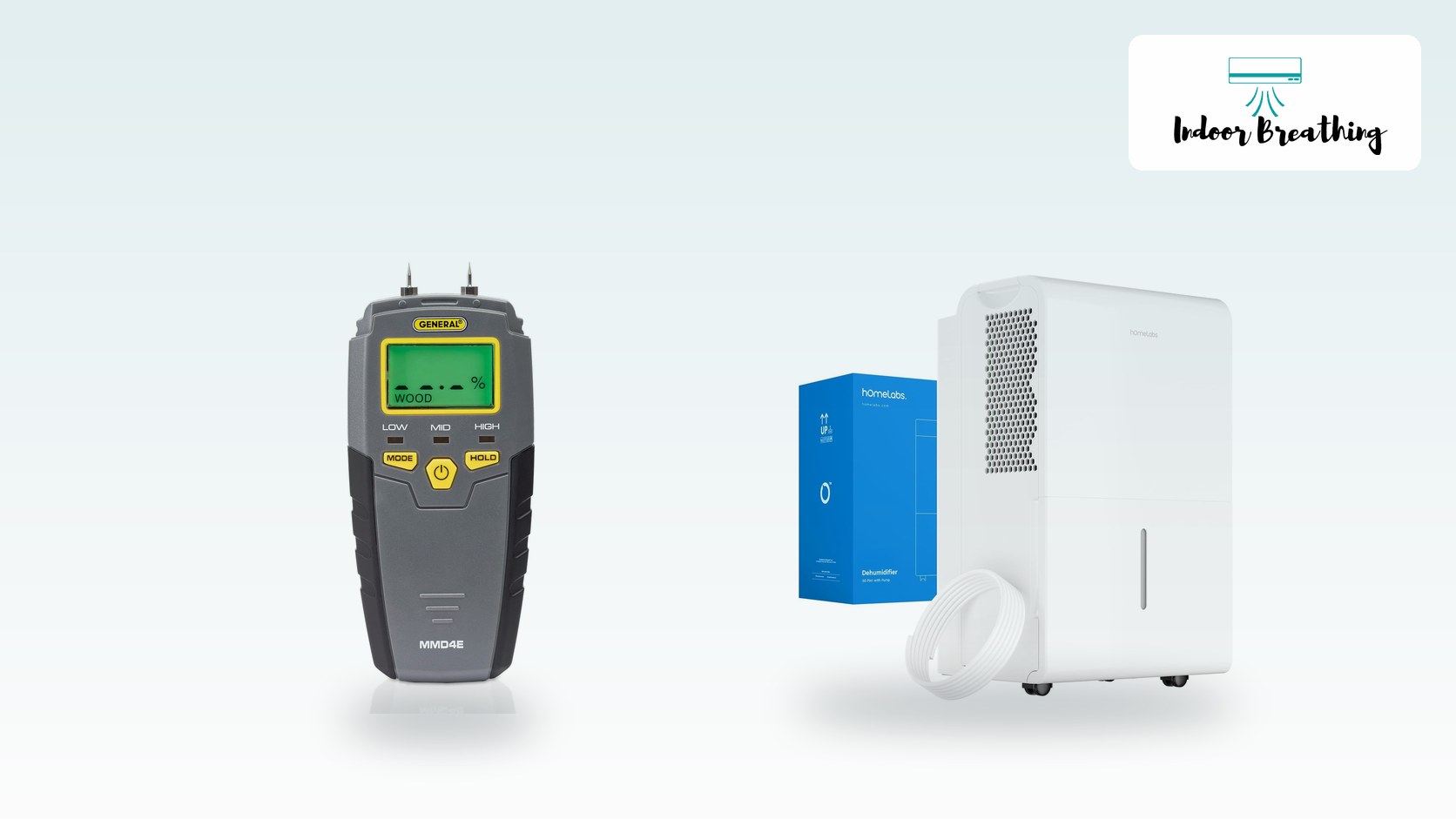
Since mold always traces back to moisture, catching a damp spot before it becomes a visible colony is worth more than any test kit after the fact. A pin-type meter like the General Tools MMD4E lets you check a water-stained ceiling, a wall near a shower, or wood near a past leak and get an actual moisture percentage instead of guessing from a stain’s color.
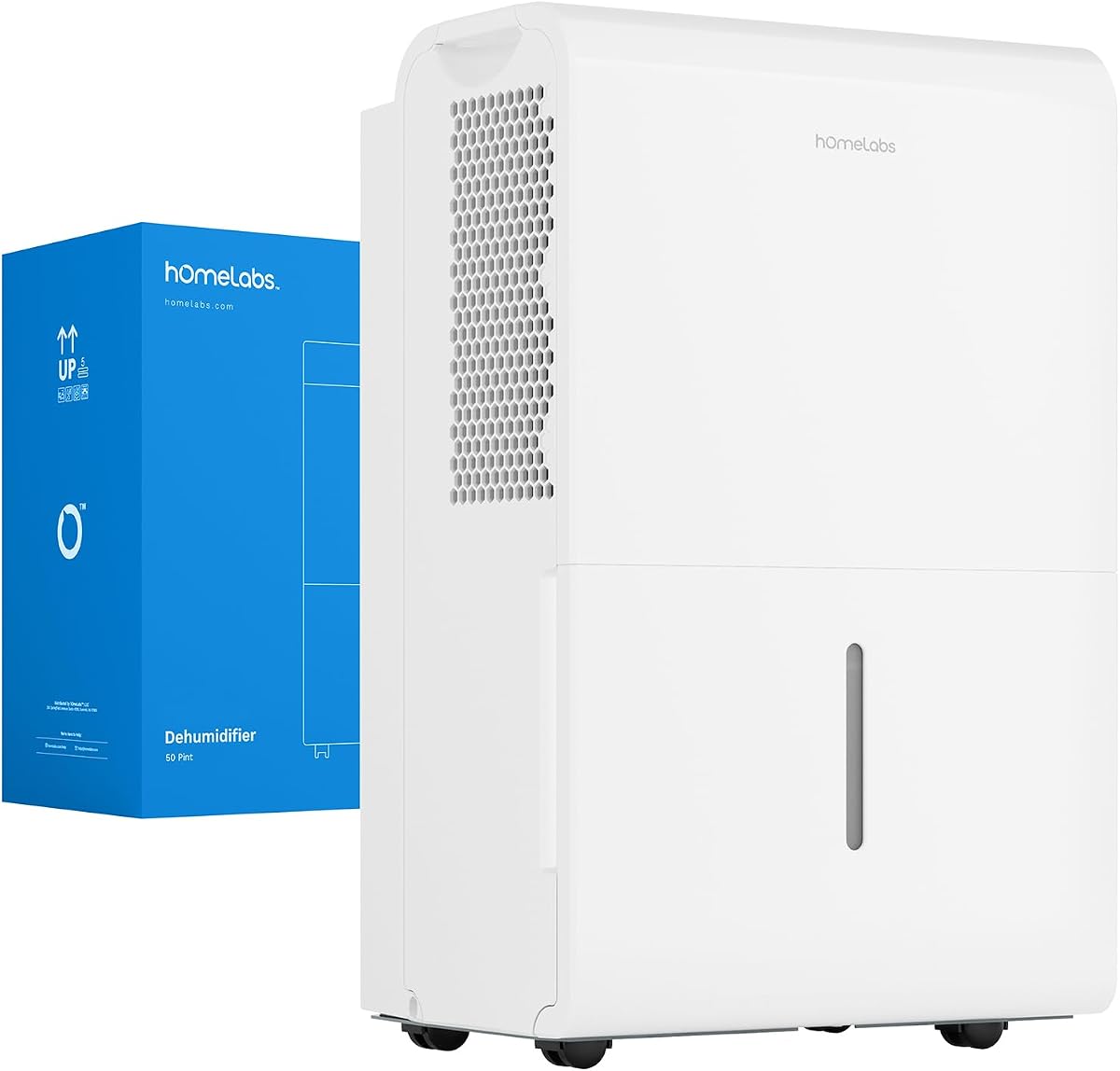
Running a dehumidifier in a chronically damp space like a basement is one of the highest-leverage prevention steps available, since it addresses the humidity mold needs rather than just the visible patch. The hOmeLabs 50-Pint Dehumidifier is a common pick for exactly this. Our dehumidifier guide for damp homes and our basement-specific dehumidifier guide both cover sizing for your actual square footage in more depth than makes sense here.
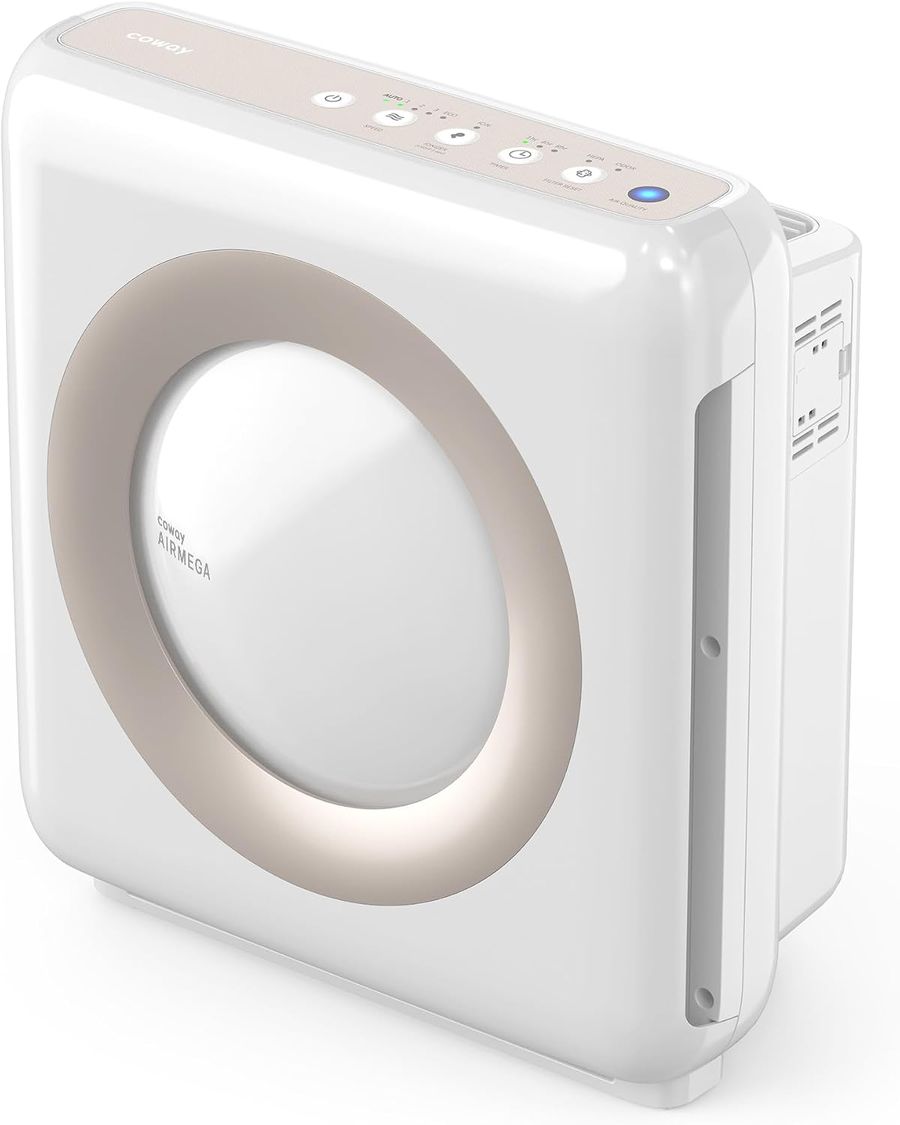
While you’re addressing the moisture source, a HEPA purifier like the Coway Airmega AP-1512HH can reduce airborne spore counts in the room — useful during and after a cleanup, but not a substitute for fixing the leak or ventilation problem underneath it. Our piece on whether air purifiers actually help with mold goes deeper on what HEPA filtration can and can’t do against spores specifically, and our explainer on how a HEPA filter works covers the filtration mechanics if you want that background first.
Keeping Indoor Humidity Down
Since moisture is the actual root cause, prevention is mostly a humidity-control problem rather than a cleaning-product problem. The EPA’s own guidance is direct: “keep indoor humidity below 60 percent (ideally between 30 and 50 percent) relative humidity.” A cheap hygrometer tells you where you actually stand instead of guessing from how a room feels, and a dehumidifier plus better bathroom and kitchen ventilation usually does the rest of the work.
A few habits go a long way: run the bathroom exhaust fan during and 20 minutes after every shower, fix plumbing leaks within days rather than months, wipe down visible condensation on windows in cold weather, and dry out any wet carpet, drywall, or furniture within 24 to 48 hours after a spill or flood — EPA’s own DIY guidance uses that same 24-to-48-hour window as the point past which porous materials should generally be discarded rather than dried and saved. If you’re sizing a dehumidifier for a specific room rather than shopping the whole lineup, our dehumidifier sizing guide and our broader dehumidifier buying guide walk through that math.
FAQ
Can mold exposure make you sick even if you’re not allergic to it?
Yes. The CDC notes mold can irritate the eyes, nose, throat, and lungs even in people without a mold allergy. It’s a direct irritant response to spores and the compounds they release, separate from an immune-mediated allergic reaction, and it can still cause real, uncomfortable symptoms in anyone exposed to enough of it.
What does “toxic black mold” actually mean, and should you worry about it specifically?
It’s a media-created term, not a CDC classification. The species usually blamed, Stachybotrys chartarum, has never had a proven causal link to the specific illnesses associated with it, and the CDC says there’s no test that proves that association. Its own advice: treat every indoor mold the same for cleanup purposes, regardless of species or color.
How long does it take for mold symptoms to show up after exposure?
It varies by reaction type. Irritant and allergic symptoms can start within minutes to a few hours of exposure in a moldy room and typically improve once you leave. Conditions like hypersensitivity pneumonitis generally develop after repeated exposure over weeks or months, not a single encounter.
Do you need a lab test to know if mold is making you sick?
Not necessarily. The EPA states sampling is usually unnecessary when mold is already visible, since there’s no federal exposure standard to compare results against anyway. A doctor evaluating your actual symptoms and their pattern is often more useful than a species identification from a lab.
Can mold cause permanent lung damage?
In most cases, no — ordinary irritant and allergic symptoms resolve once exposure stops. But repeated, unaddressed exposure that progresses to hypersensitivity pneumonitis can cause lasting lung scarring if it isn’t caught early, which is part of why persistent respiratory symptoms in a known-damp home deserve a medical evaluation rather than being brushed off.
Is it safe to stay in your home while mold is being removed?
It depends on the scope. For a small, contained DIY job under the EPA’s 10-square-foot threshold, most healthy people can stay in the home. For larger professional remediation jobs, especially where containment barriers and negative air pressure are used, follow your contractor’s specific guidance on whether to vacate the work area or the whole home during the job.
Related Mold and Air Quality Guides
Next steps: how to get rid of mold spores in the air, do air purifiers help with mold, the best air purifiers for basement smell and mold and the best dehumidifiers for damp homes. For allergies, see air purifiers for allergies and the best air purifiers for home.
What happens next: climate swings will make humidity control a normal part of home care, the way smoke alarms are. Check for leaks after storms, keep indoor humidity under about 50 percent, and fix the water source first, because mold is a symptom of moisture. The sooner a leak is fixed, the less cleanup you will face.
Bottom Line
Most household mold is a manageable, if unpleasant, cleanup problem, not a medical emergency. Use symptoms and the size of the affected area as your two main signals: under 10 square feet, a healthy household, and a clean water source means you can likely handle it yourself with basic precautions. Above that size, or if anyone in the house has asthma, allergies, or a weakened immune system, bring in a certified remediation professional instead. Skip the species-guessing and “toxic black mold” panic, since the CDC treats all indoor mold the same way — and fix the moisture source, because that’s the part that actually stops it from coming back.
Editorial note: This article covers general health information, not medical advice. If you have persistent symptoms you suspect are mold-related, talk to a doctor. Prices and availability on linked products change after publication — confirm the current listing before buying.