
Choosing an air purifier for wildfire smoke comes down to one number: CADR. Match a unit’s tobacco-smoke CADR to roughly two-thirds of your room’s square footage, confirm a true HEPA filter plus real activated carbon, and check replacement-filter cost. My top pick is the Blueair Blue Pure 211i Max with its SmokeBlock filter.
Reflects current Amazon pricing, manufacturer-published CADR ratings, and EPA/AirNow wildfire smoke guidance verified at the time of this update.
Wildfire smoke doesn’t need a nearby fire to reach your living room — plumes routinely travel hundreds or thousands of miles, leaving a hazy sky and a scratchy throat long after the flames are out of the news cycle. I look at wildfire-smoke purifiers differently than an everyday-dust purifier: smoke particles are extremely small, including PM2.5, and a purifier needs enough real airflow to clean the same air over and over, not just once. Gases matter too — a thin carbon layer isn’t the same as a genuinely deep bed.
Affiliate disclosure: IndoorBreathing may earn a commission when you buy through links on this page, at no extra cost to you. Recommendations are based on suitability for wildfire smoke, published specs, and filter cost — not commission rate.
Table of Contents
Best Air Purifiers for Wildfire Smoke Comparison
Here’s how my five picks compare on the numbers that matter for smoke: published CADR, the room size it realistically supports, and filter cost (see my explainer on how CADR is measured and certified if you’re new to shopping by this number).
| Model | Best For | Published Smoke CADR | Practical Smoke Room Size* | Carbon Filtration | Rating |
|---|---|---|---|---|---|
| Blueair Blue Pure 211i Max + SmokeBlock | Best Overall | 435 CFM | Up to ~650 sq. ft. | SmokeBlock filter (optional) | 5/5 |
| Levoit Core 600S-P | Best Value, Large Rooms | 391 CFM | Up to ~585 sq. ft. | Smoke Remover filter (optional) | 4/5 |
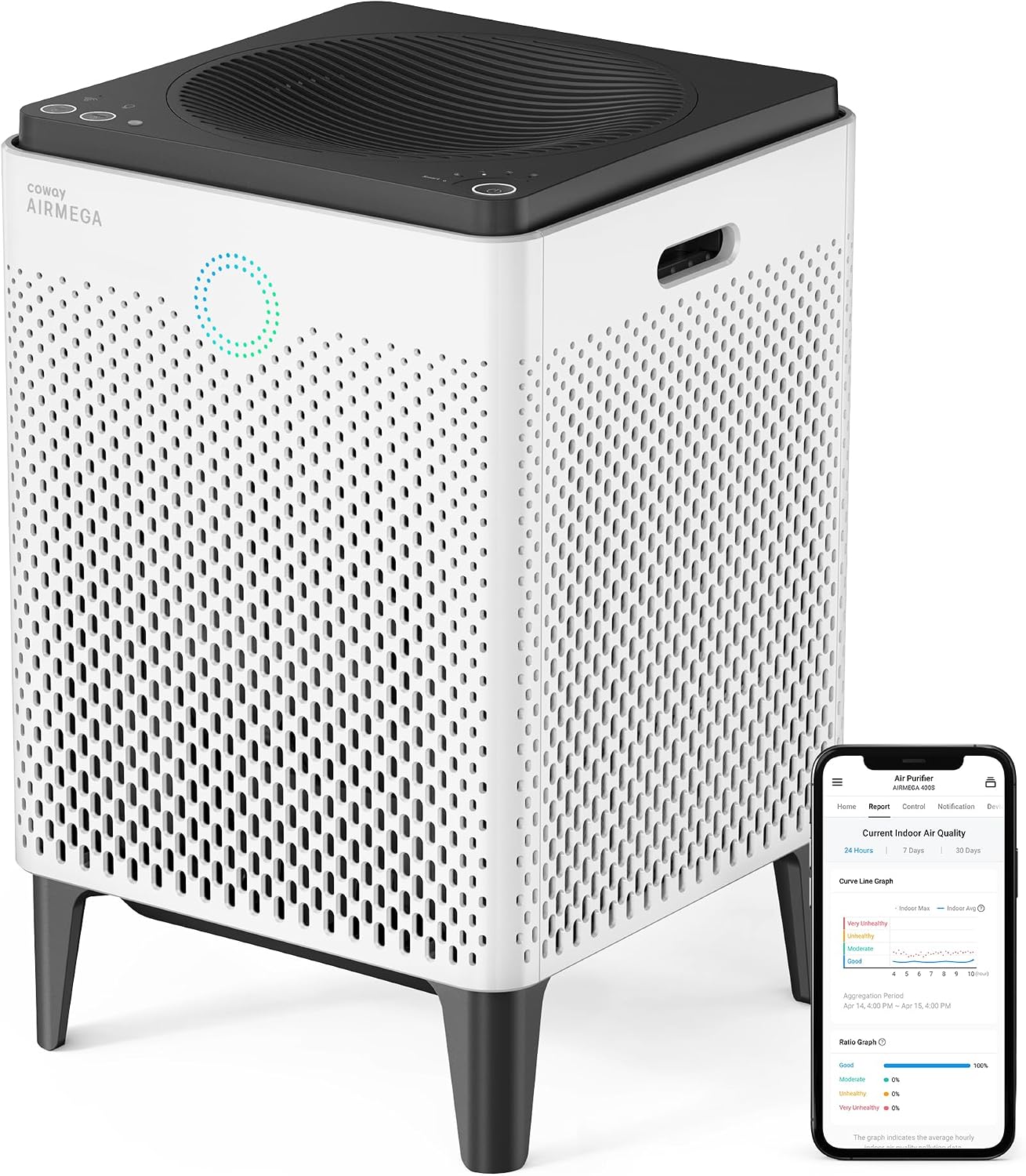
| Coway Airmega 400S | Premium Pick | 328 CFM | Up to ~490 sq. ft. | Max2 carbon + HEPA | 4/5 |
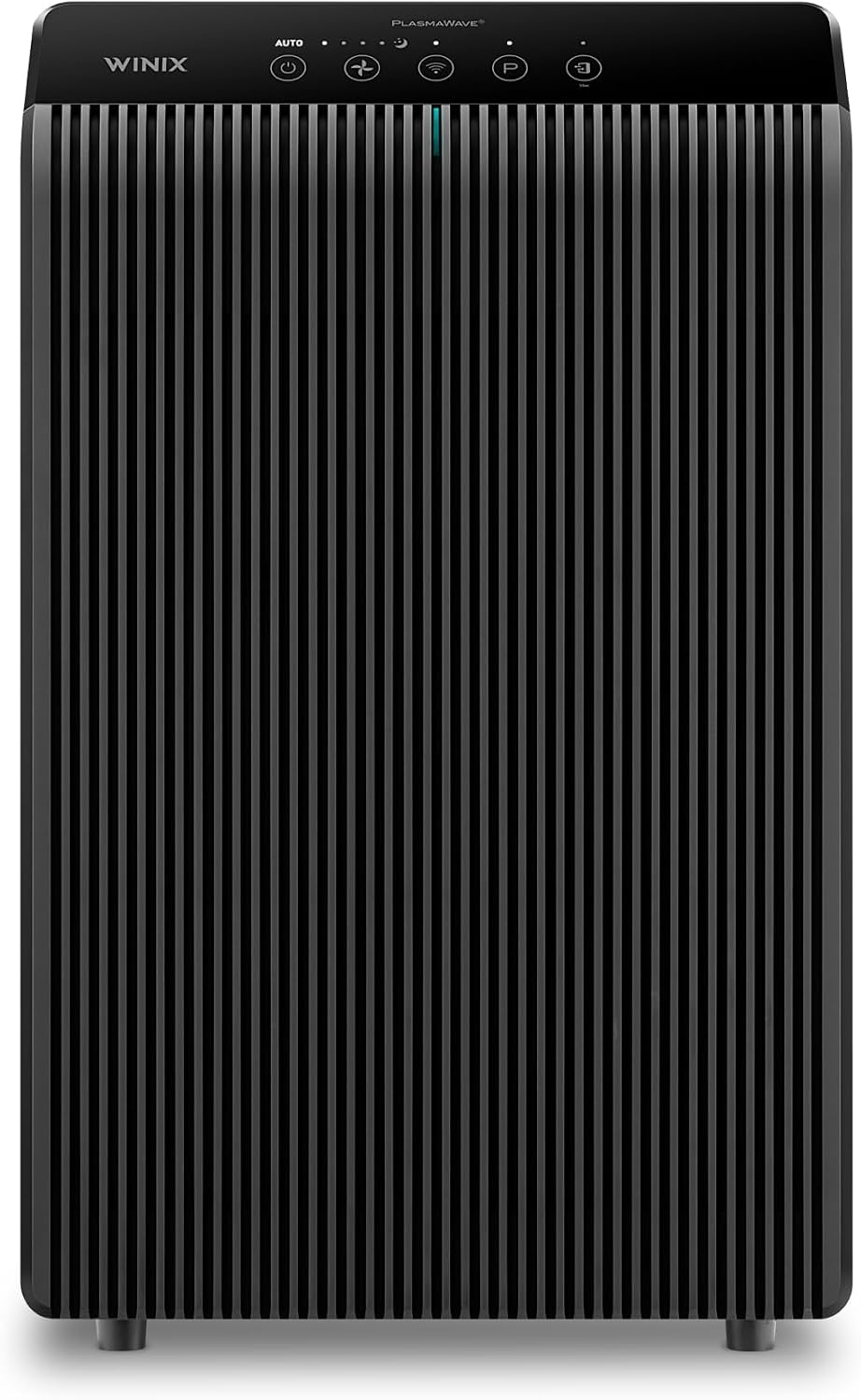
| Winix 5510 | Affordable Pick | 253 CFM | Up to ~380 sq. ft. | Yes | 4/5 |
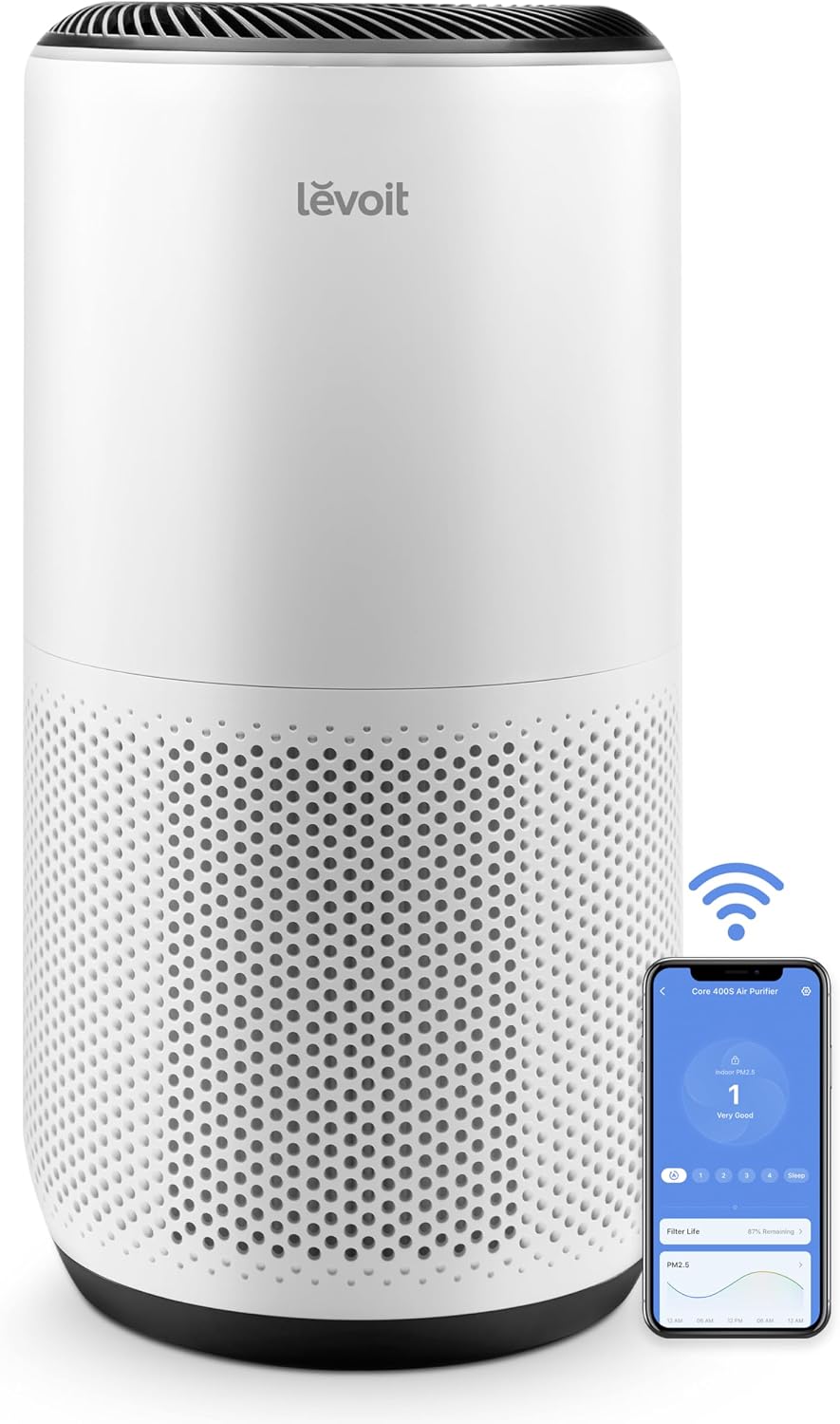
| Levoit Core 400S-P | Bedrooms / Medium Rooms | 231 CFM | Up to ~345 sq. ft. | Yes | 4/5 |
*Per the EPA’s wildfire rule of thumb: tobacco-smoke CADR at least two-thirds of room area. Higher ceilings and heavier smoke push the real number down.
Blueair Blue Pure 211i Max + SmokeBlock — Best Overall
What sold me on the 211i Max is that it pairs one of the highest published smoke CADR ratings here with a filter built specifically for smoke: 435 CFM smoke CADR, 452 CFM dust, 450 CFM pollen, rated for about 674 square feet at 4.8 ACH — far more useful than the “up to 3,235 square feet” claim also on the box, which assumes just one air change per hour. The standard filter already includes carbon, but Blueair separately sells a SmokeBlock replacement filter with roughly double the carbon — I’d switch to it for wildfire season (my notes on maintaining a Blueair cover filter resets).
Noise: 23–53 dB. Power: ~46W. SmokeBlock filter price: $84.99.
Pros
- Very high smoke CADR
- Smoke-specific SmokeBlock filter available
- Strong large-room coverage
- Low power draw for its airflow
Cons
- SmokeBlock filter costs more
- Heavy smoke shortens filter life
- Electrostatic-assisted, not purely mechanical
IndoorBreathing Rating: 9.4/10
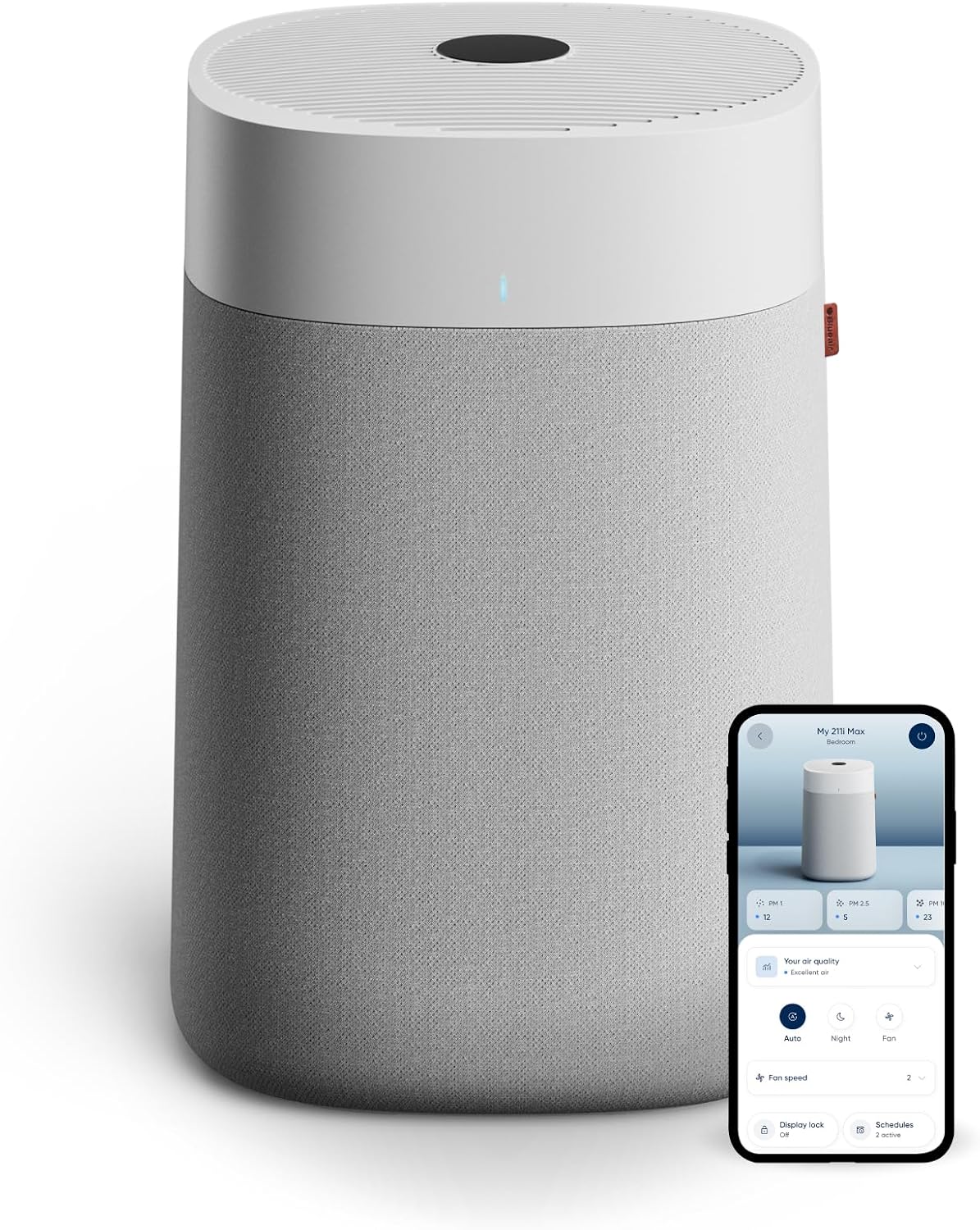
Check the Blueair SmokeBlock replacement filter on Amazon
Levoit Core 600S-P — Best Value for Large Rooms
The Core 600S-P delivers a lot of clean-air output for the money: a published 391 CFM CADR, rated for about 606 square feet at 4.8 ACH, not far behind the Blueair for well under the price. It uses three-stage filtration with built-in carbon, and Levoit separately sells a Core 600S-P Smoke Remover replacement filter for ash and wildfire conditions. I also like its PM2.5 display — a genuinely useful feedback loop.
Noise: 26–55 dB. Power: ~49W. Smoke Remover filter price: $79.99.
Pros
- Excellent CADR for the price
- Real-time PM2.5 display
- Smoke-specific filter option
- Good large-room fit
Cons
- Standard carbon layer is thin
- Gas removal isn’t CADR-rated
- Filter cost adds up over time
IndoorBreathing Rating: 9.2/10
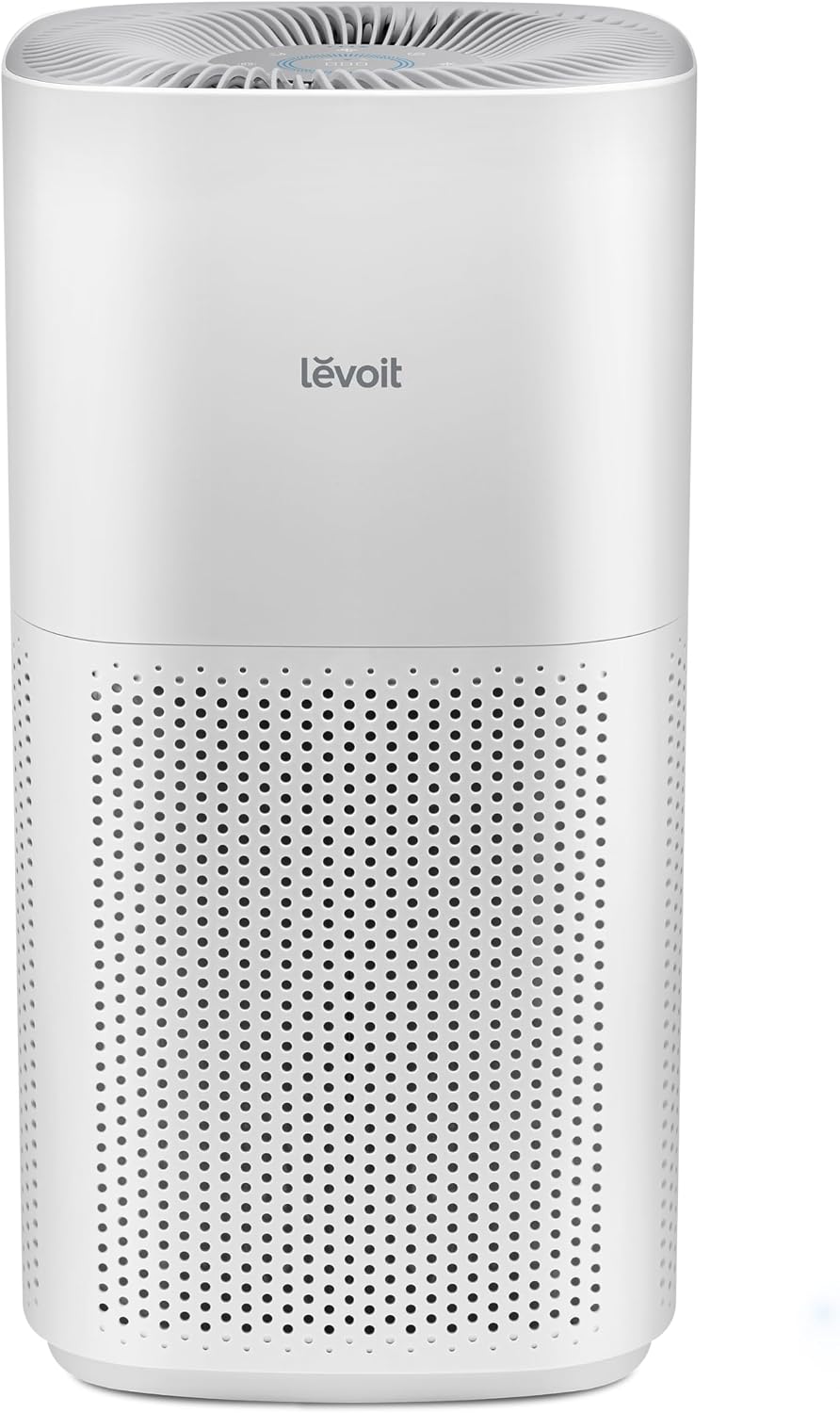
Check the Core 600S-P Smoke Remover filter on Amazon
Coway Airmega 400S — Premium Large-Room Pick
The Airmega 400S costs more and pulls air through filters on both sides, why Coway has positioned it as a premium large-room purifier for years. It publishes 328 CFM smoke CADR, 328 CFM dust, and 400 CFM pollen, with a Max2 filter combining carbon and HEPA-grade filtration (see my colleague’s air purifiers for large rooms roundup if footage matters more than price). The drawback is cost — the Blueair or Levoit 600S-P gets more CADR per dollar. Here you’re paying for build quality and filter longevity.
Pros
- Premium build quality
- Dual-sided filtration
- Washable pre-filters
- Long filter lifespan
Cons
- Highest price in this group
- Lower smoke CADR per dollar
- Bulkier footprint
IndoorBreathing Rating: 8.8/10
Winix 5510 — Best Affordable Pick
The Winix 5510 combines True HEPA filtration, a carbon filter, air-quality sensing, and Wi-Fi at a price that undercuts the Levoit and Blueair. Its AHAM-certified numbers: 253 CFM smoke CADR, 252 CFM dust, 247 CFM pollen — solid for a bedroom or office, not a substitute for a larger unit in an open living space (see whether Winix makes a genuinely good purifier, or my picks under $100). A properly sized medium unit like this outperforms an oversized one running on low.
Pros
- Best price-to-CADR ratio
- True HEPA plus carbon filter
- Widely available filters
- Solid AHAM-certified numbers
Cons
- Not sized for open floor plans
- PlasmaWave feature not for everyone
- Lower CADR than the Levoit/Blueair
IndoorBreathing Rating: 8.7/10
Levoit Core 400S-P — Best for Bedrooms and Medium Rooms
The Core 400S-P is the smaller sibling of my value pick, with a published CADR of 231 CFM and a rating of about 358 square feet at 4.8 ACH. Bigger isn’t automatically better: a huge purifier in a 250-square-foot bedroom means more money and less floor space for airflow you’ll never use. Buy the right-sized unit and run it at an effective speed rather than an oversized one kept on low.
Pros
- Right-sized for bedrooms
- Compact, quiet footprint
- Built-in air-quality sensor
- Smoke Remover filter available
Cons
- Too small for open living areas
- Lower CADR ceiling
- Filter cost per sq. ft. is higher
IndoorBreathing Rating: 8.6/10
Air Purifier Effectiveness Against Wildfire Smoke
Yes, if you pick the right type and size it correctly. Wildfire smoke is a mix of gases and particles, and PM2.5 gets the most attention since it’s small enough to reach deep into your lungs and works into buildings through cracks and HVAC systems even when everything is closed. High-efficiency mechanical filtration genuinely works for particle removal, which is why the EPA recommends properly sized portable air cleaners for cutting indoor smoke exposure (more in my colleague Sam’s deeper dive on whether purifiers help with smoke). It won’t act as a force field, though — open windows with smoky air pouring in will overwhelm even a powerful unit.
HEPA vs. Activated Carbon for Wildfire Smoke
Particle filtration and activated carbon do two different jobs; neither substitutes for the other. HEPA captures airborne particles tied to smoke — check this first. Carbon adsorbs gases and odors, but a thin carbon sheet isn’t a real deep bed, and there’s no CADR-style gas-removal rating like there is for particles. That’s why the Blueair SmokeBlock option interests me — Blueair states it carries roughly double the carbon of the standard filter. Dedicated odor-focused purifiers with larger carbon beds outperform any unit here for heavy odor control, though they cost more (see my colleague’s air purifiers for smoke and odors roundup). My buying order: particle CADR, room size, a smoke-specific filter, then carbon.
CADR Requirements by Room Size for Wildfire Smoke
CADR (Clean Air Delivery Rate) is the single most useful spec on any purifier: it combines filter efficiency and airflow into one number. The EPA’s wildfire rule of thumb: pick a tobacco-smoke CADR at least two-thirds of your room’s area in square feet.
| Room Size | Approx. Minimum Smoke CADR |
|---|---|
| 150 sq. ft. | 100 CFM |
| 300 sq. ft. | 200 CFM |
| 400 sq. ft. | 267 CFM |
| 500 sq. ft. | 333 CFM |
| 650 sq. ft. | 433 CFM |
These assume standard ceilings — size upward for 10-plus-foot ceilings. Don’t trust a manufacturer’s “up to 3,000 square feet” claim at face value; that’s usually a one-air-change-per-hour figure, not the roughly five changes per hour you want during heavy smoke (more on sizing math in my right-size air purifier guide).
Purifier Placement and Whole-Home Coverage During Wildfire Smoke
One portable purifier is a room appliance, not a whole-house solution — a 400 CFM unit downstairs won’t reliably pull dirty air through closed bedroom doors upstairs. Start with one cleaner-air room, usually a bedroom, then add a smaller unit elsewhere as needed, placed where air can move freely rather than wedged behind furniture (more in my colleague’s where to place an air purifier notes). Think in layers: reduce smoke entering the building, use HVAC filtration where safe, and size units correctly.
Continuous Operation and Filter Care During Wildfire Smoke
During an active smoke event, run purifiers continuously at the highest fan speed noise allows, close windows and doors, and add a MERV 13 HVAC filter if your system safely allows it (more on runtime in how often to run an air purifier). Filter life is the other half: a filter that normally lasts months can clog faster during heavy smoke, so check it regularly and confirm replacement cost before buying — my notes on cleaning a carbon filter can buy time between replacements. No commercial purifier available? A DIY box-fan cleaner with HVAC filters sealed to the intake can help — follow current EPA fan-safety guidance.
FAQ
Do HEPA Filters Remove Wildfire Smoke?
Yes — true HEPA filters capture fine airborne particles from wildfire smoke, and a properly sized purifier measurably reduces indoor particle levels. It still needs enough airflow for the room, which is why CADR matters as much as the “HEPA” label.
What CADR Is Best for Wildfire Smoke?
Follow the EPA’s rule of thumb: a tobacco-smoke CADR of at least two-thirds of your room’s square footage. A 300-square-foot room needs roughly 200 CFM; 600 square feet needs roughly 400 CFM.
Is One Air Purifier Enough for a House?
Usually not. Portable purifiers work best in a single room or connected open space, so separate bedrooms typically need their own units.
Should I Open Windows While Running an Air Purifier During Wildfire Smoke?
No. Opening windows when outdoor air quality is unhealthy usually brings in more smoke than your purifier can offset — follow current local air-quality guidance instead.
What Is the Best Air Purifier for Wildfire Smoke?
My top choice is the Blueair Blue Pure 211i Max with the SmokeBlock filter. The Levoit Core 600S-P is my preferred value alternative.
Bottom Line
For most homes, my best overall choice is the Blueair Blue Pure 211i Max with the SmokeBlock filter — a high 435 CFM smoke CADR plus a smoke-focused carbon option, hard to beat at this price. If your budget stretches to only one purifier, put your money into CADR and correct sizing before extra features. A smart app can’t remove smoke — airflow and real filtration can.
Editorial note: Prices can change after publication — check the current listing before buying, and follow local emergency instructions during an active wildfire.