
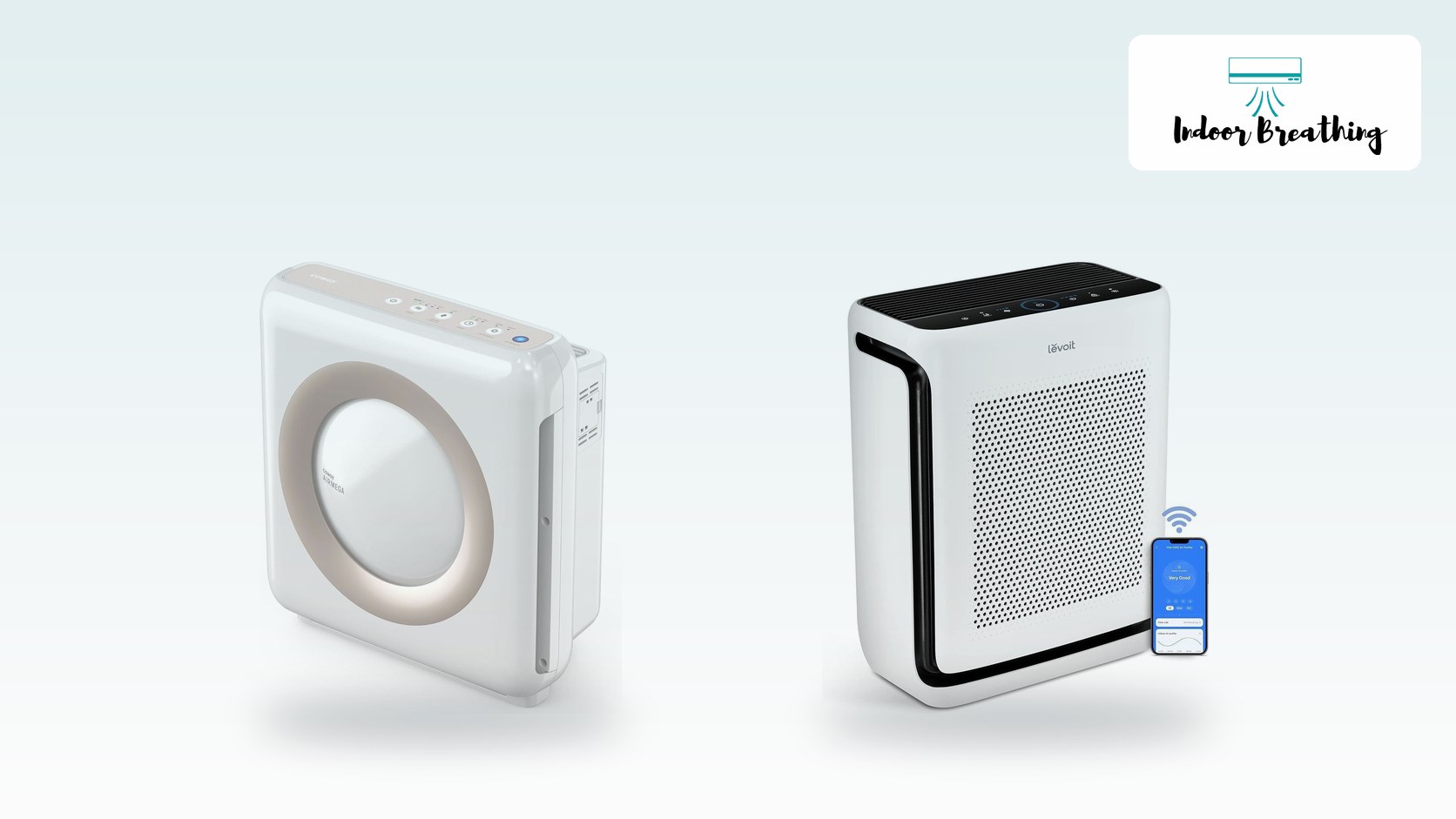
Before you buy an air purifier for allergies, check its CADR, the clean air delivery rate printed near the AHAM Verifide seal. Ignore the “covers up to X square feet” line on the box. For allergy relief you want a pollen CADR high enough to cycle your room’s air four to five times an hour, not once. The top pick is the Coway Mighty AP-1512HH.
Picks and figures here are checked against AHAM Verifide CADR data, manufacturer specs, and buyer feedback. No hands-on lab testing is involved. Prices and ratings were last checked in September 2026 and can change, so confirm the live price on Amazon before you buy.
Walk down the air purifier aisle and every box shouts a coverage number: “cleans rooms up to 1,500 square feet.” That figure is close to meaningless for allergies. It is calculated at one air change per hour, which is the bare minimum to call a room “cleaned” once. People with allergies need the air scrubbed far more often than that, because pollen, dust mite debris, and pet dander are stirred back into the air constantly, every time you move, sit down, or the furnace kicks on. The spec that tells you whether a purifier can keep up is CADR, and most shoppers never look at it. Our older best air purifiers for allergies roundup ranks a wider field of models; this guide is about the one number to check before you pick any of them.
Affiliate disclosure: IndoorBreathing may earn a commission when you buy through links on this page, at no extra cost to you. Picks are chosen for allergy performance, verified CADR, and value, not commission rate.
Table of Contents
The One Spec: CADR
CADR stands for clean air delivery rate. It is a single number, measured in cubic feet per minute, that tells you how much genuinely filtered air a purifier delivers on its highest setting. It is tested by an independent lab under the AHAM Verifide program, so unlike a marketing coverage claim, it is hard to fudge. Purifiers are rated for three particle types, and the box usually lists all three: smoke, dust, and pollen. For allergies, the pollen number matters most, because pollen grains and the clumped particles that carry pet and dust mite allergen are on the larger end of what a purifier handles.
Here is why the coverage number fails you. A purifier “rated for 1,500 square feet” is rated to move that room’s air volume once in an hour. One air change removes roughly 60 percent of airborne particles before new ones are generated. Run it in a 250-square-foot bedroom and it changes the air six times an hour, particle levels drop by more than 90 percent, and they stay down. Same machine, different result, from matching its CADR to a realistic room. The coverage figure hides that; the CADR lets you calculate it.
If a purifier’s listing gives you a coverage area but no CADR, treat that as a warning sign. Reputable brands publish AHAM Verifide CADR numbers because their machines perform. Our roundup of the best air purifiers by CADR rating ranks current models on that number alone.
How Much CADR You Need for Allergy Relief
The target most allergists and the EPA point to is four to five air changes per hour. ENERGY STAR uses 4.8 as its benchmark for allergen reduction. The shortcut to hit that: aim for a pollen CADR, in cubic feet per minute, that is at least two-thirds of your room’s square footage.
So a 150-square-foot bedroom wants a pollen CADR around 100. A 250-square-foot bedroom wants about 165. A 350-square-foot living room wants roughly 235. A big 500-square-foot open area wants 335 or more, or a second unit. Measure your actual room, not the whole floor, because you will run the purifier in one space at a time. If you are between sizes, round up; a purifier with headroom runs on a lower, quieter speed and still keeps up. Our air purifier sizing guide has a calculator that does this math from your room dimensions.
This is also why “one big purifier for the whole house” does not work for allergies. A single unit cannot pull air through walls and doorways fast enough to change a whole floor five times an hour. You are better off with a right-sized unit in the bedroom, where you spend a third of your day, and a second one in the main living area. The same logic drives our companion guide to the best air purifiers for dust, since dust mite allergen is one of the biggest overlaps between a dust problem and an allergy problem.
Best Air Purifiers for Allergies: CADR Comparison Table
Every model here uses a true HEPA filter or, for Blueair, a tested HEPASilent system that meets the same particle-capture bar. The “good up to” column is the room size where each unit still delivers roughly five air changes an hour. Prices and ratings are current Amazon figures at the time of writing and will move.
*The Winix 5510’s own AHAM Verifide listing shows 253 smoke / 252 dust / 247 pollen CADR at a 392 sq ft room size. **Blueair reports HEPASilent performance as 674 sq ft cleaned in 12.5 minutes; the number shown is the equivalent airflow.
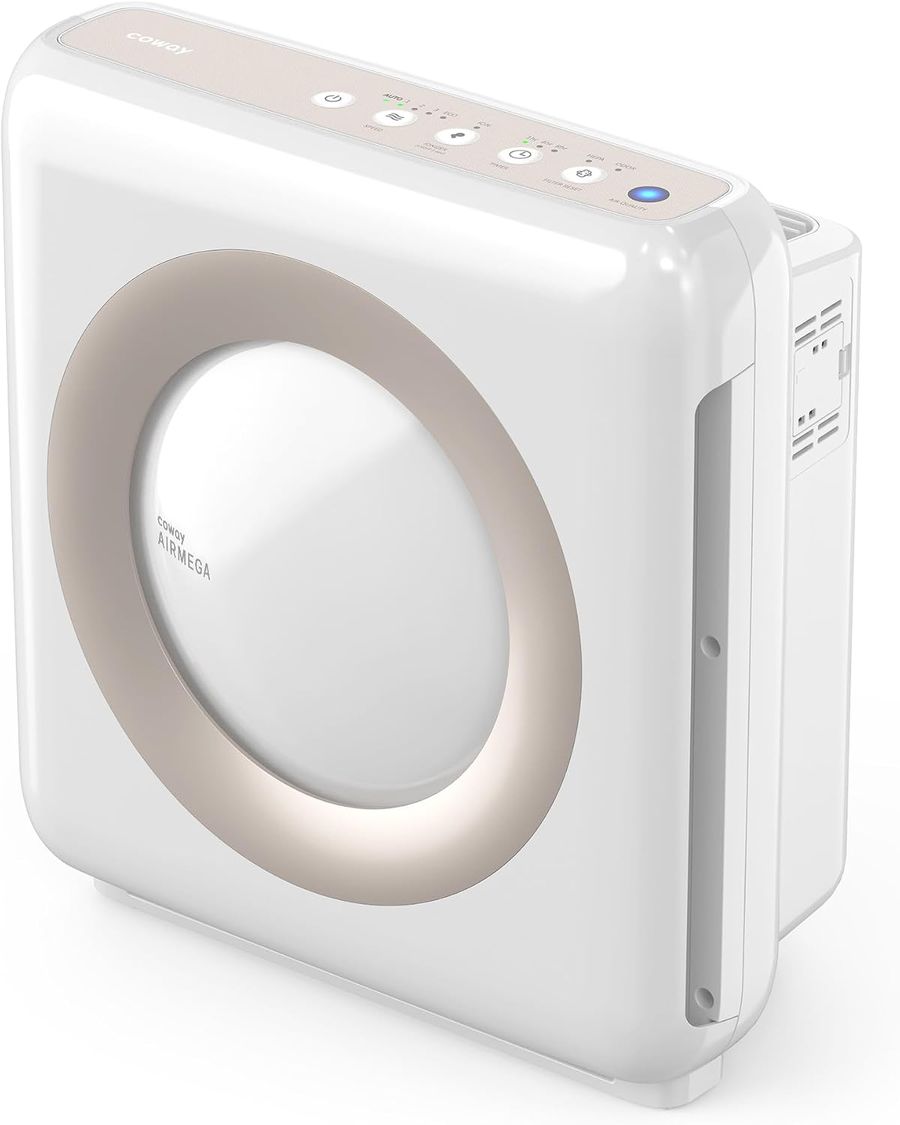
Coway Mighty AP-1512HH — Best Overall for Allergies
The Coway Mighty is the unit for most allergy sufferers because its numbers line up with real rooms at a fair price. Its AHAM Verifide CADR is 233 for smoke, 246 for dust, and 240 for pollen, which comfortably covers a bedroom or a mid-size living room at five air changes an hour, and Coway rates it for a 361-square-foot room. Air passes through a washable pre-filter, a carbon layer, and a true HEPA filter that captures 99.97 percent of particles at 0.3 microns, which is well below the size of pollen and dust mite allergen. An auto mode reads a built-in particle sensor and speeds up when allergen spikes, and the indicator light can be switched off for sleep.
Downsides are minor: it only comes in white or black, the top-mounted outlet means you cannot set anything on it, and it has a bipolar ionizer that you should switch off if you would rather not run one. Replacement filter sets are about $50 a year.
Pros
- AHAM Verifide 240 pollen CADR
- True HEPA plus carbon
- Washable pre-filter
- Responsive auto mode
- Reasonable filter cost
Cons
- Ionizer on by default
- Only white or black
- Top outlet, no shelf use
- Loud on max
Looking ahead, pollen seasons are getting longer and heavier in many parts of the US, so more homes will want a purifier for more months of the year. The catch is that makers know it, and more boxes will carry an allergy label with no CADR number behind it.
True HEPA Is the Second Thing to Check
Once the CADR is right for your room, confirm the filter is a true HEPA filter, tested to trap 99.97 percent of particles at 0.3 microns. That 0.3-micron figure is the hardest particle size to catch, so a filter that hits the standard there does even better on the larger particles that carry allergen: pollen at 10 to 100 microns, dust mite fecal particles at 10 to 40, pet dander from about 2.5 up, and mold spores from 3 to 40. All of those are inside a true HEPA filter’s wheelhouse.
The trap is the label. “HEPA-type,” “HEPA-like,” and “99 percent HEPA” are marketing terms with no test behind them, and they can leak allergen back into the room. Blueair’s HEPASilent is the one non-HEPA system worth trusting here, because it is independently tested to the same particle-capture level using a mix of mechanical and electrostatic filtration. If you want the full explanation, our guide to how a HEPA filter works breaks down the rating and the labels that fake it.
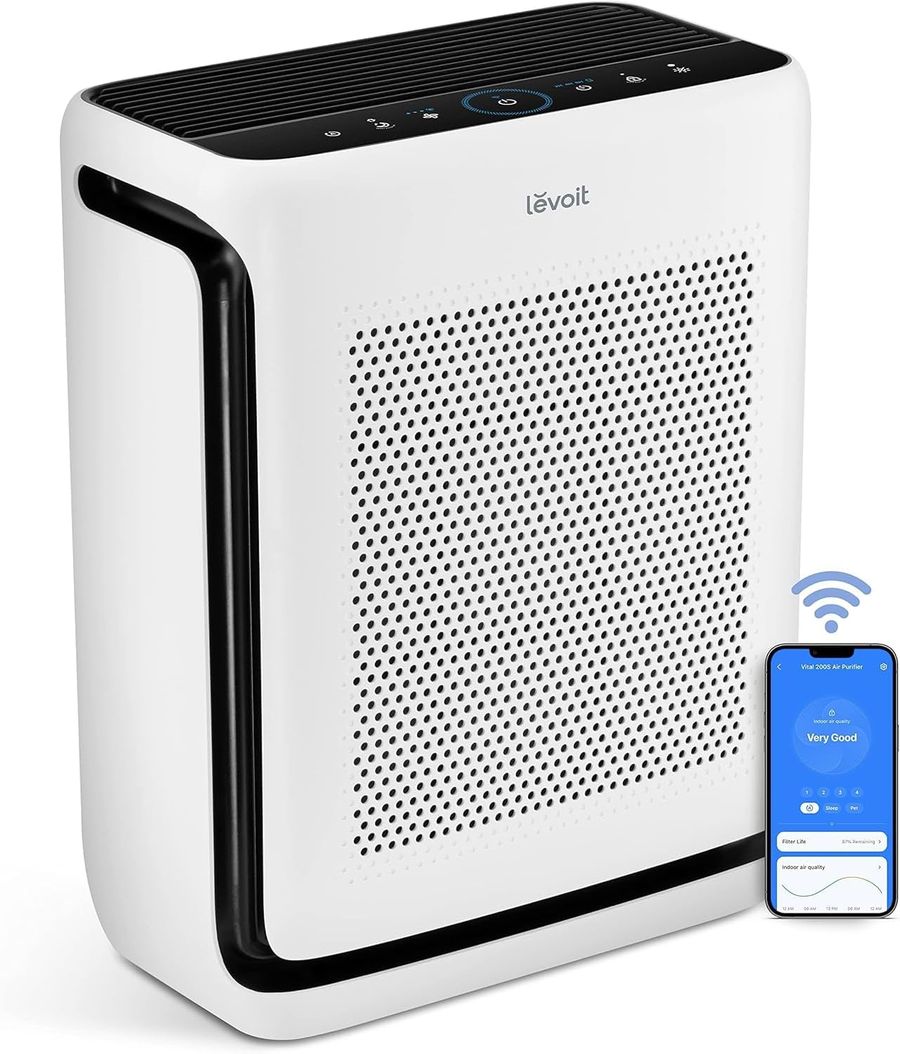
Levoit Vital 200S-P — Best for Allergy Sufferers
Levoit builds the Vital 200S-P around allergy control, and the CADR backs the marketing up: 250 for smoke, 254 for dust, and 289 for pollen, the highest pollen number in this guide. That is enough for a room up to about 430 square feet at five air changes an hour. It uses a three-stage filter with a nylon pre-filter you can vacuum, a true HEPA layer, and a carbon layer, and Levoit sells a dedicated pet or toxin filter if dander is your main trigger. A laser particle sensor drives auto mode and shows a live PM2.5 reading, and the app logs air quality and schedules quiet hours.
It is a wide, low unit that takes more floor space than a tower, the display is bright until you dim it in the app, and the filters are Levoit-specific and a little pricier than the Core 300’s. For the money it is the most pollen CADR you can buy.
Pros
- Highest pollen CADR here (289)
- Vacuumable pre-filter
- Optional pet or toxin filter
- Laser sensor and app
- Strong value
Cons
- Wide footprint
- Bright display by default
- Proprietary filters
- Pricier filters than the Core 300
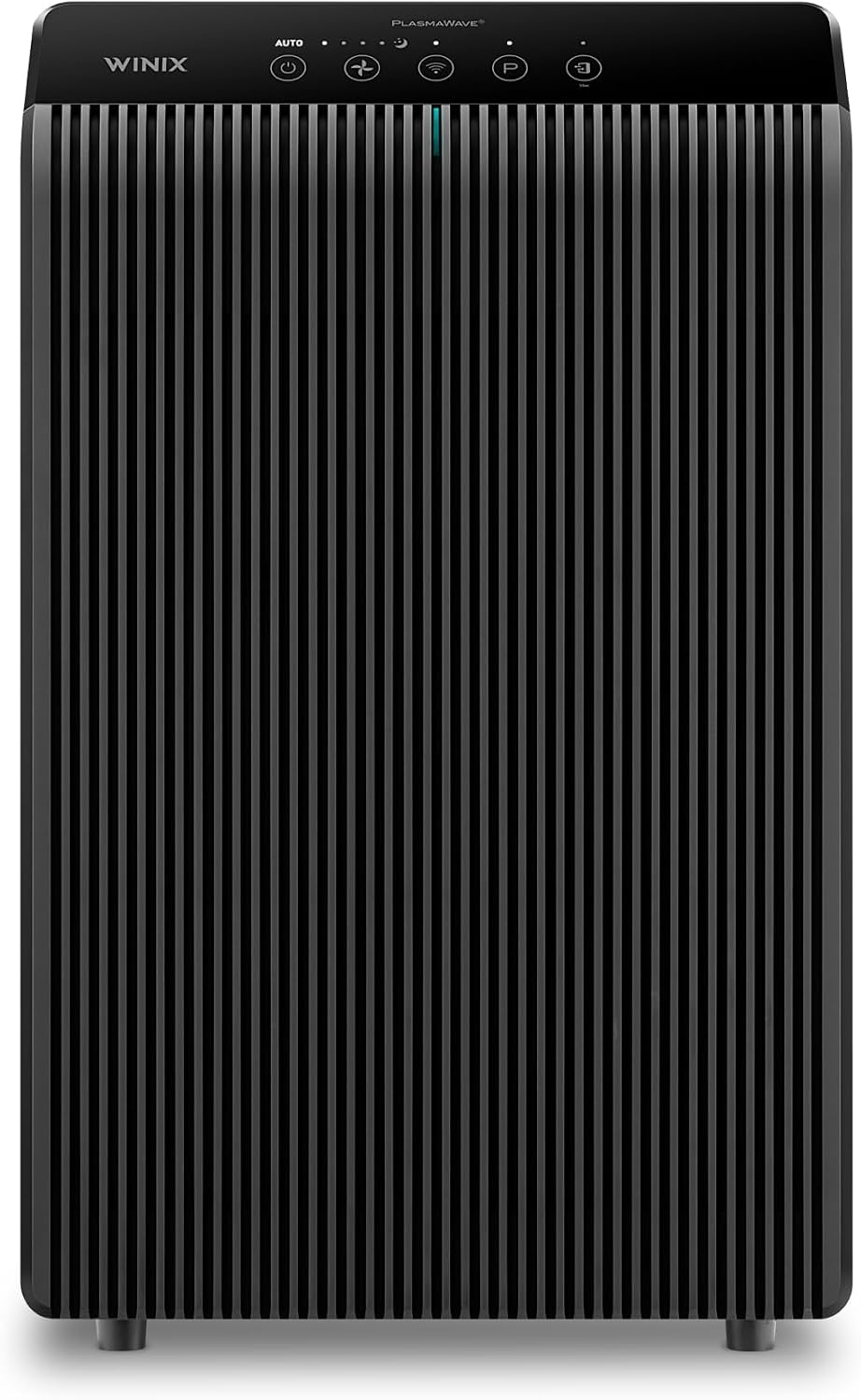
Winix 5510 — Best Value
The Winix 5510 is the current version of the 5500-2, a purifier that has been on allergy shortlists for a decade. You get a washable fine-mesh pre-filter, a carbon filter for odors, and a true HEPA filter, plus a PlasmaWave ionizer you can turn off. Winix rates it AHAM Verifide for a 392-square-foot room, which puts it in the same class as the Coway for coverage at a lower price. A particle sensor runs an auto mode that ramps up on an allergen spike and settles when the air clears.
The carbon filter is thin and needs replacing a few times a year if odors matter, the styling is plain, and the sensor is less precise than the laser units on the Levoit models. As a straight allergen scrubber for the money, nothing here beats it. Winix’s PlasmaWave also appears in our Winix C545 review.
Pros
- AHAM Verifide for 392 sq ft
- True HEPA plus carbon
- Washable mesh pre-filter
- Auto mode with sensor
- Low price
Cons
- Thin carbon filter
- Plain looks
- Sensor less precise
- PlasmaWave on by default
What CADR Doesn’t Tell You
CADR gets you the right-sized machine, but a few things it does not measure still decide whether you keep the purifier running, and a purifier that is off does nothing.
Noise on the setting you will actually use. CADR is measured at top speed, which on most units is loud. If you buy a purifier with CADR headroom, you can run it on a middle setting that is quiet enough to sleep next to and still get your air changes.
Filter life and cost. A true HEPA filter runs $40 to $60 and lasts six to twelve months in an allergy home. A washable pre-filter you vacuum every few weeks protects it and stretches that life. Check the replacement price before you buy, not after; our filter replacement cost guide lays out the yearly spend by brand.
Carbon for the smell, not the sneeze. Activated carbon handles odors and some gases, but it does nothing for allergen. If pollen and dander are your problem, do not pay extra for a thick carbon stage you do not need.
A sealed body. The best purifiers gasket the airflow path so all the air goes through the filter. A leaky housing lets some allergen bypass the HEPA. Our overview of air purifier filter types covers what each layer does.
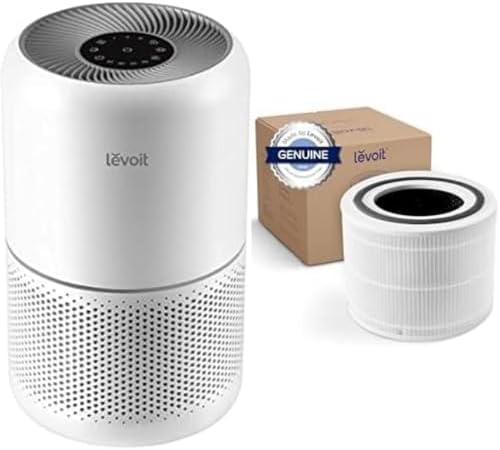
Levoit Core 300 — Best for a Bedroom
If the room is a bedroom or a home office, the Core 300 does the job for under $100. Its pollen CADR is 167, which covers a room up to about 250 square feet at five air changes an hour, and on its sleep setting it drops to a measured 24 decibels, quiet enough to forget. The three-in-one filter has a pre-filter, true HEPA, and a light carbon layer, and the display lights switch off at night.
There is no app or laser sensor, the filter is not washable and runs about $25 every six to eight months, and it does not have the CADR for a big living room. For where most people’s allergies hit hardest, the bedroom, it is the value pick. Our full Levoit Core 300 review has the details.
Pros
- Under $100
- 24 dB on sleep mode
- True HEPA plus carbon
- Small footprint
- Huge track record
Cons
- Bedroom-sized only (167 CADR)
- No app or laser sensor
- Pre-filter not washable
- Yearly-ish filter cost
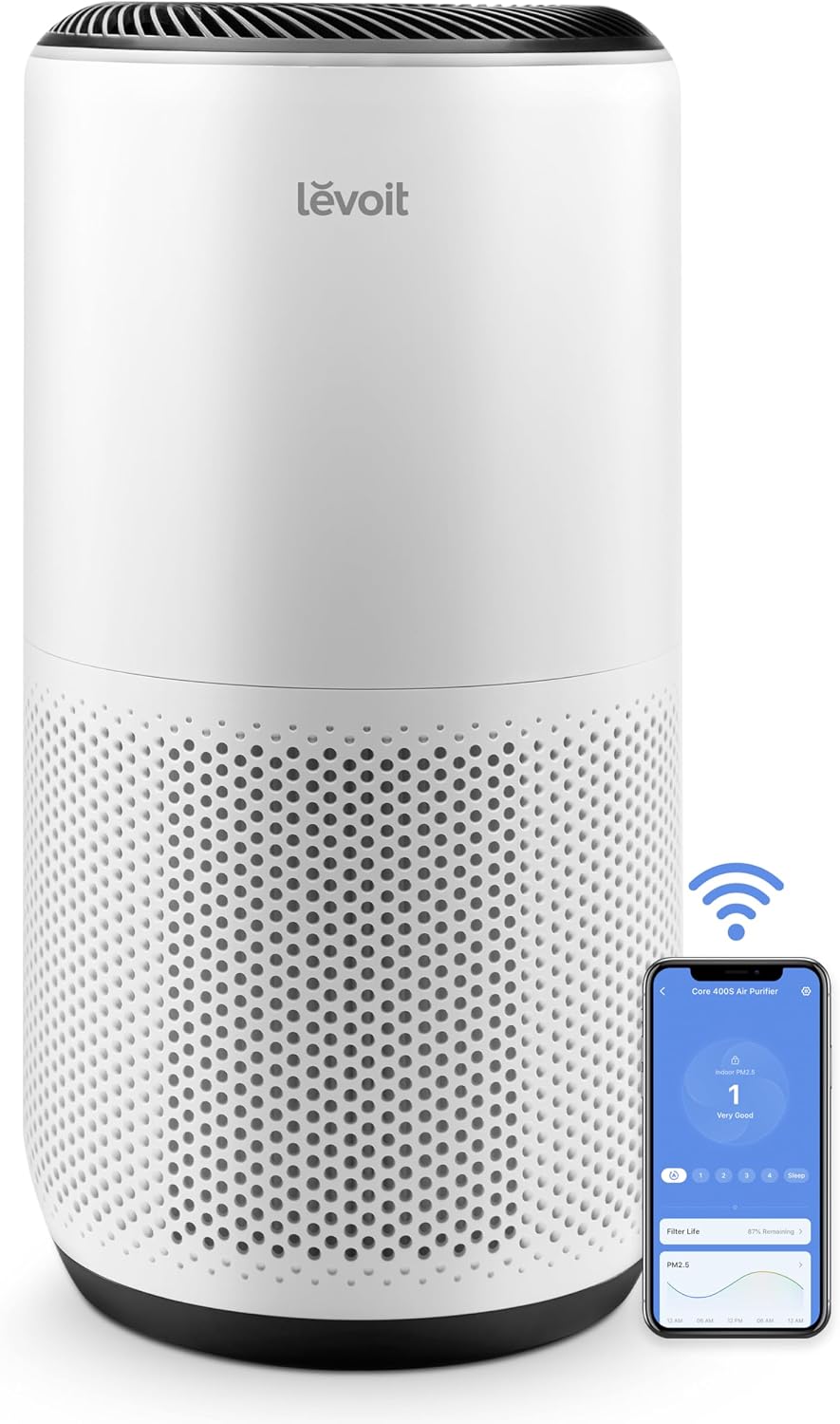
Levoit Core 400S-P — Best Smart Pick
The Core 400S-P is the one to buy if you want the purifier to manage itself. Its AHAM Verifide CADR is 231 for smoke, 240 for dust, and 259 for pollen, good for a room around 390 square feet at five air changes an hour. A laser particle sensor reads PM2.5 continuously, shows the number on the front, and drives a responsive auto mode, so during pollen season it winds itself up in the morning and eases off overnight without you touching it. The app logs trends and sets a sleep schedule.
The pre-filter is bonded to the main cartridge rather than separately washable, the replacement filter is a larger $50-ish part, and the light ring is bright until dimmed. As a set-and-forget allergy unit for a main room, it does more than models costing more.
Pros
- 259 pollen CADR
- Accurate laser sensor
- PM2.5 on the panel
- Useful app and scheduling
- Good value for features
Cons
- Pre-filter not washable
- Larger filter cost
- Bright light ring
- No carbon-heavy option
Blueair Blue Pure 211i Max — Best for Open-Plan Homes
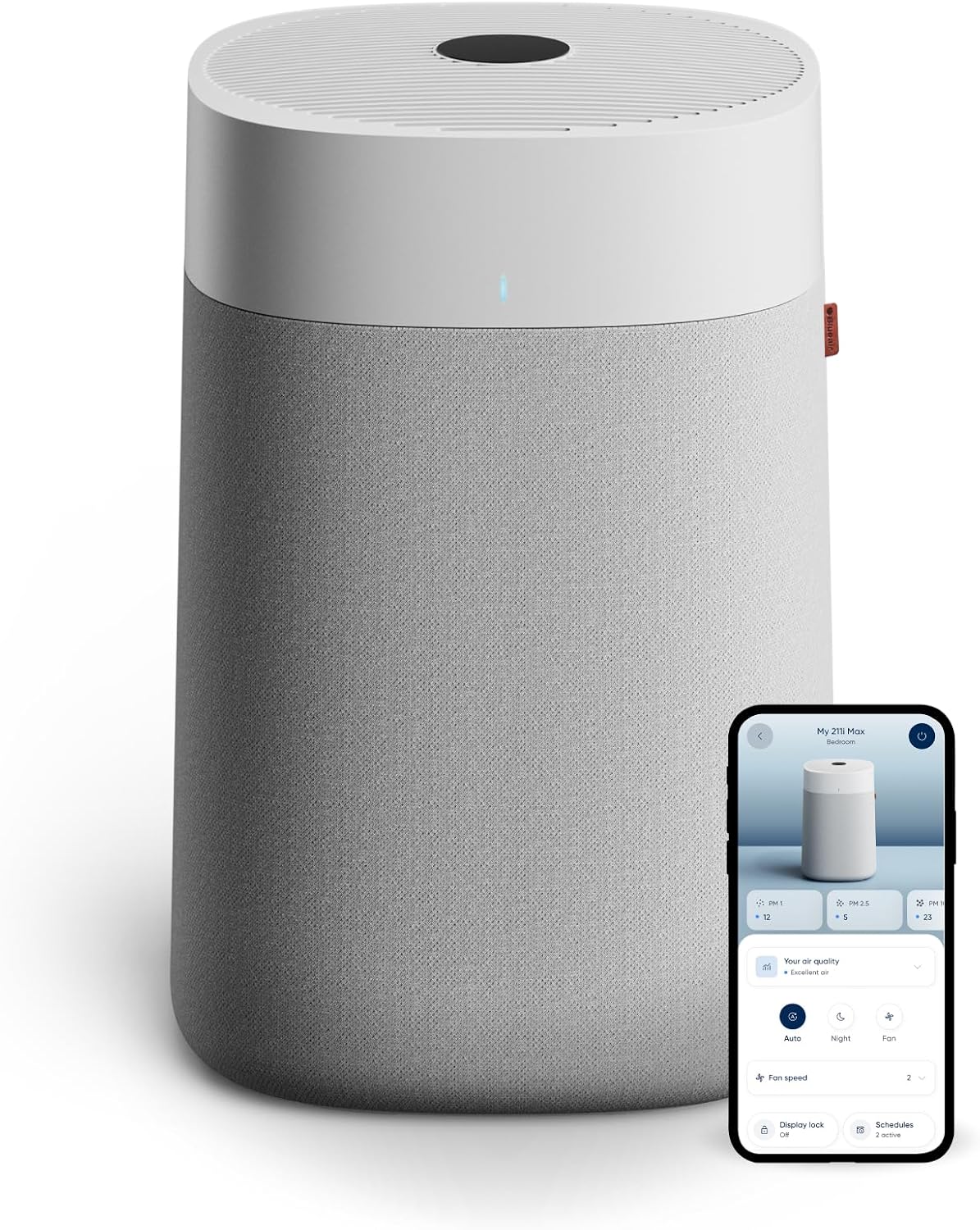
When the space is a great room or an open kitchen-living area, you need airflow a bedroom unit cannot give you, and the 211i Max delivers it. Blueair rates it to clean a 674-square-foot room in 12.5 minutes, which works out to roughly five or six air changes an hour in a normal living room on a low, quiet setting. Its HEPASilent system charges particles lightly and catches them on a less dense filter, so airflow stays high and noise stays low. The washable fabric pre-filter forms the outer shell and comes in a few colors.
It is a large unit, the filters are Blueair-specific, and the electrostatic step is one some buyers skip on principle, though Blueair states ozone output stays well below the applicable safety limits. For a whole-floor allergy problem, this is the pick, and it is also a strong performer in our guide on whether an air purifier helps with smoke.
Pros
- Very high airflow
- Quiet for its output
- Washable fabric pre-filter
- App and auto mode
- 360-degree intake
Cons
- Large footprint
- Electrostatic step not for everyone
- Proprietary filters
- Overkill for a bedroom
The risk to watch is relying on a purifier alone. A purifier cuts what floats in the air, but allergens also sit in bedding, carpet and couches, and an old filter can stop helping without any warning. Many people buy one and feel they are done.
Where to Run It, and When
Put the purifier where you breathe the most and where allergen concentrates. For most people that is the bedroom: you spend seven or eight hours there, bedding is a dust mite reservoir, and pollen settles on surfaces and gets stirred up when you move at night. Set it within a few feet of the bed, off the wall and out of corners, with clear space around the intake and outlet so it can set up a circulation loop.
Run it around the clock on a low or medium auto setting rather than blasting it for an hour before bed. Allergen is generated continuously, and a room re-fills within an hour or two of the fan stopping. During pollen season, keep the windows shut. If you only own one unit and split time between two rooms, the bedroom wins.
An Air Purifier Is Half the Allergy Plan
A purifier removes airborne allergen, but a lot of what triggers you is sitting in soft surfaces, waiting to be disturbed. The rest of the plan matters as much as the machine. Encase your mattress and pillows in dust mite mattress encasements, because the bed is the single biggest source of mite allergen in most homes. Wash bedding weekly in hot water. Vacuum carpets and upholstery weekly with a sealed HEPA vacuum so you remove allergen instead of stirring it up. Keep indoor humidity between 40 and 50 percent, since dust mites cannot survive below that and mold needs the moisture. And run at least a MERV 11 filter in your furnace or central air, since that system moves more air through the house every day than any portable unit. Our explainer on what dust mites are covers why bedrooms are the hot spot, and if pets are part of the picture, our guide to the best air purifiers for pets goes deeper on dander.
FAQ
What CADR do you need for an air purifier to help with allergies?
Aim for a pollen CADR, in cubic feet per minute, that is at least two-thirds of your room’s square footage. That delivers four to five air changes an hour, the range allergists and ENERGY STAR point to for allergen reduction. A 250-square-foot bedroom wants about 165; a 350-square-foot living room wants about 235.
Do air purifiers actually help with allergies?
Yes, for airborne triggers, when the unit has a true HEPA filter and enough CADR for the room. Studies show HEPA filtration lowers airborne pollen, dust mite, and pet allergen and can ease symptoms, especially overnight in the bedroom. It will not help with allergen already settled in carpet and bedding, so pair it with cleaning and encasements.
Is a bigger “coverage area” better for allergies?
Not on its own. A large coverage number with no CADR usually means the rating assumes a single slow air change an hour, which is not enough for allergies. A smaller purifier with a published pollen CADR that matches your actual room will outperform it.
Should you run the air purifier at night?
Yes. The bedroom is where an air purifier does the most for allergies, because you spend hours there breathing and the bed sheds allergen. Run it on a quiet auto or sleep setting all night, and all day too if you can, since the air re-fills with particles within an hour or two of it switching off.
How long until an air purifier improves allergy symptoms?
Airborne particle levels drop within an hour of running a right-sized unit. Symptom relief usually takes a few days to a couple of weeks of continuous use, as the settled allergen load in the room also comes down with regular cleaning.
Do you need a carbon filter for allergies?
No. Activated carbon handles odors and gases, not allergen. A true HEPA filter is what captures pollen, dander, and dust mite particles. A thin carbon layer is fine for general freshness, but do not pay a premium for a heavy carbon stage if allergies are your only concern.
Will an air purifier help with pet allergies specifically?
Yes, for the airborne part. Pet dander is small and stays suspended for hours, and HEPA filtration captures it well. You still need to vacuum, wash pet bedding, and keep animals off the bed, because most dander settles onto surfaces.
Related Guides
Keep going with what CADR means, the CADR calculator, bedroom air purifiers, air purifiers and pet allergies, common household allergens and MERV 13 furnace filters.
What happens next: pollen forecasts and smart purifiers will likely start to work together, with units that speed up on high-pollen days. Until that is reliable, pick by CADR, keep windows closed on peak days, change filters on time and see an allergist if symptoms continue.
Bottom Line
Do not shop for an air purifier for allergies by the coverage number on the box. Check the CADR, match the pollen figure to your actual room for four to five air changes an hour, and confirm the filter is a true HEPA. The Coway Mighty AP-1512HH is the pick that gets all of that right for most rooms at a fair price. If pollen is your main trigger and you want the highest CADR for the money, the Levoit Vital 200S-P leads at 289; for a bedroom, the Levoit Core 300 covers it for under $100. Get the spec right first, then pair the purifier with encasements, weekly cleaning, and controlled humidity, and you will actually feel the difference.
Editorial note: Prices, ratings, and CADR figures change after publication — confirm the current listing before buying.