
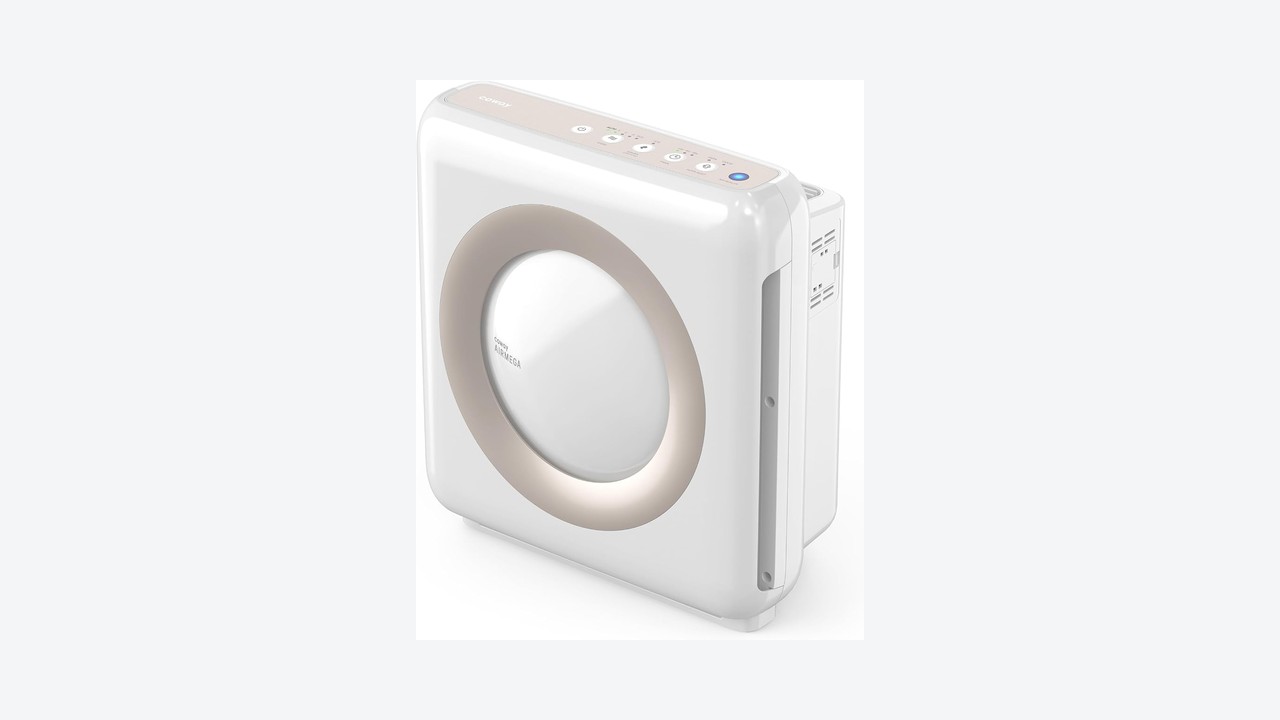
The best air purifier for smoke is the Coway Mighty AP-1512HH: it pairs a true HEPA filter with a real carbon deodorization filter, clears a room fast, and costs about $230. Smoke is two problems at once, fine particles you can see in a hazy room and gases you can only smell, so the right unit needs both a HEPA filter for the particles and enough activated carbon for the odor. Size it to your room, run it on high when smoke is heavy, and change the carbon filter on schedule.
Every pick here is checked against manufacturer CADR and coverage ratings, live Amazon pricing and review counts, and EPA and AirNow guidance on smoke. No hands-on lab testing is involved.
Smoke gets into a house in minutes and lingers for days. A wildfire plume two states away leaves your living room hazy and your throat sore. One cigarette on the couch settles into the drywall and carpet. Overheated cooking oil fills the kitchen and drifts into the bedrooms. In every case you face the same two things: tiny particles small enough to reach deep into your lungs, and a mix of gases and vapors that carry the smell.
A HEPA filter handles the particles well. It is the gas part that trips up most air purifiers. Removing smoke odor takes activated carbon, and it takes a real amount of it, not a thin mesh sprayed with carbon dust. That single fact explains why two purifiers with identical HEPA ratings can perform so differently on smoke: one clears the haze but leaves the smell, the other does both.
This guide ranks seven air purifiers that do both, from a $150 bedroom unit to a $1,600 gas-phase machine. It also covers how much carbon you need, how to size a unit to your room, and why source control still matters more than any filter. For the mechanics of filter media, our filter types guide goes deeper, the air purifier buying guide covers the basics, and our filter replacement cost guide shows what upkeep really runs.
Affiliate disclosure: IndoorBreathing may earn a commission when you buy through links on this page, at no extra cost to you. Picks are chosen for HEPA and carbon performance, CADR, filter cost, and value, not commission rate.
Table of Contents
Best Air Purifiers for Smoke: Comparison Table
CADR is the clean air delivery rate for tobacco smoke where the maker publishes it. Coverage is the manufacturer figure; the realistic smoke coverage is roughly half that. Prices and review counts are current Amazon figures and will move.
| Model | Best for | Smoke CADR | Carbon | Real room size | Price |
|---|---|---|---|---|---|
| Coway Mighty AP-1512HH | Best overall | ~233 CFM | Thin deodorization layer | ~360 sq ft | ~$229.99 |
| Medify MA-112 | Large open floor plans | ~500 CFM (mfr 950) | Bonded carbon, dual filters | ~1,000 sq ft | ~$594.99 |
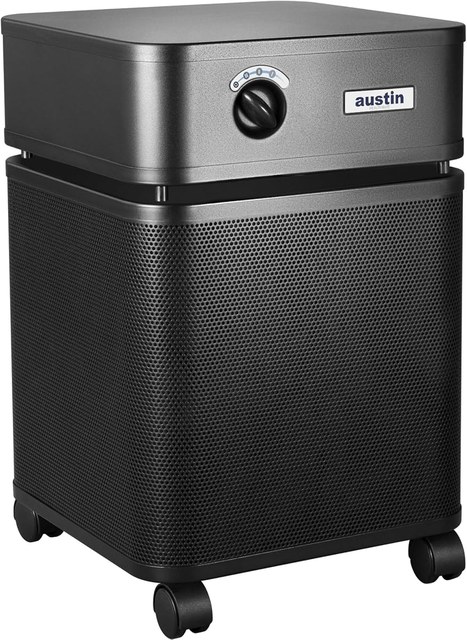
| Austin Air HealthMate Plus | Cigarette and cigar smoke | Not published (~400 CFM airflow) | 15 lb carbon + zeolite | ~750 sq ft | ~$895.00 |
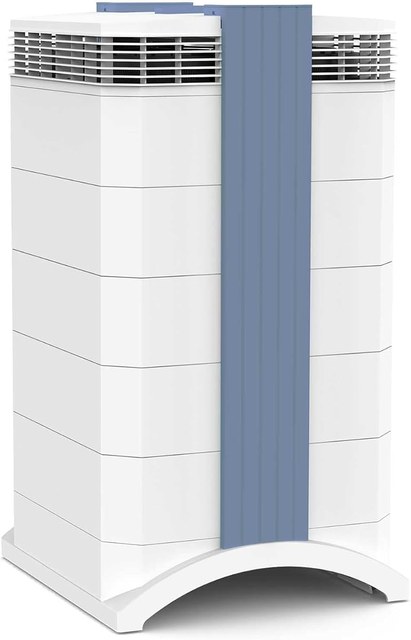
| IQAir GC MultiGas XE | Heavy tobacco odor, no compromise | Not published (gas-phase rated) | ~12 lb carbon + pellets, 4 cartridges | ~550 sq ft | ~$1,599.99 |
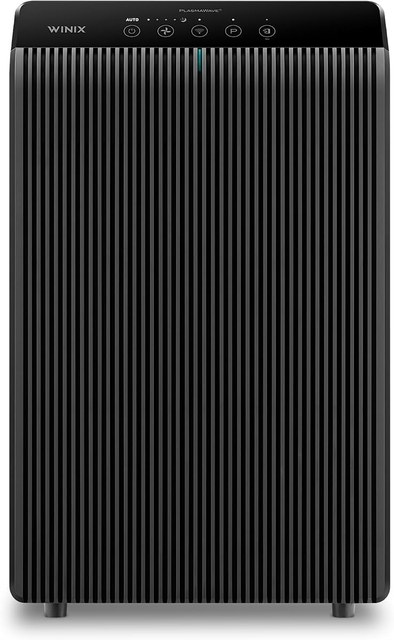
| Winix 5510 | Best budget | ~232 CFM | Washable carbon panel | ~360 sq ft | ~$179.99 |
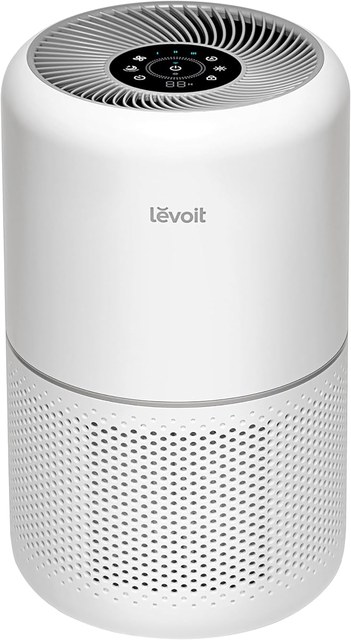
| Levoit Core 300S | Bedrooms and small rooms | ~141 CFM | Pelletized carbon, swappable filter | ~220 sq ft | ~$149.99 |
| Levoit Core 600S | Best value for large rooms | ~410 CFM | Pelletized carbon layer | ~600 sq ft | ~$259.99 |
Coway Mighty AP-1512HH — Best Overall for Smoke
The Coway Mighty has been the default recommendation in this category for years, and smoke is a big reason why. It runs a four-stage setup: a washable pre-filter, a carbon deodorization filter, a true HEPA filter, and an optional ionizer you can leave off. Its tobacco-smoke CADR is about 233, which clears a 360-square-foot room several times an hour, and the auto mode reads a particle sensor and ramps up on its own when smoke drifts in.
It is quiet on the lower speeds, cheap to run, and filters cost about $40 a year. The limit is the carbon: the deodorization layer is thin, so for a light haze or the odd cooking mishap it does the job, but for steady cigarette smoke it will not keep up. For occasional smoke, this is the right buy and the easiest one to live with. It carries over 29,000 ratings at 4.6 stars.
Pros
- Proven HEPA plus carbon at about $230
- ~233 smoke CADR, particle sensor and auto mode
- Quiet and cheap to run
- Filters only about $40 a year
- 29,000-plus ratings at 4.6 stars
Cons
- Thin carbon layer, not for constant smoking
- Real coverage closer to 360 sq ft than the box figure
- Ionizer should be left off
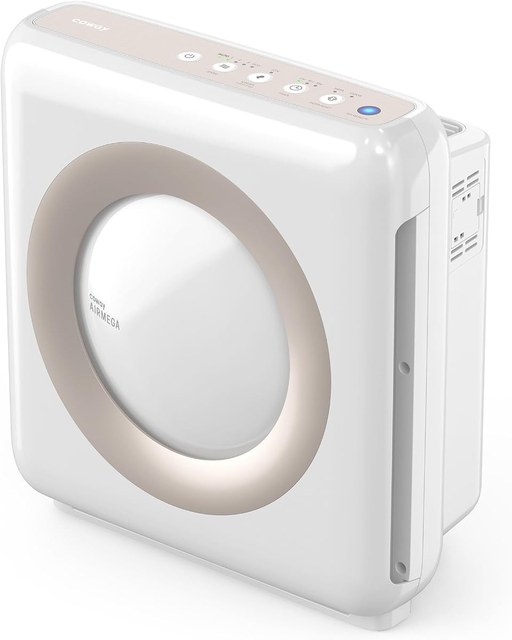
Medify MA-112 — Best for Large Open Floor Plans
When the smoke is spread across a great room, a kitchen, and a hallway all at once, a small unit cannot move enough air. The Medify MA-112 can. It uses two H13 filters, one on each side, each with a bonded activated-carbon layer, and it pushes a lot of air: Medify rates it at a 950 CADR, and while independent testing lands closer to 500, that is still the highest real airflow on this list. In a 1,000-square-foot open area it turns the air over roughly twice an hour on high.
That airflow is the point. It clears wildfire haze from a big space faster than anything else here, and the twin carbon layers handle cooking and general smoke odor well. On high it is loud, closer to a box fan than a whisper, and the two filters together run about $130 a year. If your smoke problem is a large connected living space rather than one closed room, this is the tool for it. It has nearly 14,000 ratings at 4.6 stars.
Pros
- Highest real airflow here for big open spaces
- Dual H13 filters with bonded carbon
- Clears wildfire haze from a great room fast
- Nearly 14,000 ratings at 4.6 stars
Cons
- Loud on high
- Two filters to buy, about $130 a year
- Manufacturer 950 CADR is optimistic
- Large footprint
Austin Air HealthMate Plus — Best for Cigarette and Cigar Smoke
Steady tobacco smoke is a carbon problem, and the Austin Air HealthMate Plus solves it with brute force: a single filter holding about 15 pounds of activated carbon blended with zeolite, plus potassium iodide to help with the lighter gases that plain carbon misses. Where a Coway or Winix carries a few ounces of carbon, this carries pounds. That is what it takes to keep up with someone smoking indoors every day.
It is a heavy steel cylinder, covers realistically around 750 square feet, and the filter lasts up to five years, which softens the $895 price over time. There is no app, no sensor, no auto mode; you set a speed and leave it. Airflow is moderate, so it is not the fastest at clearing visible haze. But for the specific job of removing cigarette and cigar odor from a home, nothing near its price competes. Reviews sit at 4.2 stars over about 230 ratings.
Pros
- About 15 lb of carbon plus zeolite, far more than rivals
- Potassium iodide helps with light gases and VOCs
- Filter lasts up to 5 years
- Built like a tank, made in the USA
Cons
- $895 up front
- No sensor, app, or auto mode
- Moderate airflow, slower on visible haze
- Heavy and plain looking
IQAir GC MultiGas XE — Best Premium for Heavy Tobacco Odor
The GC MultiGas is built for gases first and particles second, which is backwards from every other purifier here and exactly right for a serious odor problem. It holds about 12 pounds of activated carbon and alumina pellets across four cartridges, then finishes with a HyperHEPA filter for the particles. IQAir aims this line at labs, print shops, and homes recovering from long-term indoor smoking, where the smell is in everything.
It covers realistically closer to 550 square feet for odor, and the sealed housing means the air actually goes through the filters instead of leaking around them. The downsides are blunt: $1,600 to buy, and cartridge plus HEPA replacements run a few hundred dollars every couple of years. Buy it when you have tried a normal purifier and the smell is still there, or when you are making a formerly smoked-in house livable. Ratings are 4.3 stars across about 1,600.
Pros
- Gas-phase design, about 12 lb of carbon and pellets
- Sealed housing, no air leaks around the filter
- Best odor removal on this list
- App control and sensors
Cons
- $1,600, the most expensive pick
- Cartridge and HEPA replacements add up
- Overkill for occasional smoke
- Large and heavy
Winix 5510 — Best Budget Pick for Smoke
The Winix 5510 is the current version of the long-running 5500-2, and it keeps the feature that made that unit a smoke favorite: a washable carbon panel. Instead of tossing the carbon filter every few months, you vacuum it and put it back, which cuts the running cost to almost nothing. Behind it sits a true HEPA filter and a particle sensor with auto mode. Winix rates it AHAM Verified at 392 square feet, with a tobacco-smoke CADR around 232.
At about $180 it is the cheapest unit here that genuinely handles both parts of smoke. The washable carbon is weaker than a thick fresh carbon bed, so for constant smoke it falls behind the Austin or IQAir, but for wildfire days, an occasional fireplace, or cooking smoke it does well. Leave the PlasmaWave ionizer switched off. It has the largest review base here, over 32,000 ratings at 4.6 stars.
Pros
- About $180, the best value that does HEPA and carbon
- Washable carbon panel, very low running cost
- Particle sensor and auto mode
- 32,000-plus ratings at 4.6 stars
Cons
- Washable carbon is weaker than a thick carbon bed
- Not for constant indoor smoking
- Leave the PlasmaWave ionizer off
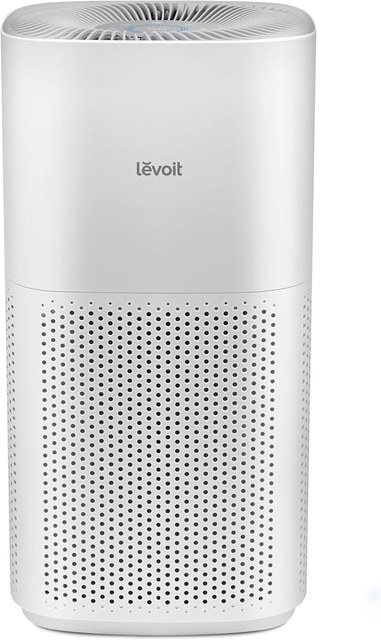
Levoit Core 300S — Best for Bedrooms and Small Rooms
Smoke does not respect doors, and a bedroom often needs its own unit. The Levoit Core 300S is the one to get: a compact cylinder with a true HEPA filter and a pelletized carbon layer, a smoke-remover filter option if odor is your main concern, and a real particle sensor feeding auto mode. Its smoke CADR is about 141, which turns over a 220-square-foot room roughly five times an hour.
On sleep mode it drops to around 24 decibels, quiet enough that most people forget it is on, and it draws only a few watts. It will not clean a living room, and the small carbon filter needs changing every six to eight months with regular smoke, but for a bedroom, nursery, or home office it is the right size at about $150. Reviews are strong: 4.7 stars over more than 17,000.
Pros
- Right size and price (~$150) for a bedroom
- Optional smoke-remover carbon filter
- Very quiet on sleep mode, low power draw
- 4.7 stars over 17,000-plus ratings
Cons
- Too small for living rooms or open areas
- Small carbon filter needs frequent changes with heavy smoke
- Best odor performance needs the upgraded filter
Levoit Core 600S — Best Value for Large Rooms
The Core 600S is the large-room bargain. It moves a lot of air for the money, with a smoke CADR near 410, enough to clear a 600-square-foot living room several times an hour, and it uses a three-in-one filter with a pelletized carbon layer that is thicker than what the Coway or Winix carry. The particle sensor and auto mode work well, and the app is genuinely useful for watching PM2.5 climb during a smoke event.
At about $260 it costs a little more than the Coway but covers a much bigger space, which makes it the better choice for an open living-and-dining area. The three-in-one filter is around $50 and lasts about a year, less in heavy smoke season. It is not built for daily indoor smoking, but for wildfire days and occasional household smoke in a large room it delivers the most clean air per dollar here. It has close to 25,000 ratings at 4.7 stars.
Pros
- ~410 smoke CADR for about $260
- Thicker pelletized carbon than cheaper rivals
- Useful app for tracking PM2.5 during smoke
- Nearly 25,000 ratings at 4.7 stars
Cons
- Not for constant indoor smoking
- Filter life drops in heavy smoke season
- Bigger and taller than the Coway
Why Smoke Is Hard for an Air Purifier
Smoke is not one pollutant. It is a suspension of solid and liquid particles in a cloud of gases. The particles from burning wood or tobacco are mostly 0.1 to 1 micron, small enough that a HEPA filter catches them easily but also small enough to stay airborne for hours and slip through gaps around doors and windows. Those are the particles that make the air look hazy and drive a high PM2.5 reading.
The gases are the harder half. Smoke carries dozens of volatile organic compounds, plus acrolein and formaldehyde, and those molecules are far too small for any particle filter to stop. They pass straight through HEPA. The only common home technology that removes them is activated carbon, which works by adsorption, holding gas molecules on its huge internal surface area until it is full. A purifier with little or no carbon clears the haze and leaves the smell, which is the complaint behind most one-star smoke reviews. Our explainer on whether air purifiers help with smoke covers the science in more depth.
HEPA vs. Activated Carbon for Smoke
You need both, and they do different jobs. A true HEPA filter removes at least 99.97% of particles at 0.3 microns, which covers the visible smoke and the PM2.5 that irritates your eyes, throat, and lungs. Every purifier in this guide has one. If a listing says “HEPA-type” or “99% at 1 micron,” keep looking; that is a weaker filter.
Activated carbon removes the odor and the gases. The amount matters more than the presence. A light coating on a pre-filter, common on units under $150, adsorbs a small volume of gas and saturates within weeks, after which it does nothing. A dedicated carbon filter with pellets or granules, measured in ounces or pounds, keeps working for months to years. For occasional smoke, a mid-range carbon layer like the Levoit 600S is enough. For daily smoking, you want the pounds of carbon in an Austin Air or IQAir. Our filter types guide breaks down each media type.
How Much Carbon You Actually Need
Match the carbon to how often smoke is present. For wildfire smoke a few weeks a year, or a fireplace that occasionally puffs back, a standard combination filter with a few ounces of carbon handles it, as long as you replace it after the smoke season rather than running it a full year. For weekly smoke or a housemate who vapes indoors, step up to a unit with a thick pelletized carbon bed and change it two or three times a year. For daily cigarette or cigar smoking, only pounds of carbon keep up: a half-pound combination filter saturates in days under constant smoke, while the 15 pounds in an Austin Air lasts months to years. Budget for an Austin Air or IQAir in that case, or the purifier will look like it is failing within a week.
CADR and Room Size: Sizing an Air Purifier for Smoke
CADR, the clean air delivery rate, is the number that matters. Use the tobacco-smoke CADR specifically, since it is measured on the smallest particles and is always the lowest of the three figures makers publish. The rule of thumb from AHAM is that the smoke CADR should be at least two-thirds of the room’s square footage. A 300-square-foot room wants a smoke CADR of about 200.
For smoke, size up from there. That rule assumes about five air changes an hour; during an active smoke event you want more like eight, so cut the coverage figure in half. A unit rated for a 360-square-foot room is really a 180-square-foot smoke unit when the air is bad. This is why the box coverage numbers, which are often quoted at a single air change per hour, are so misleading. Our air purifier size guide walks through the math with examples.
Wildfire, Cigarette, and Cooking Smoke Are Different Problems
Wildfire smoke is mostly a particle event with a moderate gas load. It arrives suddenly, lasts days to weeks, and the priority is airflow: a high smoke CADR to bring PM2.5 down fast across the whole house. A combination HEPA-and-carbon unit sized generously does the job. Our wildfire smoke guide covers sealing the house and tracking the AQI.
Cigarette and cigar smoke is the reverse: a heavy, continuous gas and tar load, where carbon volume and filter life matter more than airflow. This is the one case where a slower, carbon-heavy unit beats a fast HEPA machine. Cooking smoke sits in between; a mid-range unit near the kitchen, run on high for 20 minutes after cooking, clears it, and a range hood vented outside does more than any purifier.
What an Air Purifier Cannot Do About Smoke
A purifier cleans the air in the room. It does not pull smoke smell out of your couch, curtains, carpet, or drywall, and in a house with heavy smoke history those soft surfaces keep re-releasing odor for months. No amount of runtime fixes that; it takes cleaning, sealing, or replacing the materials. A purifier also does nothing about carbon monoxide, which is why it is not a substitute for a CO alarm during a fire.
It also cannot keep up if smoke is still coming in. Running a purifier with a window cracked during a wildfire, or in the same room as an active cigarette, is a losing race: the machine is sized to clean a sealed room, not filter an unlimited supply. Source control first, filtration second. For odor already soaked into the house, our smoke smell removal guide covers the cleaning side.
Getting Smoke Odor Out Faster
A few habits make any of these units work better. Run it on high, not auto, while smoke is present; auto mode reacts after the air is already bad. Put it in the room you use most, a few feet from the wall, with nothing blocking the intake or outlet. Keep interior doors open so one strong unit serves a few connected rooms, or use a small unit per closed bedroom.
Close windows and outside doors during a smoke event and set your HVAC fan to recirculate. Upgrade the furnace filter to MERV 13 during smoke season to take load off the purifier. After the smoke clears, keep running the purifier for a day or two to catch odor still off-gassing from surfaces, then replace or clean the carbon filter for next time. A PM2.5 monitor tells you when it is safe to ease off.
FAQ
Do air purifiers really remove smoke?
Yes, with the right filters. A true HEPA filter removes the smoke particles and PM2.5, and activated carbon removes the odor and gases. A unit with both, sized to the room, noticeably clears haze within 30 to 60 minutes and reduces the smell over a few hours. A HEPA-only unit clears the haze but leaves the odor.
What kind of filter is best for smoke?
A true HEPA filter plus a separate activated-carbon filter. The HEPA handles particles, the carbon handles odor and gases. The more carbon by weight, the longer it lasts and the better it does with heavy or constant smoke. Avoid ozone generators and “ionic” units sold as smoke removers; they add ozone, a lung irritant, without removing the gases.
Will an air purifier get rid of cigarette smoke smell?
It reduces airborne cigarette smoke and odor while it runs, and a carbon-heavy unit like the Austin Air or IQAir does this well. It will not remove smell that has soaked into furniture, carpet, and walls. In a house with heavy smoking history, you need to clean or seal those surfaces as well as filter the air. The health case for acting is covered in our piece on secondhand smoke.
How long does it take an air purifier to clear smoke?
With a correctly sized unit on high, visible haze drops within 30 to 60 minutes and PM2.5 approaches normal within a couple of hours, assuming no new smoke is entering. Odor takes longer, often a day or two of continuous running, because gases keep releasing from surfaces after the air clears.
Should I run my air purifier on auto or high during wildfire smoke?
High. Auto mode adjusts fan speed to the current reading, which means it slows down as soon as the air improves slightly, then falls behind when smoke surges again. During an active smoke event, run it on the highest speed you can tolerate and drop to auto once the outdoor AQI recovers.
How often do I change the carbon filter for smoke?
For occasional wildfire or fireplace smoke, replace the combination filter after the smoke season instead of waiting a full year. For weekly smoke, every three to four months. For daily smoking, a standard carbon filter saturates within days, which is why those situations need a pounds-of-carbon unit whose filter lasts months to years.
Do I need a purifier in every room?
Not necessarily. One strong unit can serve several connected rooms if interior doors stay open. Closed rooms, especially bedrooms, need their own unit because smoke and PM2.5 seep past doors and a purifier only cleans the space it is in. A small bedroom unit plus one larger living-area unit covers most homes; our best air purifiers for home guide has whole-house picks.
Bottom Line
Smoke is a particle problem and a gas problem, and the right air purifier solves both. For most homes the Coway Mighty AP-1512HH is the best mix of HEPA, carbon, speed, and price. Clear a large open floor plan with the Medify MA-112. For steady cigarette or cigar smoke, the carbon volume in the Austin Air HealthMate Plus is what actually works, and the IQAir GC MultiGas XE is the premium answer when the smell is in everything. On a budget, buy the Winix 5510; for a bedroom, the Levoit Core 300S; for a big room on a value budget, the Levoit Core 600S. Size it to your room, run it on high while smoke is present, keep the windows shut, and change the carbon on schedule.
Editorial note: Prices, review counts, CADR figures, and availability change after publication — confirm the current listing before buying.