

A multimeter is the closest thing HVAC work has to a stethoscope. It tells you whether a part is getting power, whether a capacitor is dead, and whether the problem is the thermostat or the board. Pick a weak one and you will chase ghosts.
These four are the picks that make sense in 2026, from a $65 starter meter to a $178 clamp meter built for service calls. Prices and ratings come from Amazon, checked October 2026.
Table of Contents
Quick comparison
Prices checked October 2026 and change often.
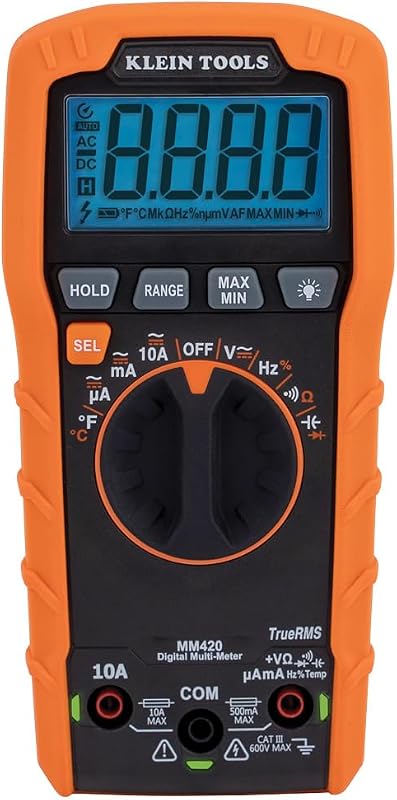
Klein Tools MM420: the best starter meter
Auto-ranging and true RMS, with AC/DC voltage up to 600V, 10A current, resistance to 50 megohms, plus continuity, temperature, capacitance, frequency and diode tests. LED lead-alert lights show when the test leads are in the wrong jack. At $64.69 with a 4.7-star rating from 755 buyers, it is the sensible first meter.
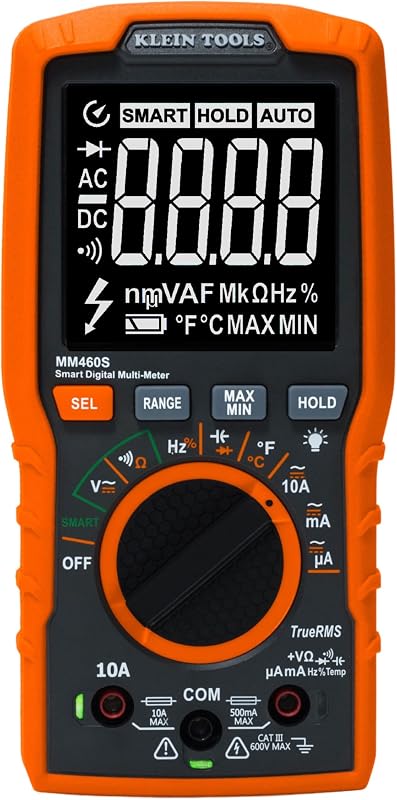
Klein Tools MM460S: the one that thinks for you
The MM460S has a smart mode that switches between continuity, voltage and resistance without turning the dial. That saves steps when checking a lot of points. It costs $79.98 and has a 4.8-star rating, though from only 58 buyers so far.
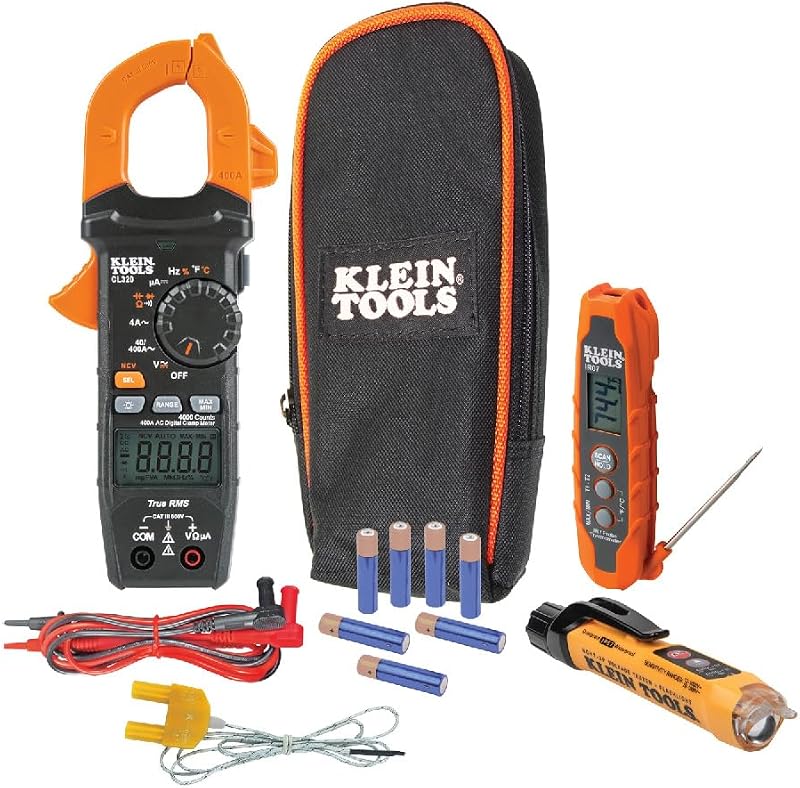
Klein Tools CL320KIT: the HVAC kit
A clamp meter measures AC current without cutting into the wire, which is how you check a compressor or blower motor. The CL320KIT bundles the clamp meter with a dual-range non-contact voltage tester and an IR/probe thermometer for $114.99. It has a 4.8-star rating from more than 1,000 buyers. Read our Klein CL320KIT review for the details.
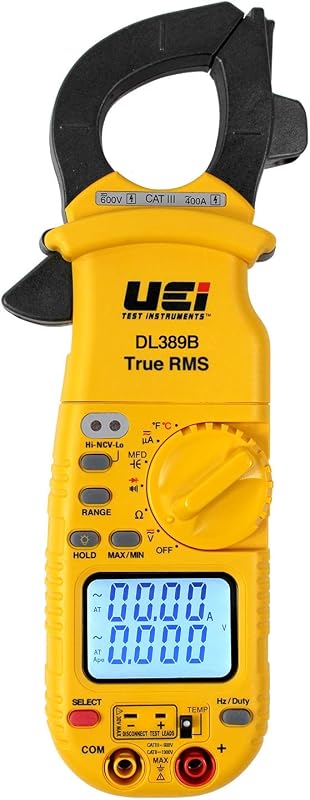
UEI DL389B: for service work
A commercial-grade true RMS clamp meter with dual display. It measures AC amps, AC/DC volts, microamps to 2,000, capacitance to 4,000 microfarads, frequency, duty cycle, temperature, continuity and resistance to 40 megohms. At $177.57 and 4.5 stars from 359 buyers, it costs more than the Kleins, and it earns that on the microamp and capacitance readings that matter for flame sensors and capacitors.
What to look for in an HVAC meter
- True RMS: reads motor and variable-speed loads correctly.
- Capacitance: a must for checking run and start capacitors.
- Microamps: needed to test a flame sensor.
- Temperature probe: for supply and return readings.
- Safety rating: look for CAT III for panels and CAT IV for service entrance work.
Safety first. Turn power off at the breaker before opening equipment unless the test needs power, and never touch a capacitor terminal without discharging it. If a job involves a gas furnace, a sealed system or high voltage, call a licensed technician. Related: HVAC gauges and HVAC vacuum pumps.
Where HVAC tools are headed
Expect more meters with Bluetooth, phone logging and smart modes. Logging a reading to an app is useful for showing a customer what failed. It also means more firmware and more ways for a cheap tool to become a paperweight.
Do not be surprised if clamp meters start to include built-in refrigerant and airflow tools as heat pumps spread. The risk is the same as with any all-in-one: more features, thinner build quality. Buy the meter for the jobs you do, not the one with the most icons.
How to use a multimeter on a basic HVAC check
- Check the thermostat wire voltage: low-voltage control power is typically 24V AC. Set the meter to AC volts and read between R and C on the board.
- Check a capacitor: power off, discharge it safely, then use the capacitance setting. A reading well below the printed rating means it is weak.
- Check a blower motor’s draw: clamp one leg and compare the amps to the nameplate.
- Check continuity on a fuse or switch: power off, a beep means the path is good.
None of this replaces training. A mistake with line voltage or a charged capacitor can hurt. If you are not sure, stop and call a licensed technician.
Price tiers
| Tier | Price range | What you get |
|---|---|---|
| Starter | About $65 to $80 | Auto-ranging TRMS meter with the basics (Klein MM420, MM460S) |
| Kit | About $115 | Clamp meter plus voltage tester and thermometer (Klein CL320KIT) |
| Service | About $180 and up | Clamp meter with microamps and dual display (UEI DL389B) |
Fluke is the other name pros mention, and its meters cost more. We did not verify a current Fluke listing for this guide, so it is not in the picks. If you already own one, keep using it.
Care and calibration
Keep leads in good condition, replace cracked insulation, and store the meter dry. Change the battery when the display dims, since a low battery can skew readings. Meters drift slowly. If you use one for paid work, send it for calibration on the maker’s schedule. For home use, check it against a known source, such as a fresh battery at a known voltage.
What happens next with test tools: expect more meters to log readings to a phone and to build a job report. That is useful for techs and a handy record for homeowners. The risk is cheap Bluetooth meters with weak safety ratings, so look at the CAT rating, not the app.
Frequently asked questions
Can a homeowner use an HVAC multimeter? For simple checks like a thermostat or a capacitor, yes, with care. For gas, sealed systems or high voltage, hire a licensed technician.
Do you need a clamp meter and a multimeter? A clamp meter handles current and many voltage checks. A multimeter is better for small resistance and continuity checks. Many people end up with both.
How much should a first meter cost? $65 to $80 buys a solid auto-ranging TRMS meter. Spend more only when you need clamp features or microamps.
Sources
- Klein Tools MM420, MM460S and CL320KIT Amazon listings (checked October 2026)
- UEI DL389B Amazon listing (checked October 2026)
- Occupational Safety and Health Administration, electrical safety guidance