
For most basements I would buy the hOmeLabs 7,000 sq ft dehumidifier: a genuine 50-pint pull under the current test rule, a hose port so it drains to the floor drain and you never carry a tank, and one of the longest owner track records in the category. Size it to your square footage and how damp the space is, set it up to drain continuously, and make sure it keeps working in a cool room.
Figures here come from manufacturer spec sheets, Energy Star listings, current Amazon pricing, and owner reviews. This is not based on in-house lab testing. Prices and availability shift, so check the current listing before you buy.
A basement dehumidifier runs almost year-round, often in an unheated room, and nobody wants to empty its tank twice a day. That changes what matters. The seven picks below are chosen for continuous drainage, cool-room operation, and honest capacity.
Quick picks
- Best overall: hOmeLabs 7,000 sq ft — a true 50-pint, hose-drain ready, huge owner track record
- Best value: Waykar 5,000 sq ft — Energy Star, quiet, a big owner base at a low price
- Best for a small or lightly damp basement: hOmeLabs 4,500 sq ft — smaller 32-pint pull, same proven design
- Best for a big, very wet basement on a budget: Yaufey 6,000 sq ft — high pull rate, two drainage modes
- Best for a cold basement: AEOCKY 5,500 sq ft — built to keep working below 65°F, top Energy Star efficiency
- Best for an unfinished basement or crawl space: AlorAir Sentinel HD55S — auto-defrost, ducting, six-year warranty
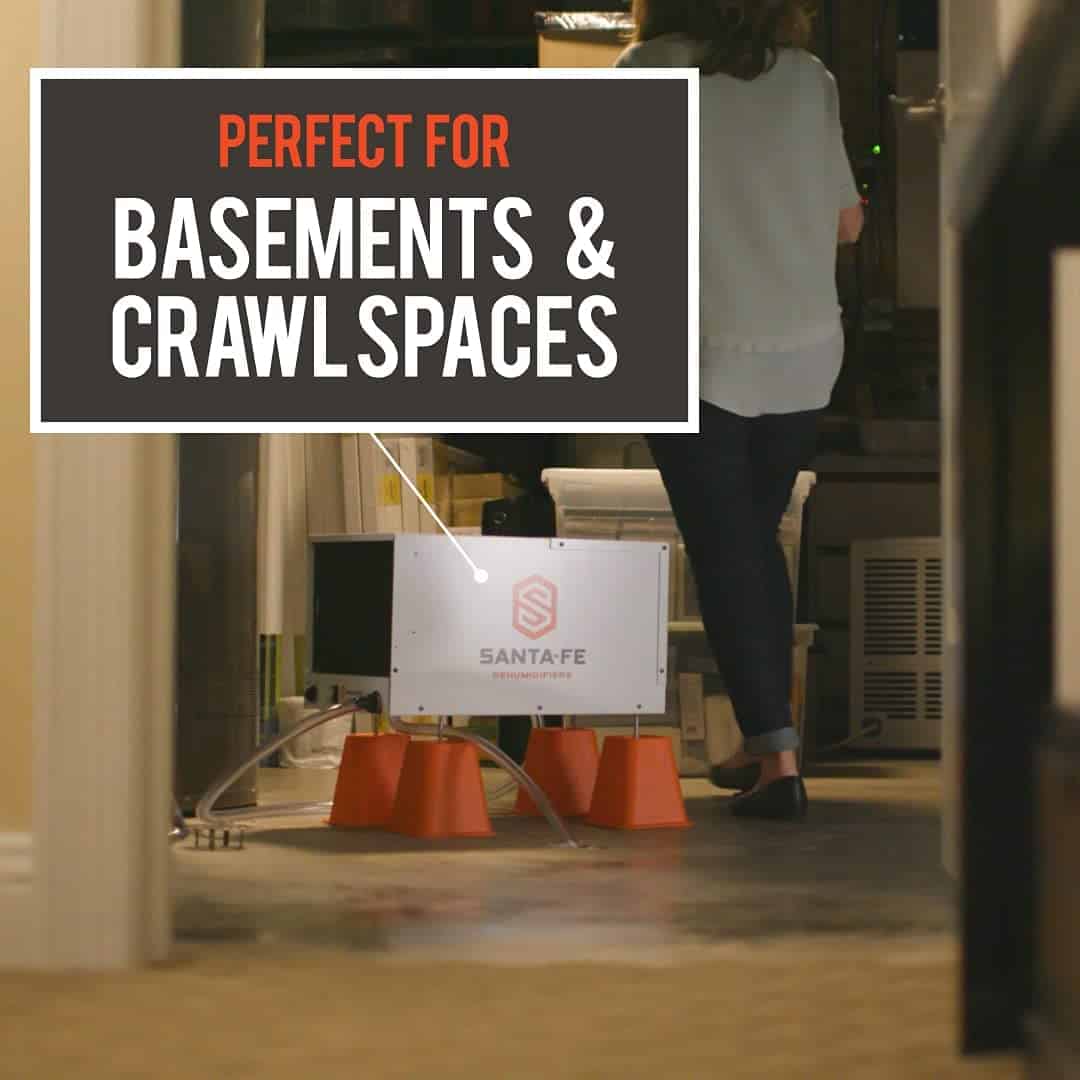
- Best premium: Santa Fe Compact70 — runs down to 49°F, built for a permanent install
Table of Contents
Best Dehumidifiers for Basements: Comparison
The table lines all seven up on what decides a basement purchase: real moisture removal at the DOE test condition, the marketing pint number next to it, rated coverage, whether it drains by hose, whether it is built for a cool room, tank size, noise, price, and buyer rating.
| Model | Capacity (DOE / marketing) | Rated coverage | Continuous drain | Cool-room ready | Tank | Noise | Price | Rating |
|---|---|---|---|---|---|---|---|---|
| hOmeLabs 7,000 sq ft | ~50 pt / “120 pt” | 7,000 sq ft (maker) | Hose port (gravity) | Auto-defrost | ~1.6 gal | ~52 dB | ~$270 | 4.4 (25,675) |
| Waykar 5,000 sq ft | ~50 pt / “80 pt” | 5,000 sq ft (maker) | Hose port (gravity) | Frost sensor | 1.14 gal | ~42 dB | ~$250 | 4.3 (22,384) |
| hOmeLabs 4,500 sq ft | ~32 pt / “80 pt” | 4,500 sq ft (maker) | Hose port (gravity) | Auto-defrost | ~1 gal | ~50 dB | ~$235 | 4.6 (11,179) |
| Yaufey 6,000 sq ft | ~50 pt / “120 pt” | 6,000 sq ft (maker) | Hose port (gravity) | Auto-defrost | 1.06 gal | Quiet mode | ~$237 | 4.4 (6,921) |
| AEOCKY 5,500 sq ft | ~50 pt / “80 pt” | 5,500 sq ft (maker) | Hose port (gravity) | Rated below 65°F | ~1 gal | Low | ~$230 | 4.4 (6,482) |
| AlorAir Sentinel HD55S | 55 pt AHAM / 120 PPD saturation | ~1,300 sq ft (crawl/basement) | Condensate hose + ducting | Auto-defrost, built for it | None (drain only) | ~52 dB | ~$550 | 4.1 (185) |
| Santa Fe Compact70 | 70 pt AHAM / 120 PPD saturation | ~1,300–2,000 sq ft | Condensate hose + ducting | Runs down to 49°F | None (drain only) | 58–63 dB | ~$1,628 | 4.5 (106) |
How I Picked the Best Basement Dehumidifiers
I have not run these units side by side in a test room. The picks come from manufacturer spec sheets, the Energy Star product database, current Amazon pricing and ratings, and what owners report after a season or two in a real basement. Every portable pick here has a hose port for continuous drainage and an auto-defrost or frost-sensing system, because a basement unit that needs hand-emptying or that ices up in a cool room is not doing the job. Our general dehumidifier buying guide covers the basics that apply to any room.
Best Overall: hOmeLabs 7,000 sq ft
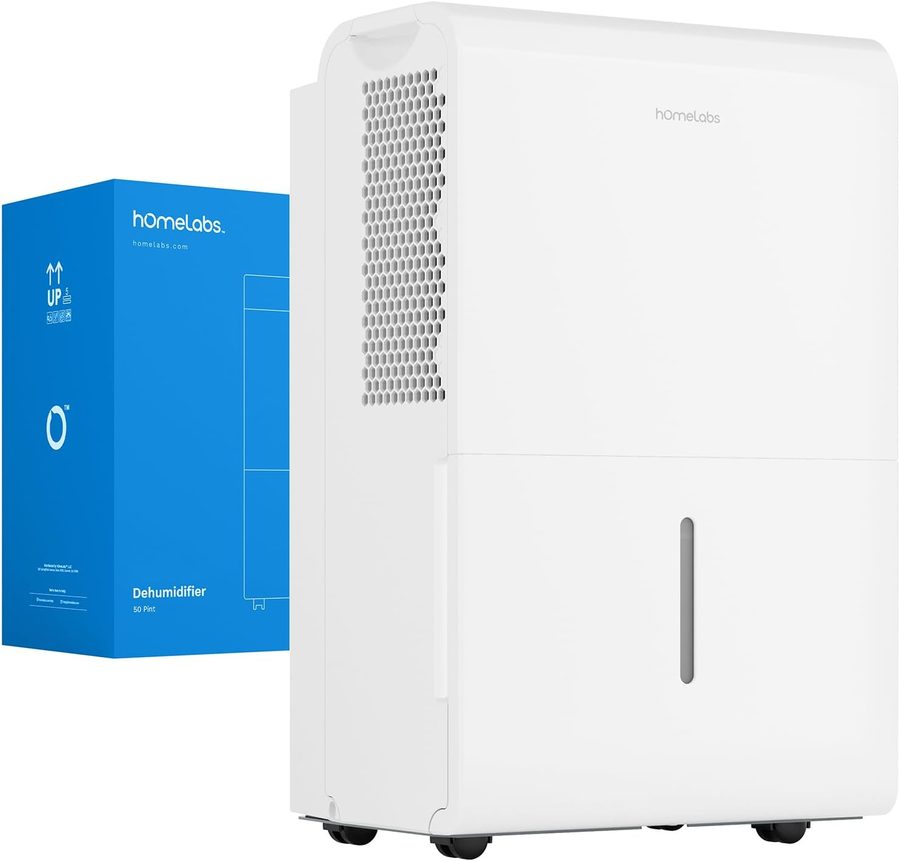
For a typical damp-to-wet basement, this is the one I would buy. The hOmeLabs 7,000 sq ft dehumidifier removes about 50 pints a day at the current DOE test condition — a genuine 50-pint, the size that fits most full basements — and pushes 188 CFM on normal, more in turbo mode. It drains by gravity through a hose port on the back, has a large tank and Wi-Fi humidity control as backup, and uses an auto-defrost cycle so it keeps working as the room cools. With more than 25,000 reviews at 4.4 stars across the hOmeLabs line, it has the track record the newer value brands do not. Downsides are minor: the Wi-Fi app is basic, it is physically big, and like every portable it needs the coils vacuumed once a year.
Pros
- True 50-pint pull under the current rule
- Hose port for continuous drainage
- Auto-defrost for a cool room
- 188 CFM plus a turbo mode
- Huge, strong owner track record
Cons
- Basic Wi-Fi app
- Large footprint
- No built-in pump
For a basement under about 2,000 square feet or one that is only lightly damp, the smaller hOmeLabs 4,500 sq ft below costs less to buy and run. To size it against your own space, run the numbers through our dehumidifier sizing guide.
Best Value: Waykar 5,000 sq ft
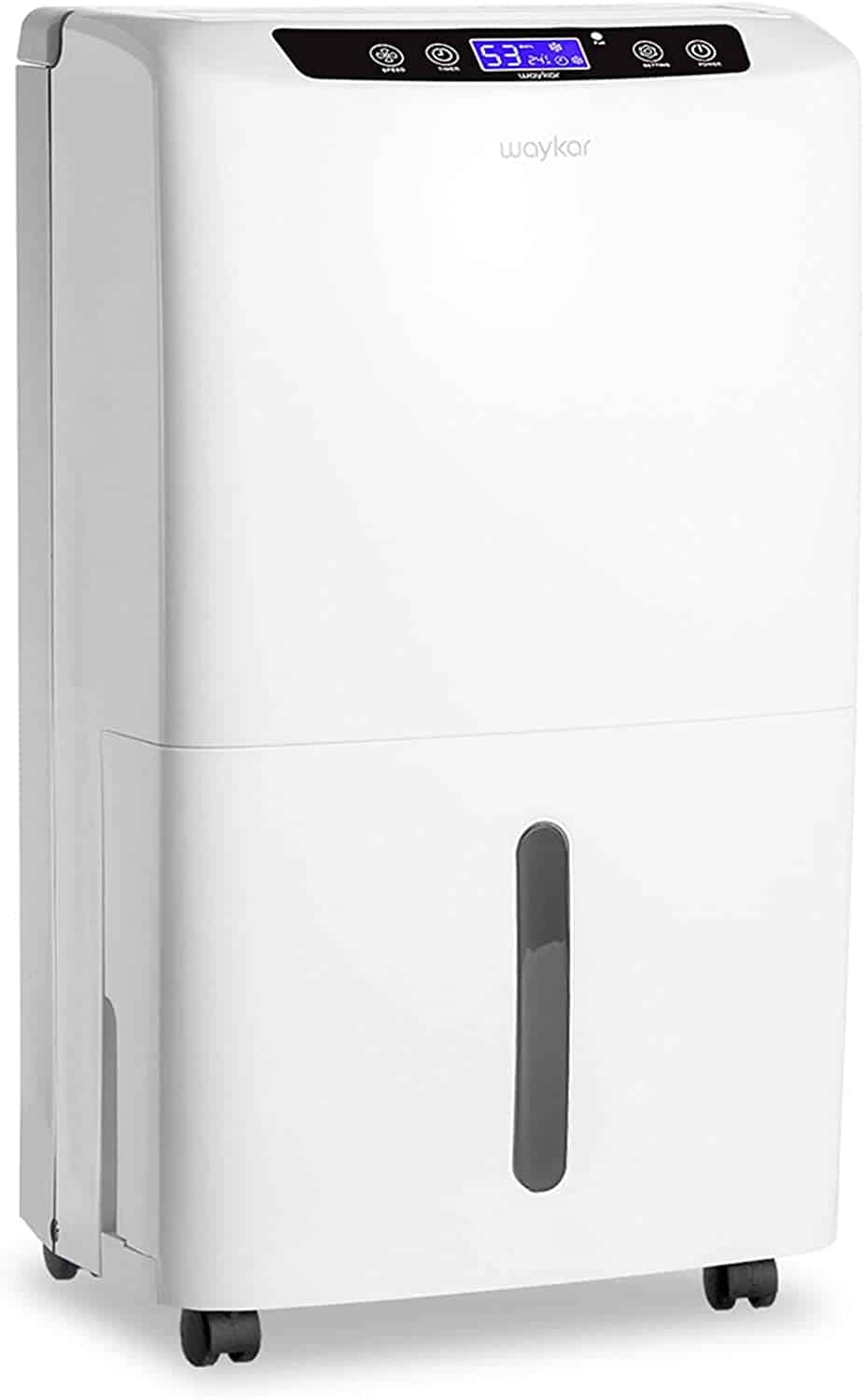
The Waykar 5,000 sq ft dehumidifier is the pick when you want a capable basement unit for the least money. It removes about 50 pints a day at the DOE condition (marketed as an 80-pint), is Energy Star certified, and runs quietly at a rated 42 decibels. It has a hose port for continuous drainage, a 1.14-gallon tank, a 90-degree oscillating louver to spread dry air, a frost sensor that pauses the compressor before ice builds, and it can pull humidity down to 30 percent for a workshop or wine area. With more than 22,000 reviews at 4.3 stars it is a known quantity, but Waykar is a value brand rather than a legacy name, so check the current warranty terms before you buy.
Best for a Small or Lightly Damp Basement: hOmeLabs 4,500 sq ft
A small finished basement, or a larger one that only gets a little musty in July, does not need a 50-pint unit running the whole time. The hOmeLabs 4,500 sq ft dehumidifier removes about 32 pints a day at the DOE condition (the box prints a bigger “80-pint” saturation figure), which is enough for a basement up to roughly 2,000 square feet that is damp rather than wet. It has the same hose port, auto-defrost, Wi-Fi, and one-gallon backup tank as its bigger sibling, is a little quieter and cheaper to run, and its 11,000-plus reviews sit at 4.6 stars — the highest here. Do not stretch it to cover a large, genuinely wet basement; size up to the 7,000 or the Yaufey for that.
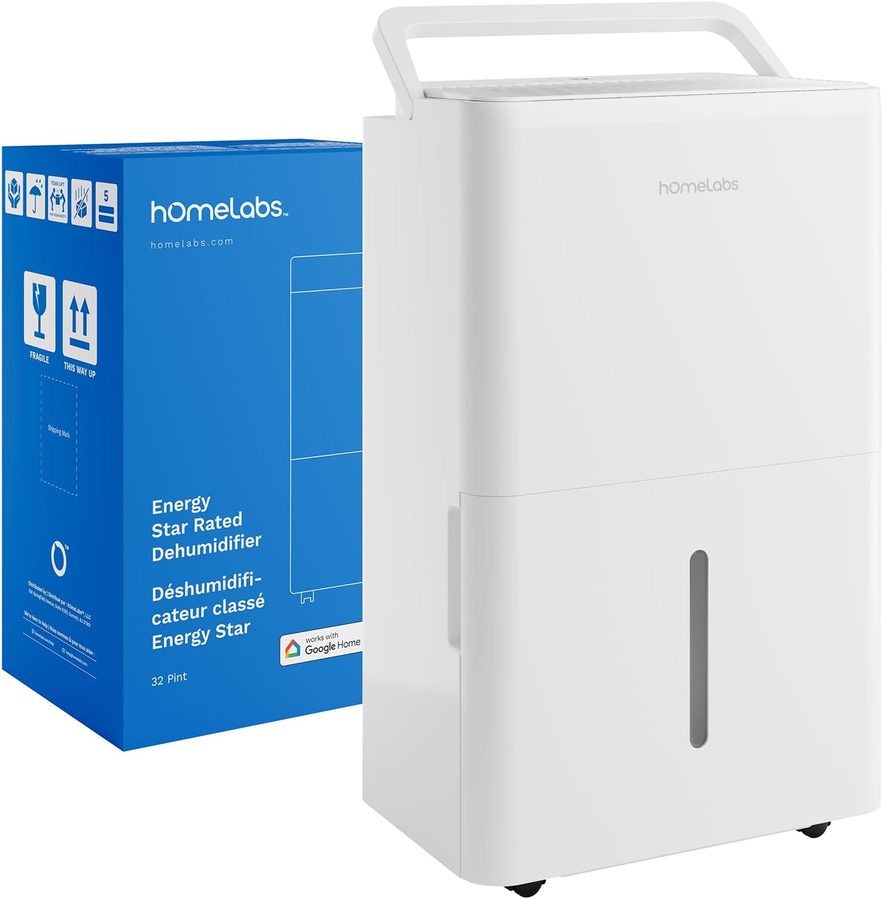
Best for a Big, Very Wet Basement on a Budget: Yaufey 6,000 sq ft
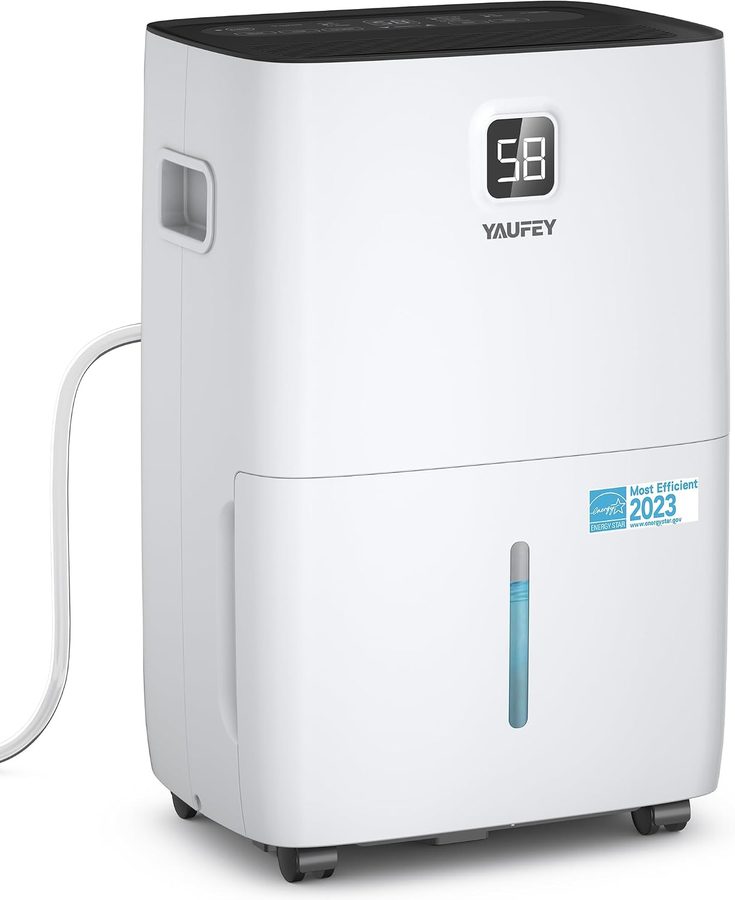
If your basement is large and genuinely wet — a musty smell, damp block walls, condensation on the cold-water pipes — and you do not want to spend $500-plus, the Yaufey 6,000 sq ft dehumidifier is the value answer. It is marketed as a 120-pint and pulls roughly 50 pints a day at the DOE condition, is Energy Star certified, and gives you both a tank and a hose outlet so you can start with one and switch to the other. It has a simple touch panel, a 24-hour timer, and a quiet mode for a basement below a bedroom. Yaufey is a value brand this site has reviewed before — see our Yaufey 30-pint review for a closer look at how the line is built.
Best for a Cold Basement: AEOCKY 5,500 sq ft
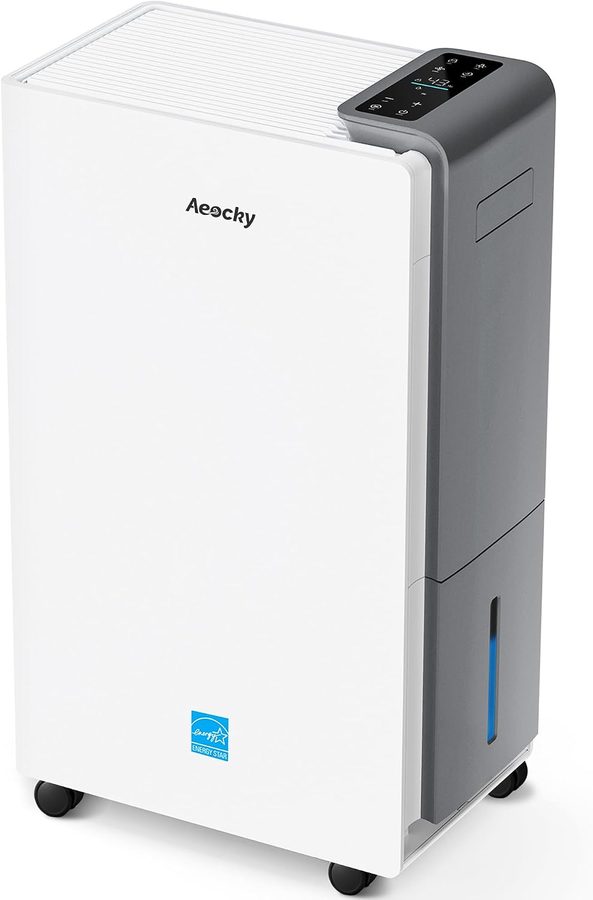
Compressor dehumidifiers lose efficiency as the air cools, and many stall and frost up below about 65 degrees — a problem, because an unheated basement often sits in the high 50s to low 60s. The AEOCKY 5,500 sq ft dehumidifier is built around that gap: the maker rates it to keep pulling water below 65 degrees where ordinary units taper off, and it carries an Energy Star Most Efficient designation, so it costs less to run through the long hours a basement unit works. It removes about 50 pints a day at the DOE condition, drains through a hose port, and is one of the quieter units in its size class. AEOCKY is a newer brand, but the low-temperature focus is the right one for a cool basement, and it has more than 6,000 reviews at 4.4 stars.
Best for an Unfinished Basement or Crawl Space: AlorAir Sentinel HD55S
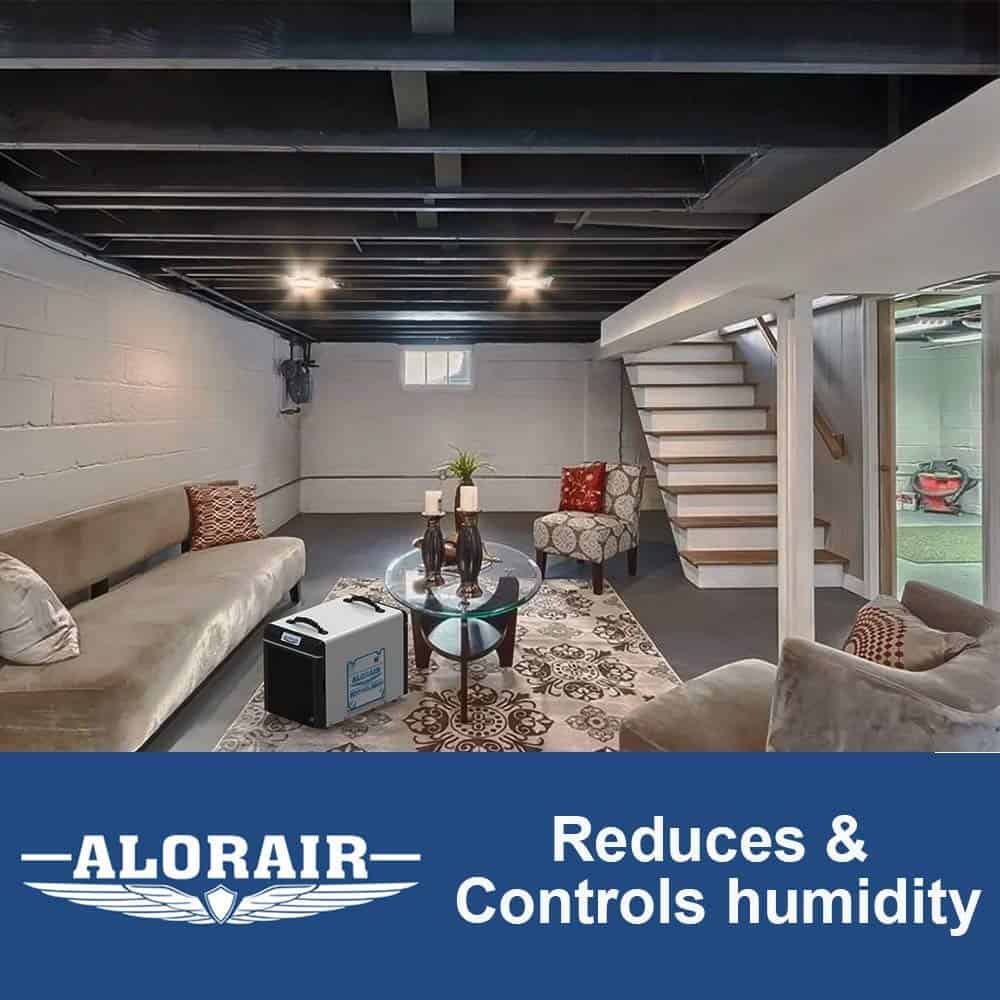
An unfinished basement with block walls, a slab or dirt floor, and an opening to a crawl space is harder than a portable is built for. The AlorAir Sentinel HD55S is a dedicated moisture-control unit: 55 pints a day at the AHAM rating (120 at saturation), a real auto-defrost system engineered for cool, still air, and a ducting collar so you can pull damp air from a crawl space or push dry air where you need it. It is meant to sit in one place on a humidistat with the condensate line piped to a drain, is backed by a six-year warranty and ETL listing, and is far more serviceable than a $250 portable. It has no tank — drain-only by design. Our review of the larger AlorAir 198 PPD basement unit covers how the line is built.
Best Premium: Santa Fe Compact70
The Santa Fe Compact70 is the unit to buy when you want a basement dehumidifier you install once and forget for a decade. Santa Fe builds specifically for below-grade spaces: the Compact70 removes 70 pints a day at AHAM, keeps running down to 49 degrees, uses a MERV-13 filter instead of the thin mesh screen on portables, and has ducting ports so it can serve a basement and crawl space together. It runs on a humidistat with the condensate piped to a drain, backed by a six-year warranty from a company that has been in this niche for decades. The trade-offs are price and noise — a rated 58 to 63 decibels, louder than a portable — but for a permanent install it is the standard. If you are also fighting moisture upstairs, compare it against a ducted system in our guide to the best whole-house dehumidifiers.
What a Basement Dehumidifier Can and Cannot Fix
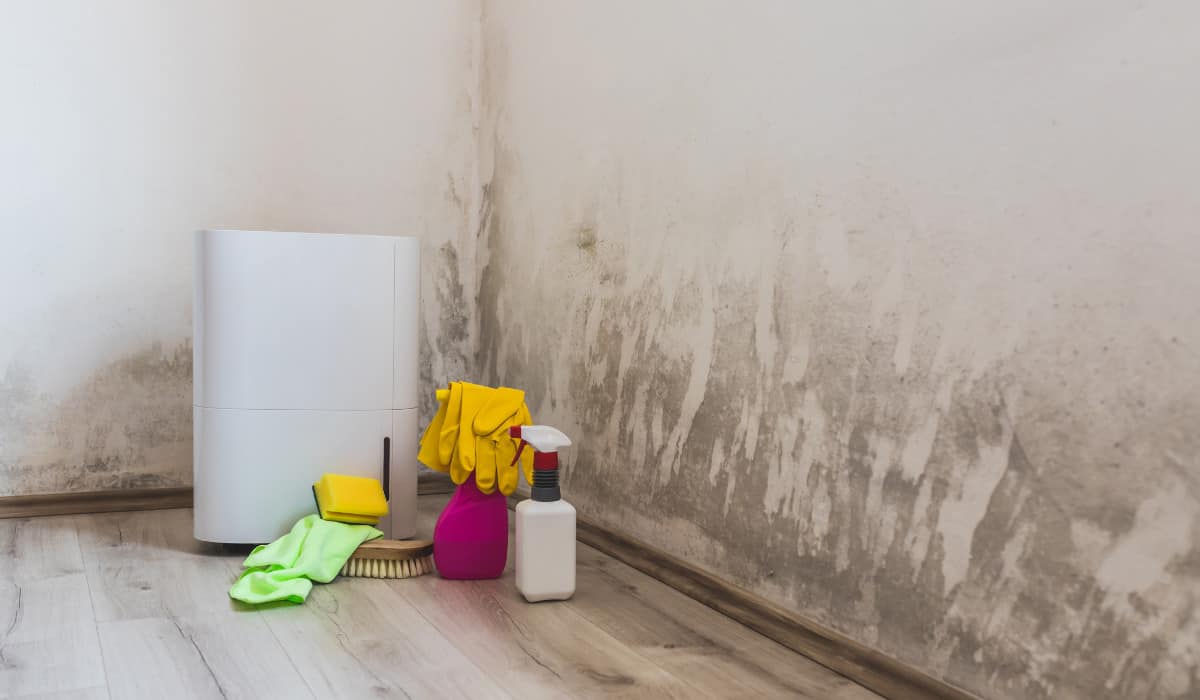
A dehumidifier removes water vapor from the air. In a basement that controls the musty smell, keeps relative humidity below the roughly 60 percent line where mold and dust mites take off, protects stored boxes, and stops condensation on cold surfaces — a right-sized unit on a humidistat holds a basement around 45 to 50 percent through the humid months. It does not fix the reasons water gets in: bulk water from a crack, a failed sump, or poor grading is a drainage and waterproofing problem, and a dehumidifier fighting an active leak will run non-stop and still lose. Sealing gaps, extending downspouts, regrading away from the foundation, and fixing the sump come first. It also does nothing for radon, and it will not remove an established mold colony — it only removes the moisture that let mold grow. Our guide on improving basement air quality covers the full picture, and whether an air purifier helps with mold explains where filtration fits in.
Set It Up for Continuous Drainage
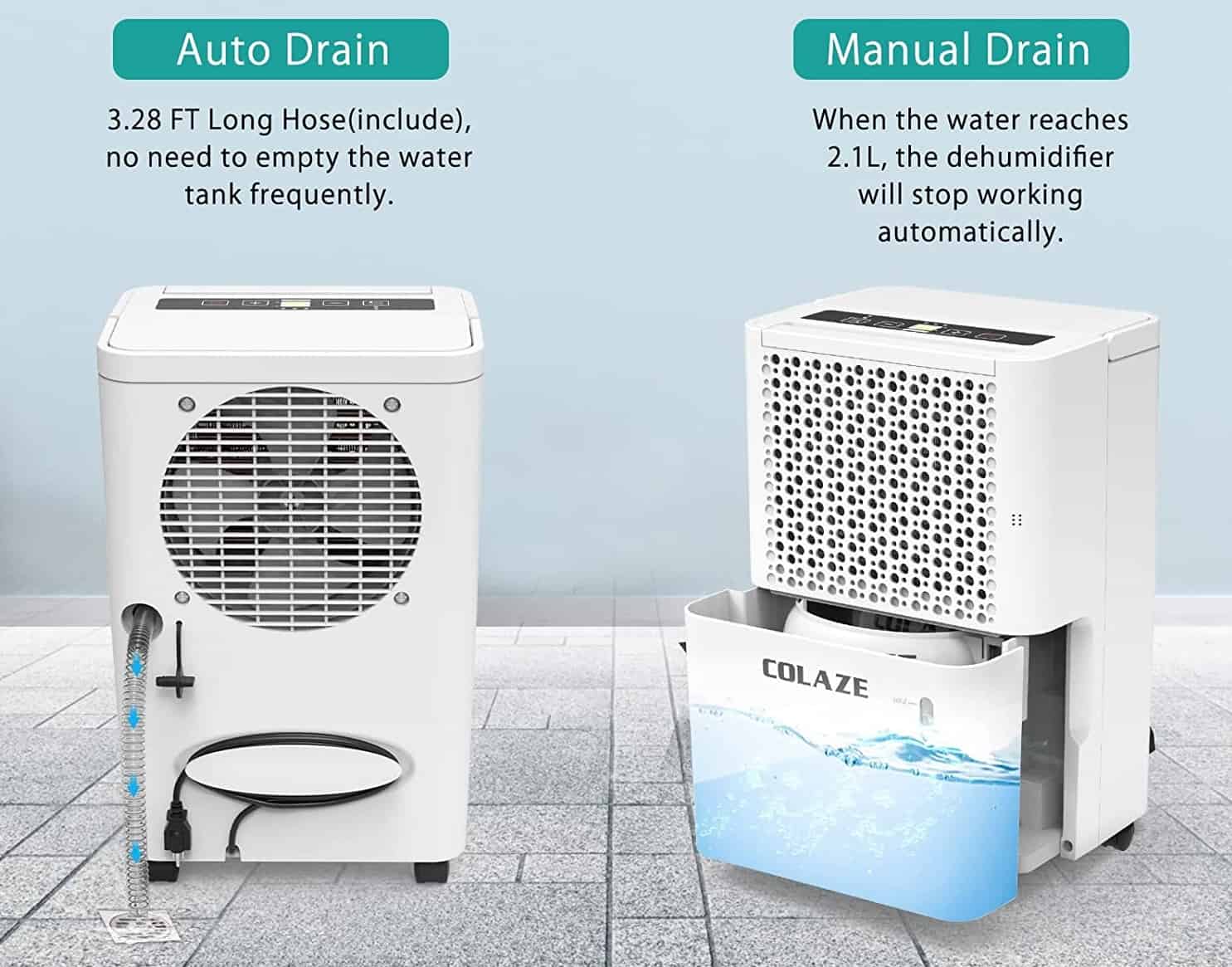
The single most important thing you can do with a basement dehumidifier is never touch its tank. A tank-only unit in a damp basement fills in eight to twelve hours, shuts off, and lets humidity climb back while you are at work. Every portable pick here has a hose port; attach a garden hose or vinyl tube and run it to the floor drain, sump pit, or a laundry sink. Two rules make gravity drainage reliable: the whole hose run has to slope continuously downhill to the drain, since any dip holds water and backs the unit up; and the dehumidifier should sit on a shelf or a couple of paver blocks so the outlet has some height to work with. If the drain is higher than the outlet, you need a model with a built-in pump. If your unit keeps stopping with a full-tank light despite a hose, our guide on a dehumidifier not collecting water covers the usual causes.
Read the Pint Rating the New Way
In 2019 the Department of Energy changed the test conditions for dehumidifiers, measuring capacity at a cooler 65 degrees instead of 80. Under the new test a unit removes noticeably less water, so the numbers dropped: a machine labeled “70-pint” under the old rule is about a “50-pint” now, and it is the same machine. Sellers respond by printing a big “saturation” or “at 95 degrees, 90 percent” number on the box — the “80-pint” and “120-pint” figures on several units here — which you will never see in a basement.
Size off the honest DOE number and your conditions. As a rough guide, a basement that is merely damp needs roughly a 30-pint (DOE) unit for up to about 1,500 square feet and a 50-pint for 1,500 to 3,000; a wet basement with a musty smell or visible moisture needs a 50-pint for up to about 1,500 square feet and more above that. Buying one size up from the minimum lets the unit hold humidity on a lower, quieter, cheaper fan speed. Our dehumidifier sizing guide has a full pint chart.
Low Temperature Is the Basement Problem
A compressor dehumidifier pulls water by chilling a coil below the dew point so moisture condenses on it. As the room air gets colder that coil drops below freezing and frost forms, which blocks airflow and eventually stops the unit. Cheap models just ice up; better ones have a frost sensor that pauses the compressor or a true auto-defrost cycle that melts the coil and resumes. Every pick here has one or the other, but not equally: the AEOCKY is rated to keep working below 65 degrees, and the AlorAir and Santa Fe are engineered for the low 50s and below. If your basement drops into the 40s in winter, no standard compressor unit will keep up and a desiccant dehumidifier — a drying wheel instead of a cold coil — is the tool, at the cost of higher energy use. Above about 55 degrees, a compressor unit with real auto-defrost is fine.
Do You Need a Built-In Pump?
Most basements do not. If there is a floor drain, a sump pit, or a laundry standpipe at or below the level of the dehumidifier’s outlet, a plain hose and gravity do the job for free and never break. A built-in condensate pump earns its place only when the nearest drain is higher than the unit — draining up into a laundry sink, out a rim joist to the outside, or up to a basement bathroom. Pump models cost more and add a part that can fail, so they are worth it only for that up-and-out situation. Our roundup of dehumidifiers with a pump covers the options if that is your setup.
Noise, Energy, and Maintenance
A basement dehumidifier runs thousands of hours a year, so the Energy Star label is worth real money over its life — the AEOCKY’s Most Efficient rating and the certification on the Waykar and Yaufey pay back in lower running cost. Noise matters if the basement sits under a bedroom: the Waykar’s rated 42 decibels and the portables’ roughly 50 disappear into a floor, while the Santa Fe at 58 to 63 is audible through it; our list of the quietest dehumidifiers compares more models. Maintenance is simple: rinse the intake filter monthly, vacuum the coils once a year, and check the drain hose has not clogged with dust and biofilm.
FAQ
What size dehumidifier do I need for a basement?
Size off the DOE pint rating, not the big “saturation” number. A merely damp basement needs about a 30-pint unit for up to 1,500 square feet or a 50-pint for 1,500 to 3,000; a wet basement with a musty smell needs a 50-pint for up to about 1,500 square feet and more above that. Going one size up from the minimum lets the unit run on a lower, quieter speed.
Should a basement dehumidifier run all the time?
Run it continuously on a humidistat set to about 45 to 50 percent through the humid months, roughly spring through early fall. In a cold, dry winter the basement air often drops below 50 percent on its own and the unit can be switched off or will idle. Set-and-forget on a humidistat, drained to a floor drain, is the goal.
Is the tank enough, or do I need a drain?
In a basement, use continuous drainage. A tank in a damp basement fills in well under a day, and every hour the unit sits off with a full tank the humidity climbs back. Every portable here has a hose port — run it to a floor drain or sump and forget the tank exists.
Why does my basement dehumidifier keep freezing up?
The room air is too cold for the model. As basement air drops toward 60 degrees, the cold coil frosts over and blocks airflow. A unit with a frost sensor or auto-defrost will pause and clear itself; a cheap one just stalls. If your basement runs cool, choose a model rated for low-temperature operation like the AEOCKY, AlorAir, or Santa Fe here.
Where should I put the dehumidifier in the basement?
Central and slightly elevated, with clear space around the intake and exhaust, and near the drain you are piping to. Keep it a few inches off the wall, and if the basement is partitioned, put it in the room with the worst moisture and leave interior doors open so air circulates.
Will a dehumidifier fix a wet basement by itself?
No. It manages humidity in the air, which controls smell, mold growth, and condensation, but it cannot keep up with bulk water from a leak, a failed sump, or water pooling against the foundation. Fix drainage, grading, and the sump first, then let the dehumidifier handle what is left.
Bottom Line
Match the dehumidifier to your basement’s size and how wet it is, set it up to drain continuously to a floor drain or sump, and check it is rated to keep working as the room cools. For most basements the hOmeLabs 7,000 sq ft is the right balance of a true 50-pint capacity, quiet operation, and a proven track record. Drop to the hOmeLabs 4,500 sq ft for a smaller or lightly damp basement, choose the AEOCKY if your basement runs cold, and move to the AlorAir Sentinel HD55S or Santa Fe Compact70 for an unfinished space or a permanent install. Whatever you pick, drain it to a hose and run it on a humidistat.