
Hard water leaves a white crust on faucets, spots on glasses and scale in the water heater. Two kinds of systems claim to fix it. One really removes the minerals. The other changes how they behave. The difference decides how well it works, and what it costs to run.
Here is the plain answer, a quick way to read a hardness number, and two systems that show the gap on Amazon today.
Table of Contents
Water softener vs water conditioner
| Softener | Conditioner (salt-free) | |
|---|---|---|
| What it does | Swaps calcium and magnesium for sodium or potassium (ion exchange) | Changes how minerals form scale (often called TAC), but leaves them in the water |
| Hardness after treatment | Lower | Same on a test kit |
| Needs salt? | Yes | No |
| Wastes water? | Yes, during regeneration | No |
| Feel of the water | Softer, more lather | Little change |
| Best for | Hard or very hard water | Moderate hardness where scale is the main complaint |
Know your hardness first
Water hardness is measured in grains per gallon (gpg) or milligrams per liter. One gpg equals about 17.1 mg/L. The U.S. Geological Survey calls water soft under 60 mg/L, moderate at 61 to 120, hard at 121 to 180 and very hard above that. Look up your area in our water hardness by state guide, then test your own tap.
Cost to own
- Softener: the system itself, installation, bags of salt and some extra water during regeneration.
- Conditioner: the system, installation and a media or cartridge change on a schedule that varies by brand.
- Both: a pre-filter replacement on a schedule.
The old figures of $1,000 to $2,500 for softening and $500 to $800 for conditioning did not match what is for sale now, so check current quotes. Installation depends on your plumbing, and a plumber can quote that.
What a softener looks like
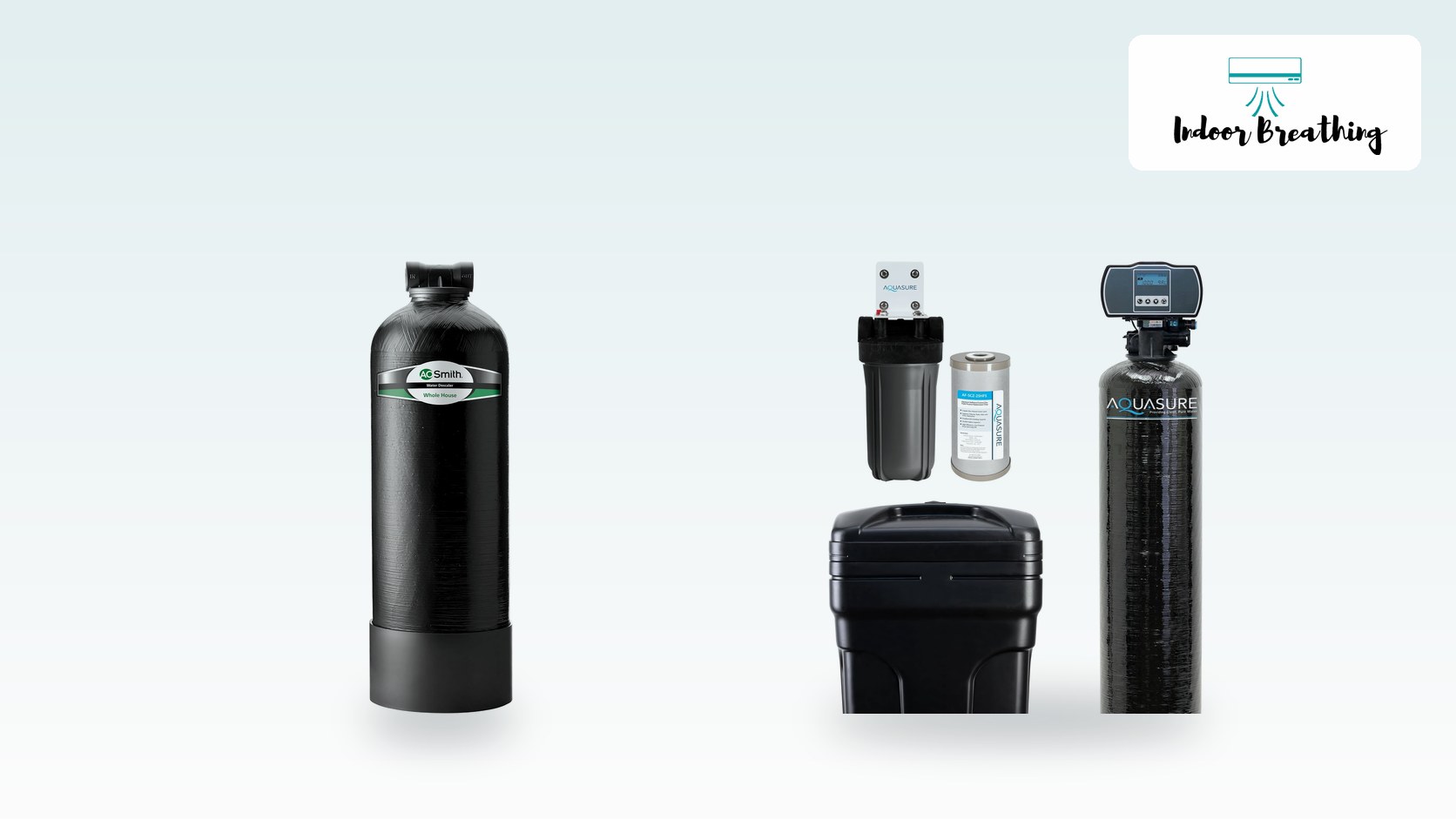
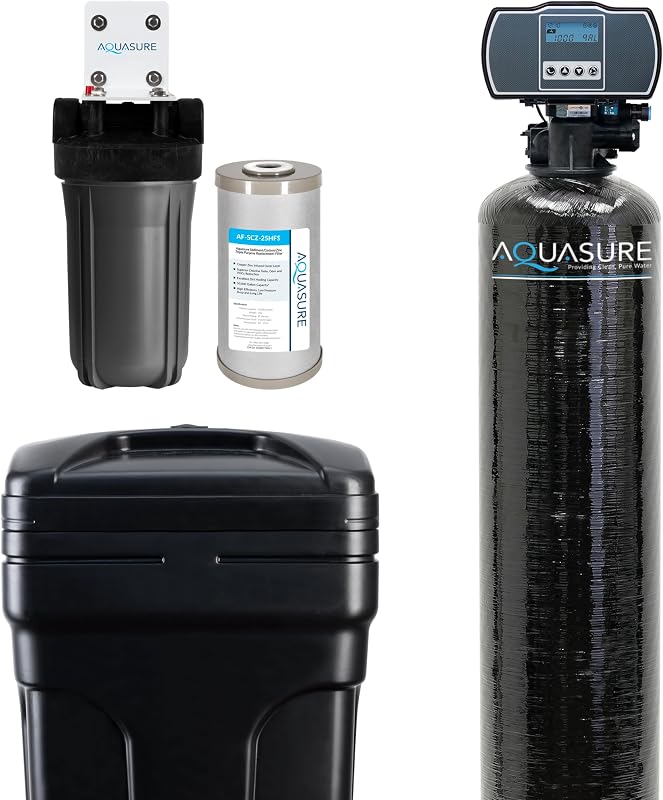
The Aquasure Harmony 40,000-grain softener is listed at $521.99 with 4.8 stars, though from only 92 ratings. It is aimed at homes with three to four bathrooms and uses a metered control head and a pre-filter. A softener needs salt, a drain and sizing by grain capacity. Use our softener sizing guide.
Quick decision list
- Hardness above about 7 gpg and you want soft-feeling water: softener.
- Hardness around 3 to 7 gpg and scale is the main worry: consider a conditioner.
- Well water with iron: filter first, then treat hardness.
- Not sure: test the water, then ask for quotes on both.
These ranges are rough. Always match the system’s own rating to your test results.
What a conditioner looks like
The A. O. Smith Whole House Salt-Free Scale Control is listed at $399.99 with 4.3 stars from 1,979 ratings. Its listing says it fits water with hardness under 15 grains, works on city or well water and is rated for 600,000 gallons. It reduces scale in pipes. It does not make the water feel soft.
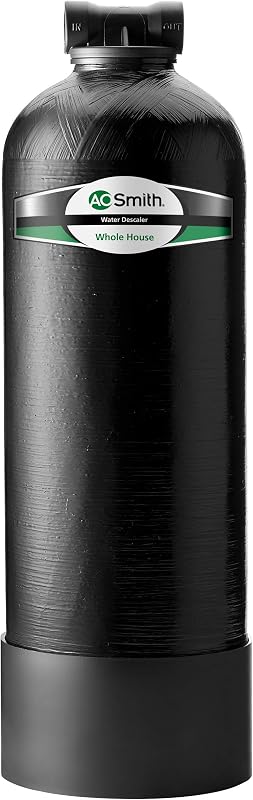
| System | Type | Rating | Price |
|---|---|---|---|
| Aquasure Harmony 40,000 grain | Salt-based softener | 4.8 stars (92) | ~$521.99 |
| A. O. Smith Salt-Free Scale Control | Conditioner (scale control) | 4.3 stars (1,979) | ~$399.99 |
Prices checked October 2026 and change often.
How to choose
- Pick a softener if hardness is high, you want soft-feeling water, and you do not mind salt and a drain.
- Pick a conditioner if hardness is moderate, scale in pipes is the worry, and you want little upkeep.
- Check local rules. Some communities restrict salt-based softener discharge.
The downside: independent proof for salt-free scale control is thinner than for softeners. Ask for third-party test data before buying. Skip any claim that a conditioner removes hardness, because it does not.
Expect more hybrid systems that pair a filter with a scale-control stage. Do not be surprised if sales claims get bolder faster than the testing does.
Related: best water softeners, salt-free systems and whole house filters for hard water.
Test before you buy
- Use a hardness test strip or send a sample to a lab.
- Check whether iron, manganese or chlorine are present, since they can foul the system.
- Test again after install to confirm the result.
What about drinking water?
A softener changes the minerals but is not a drinking-water filter. If you worry about lead, chlorine or other contaminants, a separate filter is the answer. See our whole house filters for hard water. Softened water also holds added sodium, so people on a low-sodium diet should talk to a doctor.
Appliances and scale
Hard water leaves scale inside the water heater and on heating elements, which wastes energy over time. Flushing the tank helps either way. See how to flush a water heater.
Where is this going? Expect more cities to restrict salt discharge, and more homes to pick scale control or hybrid systems. One thing to watch: some products promise soft water without any change in the test. A free hardness test is the best way to keep sellers honest.
Frequently asked questions
Which is better, a softener or a conditioner? A softener removes the minerals and works best on very hard water. A conditioner suits moderate hardness.
Is softened water safe to drink? Yes, though it contains added sodium or potassium. People on a low-sodium diet should ask a doctor.
Do salt-free systems lower hardness? No. A test kit will show the same hardness before and after.
Sources
- Aquasure Harmony 40,000 grain and A. O. Smith Salt-Free Scale Control Amazon listings (checked October 2026)
- U.S. Geological Survey, water hardness
- Water Quality Association, water softening and conditioning