
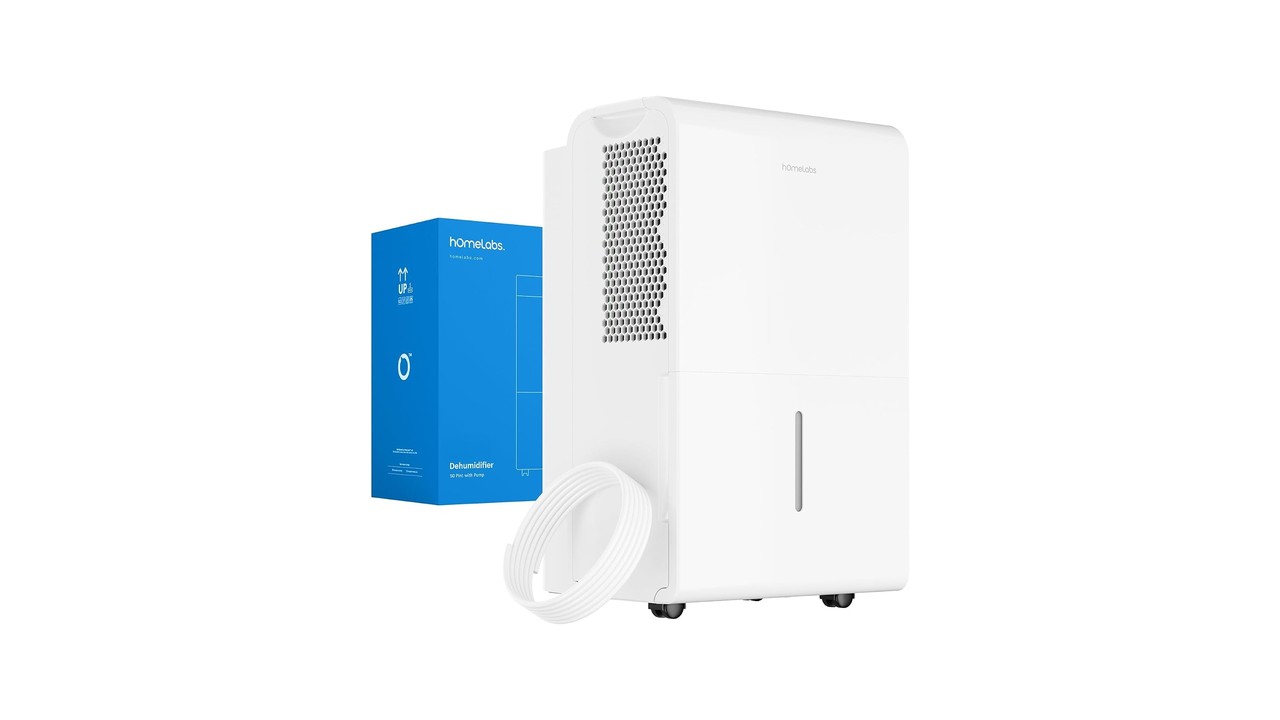
The best dehumidifier with a built-in pump for most homes is the hOmeLabs 50 Pint with Pump: it drains upward to a sink or window, has a long track record, and stays quiet. A built-in pump only matters when your drain sits higher than the unit; if you have a floor drain, a plain gravity hose is simpler and has nothing to wear out.
Every pick here is checked against verified pump-lift specs, current capacity ratings, live Amazon listings, and buyer feedback. This guide does not involve hands-on lab testing.
A dehumidifier in a damp basement fills its tank once or twice a day, and nobody keeps emptying a bucket for long. The fix is continuous drainage, and that is where the pump question comes in. If there is a floor drain or a lower sink nearby, a gravity hose does the job for free. If the only place to send the water is up, into a utility sink, out a basement window, or across the room to a standpipe, you need a pump.
Some dehumidifiers have that pump built in. Others make you buy a separate condensate pump and wire it up. Both work, and which is better depends on your space and how much you want to maintain. There is also a catch nobody mentions in the listing: the pump is the part most likely to fail, usually because the intake clogs with the slime that grows in standing condensate.
This guide covers when a built-in pump is worth it, how it differs from an add-on pump, five dehumidifiers with pumps that actually hold up, and how to keep the pump working for years. For the wider decision on capacity and coverage, see our dehumidifiers for damp homes guide.
Affiliate disclosure: IndoorBreathing may earn a commission when you buy through links on this page, at no extra cost to you. Picks are chosen for pump reliability, capacity, noise, and value, not commission rate.
Table of Contents
Do You Actually Need a Built-In Pump?
Answer one question: where will the water go? Stand where the dehumidifier will sit and find the nearest drain, floor drain, sump pit, laundry sink, or condensate line.
If that drain is at or below the level of the dehumidifier’s outlet, you do not need a pump. Run the included hose downhill to the drain and gravity does the work, silently and forever. This covers most basements with a floor drain or a sump.
If the only drain is higher than the unit, a window well, a sink on the wall, a standpipe, an upstairs bathroom, you need a pump to lift the water. This is common in finished basements, crawl spaces, and any room without a floor drain. A built-in pump handles it in one appliance; an external condensate pump does the same job as a $40 to $60 add-on.
If you want the unit far from any drain, a pump also pushes water long horizontal distances, often 15 feet or more, so you can place the dehumidifier where it works best and route the hose to wherever the drain is.
One more case: a basement that already has a sump pit is the easiest of all. You can usually run a plain gravity hose straight into the pit and let the sump pump handle the lift, no dehumidifier pump needed. Our basement dehumidifier guide covers that setup and cold-basement sizing in more detail.
How a Built-In Pump Works
Inside a pump-equipped dehumidifier, condensate drips into a small internal reservoir instead of the main tank. When that reservoir fills, a float switch trips and a little pump kicks on for a few seconds, pushing the water out through a separate pump hose. Then it shuts off and waits for the next fill. You hear a short buzz every several minutes when the unit is working hard, less often once the room dries out.
Two numbers matter. Lift is how high the pump can raise water vertically, usually 12 to 20 feet on home units, which is plenty to reach a sink or a basement window. Run length is how far it can push horizontally, generally longer than the lift figure. Most pump hoses included in the box are 15 to 16 feet. If your route is longer or higher than the spec, the pump strains, cycles more, and wears out faster.
Built-In Pump vs. External Condensate Pump
A built-in pump is tidier: one appliance, one power cord, one hose. Setup is faster and there is no second device on the floor. The downside is that when the pump fails, it is part of the dehumidifier. On most units you cannot service it, so a dead pump can mean a dead machine unless it is under warranty.
An external condensate pump is a small box with its own reservoir that sits beside or under the dehumidifier. Any gravity-drain dehumidifier feeds it, and it lifts the water out. It costs $40 to $60, adds a second thing to plug in and clean, but it is fully replaceable on its own, so a pump failure is a cheap fix, not a new dehumidifier. It also lets you keep a dehumidifier you already like.
Cost is close to a wash. A pump-equipped dehumidifier runs $30 to $80 more than the same model without one, and a decent external condensate pump is $40 to $60, so you are not saving real money either way. The deciding factor is whether you would rather have one clean appliance or a serviceable pump you can replace for $50 when it eventually wears out.
The rule of thumb: if you are buying new and want the simplest setup, get a built-in pump. If you already own a good gravity-drain unit, or you want the pump to be independently replaceable, add an external one. One of our picks, the Gasbye, splits the difference with a built-in pump you can pull out and clean or swap. If you are still choosing between pint sizes and room coverage, start with our 50-pint dehumidifier comparison.
Best Dehumidifiers With Built-In Pumps: Comparison Table
Capacity is the current-standard pint rating where given, with the marketing “max” figure noted. Prices and ratings are current Amazon figures and will move.
| Model | Best for | Capacity | Coverage | Pump lift / hose | Noise (low) | Price |
|---|---|---|---|---|---|---|
| hOmeLabs 50 Pint with Pump | Best overall | 50 pint (80°F test); 120 pint max | ~1,500 sq ft (damp) | ~16 ft hose included | ~48 dB | ~$309.99 |
| avylo Dehumidifier with Pump | Best value | 90 pint max (90°F/90%) | up to ~2,000 sq ft (damp) | 15 ft lift, 15 ft hose | ~41 dB | ~$248.99 |
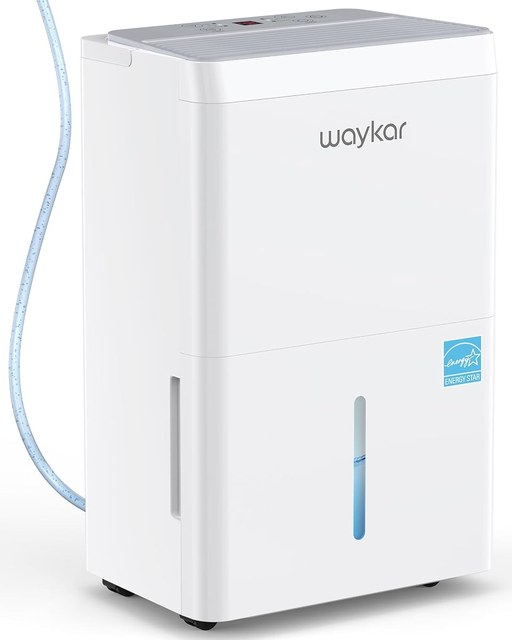
| Waykar 150 Pint with Pump | Large or very wet spaces | 150 pint max (95°F/90%) | up to ~2,500 sq ft (damp) | Pump + tank, hose included | ~40 dB | ~$499.99 |
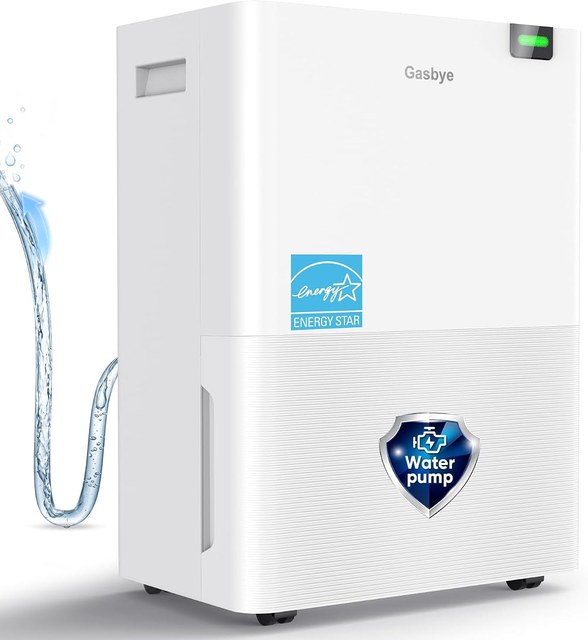
| Gasbye Dehumidifier (replaceable pump) | Pump longevity | 75 pint max | up to ~1,800 sq ft (damp) | 16.5 ft hose; pump removable | ~44 dB | ~$299.99 |
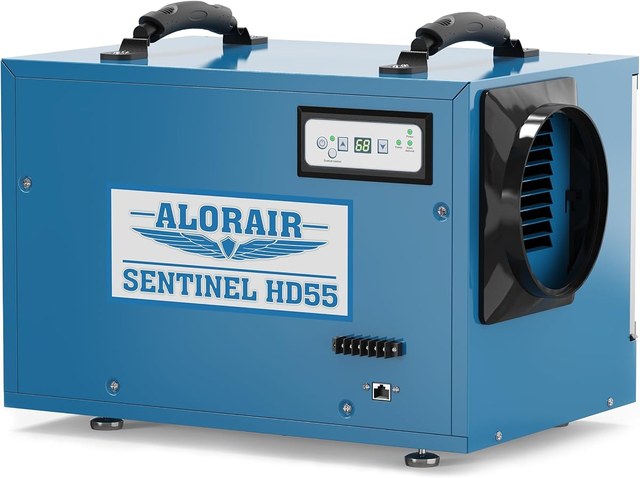
| AlorAir Sentinel HD55 | Crawl spaces, cold rooms | 53 pint/day AHAM (113 saturation) | ~1,200 sq ft | 19.6 ft lift | ~50 dB | ~$446.46 |
hOmeLabs 50 Pint with Pump — Best Overall
The hOmeLabs 50-pint line has been the default basement dehumidifier for years, and the pump version, rated for spaces up to 7,500 square feet in its marketing and roughly 1,500 square feet of real damp basement, adds a genuine built-in condensate pump for continuous upward drainage. It ships with a long pump hose, runs on casters, connects to Wi-Fi with Alexa and Google support, and is quieter than most units in the class at around 48 decibels on low.
Size it honestly: the “50 pint” figure uses the older 80-degree test, so on the current DOE standard it is closer to a 35-pint machine, which is still plenty for a typical damp basement. The pump itself has a solid reliability record across tens of thousands of owners, though like any internal pump it is not user-serviceable, so buy from a seller with a clear return path and register the warranty. For most people with a basement that needs the water sent up and out, this is the one to get.
Pros
- Proven pump across a huge owner base
- Quiet for the class (~48 dB)
- Wi-Fi with Alexa and Google
- Long pump hose in the box
- Gravity drain still available as backup
Cons
- Pump is not user-serviceable
- Capacity quoted on the older warm-air test
- Coverage claim assumes light dampness
- Around $310
avylo Dehumidifier with Pump — Best Value
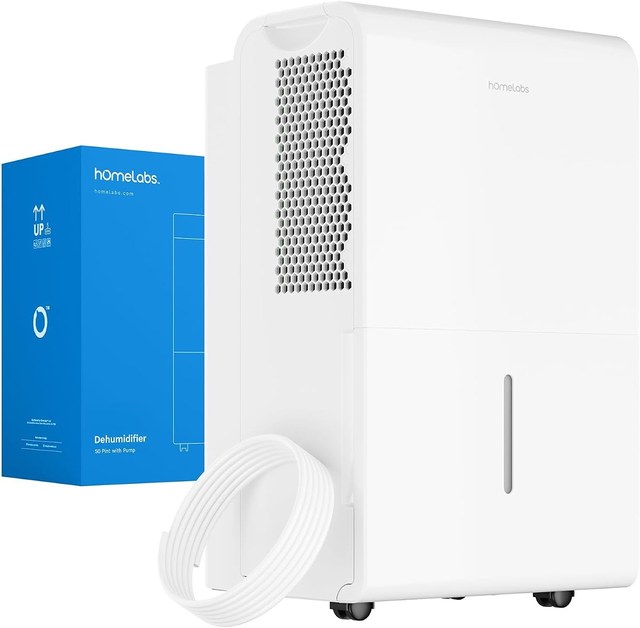
The avylo pump unit does the core job for under $250. It has a genuine built-in pump with a 15-foot vertical lift and a 15-foot hose in the box, a 2.1-gallon top-mounted tank as a fallback, an LED humidity and temperature readout, and it is certified Energy Star Most Efficient, so daily running cost stays around a dollar. Noise is low for a pump unit, roughly 41 decibels on the quiet setting.
The compromises are the usual budget ones. It is a newer brand with a smaller review history, the “90 pint” figure is a hot-and-soaking maximum rather than a standard rating, so treat its honest capacity as suiting a moderately damp space up to about 2,000 square feet, and long-term pump reliability data simply is not there yet. As a low-cost way to get continuous upward drainage in a basement or laundry room, though, it is hard to beat on price.
Pros
- Built-in pump for under $250
- 15 ft lift, 15 ft hose included
- Energy Star Most Efficient
- Quiet at ~41 dB on low
Cons
- Newer brand, limited track record
- Capacity quoted as a hot-condition max
- No long-term pump reliability data
- Basic controls, no app
Waykar 150 Pint with Pump — Best for Large or Very Wet Spaces
When the space is big or seriously wet, a flooded basement being dried out, a large unfinished lower level, a workshop, the Waykar has the raw capacity. Its “150 pint” figure is a hot-and-humid maximum, but even derated it is one of the highest-output home units with a pump, and it is certified to 2025 Energy Star, which keeps the power bill sane for a machine this size. It has auto defrost for cool rooms, a self-drying cycle to protect the coil, casters, and both a pump hose and a tank.
It is a large, heavy unit, and at around $500 it is priced accordingly. The pump is built in and not serviceable, and Waykar’s marketing is heavy on square-footage claims, up to 7,000 square feet, that assume very light dampness; for a genuinely wet space plan on roughly 2,500. If your problem is a large or actively wet area, this is the pick; for a normal damp basement it is more machine than you need.
Pros
- Very high moisture-removal capacity
- 2025 Energy Star for its size
- Auto defrost and self-drying cycle
- Pump hose plus tank
Cons
- Large, heavy, around $500
- Pump not user-serviceable
- Square-footage claims assume light dampness
- Overkill for a normal basement
Gasbye Dehumidifier with Replaceable Pump — Best for Pump Longevity
Gasbye built this unit around the one real weakness of pump dehumidifiers: on almost every other model, the pump is sealed inside and cannot be cleaned or replaced, so a clogged or dead pump can retire the whole machine. The Gasbye’s pump pulls out. You can rinse the intake when it starts to slow, or swap the pump entirely for a cheap part if it fails, instead of buying a new dehumidifier.
The rest is competent rather than remarkable: a 75-pint hot-condition maximum, Energy Star certification, a 16.5-foot pump hose, a 1.45-gallon tank as a backup, and quiet drainage at around 44 decibels because the pump runs submerged. Review numbers are still modest, so the long-term picture is thin, but the serviceable pump is a genuinely smart design for anyone who has had a pump die before. For a basement where you want the drainage to keep working for a decade, it is the thoughtful choice.
Pros
- Pump removes for cleaning or replacement
- Quiet, submerged-pump drainage (~44 dB)
- Energy Star certified
- 16.5 ft pump hose plus tank
Cons
- Modest review history
- Capacity is a hot-condition maximum
- Mid-tier build otherwise
- Replacement pumps depend on the brand stocking them
AlorAir Sentinel HD55 — Best for Crawl Spaces and Cold Rooms
The Sentinel HD55 is a different kind of machine: a metal-cased, tankless unit built to sit in a crawl space or an unheated basement and run for years. It removes 53 pints a day on the AHAM test, covers about 1,200 square feet, and its condensate pump can lift water almost 20 feet up and out of the crawl space. An automatic low-temperature defrost keeps it working down into the 40s, where a normal portable would frost over and stall.
It has no water tank at all, it drains continuously, which is the point for a space you rarely visit. The trade-offs: it is louder than a living-room unit at about 50 decibels, the controls are basic, and at around $450 it costs more than a portable. It is also worth pairing with a sealed vapor barrier on the crawl-space floor, which cuts how hard it has to work. For a damp crawl space or a cold basement corner, it is the durable answer.
Pros
- Pump lifts water ~20 ft out of a crawl space
- Low-temperature defrost for cold spaces
- Tankless, fully continuous drainage
- Rugged metal case for rough conditions
Cons
- Louder, around 50 dB
- Basic controls, no app
- Around $450
- Best paired with a vapor barrier
What Makes a Pump Last, or Fail
Condensate is not clean water. Dust, mineral scale, and a thin biofilm, the slime you see in a window air conditioner tray, all collect in the pump reservoir and the impeller. That buildup is the number one reason pumps fail: the intake screen clogs, the float switch sticks, and the pump either runs dry or stops. Heat and constant cycling wear the motor over time, and pushing water higher or farther than the rated lift makes all of it happen sooner.
What helps: rinse the pump intake and reservoir every few months, keep the unit’s air filter clean so less dust reaches the water, run the pump within its rated lift with as few bends in the hose as possible, and pour a cup of white vinegar through the reservoir a couple of times a year to slow the biofilm. A unit with a serviceable pump, like the Gasbye, makes all of this a two-minute job instead of a warranty claim.
Sizing: Match the Pint Rating to Your Space
A pump does not change how much water a dehumidifier can pull; capacity still has to match the room. Remember that in 2019 the Department of Energy moved its test from 80 degrees to 65 degrees, so a unit sold as “50 pint” a few years ago is labeled “35 pint” today for the same performance, and the big “90 pint” or “150 pint” numbers on many pump units are hot-and-soaking maximums, not standard ratings. As a rough guide, a moderately damp 1,500 square foot basement needs about 35 to 50 pints a day on the current test; a wet or larger space needs more. Our pint calculator and size guide work it out for your space.
Setup and Maintenance
Connect the pump hose, not the gravity hose, and route it to the drain with the fewest bends possible, rising steadily rather than looping up and down. Keep the end of the hose above the water line of whatever you are draining into so it cannot siphon back. Test it by pouring a quart of water into the reservoir and watching it pump out. Then set the humidistat to 45 to 50%, clean the air filter monthly, and flush the pump reservoir every few months. If the unit ever stops draining, it is usually a clogged pump intake or a kinked hose, not a dead machine; our guide on a dehumidifier not collecting water walks through it.
Mistakes to Avoid
The first is buying a pump you do not need: if your drain is below the unit, a gravity hose is simpler and never breaks. The second is exceeding the rated lift, running the hose up 18 feet on a pump rated for 15 makes it cycle constantly and burn out. The third is ignoring the pump reservoir until it clogs; a five-minute rinse every few months prevents most failures. The fourth is treating the “max pint” marketing number as the real capacity and buying too little machine for a wet basement. And the fifth is assuming a pump fixes standing water, it moves condensate the unit collects from the air, not water on the floor from a leak or bad grading, which you still have to fix at the source.
FAQ
Do I need a dehumidifier with a built-in pump?
Only if the drain you want to use is higher than the dehumidifier, or far enough away that gravity will not carry the water. If you have a floor drain or a sump below the unit, a plain gravity hose is simpler, silent, and has nothing to wear out.
How high can a built-in dehumidifier pump lift water?
Most home units are rated for 12 to 20 feet of vertical lift, which reaches a laundry sink or a basement window comfortably. They can push water farther horizontally than vertically. Staying well under the rated figure makes the pump last longer.
Is a built-in pump or an external condensate pump better?
A built-in pump is tidier and simpler to set up. An external pump costs $40 to $60, adds a second device, but is replaceable on its own, so a pump failure is a cheap fix rather than a new dehumidifier. Buy built-in for simplicity, external if you want the pump to be serviceable or you already own a good unit.
Why has my dehumidifier pump stopped working?
Almost always a clogged intake or a stuck float switch from biofilm and dust in the reservoir. Unplug it, rinse the pump intake and reservoir, check the hose for kinks, and run a cup of vinegar through it. If it still will not pump, the pump motor has likely failed.
Are pump dehumidifiers noisy?
The dehumidifier itself is the same as any other. The pump adds a short buzz, a few seconds every several minutes when the unit is working hard, less often once the room dries. Models where the pump runs submerged, like the Gasbye, are quieter about it.
Can I add a pump to a dehumidifier I already own?
Yes. An external condensate pump connects to any dehumidifier’s gravity drain outlet, sits beside it, and lifts the water out. It is the standard way to give a gravity-only unit upward drainage without replacing it.
Does a built-in pump reduce how much water the dehumidifier removes?
No. The pump only moves the water the unit has already pulled from the air; it has no effect on capacity, coverage, or energy use. Size the machine by its pint rating exactly as you would a non-pump model, then treat the pump as a drainage feature on top.
Bottom Line
Buy a built-in pump only if your drain is above the dehumidifier or across the room; otherwise a gravity hose is the better answer. When you do need one, the hOmeLabs 50 Pint with Pump is the safe overall pick, the avylo is the value choice, the Waykar 150 Pint handles large or very wet spaces, and the AlorAir Sentinel HD55 is built for crawl spaces. If a failed pump has burned you before, the Gasbye and its removable pump are worth the trade. Whichever you pick, keep the pump hose short and rising, rinse the reservoir a few times a year, and fix any actual water intrusion at the source.
Editorial note: Prices, ratings, capacity ratings, and availability change after publication — confirm the current listing before buying.