
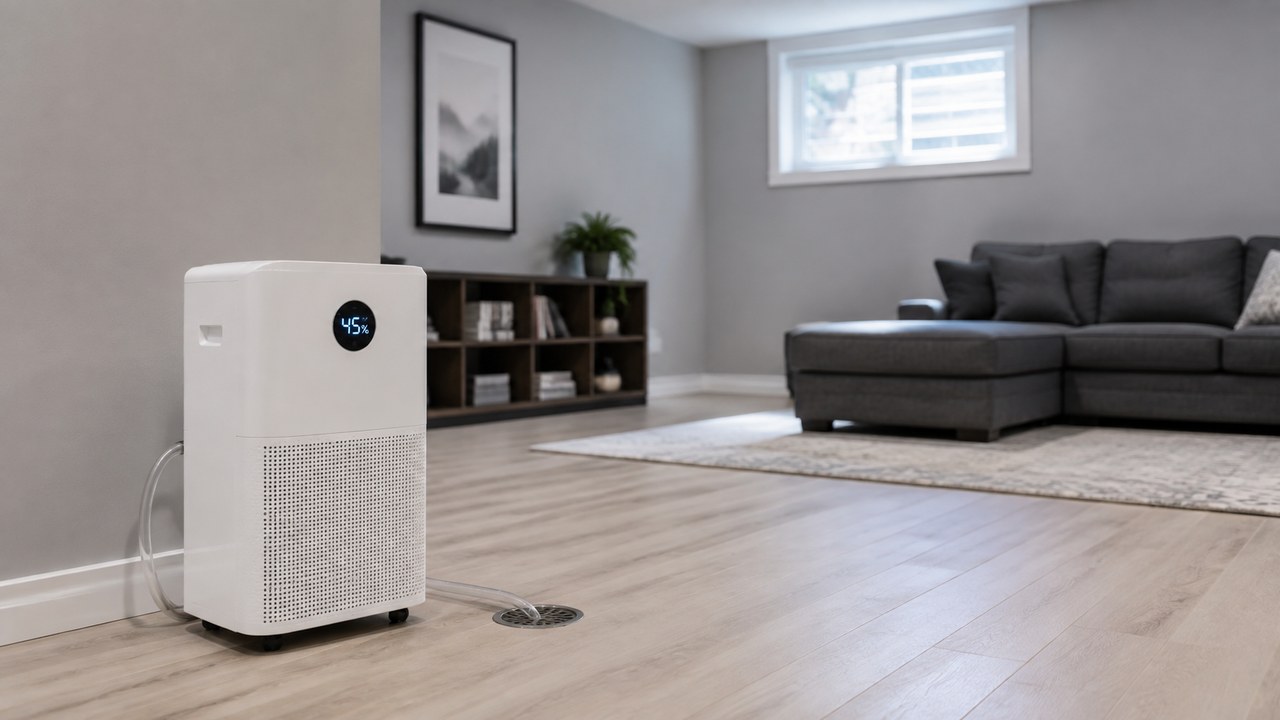
A 50-pint dehumidifier is the standard whole-area size for a damp basement, a humid main floor, or a large laundry room. Since the 2019 DOE test change, today’s “50 pint” is what used to be sold as a 70-pint, so it pulls more water than the number suggests. Match it to your square footage and how wet the space is, decide whether you need a pump, and check the noise rating before you buy.
Figures here come from manufacturer spec sheets, current Amazon pricing, DOE and AHAM capacity data, and owner reviews. This is not based on in-house lab testing. Prices and stock move around, so check the live listing before you buy.
Fifty pints is the size most people actually need and the size most people get wrong. It is the standard pick for a basement that smells damp, a first floor that feels sticky all summer, or a big room where a small unit runs all day and never catches up. Go smaller and it never keeps up; go bigger and you pay more up front and every month for capacity you cannot use.
One wrinkle first. In 2019 the Department of Energy changed how dehumidifiers are tested and every rating dropped, so a unit sold as “70 pint” before 2019 is labeled “50 pint” now. Same machine, smaller number. A modern 50-pint dehumidifier is a genuine workhorse, and the seven below are the ones worth your money in 2026.
Quick picks
- Best overall: Midea Cube 50 Pint — most efficient, huge tank, good app
- Best value and safest bet: hOmeLabs 50 Pint — proven over tens of thousands of homes
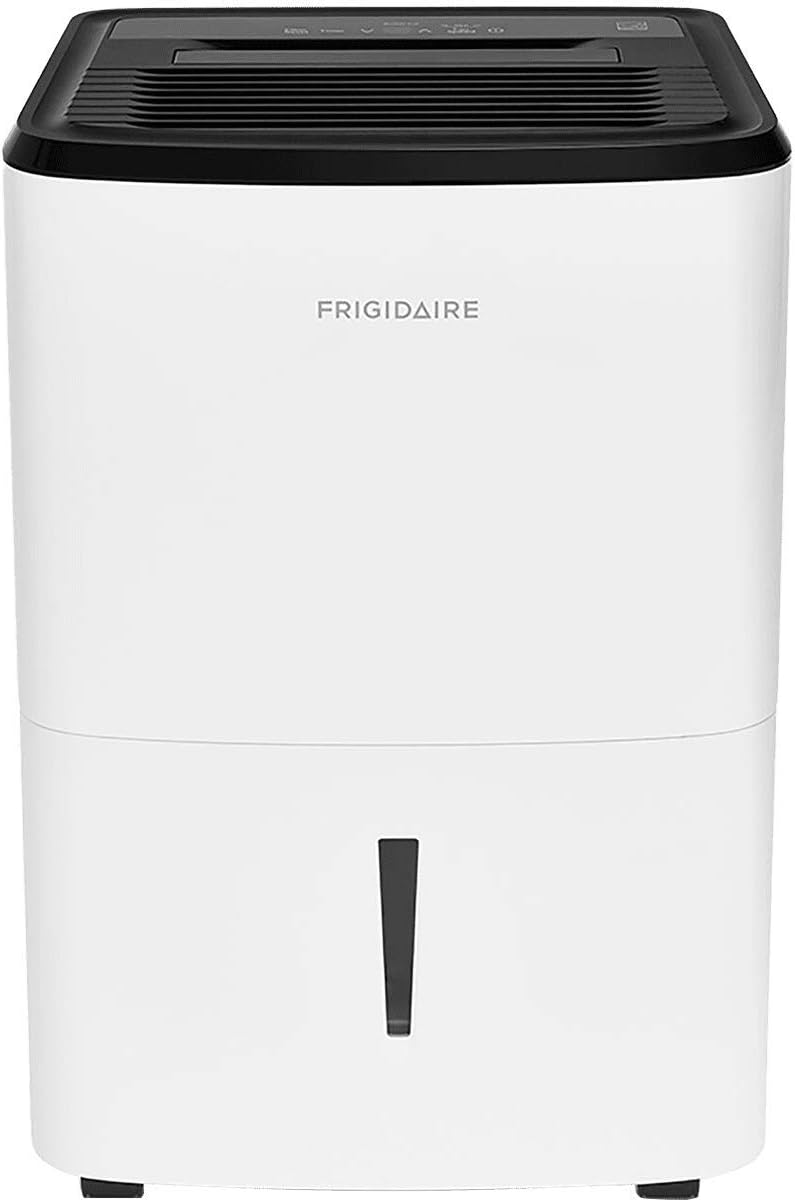
- Best simple pick: Frigidaire FFAD5033W1 — set the dial and forget it, no app
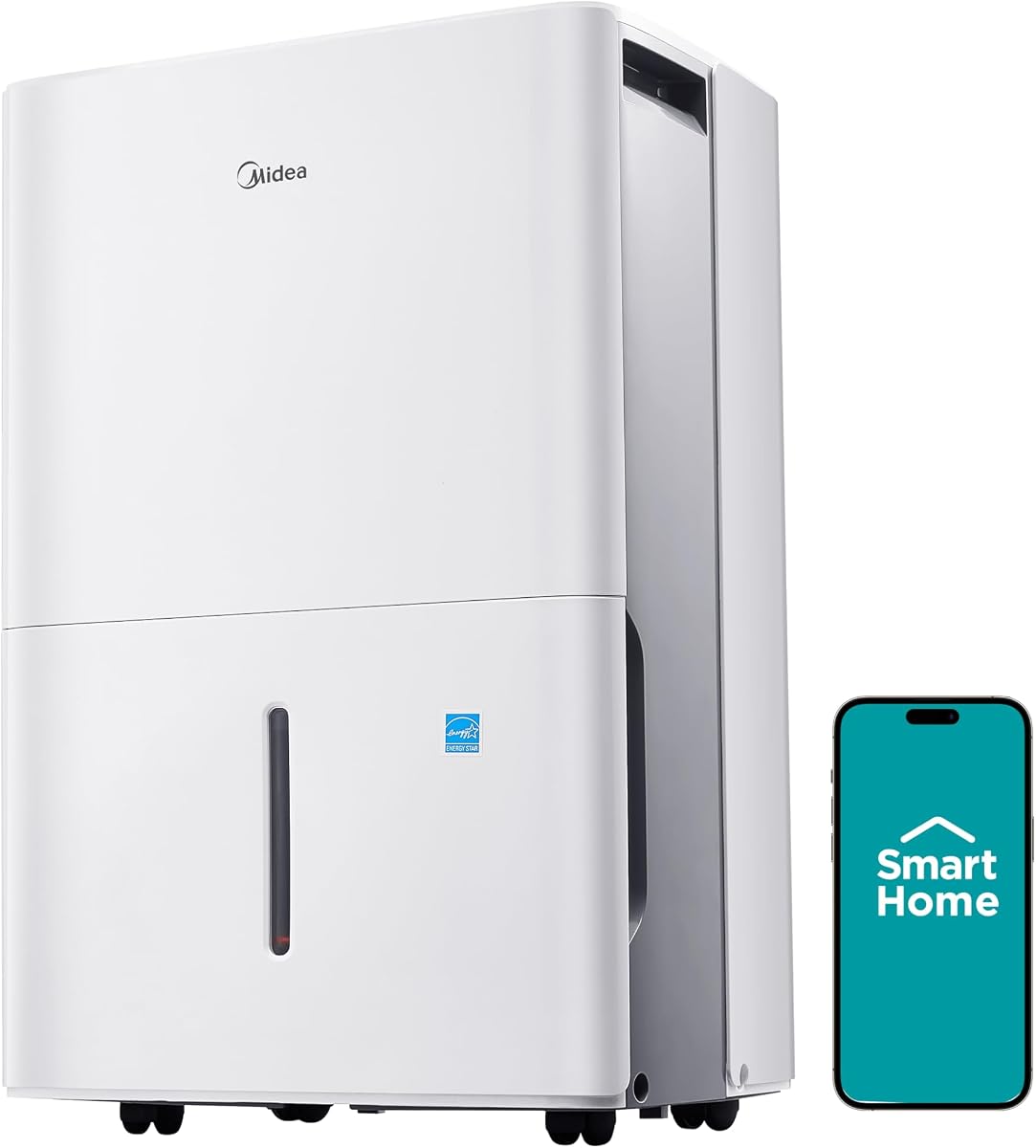
- Best for a bedroom or living room: Midea 50 Pint Wi-Fi — quiet, cheaper than the Cube
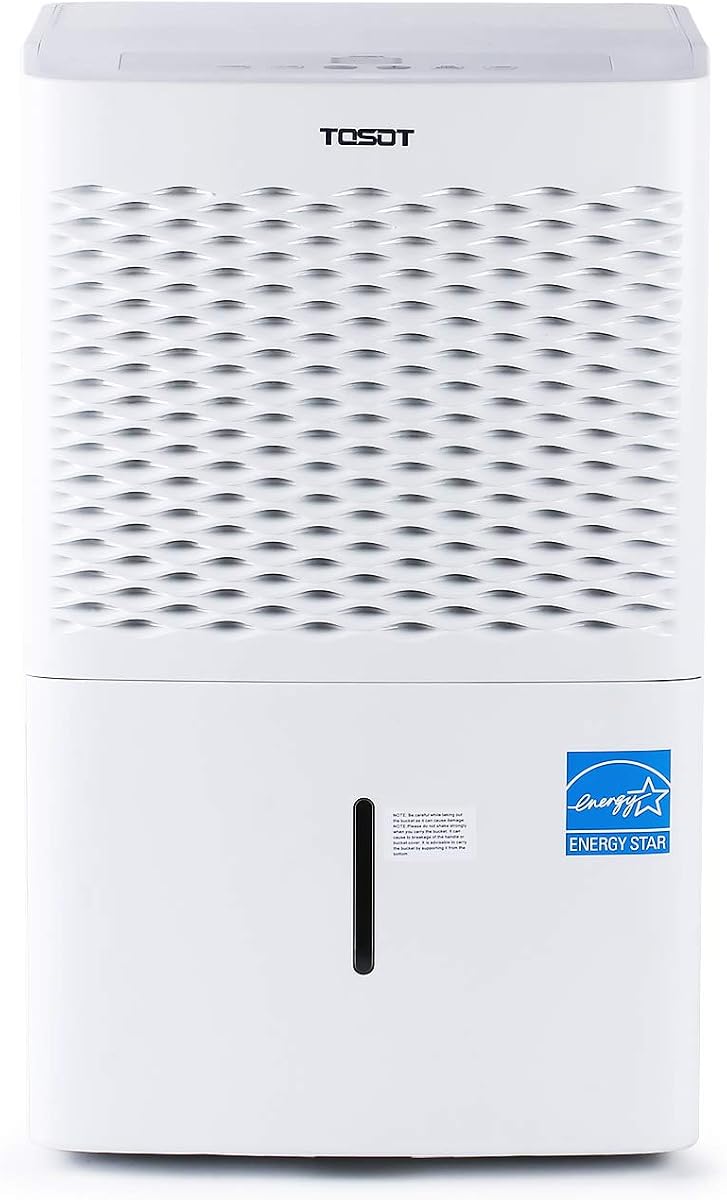
- Best with a built-in pump: Tosot 50 Pint with Pump — drains uphill, lowest price with a pump
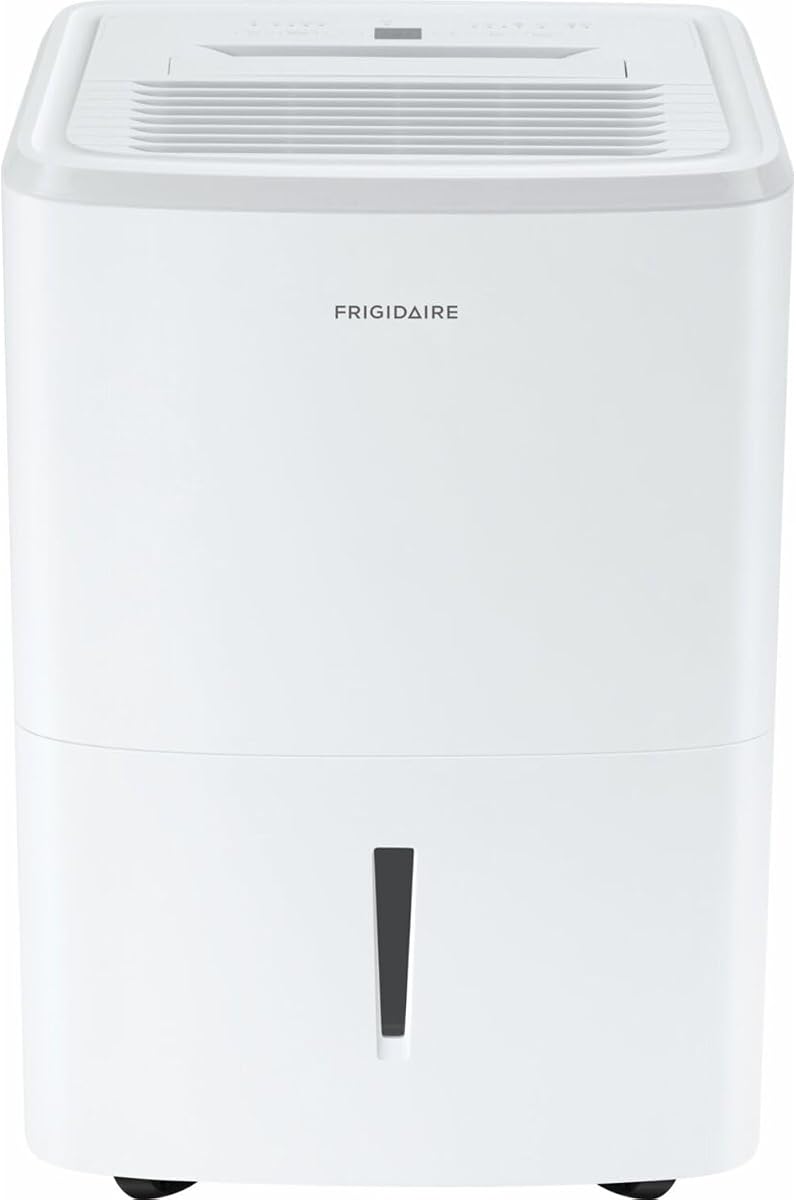
- Best app and humidistat control: Frigidaire 50 Pint Wi-Fi — schedule it, watch the humidity from your phone
- Best for a long drain run: GE 50 Pint with Built-in Pump — pushes water 15 feet up and out
Table of Contents
Best 50-Pint Dehumidifiers: Comparison
The table lines all seven up on what actually decides the purchase: real capacity, the space each one can hold, tank size, whether it has a pump, the lowest noise level, app control, and price band.
| Model | Rating | Coverage claim | Tank | Pump | App | Noise (low) | Price band |
|---|---|---|---|---|---|---|---|
| Midea Cube 50 Pint | 50 pint / day | up to 4,500 sq ft | ~1.6 gal (3x extended) | Optional model | Yes | ~51 dB | $$ |
| hOmeLabs 50 Pint | 50 pint / day | up to 4,500 sq ft | ~1.6 gal | No | Yes | ~51 dB | $$ |
| Frigidaire FFAD5033W1 | 50 pint / day | medium–large rooms | ~1.7 gal | No | No | ~52 dB | $$ |
| Midea 50 Pint Wi-Fi | 50 pint / day | up to 4,500 sq ft | ~1.6 gal | No | Yes | ~48 dB | $$ |
| Tosot 50 Pint with Pump | 50 pint / day | up to 4,500 sq ft | ~1.3 gal | Yes, internal | No | ~48 dB | $ |
| Frigidaire 50 Pint Wi-Fi | 50 pint / day | medium–large rooms | ~1.7 gal | No | Yes | ~51 dB | $$ |
| GE 50 Pint with Built-in Pump | 50 pint / day | up to 5,000 sq ft | ~1.8 gal | Yes, 15 ft lift | No | ~52 dB | $$$ |
Price bands: $ is under $220, $$ is $220 to $285, $$$ is above $285. Coverage claims are the manufacturer’s; in a genuinely damp space, plan on roughly half that figure. Noise numbers are the lowest published fan speed.
Is 50 Pints the Right Size for You?
The honest answer is that pint ratings describe a lab, not your house. But they still give you a starting point. Here is the rough guide, using the current (post-2019) labels.
| Your space | Size to buy | Why |
|---|---|---|
| One damp room, up to ~500 sq ft | 20–30 pint | A 50 would short-cycle and waste energy |
| Average basement, 800–1,500 sq ft, musty smell | 50 pint | The sweet spot for this guide |
| Main floor of a humid house, or a room with standing dampness | 50 pint | Enough headroom to pull humidity down and hold it |
| Large or very wet basement, visible water, 1,500–2,500 sq ft | 50 pint with a pump, or step to a larger unit | You will want continuous drainage, not a bucket |
| Flooded space, crawl space, or new construction drying out | Larger unit or a commercial model | A home 50-pint will run non-stop and still lose |
If your number lands right on the line between 50 and a bigger size, go up. An oversized dehumidifier on a low setting is quieter and cheaper to run than a maxed-out one that never reaches the target. For a full walk-through, our guide to choosing the right size dehumidifier has a room-by-room breakdown, and the dehumidifier buying guide covers features in more depth.
How We Picked
We started with the units that show up most in owner reviews, appliance testing, and our own reader questions, then narrowed to seven that cover different needs at this size: how fast each pulls humidity down, the power it draws to do it, noise on the lowest useful setting, how drainage works, and how the brand handles warranty claims. We left out models that are hard to find in stock and anything where the “50 pint” label was a stretch. Where a pick also appears in our basement dehumidifier guide, we look at it here for whole-home use rather than cold-basement performance.
Best Overall: Midea Cube 50 Pint
The Midea Cube 50 Pint is the unit we would put in most homes. It is the most efficient 50-pint dehumidifier we know of, drawing noticeably less power than the rest of the class to pull the same water, which matters when it runs for months. The reason to buy it, though, is the tank: the Cube pulls apart and locks into a taller shape that holds about three times what a normal unit does, so you empty it far less often, and a Cube model with a built-in pump means you never empty it at all. The app shows room humidity, sets a target from your phone, and pings you when the tank is full. The knocks are small. The lift-and-twist design takes a minute to learn, the review average sits below hOmeLabs because a heavy box invites shipping damage, and it is not the cheapest option.
Pros
- Most efficient in the class, lower power bill
- Tank holds about 3x a normal unit
- Useful app with tank-full alerts
- Pump version available
Cons
- Lift-and-twist design has a learning curve
- Reviews dragged down by shipping damage
- Not the cheapest
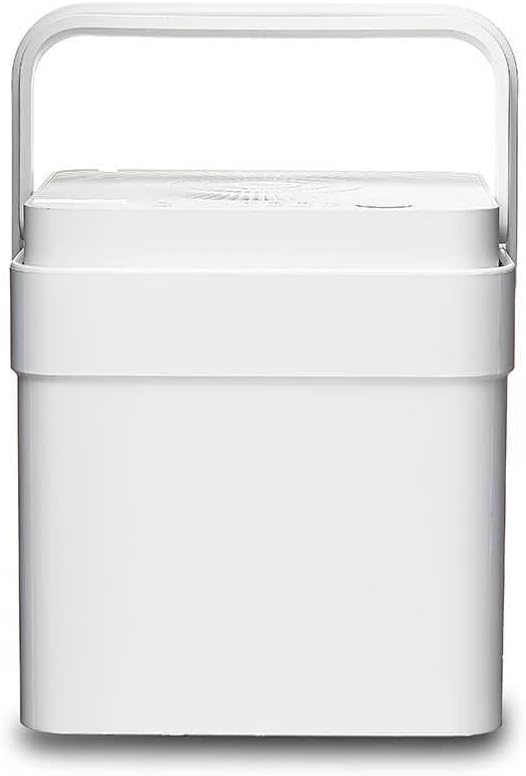
Verdict: the most efficient pick, with a tank you rarely empty.
Best Value and Safest Bet: hOmeLabs 50 Pint
The hOmeLabs 50 Pint has been the default pick at this size for years, and the review count backs it up: tens of thousands of owners, a rating that has barely moved, and a support team that ships replacement parts without a fight. It is a plain unit that does the job. Set the humidity you want, connect a gravity hose, and it holds the space without drama. The current version adds Wi-Fi and a cleaner panel. Its coverage rating is optimistic like all of them, but there is enough capacity for a normal basement or a sticky main floor. There is no pump, so a drain point above the unit means adding an external condensate pump or emptying the tank, and it runs a touch louder than the quietest picks here.
Pros
- Huge, steady review record
- Responsive warranty and parts support
- Wi-Fi and simple controls
- Good price for the capacity
Cons
- No built-in pump
- Slightly louder than the quiet picks
- Plain looks
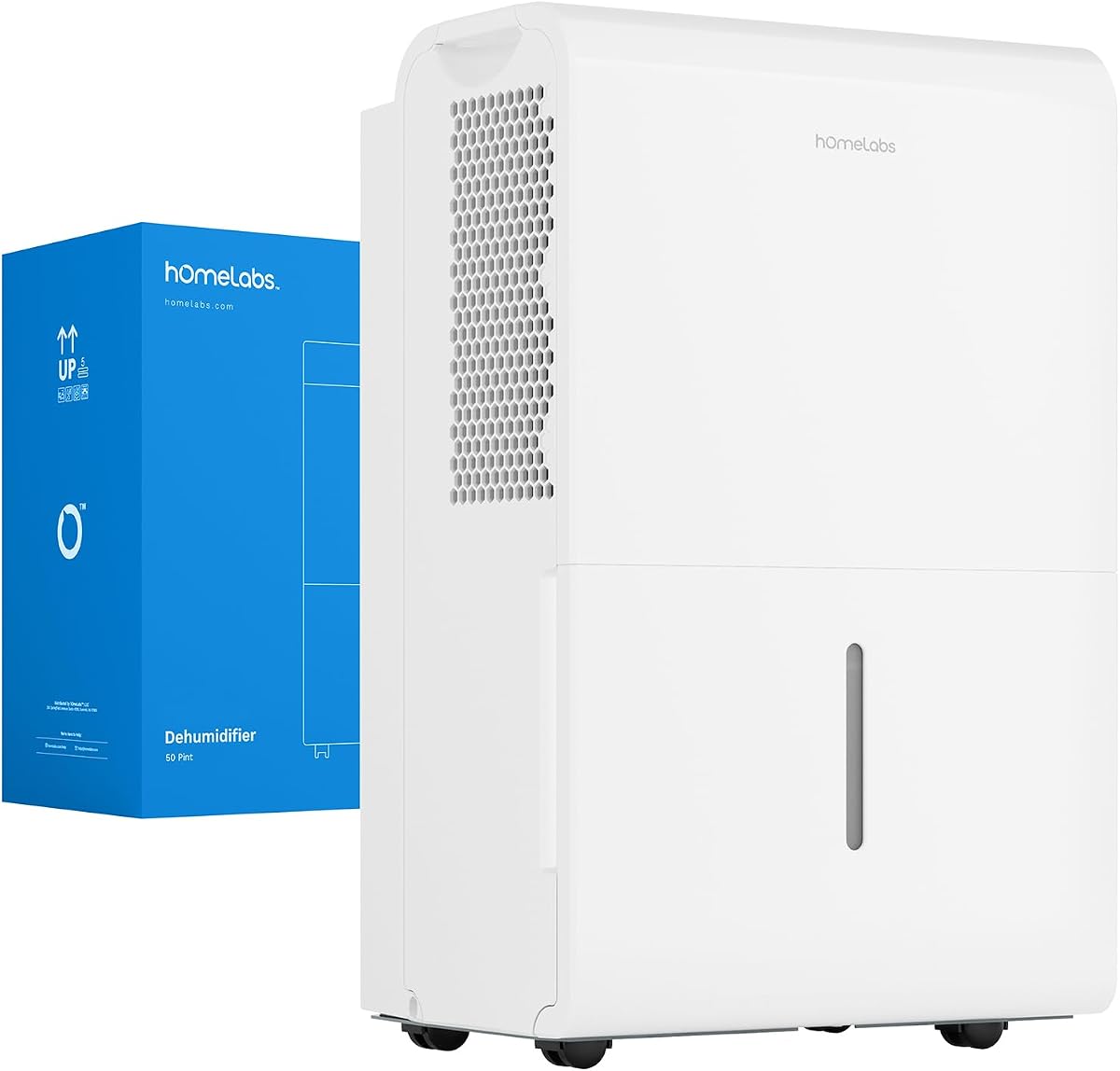
Verdict: the low-risk choice; buy it if you just want it handled. See our full hOmeLabs 50 Pint review.
Best Simple Pick: Frigidaire FFAD5033W1
Not everyone wants an app. The Frigidaire FFAD5033W1 is for people who want to turn a dial, pick a humidity level, and never think about it again. It is a well-built, boring machine with a washable antibacterial filter, a full-tank shutoff, a continuous-drain port for a gravity hose, and one of the higher airflow rates in the class, which helps it dry a room evenly. Frigidaire has made this line for years and the parts are easy to find. The trade-offs: no Wi-Fi, no pump, and a bucket that is a little awkward to carry to the sink without sloshing. If your drain point is below the unit and you like simple, this is the one. Our Frigidaire FFAD7033R1 review covers the larger sibling if you need more.
Pros
- Dead-simple controls, no app needed
- High airflow dries a room evenly
- Washable filter, easy-to-find parts
- Long, stable track record
Cons
- No Wi-Fi or pump
- Bucket sloshes when you carry it
- Coverage claim is optimistic
Verdict: the no-nonsense pick for a below-grade drain.
Best for a Bedroom or Living Room: Midea 50 Pint Wi-Fi
The regular Midea 50 Pint Wi-Fi, the non-Cube model, is the one for a space where people spend time. It runs quieter than most of the class on low, the cabinet is plain enough to blend in, and it costs less than the Cube while keeping the app, Alexa support, and reusable filter. Capacity is the same 50 pints, enough for a damp main floor or a mid-size basement. It has a continuous-drain port but no pump. The review count is modest because the listing is new, but Midea’s dehumidifier platform is well proven. If quiet matters more than a giant tank, buy this instead of the Cube.
Pros
- Quiet on low, good for living spaces
- Cheaper than the Cube, same capacity
- App and Alexa support
- Reusable, washable filter
Cons
- No pump
- Newer listing, fewer reviews
- Standard-size tank
Verdict: the quiet Midea for rooms you actually sit in.
Best with a Built-In Pump: Tosot 50 Pint with Pump
A built-in pump usually adds $80 to $100 to the price. The Tosot 50 Pint with Pump is the exception, coming in under $200 with a real internal pump that pushes water up to 15 feet in any direction, so you can drain into a laundry sink, a window well, or up and out of the basement. Tosot is Gree’s consumer brand, the build uses solid copper tubing, and owners consistently call it quiet for its size. It was sold as a 70-pint before the 2019 relabel, so it hits above its current number. The controls are basic, there is no app, and the pump adds a faint hum you can hear at night. But for the money, nothing else gives you hands-off drainage like this.
Pros
- Real internal pump under $200
- Pushes water 15 ft in any direction
- Quiet compressor for the size
- Solid copper tubing, good build
Cons
- Basic controls, no app
- Faint pump hum at night
- Smaller tank than average
Verdict: the cheapest way to get true hands-off drainage.
Best App and Humidistat Control: Frigidaire 50 Pint Wi-Fi
The Frigidaire 50 Pint Wi-Fi pairs Frigidaire’s reliable compressor platform with a full app. You can set a target humidity, build a schedule, and watch the room’s reading from your phone, which is handy for a basement you do not visit often. It is marketed as quiet and owners agree it is on the calmer end of the class. It has a continuous-drain option for a gravity hose but no pump. Reviews are still building since it is a recent model, but Frigidaire’s dehumidifiers have a long history and this one has landed well so far. Choose it over the plain FFAD5033W1 if you want to keep an eye on things remotely, and over the Midea options if you prefer Frigidaire’s app and service network.
Pros
- Full app with scheduling and remote monitoring
- Quiet for the class
- Proven Frigidaire compressor platform
- Continuous-drain port included
Cons
- No pump
- Fewer reviews so far
- App occasionally drops the connection
Verdict: the pick for watching a far-off basement from your couch.
Best for a Long Drain Run: GE 50 Pint with Built-In Pump
The GE 50 Pint with Built-In Pump is built around drainage. Its pump lifts water 15 feet straight up and the included hose runs 16 feet, so it can move condensate out of a deep basement, across a room to a standpipe, or up and out a window without you touching a bucket. It has a humidistat that holds a set level, a continuous-drain option for gravity backup, and GE’s service network behind it. The catch is the review record: it is a recent listing with a thin rating history, so you are buying more on the GE name than on a long owner track record. If your one hard requirement is pushing water somewhere far away, it does that better than anything else here. If you have a nearby floor drain, a cheaper pick will serve you just as well.
Pros
- Pump lifts water 15 ft, 16 ft hose
- Humidistat holds a set level
- Continuous-drain backup option
- GE service network
Cons
- Newer listing, modest rating
- Some reports of pump noise over time
- Priciest pick here
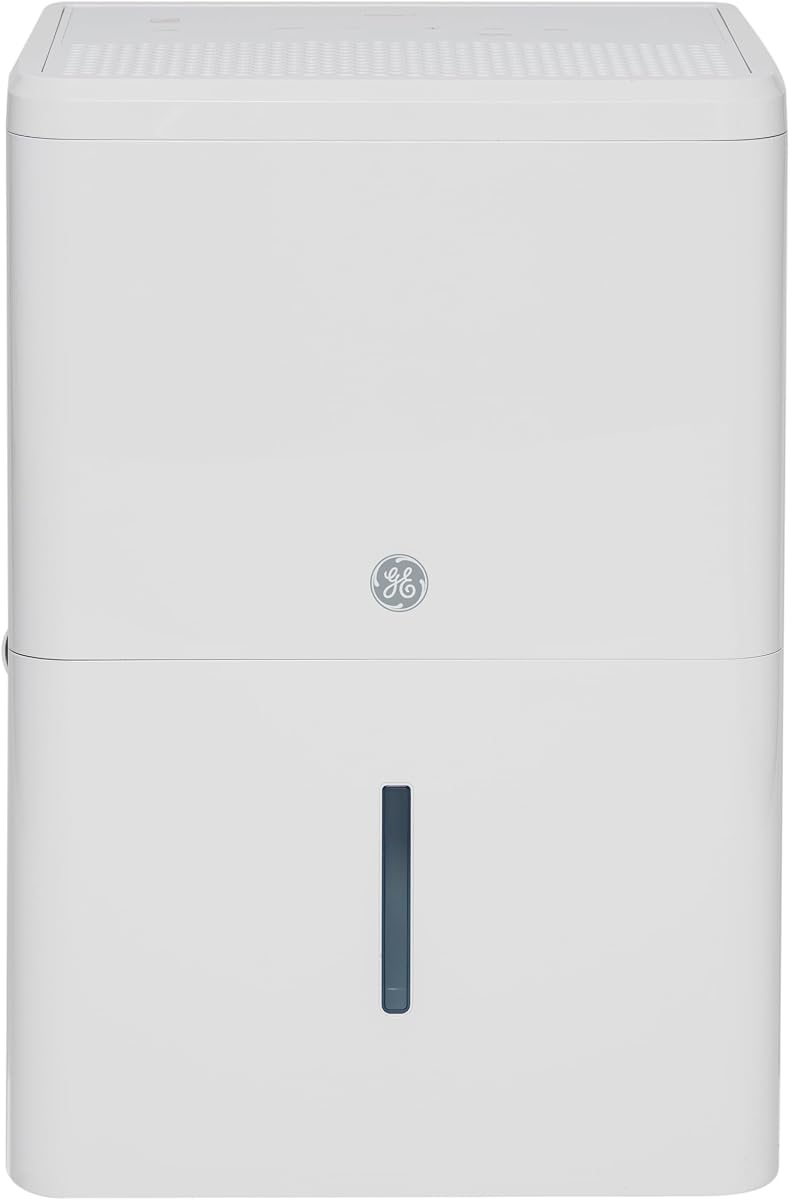
Verdict: buy it only if you need to move water a long way.
Why a “50 Pint” Today Was a “70 Pint” in 2018
The DOE retest in 2019 knocked roughly a third off every printed capacity without changing a single machine, so a modern 50-pint model is a large-capacity home unit, not a mid-size one. The practical fallout: if you are cross-shopping an older dehumidifier against a new one, the pints on the box are not the same measurement, and a used “70 pint” from 2017 is about equal to a new 50. Buy off the current DOE number and the room-size math in our dehumidifier size guide.
Draining a 50-Pint Dehumidifier
You have three options, and the right one depends on where the water can go.
Tank. Every unit here has a bucket, 1.3 to 1.8 gallons. In a damp space a 50-pint unit fills that in under a day, so you empty it once or twice daily. Fine for a short project, tiring as a routine.
Gravity hose. Every unit here also has a continuous-drain port. Screw on a garden hose and run it to a floor drain, sump pit, or lower sink. This is what most people should use, and it works whenever the drain point sits below the port, which in a basement it usually does.
Pump. If the drain point is higher than the unit, you need a pump. The Tosot and GE have one built in; for any other model, add an external condensate pump for about $40. It is one more thing that can clog, so check it now and then if a failure would flood a finished room.
What a 50-Pint Dehumidifier Costs to Run
A modern 50-pint unit draws roughly 500 to 650 watts while the compressor runs, but it cycles once the room hits your target. Figure an average near 300 to 400 watts over a day in a moderately damp basement, about 8 kWh a day or 240 kWh a month.
At the U.S. average residential rate near 17 cents per kWh, that is about $40 a month during humid season, dropping sharply once the weather dries out. A very wet basement running the unit most of the time can push $60 or more. An efficient model like the Midea Cube trims 15 to 25 percent off that, and sealing air leaks and covering a dirt crawl space floor cuts the moisture load so the unit runs less. Drier air also feels cooler, so a dehumidifier can ease your AC’s load a little in summer, though not dramatically.
Noise, Placement, and Maintenance
Noise. Most 50-pint units land between 48 and 53 decibels on low, about a quiet fridge. Fine in a basement, noticeable in a bedroom, so if people share the room, pick a quieter model and set it a few feet from where you sit.
Placement. Put it near the dampest spot with a foot of clearance around the intake and outlet, and keep doors and windows closed while it runs or you are dehumidifying the outdoors. On concrete, a small pad under the feet cuts vibration noise.
Maintenance. Rinse the filter every three to four weeks; a clogged one chokes airflow and drops capacity. Once a season, vacuum the coils through the back grille. If it ever stops pulling water, our guide to a dehumidifier not collecting water covers the usual causes. Before winter storage, drain it fully and run the fan for half an hour to dry the inside.
FAQ
Is a 50-pint dehumidifier enough for a basement?
For most basements, yes. A modern 50-pint unit is the old 70-pint size and handles a typical 800 to 1,500 square foot basement with a musty smell. If the basement is very large, has visible water, or floods, you will want a pump and possibly a bigger unit. Our basement dehumidifier guide covers those cases.
50 pint or 70 pint, which should I get?
Remember the labels shifted in 2019, so today’s 70-pint is what a 95-pint would have been called in 2018. Buy a 50 for an ordinary damp basement or a humid main floor. Step up to a 70 only if the space is large, the dampness is severe, or you are drying out new construction or a flood.
How many square feet does a 50-pint dehumidifier cover?
Boxes say 3,000 to 4,500 square feet, but that is a lightly damp room. In a genuinely musty basement, plan on about half that, so 1,500 to 2,500 square feet. In a wet space with standing water, less again.
Do I need a 50-pint dehumidifier with a pump?
Only if the place you want the water to go is higher than the machine, like an upstairs sink or a window. If a floor drain, sump pit, or lower sink is nearby, a plain gravity hose does it for free and never breaks.
How much does it cost to run a 50-pint dehumidifier?
Roughly $40 a month during humid season for an average basement, more if the space is very wet, much less once the weather dries out. An efficient model like the Midea Cube trims 15 to 25 percent off that. See the running-cost section above for the math.
Can a 50-pint dehumidifier be too big for a room?
Yes. In one small, only slightly damp room a 50 will hit the target fast, shut off, and short-cycle, which wears the compressor and wastes power. For a single room under about 500 square feet, a 20 or 30-pint unit is the better match.
How long should a 50-pint dehumidifier last?
Plan on three to five years of heavy seasonal use for a mainstream unit, longer if you keep the filter clean and store it drained over winter. The compressor is the part that eventually goes; a good warranty on the sealed system is worth having.
Bottom Line
Fifty pints is the right size for a normal damp basement or a sticky main floor, and thanks to the 2019 rating change it pulls more water than the number implies. For most people the Midea Cube 50 Pint is the best buy: lowest running cost, a tank you rarely empty, and a genuinely useful app. If you would rather bet on the longest track record, the hOmeLabs 50 Pint has earned it over tens of thousands of homes. And if you want hands-off drainage without paying a premium, the Tosot 50 Pint with Pump is the value of the group. Whichever you pick, run a gravity hose if you can, keep the filter clean, and set a humidity target instead of running it wide open. If you are still not sure about size, our commercial dehumidifier overview and the Midea 35 Pint review bracket the sizes on either side of 50.