

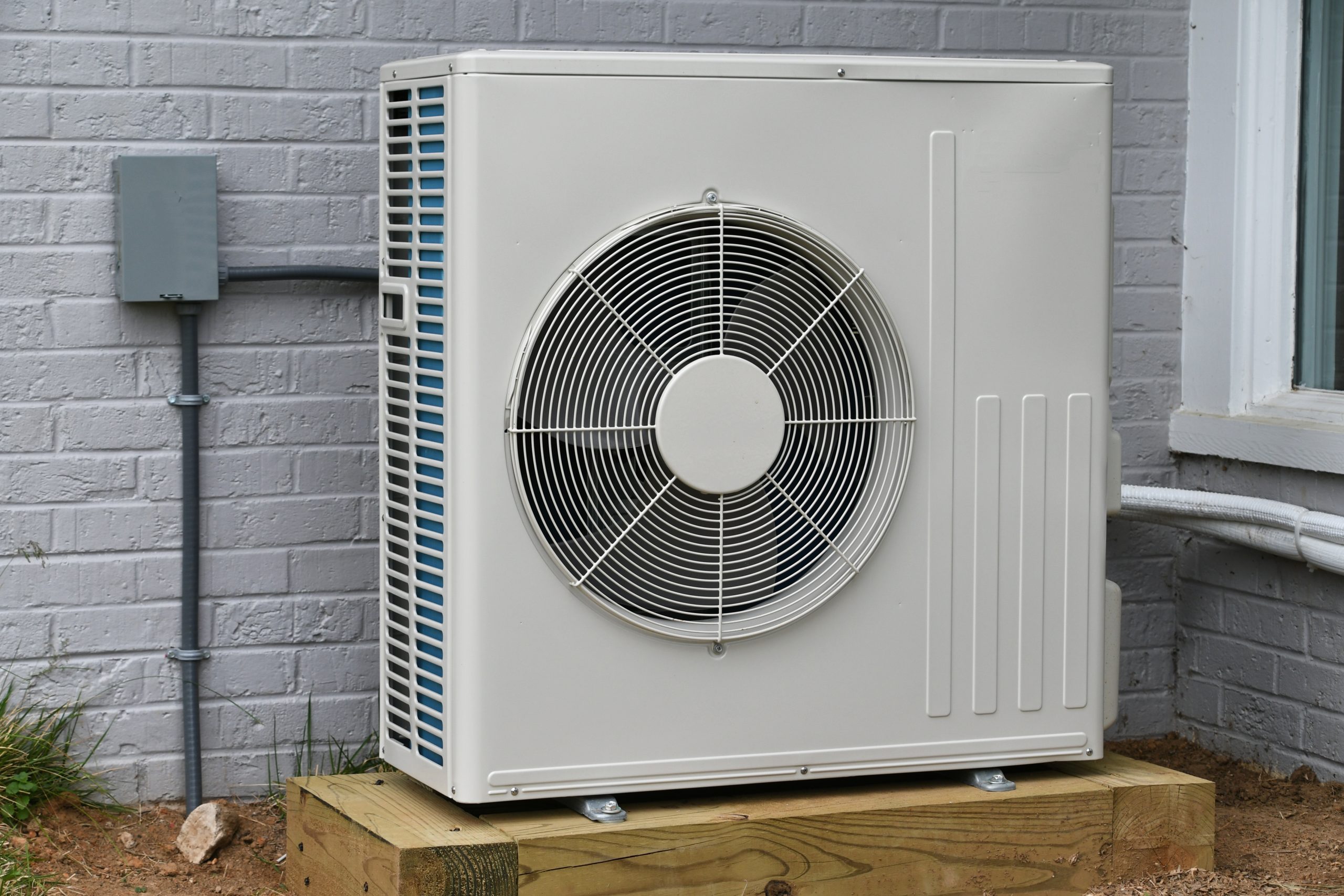
Choosing the right air conditioner size means matching the BTU rating to your room’s real air volume, not just its floor space. A 350 sq ft room with a standard 8-foot ceiling needs roughly 8,000 BTU — but sun exposure, ceiling height, and whether the room is a kitchen can each push that number up or down by thousands of BTU. Undersize it and the unit runs constantly without cooling the room; oversize it and you waste money on equipment and electricity you don’t need.
This guide reflects current BTU sizing standards used across major AC manufacturers as of 2026. Sizing methodology cross-checked against published room-size guidance tables.
Most people size an air conditioner by memory or guesswork — “my old apartment had an 8,000 BTU unit and it seemed fine.” That approach ignores the two things that actually determine cooling need: how much air volume the unit has to move, and how much extra heat load the room generates from sun, cooking, and occupants. Get those right and sizing stops being a guess.
Table of Contents
How Many BTU Per Square Foot Do You Actually Need?
The standard reference used across most AC buying guides isn’t a flat “20 BTU per square foot” rule — it’s a stepped table that assumes a typical 8-foot ceiling and average conditions, then scales down slightly as rooms get larger (a bigger room needs less BTU per square foot than a small one, since surface-area-to-volume ratios shrink and shared walls do more of the insulating work).
Roughly: a 150 sq ft room needs about 5,000 BTU, a 350 sq ft room needs about 8,000 BTU, and a 700 sq ft room needs about 14,000 BTU — not simply double the 350 sq ft figure. This is why a straight per-square-foot multiplier undersizes small rooms and oversizes large ones if you’re not careful.
- 100–150 sq ft — 5,000 BTU, typical for a small bedroom or home office
- 300–350 sq ft — 7,000–8,000 BTU, a standard bedroom or den
- 500–550 sq ft — 11,000–12,000 BTU, a large bedroom or small open-plan living area
- 700–1,000 sq ft — 14,000–18,000 BTU, a full living room or small apartment
Why Ceiling Height and Sun Exposure Change the Math
Square footage alone tells you the floor area, but an air conditioner has to cool the entire volume of air in the room — and two other factors shift that number further than most buyers expect. Ceiling height works the same way it does for any HVAC sizing math: a room with a 10–12 foot vaulted ceiling has significantly more air volume than the same footprint with a standard 8-foot ceiling, and the BTU rating needs to scale with it.
Sun exposure matters just as much. A room with large west-facing windows that gets direct afternoon sun absorbs meaningfully more heat than an equivalent shaded room, even at the identical square footage and ceiling height. Most sizing guidance adds roughly 10% more BTU for a very sunny room and allows about 10% less for a consistently shaded one. Add a third factor — a kitchen adds about 4,000 BTU on its own, since stovetops and ovens generate substantial extra heat load — and it’s easy to see why two rooms of identical size can need meaningfully different AC units.
LengthWidthCeilingHeightSun exposureVolume = L × W × H
Calculate Your Exact BTU Needs
The reference table above gives a solid starting point, but it assumes a standard 8-foot ceiling, average sun, and no kitchen heat load — it can’t account for your specific room. For an exact number based on your real dimensions, sun exposure, and occupancy, use the calculator below:
Add 600 BTU for each person beyond 2 regularly using the room.
Minimum BTU you need
Floor area
144 sq ft
Base BTU
2,880
Adjustments
+0
Real air conditioners that clear this BTU
Ceiling Height ÷ 8, then ±10% for sun exposure, +600 BTU per occupant beyond 2, and +4,000 BTU if the room is a kitchen. This mirrors the sizing guidance most AC manufacturers and energy-efficiency guides publish.
Recommended Air Conditioner for a 350 sq ft Room
Midea 8,000 BTU U-Shaped Window AC
| BTU | 8,000 |
| Coverage (8ft ceiling) | Up to 350 sq ft |
| Noise level | Ultra-quiet U-shaped design |
| Install type | Window-mounted, open-window flexibility |
| Best for | Standard bedrooms and dens up to 350 sq ft |
Air Conditioner Size Chart: BTU by Room Size
| Room Size | Recommended BTU |
|---|---|
| 150 sq ft | 5,000 |
| 300 sq ft | 7,000 |
| 500 sq ft | 11,000 |
| 800 sq ft | 15,300 |
Assumes a standard 8-foot ceiling and average sun exposure. Add roughly 10% for a very sunny room, 4,000 BTU for a kitchen, or run your exact numbers through the calculator above if your ceiling is taller than 8 feet.
Central Air Conditioner Sizing by House Square Footage
Everything above covers sizing a single window or portable unit for one room. Sizing central air for a whole house is a different calculation — contractors size central systems in tons (1 ton = 12,000 BTU) using roughly 500–600 sq ft per ton in an average climate, not the same BTU-per-square-foot math a single room uses. A bigger house doesn’t need proportionally more BTU per square foot the way a single room does; shared walls, consistent insulation, and whole-building thermal mass make larger homes more efficient to cool per square foot.
| House Size | Central AC Size | BTU |
|---|---|---|
| 1,500 sq ft | 3 tons | 36,000 |
| 2,000 sq ft | 3.5 tons | 42,000 |
| 2,500 sq ft | 5 tons | 60,000 |
| 3,000 sq ft | ~6 tons total* | ~72,000* |
| 3,500 sq ft | ~7 tons total* | ~84,000* |
| 4,000 sq ft | ~8 tons total* | ~96,000* |
| 4,500 sq ft | ~9 tons total* | ~108,000* |
| 5,000 sq ft | ~10 tons total* | ~120,000* |
| 10,000 sq ft | ~20 tons total* | ~240,000* |
*Homes above roughly 2,500–3,000 sq ft almost always use two or more separate zoned systems rather than one oversized unit — a single central air system that large would cycle unevenly and leave some rooms over- or under-cooled. The figures above for 3,000+ sq ft represent total combined capacity across multiple systems, not a single unit’s spec sheet. At 10,000 sq ft you’re well into commercial-scale HVAC design, where a licensed contractor’s Manual J load calculation (accounting for your specific climate zone, insulation, window count, and orientation) replaces any square-footage rule of thumb — the table above is a starting reference point for a conversation with a contractor, not a substitute for one.
Climate Zone and Insulation: Additional BTU Adjustments
The tables above assume a moderate climate and average insulation — two more factors that shift your real number meaningfully. Climate zone changes the sq-ft-per-ton ratio directly: hot, humid regions (the Gulf Coast, the Southwest, Florida) typically need closer to 400–500 sq ft per ton rather than the 500–600 sq ft used above, since the unit fights a larger indoor-outdoor temperature difference for more hours per day. Cooler northern climates can often use 600–700 sq ft per ton for the same square footage.
Insulation quality matters just as much, independent of climate. A newer, well-insulated, well-sealed home holds cooled air efficiently and can size toward the lower end of any range above. An older home with single-pane windows, minimal attic insulation, or noticeable drafts loses cooled air faster and should size toward the higher end — sometimes adding another 10–15% on top of the base figure. If your home has both a hot climate and poor insulation, those two adjustments stack, and a professional load calculation becomes worth the cost rather than optional.
BTU vs. Manufacturer Room Coverage: Why the Numbers Don’t Match
A common point of confusion: going from an 8,000 BTU unit to a 12,000 BTU unit is a 50% increase in BTU, but the manufacturer’s claimed coverage often only grows from around 350 sq ft to 550 sq ft — about 57% more, not a clean 50%. Neither number is wrong; BTU requirements don’t scale in a straight line with square footage, since a bigger room’s surface-area-to-volume ratio is more efficient (less relative heat gain through walls and windows per square foot of floor).
The practical takeaway: don’t assume a unit rated “50% more BTU” covers “50% more room.” Compare units by their real, tested coverage claim at the same conditions (ceiling height, climate), not just the raw BTU number — or better, run your own room through the calculator above so you’re comparing your actual required BTU against a unit’s actual rated capacity.
8,000 BTU350 sq ft coverage12,000 BTU550 sq ft coverage+50% BTU delivers +57% coverage — not a 1:1 ratio
Where to Place Your Air Conditioner for Best Results
Even a correctly sized unit underperforms if it’s installed or positioned poorly. A few rules that make a measurable difference:
- Avoid direct afternoon sun on the unit itself — a window AC baking in direct sun works harder to cool the same air
- Keep the airflow path clear — don’t block the front or sides with furniture, curtains, or blinds
- Seal the window gaps — even small air leaks around a window unit let warm air back in and reduce effective cooling
- Central location beats a corner — a unit centered on the longest wall distributes cool air more evenly than one tucked in a corner
- Close doors and vents to unused rooms — don’t make the unit cool space you’re not using
Air Conditioner Running Cost by BTU Size
BTU size also drives your electricity bill, since a bigger unit draws more power whenever it’s running. A rough way to estimate: divide BTU by the unit’s EER (Energy Efficiency Ratio, printed on the spec sheet or EnergyGuide label) to get wattage, then multiply by hours of use and your local electricity rate.
For example, an 8,000 BTU unit with an EER of 11 draws about 727 watts (8,000 ÷ 11). Run it 8 hours a day at the U.S. average residential rate of roughly $0.16 per kWh, and that’s about 5.8 kWh per day — around $0.93 a day, or roughly $28 a month during heavy summer use. A 12,000 BTU unit at a similar EER draws proportionally more, so sizing correctly (rather than buying oversized “just in case”) directly controls your cooling costs, not just your comfort.
Higher-EER units cost more upfront but use less power for the same BTU output — worth comparing on the spec sheet alongside the BTU rating itself, especially for a unit that will run for months at a time.
Best Air Conditioner by Use Case
Room size is only one input — what kind of space and equipment fits the situation matters just as much:
- Bedroom: prioritize a quiet unit at low/sleep mode over raw BTU — see our Friedrich Chill Premier 8,000 BTU review for a genuinely quiet window option
- No window access or renting restrictions: a portable unit avoids permanent window installation — see our hOmeLabs 14,000 BTU portable AC review
- Whole apartment or open floor plan: a single window/portable unit usually can’t keep up — a ductless mini-split handles multiple rooms far more efficiently, like our Pioneer WYS018GMFI22RL mini-split review or the higher-capacity MrCool 36,000 BTU DIY mini-split review
- No exterior wall or window at all: a through-the-wall unit is the fallback option — see our Friedrich Uni-Fit through-the-wall AC review
- Whole-home cooling: once you’re sizing beyond a few rooms, central air is the more efficient long-term choice — see our Bryant Preferred central air review or the Goodman GLXS4BA4210 3.5-ton review
If humidity is as much of a concern as heat in your space, sizing a dehumidifier follows a similar room-size-first logic — our dehumidifier buying guide walks through that math the same way this guide does for BTU.
FAQ
What’s BTU, and why does it matter for air conditioners?
BTU (British Thermal Unit) measures how much heat an air conditioner can remove from a room per hour. Higher BTU means more cooling capacity for a given room size — but more isn’t automatically better, since an oversized unit cycles on and off too quickly to properly dehumidify the air.
What’s the difference between BTU and tonnage?
Tonnage is just BTU expressed differently for larger, whole-home systems: 1 ton equals 12,000 BTU. A window or portable AC is almost always sized in BTU directly; central air systems are typically sized in tons (e.g., a “3-ton” system is 36,000 BTU).
Can I use an oversized AC unit?
You can, but it’s wasteful. An oversized unit cools the air quickly but shuts off before it has time to remove humidity, leaving the room feeling cold and clammy rather than genuinely comfortable — and it costs more upfront and in electricity than a correctly sized unit run at a comfortable, steady pace.
Does placement matter?
Yes. Direct sun on the unit itself, blocked airflow, and unsealed window gaps can all measurably reduce real-world cooling performance, even on a correctly sized unit. See the placement section above for the full list.
Why do two units with similar BTU ratings cover different room sizes?
BTU-to-coverage isn’t a straight line — larger rooms need proportionally less BTU per square foot than small ones, so a 50% jump in BTU can translate to a 57%+ jump in rated coverage. Compare a unit’s actual tested coverage claim, or run your own room through the calculator above, rather than assuming BTU and coverage scale 1:1.
Does insulation quality affect BTU sizing?
Yes, significantly. A well-insulated, well-sealed home can size toward the lower end of any BTU range, while an older home with poor insulation or drafty windows should add 10–15% on top of the base figure — it loses cooled air faster, so the unit works harder to maintain the same temperature.
How much does it cost to run a window air conditioner?
It depends on BTU size and efficiency (EER rating), but as a rough example, an 8,000 BTU unit with an EER of 11 costs around $0.93 a day (about $28 a month) running 8 hours daily at average U.S. electricity rates. See the running cost section above for the full calculation.
Bottom Line
Choosing the right air conditioner size comes down to three numbers: your room’s real volume (including ceiling height), how much extra heat load it gets from sun and cooking, and the BTU rating that covers both. Use the calculator above to get an exact BTU target, then match it against real, currently-available units rather than assuming bigger is always better.