
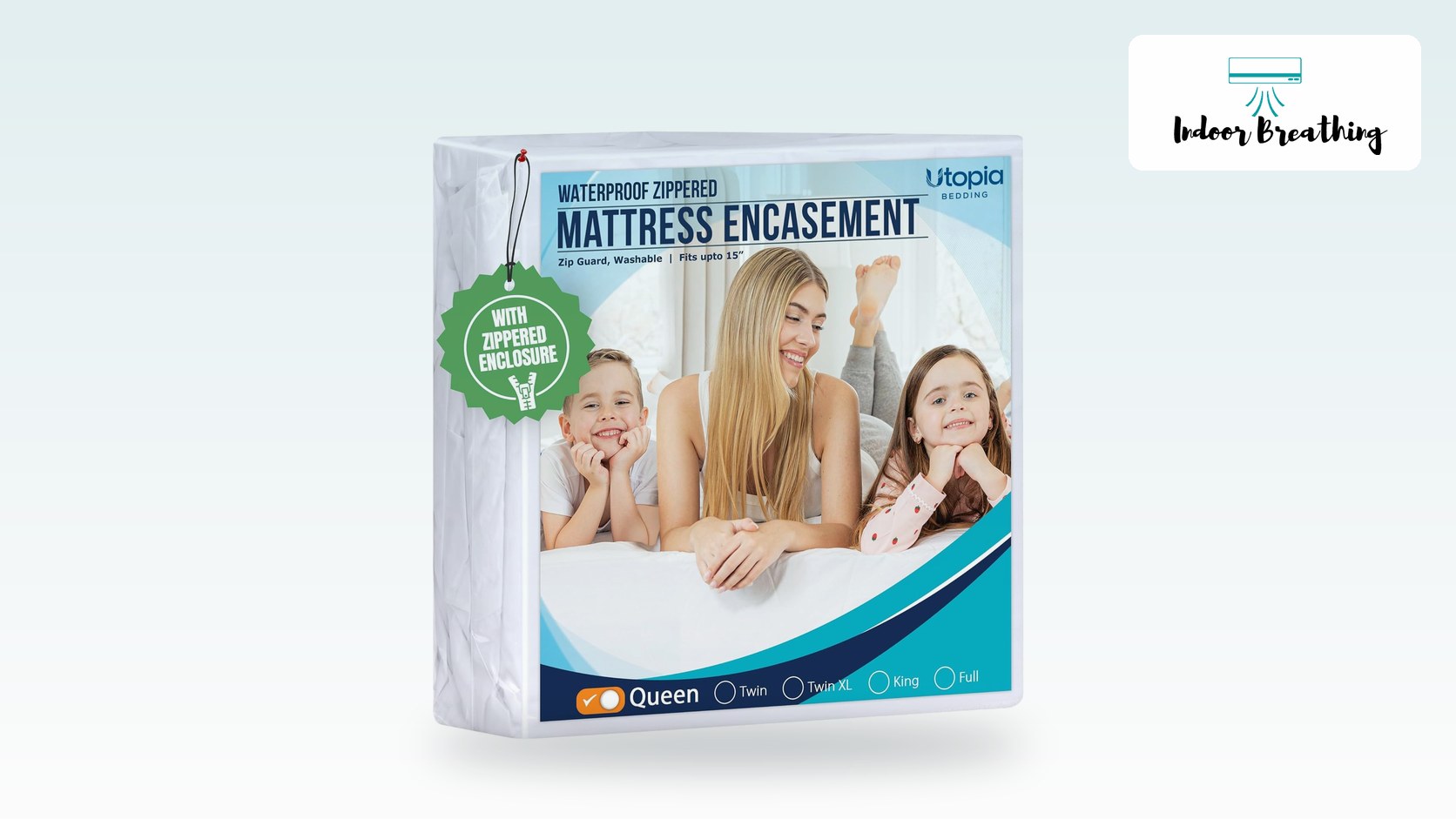
A mattress is a dust mite hotel with free room service. Skin flakes in, warm sleepers in, mites and their droppings everywhere. The cheapest fix is a zippered cover, but only some covers are worth buying, and none of them is a full cure.
Three popular encasements on Amazon run from $25 to $65, all rated 4.6 stars. Here is how they compare, what to check on any label, and what else to do so the cover actually helps.
Table of Contents
Dust mite encasements at a glance
Prices checked October 2026, shown for the size listed, and change by size and over time.
What to look for
- A full zipper seal. Mites and droppings escape through gaps, so the zipper should close the whole cover.
- Tight weave. The fabric should be woven too finely for mites to pass through.
- Right depth. Measure the mattress and match the size.
- Cover the box spring too. Mites live there as well.
- Breathable top. Plastic-feeling covers get hot and noisy.
Common mistakes
- Buying a plain mattress protector with no zipper. It does not seal the mattress.
- Forgetting the pillows and box spring.
- Skipping the weekly hot wash on sheets and pillow covers.
- Letting bedroom humidity stay above 50 percent.
Picking between them
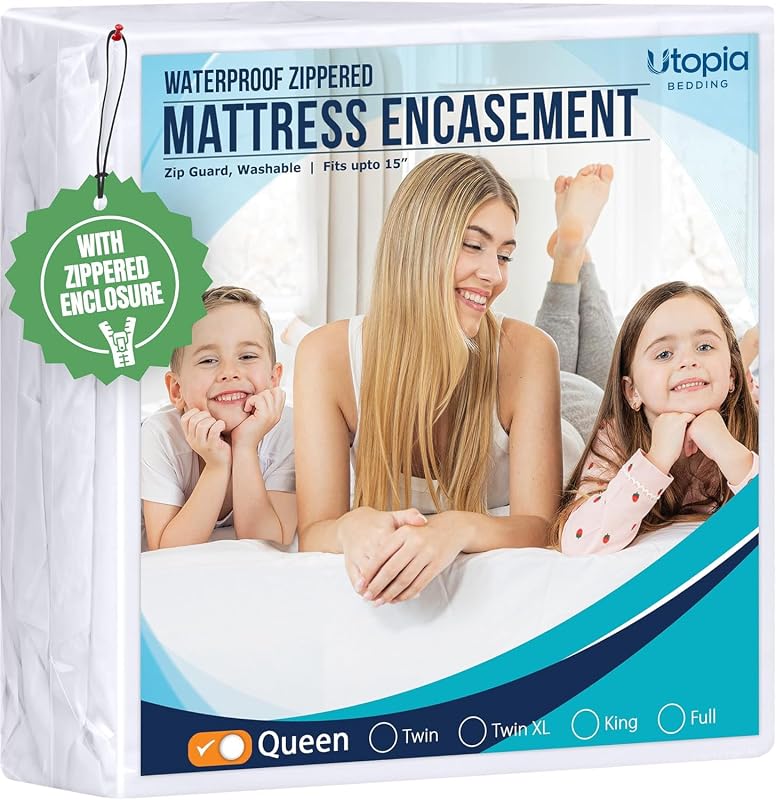
- Utopia ($25.19): the lowest price with an enormous review base. Best for a first try.
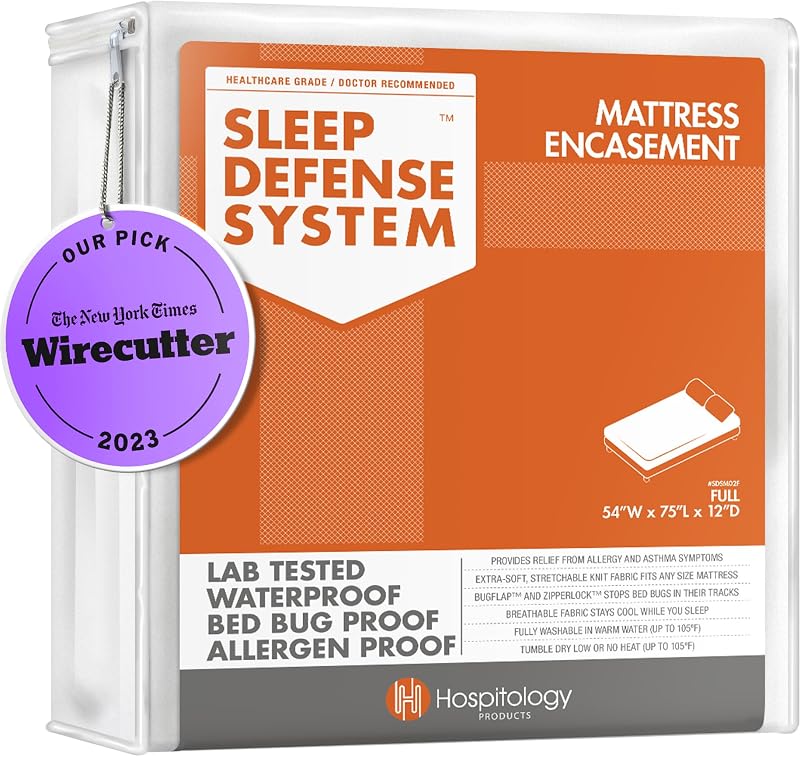
- Hospitology ($41.00): a polyester knit that the listing calls breathable and waterproof.
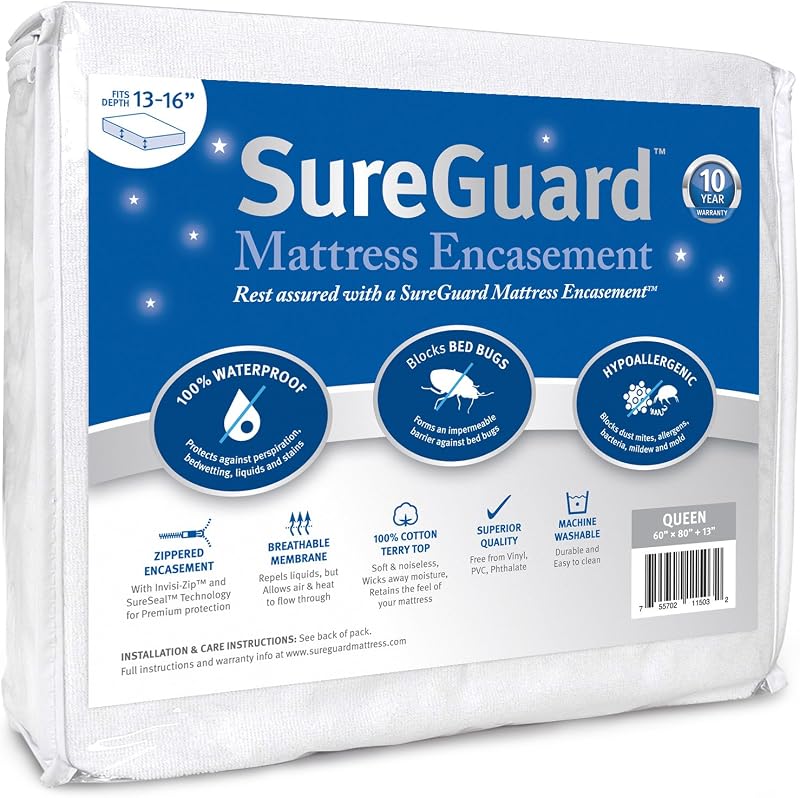
- SureGuard ($64.97): the most expensive, with a cotton terry top and a six-sided waterproof cover.
Pros and cons
| Pros | Cons |
|---|---|
| Blocks mites from reaching the mattress surface | Not a full cure, since mites live elsewhere too |
| Waterproof on the listed models, which also guards against spills | Can run warm for some sleepers |
| Wide price range from about $25 to $65 | Sizes and depth change the price |
| Washable on the listed models | A bad zipper defeats the purpose |
What may help: start with the $25 cover, see how it feels, and upgrade only if comfort or durability disappoints. Looking ahead, expect cover makers to publish pore-size and lab-test data; until then, the zipper and the fabric are what count.
An honest note on results
Studies on dust mite avoidance have mixed results. Covers alone do not always cut symptoms. They work best as part of a plan: encase the mattress and pillows, wash bedding weekly in hot water, and keep humidity at or below 50 percent. The EPA backs the humidity target, and 130 degrees F water for bedding is the usual advice from allergy groups.
A quick plan that works
- Encase the mattress, box spring and pillows.
- Wash sheets and covers weekly in hot water.
- Use a vacuum with a sealed system and HEPA filter. See HEPA vacuums for dust mites.
- Keep humidity under 50 percent. Our damp-home dehumidifier picks can help.
- Read what dust mites are for the full background.
Where this is going: expect more encasements to carry third-party allergen-barrier test results on the label. The catch is that some labels use vague words like hypoallergenic. Look for a clear weave claim and a real return policy.
Also worth reading: air purifier for allergies and common household allergens.
How to put one on
- Strip the bed and vacuum the mattress.
- Slide the cover on and zip it fully closed, with the zipper pull tucked under the zipper flap if one is provided.
- Put your regular mattress pad and sheets on top.
- Check the seam and zipper every few months for tears.
Size and depth
The prices above are for the sizes listed: queen for Utopia and SureGuard, full for Hospitology. Prices change by size and by mattress depth. Measure the mattress height before ordering, and add a margin for a pillow-top. A cover that is too small will not zip properly.
How long do they last?
Quality varies, so there is no safe single figure. A cover that stays intact, with no tears or zipper gaps, still does its job. Replace it when the fabric tears or the zipper fails. Reviews with complaints about leaks or noise are worth a read before you buy.
One more thought: looking ahead, expect allergy groups and sleep brands to push for clearer labels. For now, trust a real zipper seal and a fabric you can wash, more than any slogan on the box.
Frequently asked questions
Will an encasement make the bed hot? A polyester knit or cotton terry top is more comfortable than plastic. Covers marked waterproof can still run warm for some sleepers.
How often should the cover be washed? Follow the label. Many can be washed every few months, and sheets on top should be washed weekly.
Do encasements stop dust mites completely? They block mites from the mattress, but mites also live in carpets, couches and pillows. Use the full plan above.
Sources
- Utopia Bedding, Hospitology and SureGuard Amazon listings (checked October 2026)
- U.S. Environmental Protection Agency, Indoor Air Quality, dust mites and humidity
- Asthma and Allergy Foundation of America, dust mite allergy guidance