
Eight filters below were checked on Amazon on October 10, 2026. Two dealer filters are sold on maker sites, so details are the makers’ claims and prices were not re-checked. The old list repeated the Sawyer MINI twice and the old Platypus link now points to a newer listing. A filter is not a purifier unless it is tested for viruses. For drinking water of unknown quality, follow CDC and EPA guidance.
A portable filter is one of the most useful bits of gear you can own. It turns a clear-looking stream into something much safer to drink. It also fails quietly if you use the wrong type. This guide shows what filters do, what they do not and which ten to look at.
Table of Contents
Filter or Purifier: Know the Difference
- Filters block particles by size. Most hollow-fiber filters have a pore near 0.1 micron, which stops bacteria like E. coli and protozoa like Giardia and Cryptosporidium. They do not stop viruses.
- Purifiers add a step for viruses. That step can be UV light, chemical treatment, a very fine membrane or a carbon and iodine stage.
- Boiling works on all three. The CDC says a full rolling boil for 1 minute, or 3 minutes at high elevation.
In the United States and Canada, viruses are less of a worry in backcountry water, but travel to areas with poor sanitation calls for virus protection.
Looking ahead, portable filters are no longer only for hikers. Floods, storms and long outages have pushed them into emergency kits, and lighter, cheaper hollow-fiber filters now weigh a few ounces. More brands add virus protection and phone-sized UV units. The catch is that a filter is only as good as the care it gets, and one that has frozen or cracked can fail without any sign.
What Filters Do Not Remove
Chemicals, heavy metals and salt stay in the water. Do not use a portable filter on flood water, runoff from farms or mines, or sea water. Pre-filter cloudy water through a cloth first.
8 Filters on Amazon
Prices were checked on Amazon on October 10, 2026. Rating counts are shown where the listing gave one.
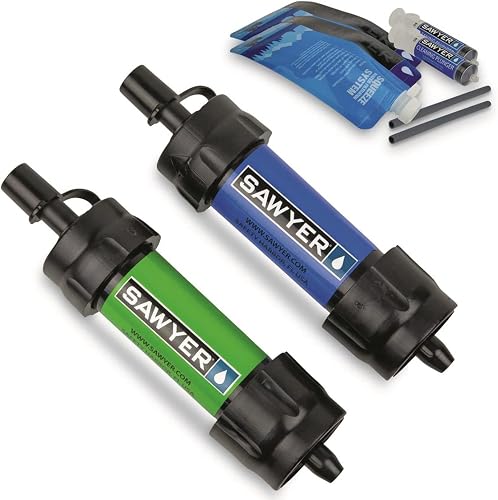
Price on Amazon: $28.99 | stars from ratings (checked October 10, 2026)
The Sawyer MINI is a tiny hollow-fiber filter with a 0.1 micron pore. It removes bacteria and protozoa, per the maker, and not viruses. It can screw onto bottles or a bag.
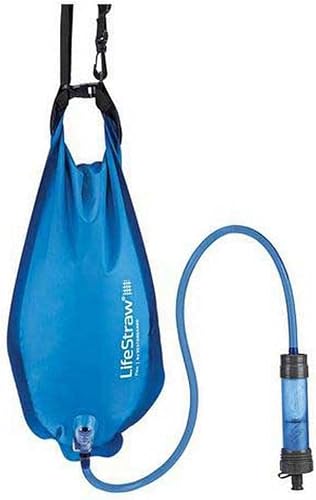
Price on Amazon: $33.99 | 4.6 stars from 2,916 ratings (checked October 10, 2026)
The LifeStraw Flex pairs a gravity bag with a filter. The listing says it removes lead, bacteria, parasites and chemicals. It has a large rating count.
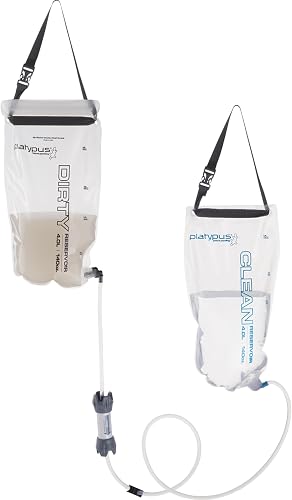
Price on Amazon: $134.95 | 4.7 stars from 68 ratings (checked October 10, 2026)
The Platypus GravityWorks 4L is a group filter with a big bag for base camp. It is the newer listing of the older Platypus link, and it has few ratings so far.
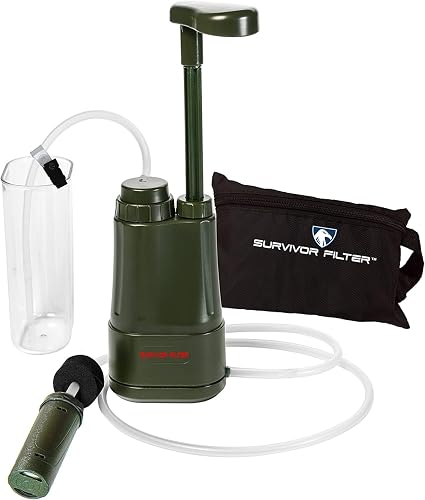
Price on Amazon: $77.99 | 4.6 stars from 4,894 ratings (checked October 10, 2026)
The Survivor Filter PRO is a pump filter. The listing claims a 0.01 micron pore and virus removal, which is a maker claim. Check the tests before you rely on it.
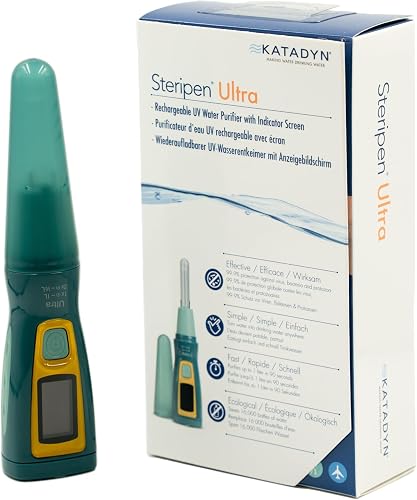
Price on Amazon: $129.86 | 4.3 stars from 1,001 ratings (checked October 10, 2026)
The SteriPen Ultra uses UV light to treat water, including viruses. It needs clear water, a charge and a clean bottle, and it does not remove sediment or chemicals.
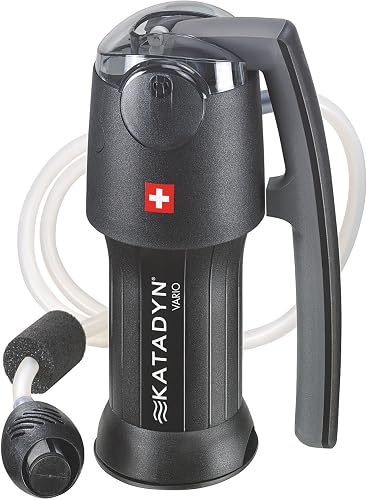
Price on Amazon: $119.95 | 4.5 stars from 1,429 ratings (checked October 10, 2026)
The Katadyn Vario is a two-mode pump filter with a fast flow. It weighs about 15 ounces, per the listing.
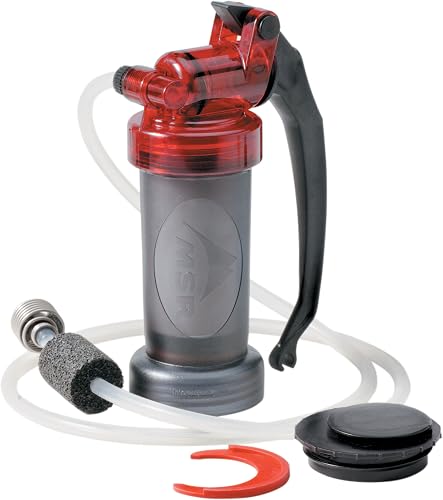
Price on Amazon: $129.95 | 4.6 stars from 1,597 ratings (checked October 10, 2026)
The MSR MiniWorks EX is a long-time ceramic and carbon pump filter that can be cleaned in the field.

Price on Amazon: $17.95 | stars from ratings (checked October 10, 2026)
The LifeStraw Personal is a simple straw filter. It is the cheapest, with no storage, so it is a backup pick.
The risk to watch is the wrong tool for the water. A filter that clears bacteria and protozoa does not stop viruses, and neither one removes chemicals from a farm run-off stream or a flooded basement. A frozen cartridge can crack its fibers, and a clogged one pushed too hard can split. Expect more kits that blur the line between a filter and a purifier. Read what the unit is tested to remove, and pair it with a second step when risk is high.
2 More Filters From Makers
The details below come from maker pages.
1. Clearly Filtered Insulated Stainless Steel Filtered Water Bottle
A stainless bottle with a built-in filter from a brand known for published lab results. It suits daily use more than the backcountry. Check the test list for what it reduces.
- Insulated
- Daily use
- Check the test list
2. PortaWell Portable Water Filtration System
A portable filtration unit from the maker. Check the product page for the pore size, the filter life and the tests behind its claims.
- Portable
- Maker-listed claims
- Check the tests
How to Choose
- Know the risk. For the backcountry in North America, a 0.1 micron filter is usually enough. For travel abroad, add a virus step.
- Pick the style. Squeeze and straw for solo trips. Gravity for groups. Pump for fast flow or silty water. UV for speed.
- Check the weight and flow. A filter that is slow is one you stop using.
- Look at the rated life, in liters.
- Know how to clean it. Most can be backflushed with a syringe.
Care Tips
- Never let a hollow-fiber filter freeze. Ice can crack the fibers. Keep it inside your sleeping bag in cold weather.
- Backflush as the maker says.
- Dry it before you store it for a long time.
- Test it before a trip, by running clean water through it.
Emergency Use at Home
A portable filter belongs in a go-bag and a storm kit. For a home setup, pair it with a gravity unit. See our guide to gravity water filters and filtered water bottles.
FAQ
Do portable filters remove viruses?
Most do not. Use a purifier, UV, chemical treatment or boiling for viruses.
How long do they last?
From hundreds to thousands of liters, depending on the filter. Check the box.
Can you drink from a filter straight from a stream?
For the backcountry, a good filter makes it much safer, but not risk-free. If the water looks cloudy or comes from near farms, pre-filter it and add a second step.
Final Word
Pick a filter for your trip and your water. Keep it from freezing and carry a way to boil as a backup. For other options, read our water filters guide and countertop water filters.
What happens next: expect small gravity bags and squeeze filters to take share from pumps, and UV pens to grow among travelers. For home emergency kits, a gravity filter plus a way to boil water is the simple pair that covers most situations.
Related Guides
Keep going with gravity water filters, filtered water bottles, water filters and countertop water filters.