

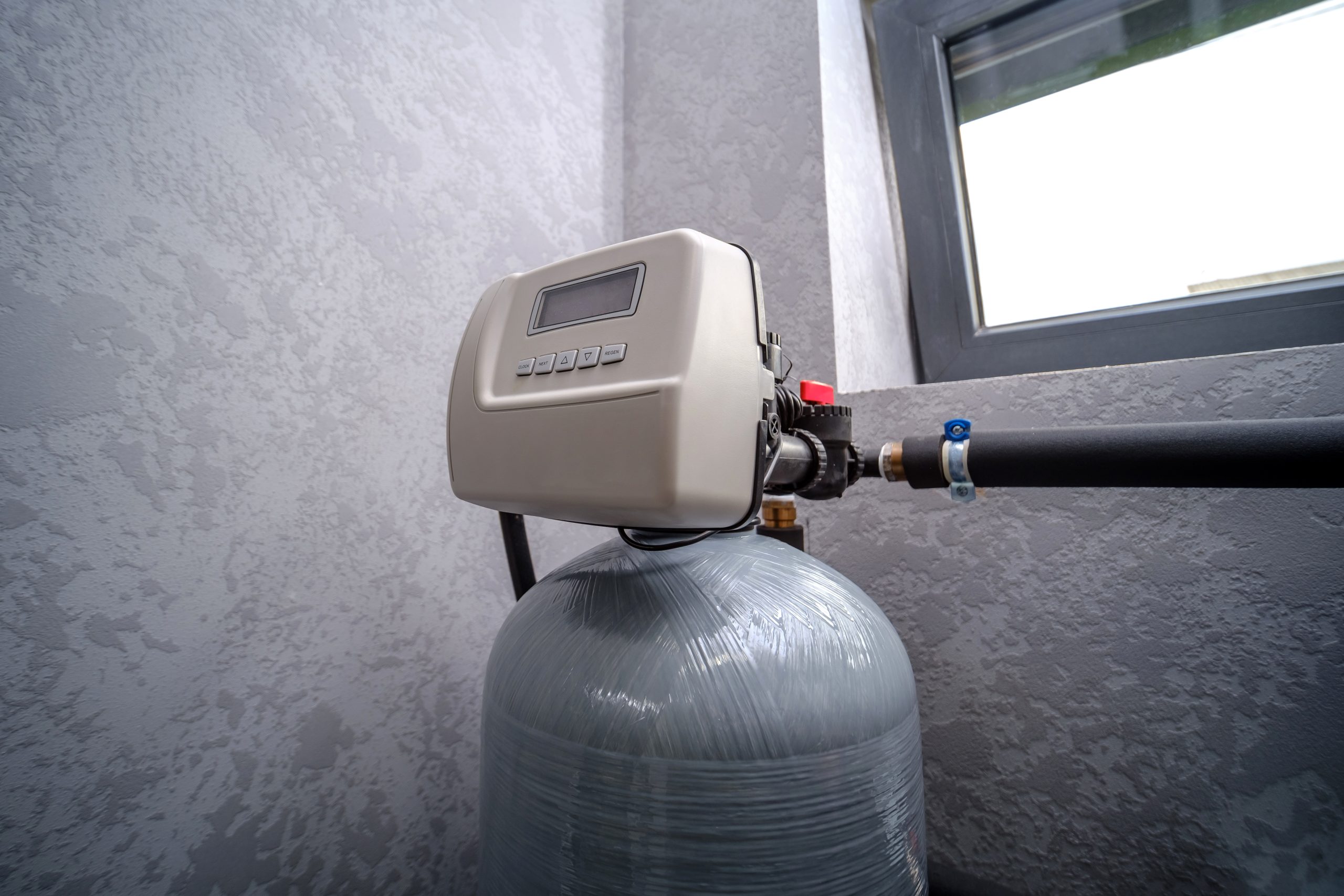
Choosing the right water softener size means matching grain capacity to your household’s real daily softening load, not just picking whatever size is popular. A family of four on moderately hard water might need only 32,000 grains — but the same family on very hard well water with iron content could need 64,000 grains or more. Undersize it and it regenerates constantly, wasting salt and water; oversize it and you’re paying for capacity that sits unused between cycles.
This guide reflects the grain-capacity sizing method used by water treatment professionals and most softener manufacturers, based on WQA (Water Quality Association) guidance.
Most people size a water softener by household headcount alone and either end up regenerating every other day or paying for capacity that never gets used. The fix is the same one water treatment professionals use: grain capacity depends on water hardness and iron content just as much as it depends on how many people live in the house.
Table of Contents
How Many Grains Per Gallon Do You Actually Need?
Water hardness is measured in grains per gallon (GPG), and it’s the single biggest factor in softener sizing — more important than household size on its own. Most water utilities publish hardness numbers for municipal water, and home test kits or professional water tests give an exact reading for well water.
- Slightly Hard — 1 to 3.5 grains per gallon
- Moderately Hard — 3.5 to 7 grains per gallon
- Hard — 7 to 10.5 grains per gallon
- Very Hard — 10.5+ grains per gallon, common on well water
If you’re on well water and haven’t had it tested, assume Hard or Very Hard until you know otherwise — well water runs harder than municipal water more often than not, and guessing low is exactly how undersized systems happen.
Why Iron Content and Regeneration Interval Change the Math
Household size tells you how much water you use, but two other factors change how much softening capacity that water actually demands:
- Iron content — even a small amount of dissolved iron (common in well water) adds real softening load. The standard industry adjustment is +4 grains of equivalent hardness for every 1 ppm of iron, which is why two households with identical hardness readings can need meaningfully different softener sizes if one has iron and the other doesn’t.
- Regeneration interval — a softener that regenerates every 3 days needs less total capacity than one you want to run for a full 7 days between cycles. Shorter intervals use more salt and water overall; longer intervals need a bigger tank up front.
Neither factor shows up if you size purely off “gallons per bathroom” rules of thumb, which is why two identically-sized homes can need very different softeners.
Calculate Your Exact Grain Capacity
Generic sizing charts based on bathroom count or square footage skip hardness, iron, and regeneration preference entirely. For an exact number based on your real water, use the calculator below:
Iron is common on well water and adds real softening load even in small amounts. A longer regeneration interval needs more capacity but uses less salt and water overall.
Softener capacity you need
Daily softening load
2,400 grains
Effective hardness
8 GPG
Regeneration interval
7 days
Real water softeners that clear this grain capacity
Water Softener Size Chart: Grains by Household Size and Hardness
| Household Size | Moderately Hard (5 GPG) | Hard (8 GPG) | Very Hard (15 GPG) |
|---|---|---|---|
| 1-2 people | 24,000 grains | 24,000 grains | 32,000 grains |
| 3-4 people | 24,000 grains | 32,000 grains | 48,000 grains |
| 5-6 people | 32,000 grains | 48,000 grains | 64,000 grains |
Assumes a standard 7-day regeneration interval and no iron content. Add capacity for iron, or run the calculator above with your exact numbers for a precise target instead of an estimate.
Well Water, Iron, and When to Size Up
Well water is where generic sizing charts fail most often. It’s frequently harder than municipal water, commonly carries dissolved iron, and doesn’t come with a utility-published hardness number the way city water does — you’re relying on your own test results. If you’re on well water, get an actual hardness and iron test before buying anything; guessing here is how a “big enough” softener turns out undersized within the first year.
Our well water softener picks account for this iron-and-hardness combination specifically. If iron staining or metallic taste is a bigger concern than hardness alone, pairing a softener with a dedicated whole-house well water filter handles both problems better than a softener trying to do it all on its own.
Grain Capacity vs. Manufacturer “Household Size” Claims: Why the Numbers Don’t Match
A common point of confusion: two softeners both rated “32,000 grains” list different household-size recommendations — one says “1-2 bathrooms,” another says “3-4 bathrooms” for the identical capacity. The reason is the same as it is across other sizing categories on this site: manufacturers aren’t required to test against the same hardness or regeneration-interval assumption. A brand assuming moderately hard water and a 3-day regeneration cycle will claim a smaller household size than one assuming hard water and a 7-day cycle, for the exact same grain rating.
The fix is the same too: ignore the manufacturer’s headline household-size claim and work from the grain rating plus your own hardness, iron, and regeneration preference instead. That’s the only way to compare two softeners on equal footing.
A concrete example makes this easier to spot: a family of four on Hard water (8 GPG) with no iron needs about 32,000 grains on a standard 7-day regeneration schedule. The same family on well water with 2 ppm of iron effectively faces 16 GPG once the iron adjustment is applied — nearly double the daily load, and enough to push them into the 48,000-64,000 grain range even though the household size and “hardness label” look similar on paper.
Continuous Flow: When a Dual-Tank System Makes Sense
A single-tank softener goes offline briefly during regeneration, which usually happens overnight and goes unnoticed — but larger households or homes with high simultaneous water demand can run into soft water gaps. A dual-tank system keeps one tank in service while the other regenerates, so you never run out of soft water regardless of when regeneration kicks in. It’s worth the added cost mainly for larger households already sizing toward the 48,000-64,000 grain range, where regeneration frequency is already higher.
Best Water Softener by Use Case
Grain capacity and hardness get you most of the way there, but the specific situation matters too:
- Well water with iron: size up for the iron adjustment and consider pairing with a dedicated iron filter rather than asking the softener to handle both
- Large households (5+ people): lean toward the higher end of the calculator’s range and consider a dual-tank system if regeneration frequency becomes a real inconvenience
- Small households or apartments: a 24,000-grain unit is usually enough even on hard water, since the daily load is naturally lower
- Salt-sensitive households: a properly sized softener (not oversized) regenerates less often and uses less salt overall — sizing accuracy matters more here than chasing the biggest tank available
For more real product picks, see our water softener reviews.
FAQ
What’s the difference between a 32,000-grain and a 48,000-grain softener?
The grain rating is how much hardness the resin can remove before it needs to regenerate. A 48,000-grain unit handles more total hardness between cycles than a 32,000-grain one, which matters more as household size, water hardness, or iron content increases — it isn’t just “for bigger houses,” it’s for houses using more water, harder water, or both.
Can I use an oversized water softener?
Yes, and unlike an oversized AC or dehumidifier, there’s less mechanical downside — it just regenerates less often. The main cost is paying more upfront for capacity you may not fully use, not a performance problem.
Does iron content really matter that much?
Yes. Even 1-2 ppm of iron, common on well water, adds meaningful softening load through the +4 grains per ppm adjustment. Skipping this is one of the most common reasons a “correctly sized” softener on paper still regenerates more often than expected in practice.
Why do two softeners with the same grain rating list different household-size recommendations?
Different manufacturers assume different water hardness and regeneration intervals when calculating their advertised household-size claim. Ignore that claim and size from the grain rating plus your own hardness, iron, and regeneration preference instead.
How do I find out my water’s actual hardness and iron content?
Municipal water customers can usually find hardness on their utility’s annual water quality report. Well water needs an actual test — inexpensive home test strips give a rough reading, while a lab test (often available through local extension offices or water treatment companies) gives an exact number worth trusting for a real equipment purchase.
Bottom Line
Choosing the right water softener size comes down to three numbers: your household’s daily water use, your water’s real hardness and iron content, and how often you want it to regenerate. Use the calculator above to get an exact grain target, then match it against real, currently-available units rather than a manufacturer’s marketing household-size claim.