

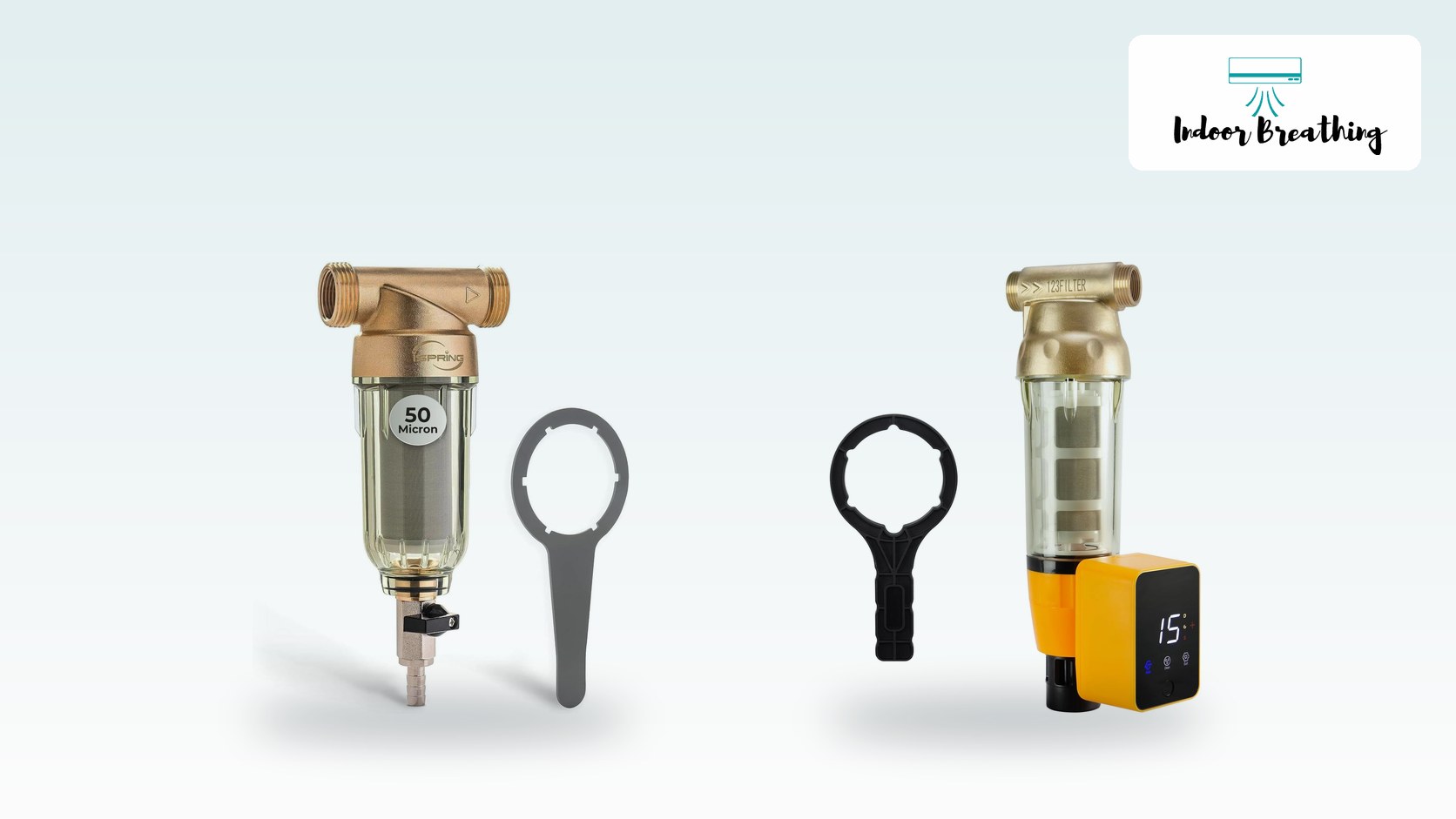
Amazon prices and ratings were checked on October 10, 2026. Products from other stores below are described from the makers’ own pages, and their prices were not re-checked. A sediment filter does not make well water safe to drink. Test the water first.
Well water often carries sand, silt, clay and rust flakes. They clog faucets, wear out pumps and scratch appliance parts. A sediment filter is the first line of defense. It is not a purifier, but it protects everything that comes after it.
This guide covers how sediment filters work, what they can and cannot remove, how to choose one, and nine options to compare.
Table of Contents
What a Sediment Filter Does and Does Not Do
A sediment filter is a mechanical strainer. Water passes through a screen or a cartridge, and solid particles stay behind. It removes sand, silt, dirt, rust flakes and other solids bigger than its micron rating. A micron is one millionth of a meter. A 50-micron screen stops grit you can see. A 5-micron cartridge stops fine silt that clouds the water.
It does not remove:
- Bacteria and viruses
- Dissolved metals such as clear-water iron, lead or arsenic
- Hardness (calcium and magnesium)
- Nitrate, pesticides and other chemicals
- Sulfur smell (rotten egg odor)
Total dissolved solids (TDS) is also untouched, since it measures what is dissolved. For well water, the CDC advises testing at least once a year for bacteria, nitrate and other items that matter in your area. For iron and hardness, see our guides on iron filters for well water and water softeners for well water.
Looking ahead, more homes on private wells will add testing and filtration as drought, flooding and aging pumps stir up sediment. Self-flushing spin-down filters and smart leak shutoffs are getting cheaper. The catch is that a filter only catches what it is rated for, and many owners buy one for a problem it cannot fix.
Spin-Down vs Cartridge Filters
Spin-down filters
A spin-down filter has a reusable screen, usually 50 to 100 microns, inside a clear sump. Water spins, heavy grit drops into the sump, and you open a valve to flush it out. There is no cartridge to buy, and the pressure drop is low. They are the best first stage for sandy or gritty wells. Some models flush on a timer.
Cartridge filters
Cartridges come in two types. Pleated cartridges catch particles on the surface, and many can be rinsed and reused. Spun or melt-blown cartridges catch big particles on the outside and smaller ones deeper in, so they hold more dirt and last longer. Typical sizes are 1, 5, 20 and 50 microns. Change them every 3 to 12 months, sooner if the pressure drops.
The best setup for most wells
Put a spin-down filter first, then a 5 to 20 micron cartridge, then any treatment stage such as an iron filter, a softener or a carbon filter. The coarse filter protects the fine one, so the cartridge lasts longer.
5 Sediment Filters Checked on Amazon
Prices and ratings were checked on Amazon on October 10, 2026.
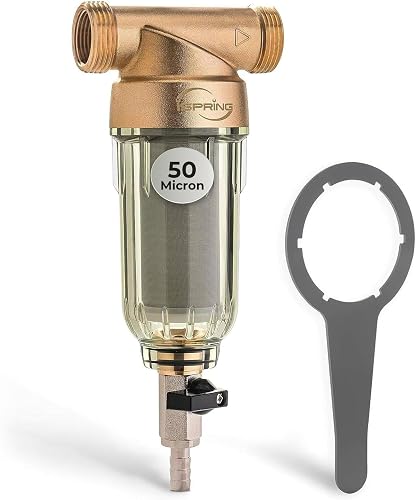
Price on Amazon: $56.89 | 4.6 stars from 3,615 ratings (checked October 10, 2026)
The iSpring WSP-50 is a low-cost spin-down with a 50-micron stainless screen and a clear sump. You flush it by hand. It is a good fit for a well with moderate grit.
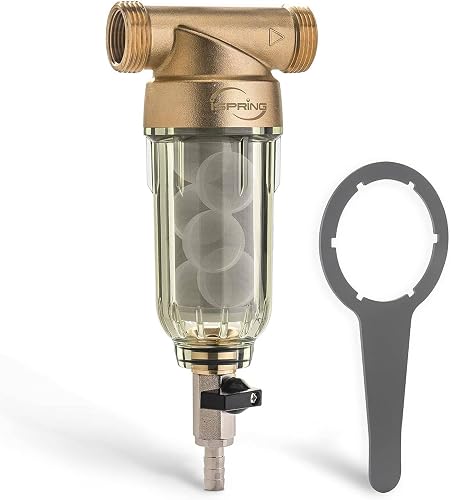
Price on Amazon: $64.99 | 4.6 stars from 1,305 ratings (checked October 10, 2026)
The WSP-50SL is the same type with a different housing and fittings. Match the port size to your pipe.
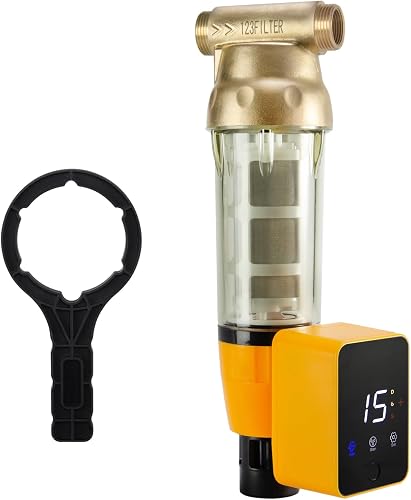
Price on Amazon: $229.99 | 4.5 stars from 885 ratings (checked October 10, 2026)
The iSpring WSP50ARB adds a self-flushing scraper with a touch screen, so it cleans itself on a schedule. It costs more, and it saves a chore.
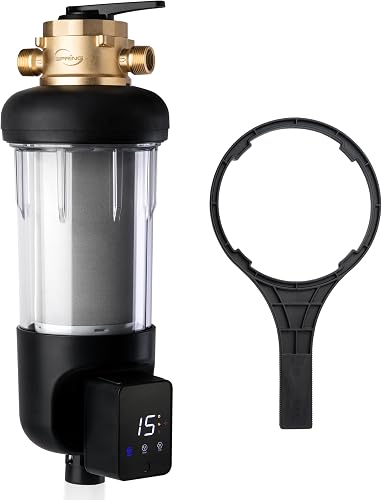
Price on Amazon: $421.69 | 4.5 stars from 173 ratings (checked October 10, 2026)
The Jumbo WSP50ARJ-BP is a larger self-flushing model with a bypass, made for big homes with higher flow.
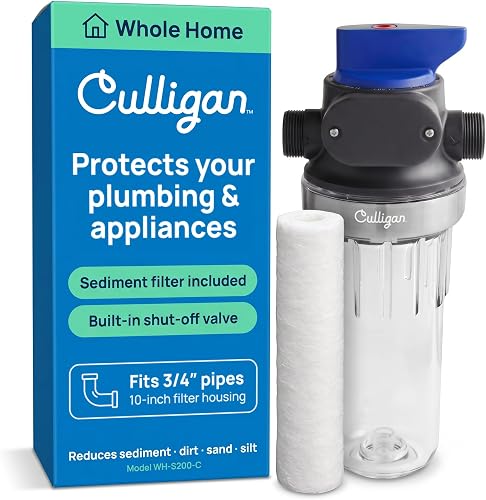
Price on Amazon: $32.49 | 4.5 stars from 2,957 ratings (checked October 10, 2026)
The Culligan WH-S200-C is a cartridge housing with a P5 cartridge. It suits clear, city-like water or a second stage after a spin-down. A cartridge this fine will clog fast on a muddy well, so it is not a first stage there.
The risk to watch is false comfort. A sediment filter does not remove bacteria, nitrate, lead, dissolved iron or the rotten egg smell. A clear glass of water can still be unsafe. Expect more kits to sell “whole-house purification” when they only strain sand.
4 More Options From Other Makers
These products are sold on the makers’ own sites. The details below come from their pages, and prices were not re-checked.
Rusco Spin-Down Separator
A classic spin-down with a 100-micron polyester screen and a clear sump. Rated for large flow, and the screen can be rinsed and reused. It can lower water pressure if the size is too small for the home. Contrary to some older claims, it does not remove sulfur smell; use an air-injection or carbon unit for that.
SoftPro Spin-Down Sediment Separator
Comes in many flow sizes and screen sizes, with a bottom flush valve and a clear sump. Pick the port size and screen that match your pipe and your water.
Frizzlife JX800 Auto-Flush Filter
A self-flushing pre-filter with a 40-micron stainless screen and brass fittings, set by button. It costs more than manual models. Check that the scraper cleans the whole screen on your water.
ProHome Pre-Sediment Filter Assembly
A single-stage housing with a 5-micron pleated cartridge and 3/4 inch ports, built for dirt, sand and rust. A fine cartridge like this is best as a second stage after a spin-down on a well.
How to Choose
- Test the water. Get a lab test for bacteria, nitrate, iron, hardness and pH. Sediment alone may not be your only problem.
- Pick the micron size. 50 to 100 for gritty wells, 5 to 20 for fine silt. Go finer only after a coarse stage.
- Check the port size and flow. A 3/4 inch port suits many homes. Larger homes or high-flow wells may need a 1 inch or bigger unit. Too small a filter cuts pressure.
- Look for NSF listing. NSF/ANSI 42 covers some aesthetic effects. Check the exact standard on the box and the NSF database.
- Plan upkeep. Spin-downs need a flush, cartridges need a swap, and self-flushing units need a drain line.
How Often to Change or Flush
Flush a spin-down filter when the sump looks dirty, often weekly on a gritty well. Replace cartridges every 3 to 12 months, or when the water pressure drops. Dropping pressure at the tap is the clearest sign of a clogged filter.
FAQ
Do you need a sediment filter for well water?
Almost always. Even a clear well can carry fine silt that wears out pumps and fixtures.
Can a sediment filter remove iron?
Only the rusty, particle form (red-water iron). It cannot remove clear-water iron, which is dissolved. Use an iron filter or a softener rated for iron.
Does a sediment filter reduce TDS?
No. TDS is what is dissolved. Reverse osmosis is the usual way to lower it.
Will it make well water safe to drink?
No. Bacteria and chemicals pass through. Test the water and add the right treatment.
Final Word
A sediment filter is cheap insurance for your plumbing, but only the first step. Start with a test, add a spin-down for grit and a fine cartridge for silt, and then treat what is dissolved. For the full setup, see our whole-house water filters for well water.
What happens next: wells will get tested more often after storms and floods, and shoppers will pair a cheap sediment stage with a tested treatment step. Start with a lab test, then buy the filter that matches the result.
Related Guides
Keep going with whole-house water filters for well water, iron filters for well water, water softeners for well water and water softeners.